
Most of us don't give much thought to what we're wearing on our feet when we shuffle to the kitchen for coffee or pad down the hallway in the middle of the night. We slip on whatever's comfortable and convenient. But here's something that might change your morning routine: the shoes (or lack thereof) on your feet could be one of the biggest fall risk factors in your daily life.
Falls are the leading cause of injury among older adults, and while we often focus on hazards like loose rugs or poor lighting, we're literally overlooking what's right beneath us. Your footwear choices matter more than you might think, and the comfortable favorites in your closet could be working against you.
The Footwear-Fall Connection You Need to Know
The relationship between what you wear on your feet and your fall risk isn't just theoretical. Research has documented clear patterns showing that certain types of footwear dramatically increase the likelihood of falling, while proper shoes can significantly reduce your risk.
In long-term care facilities where falls are carefully tracked, the statistics are eye-opening. When researchers analyzed fall incidents, they found that 43% of falls occurred while people were wearing slippers or sandals. Another 35% happened while wearing only socks. Compare that to just 7% of falls occurring in proper shoes, and the pattern becomes impossible to ignore.
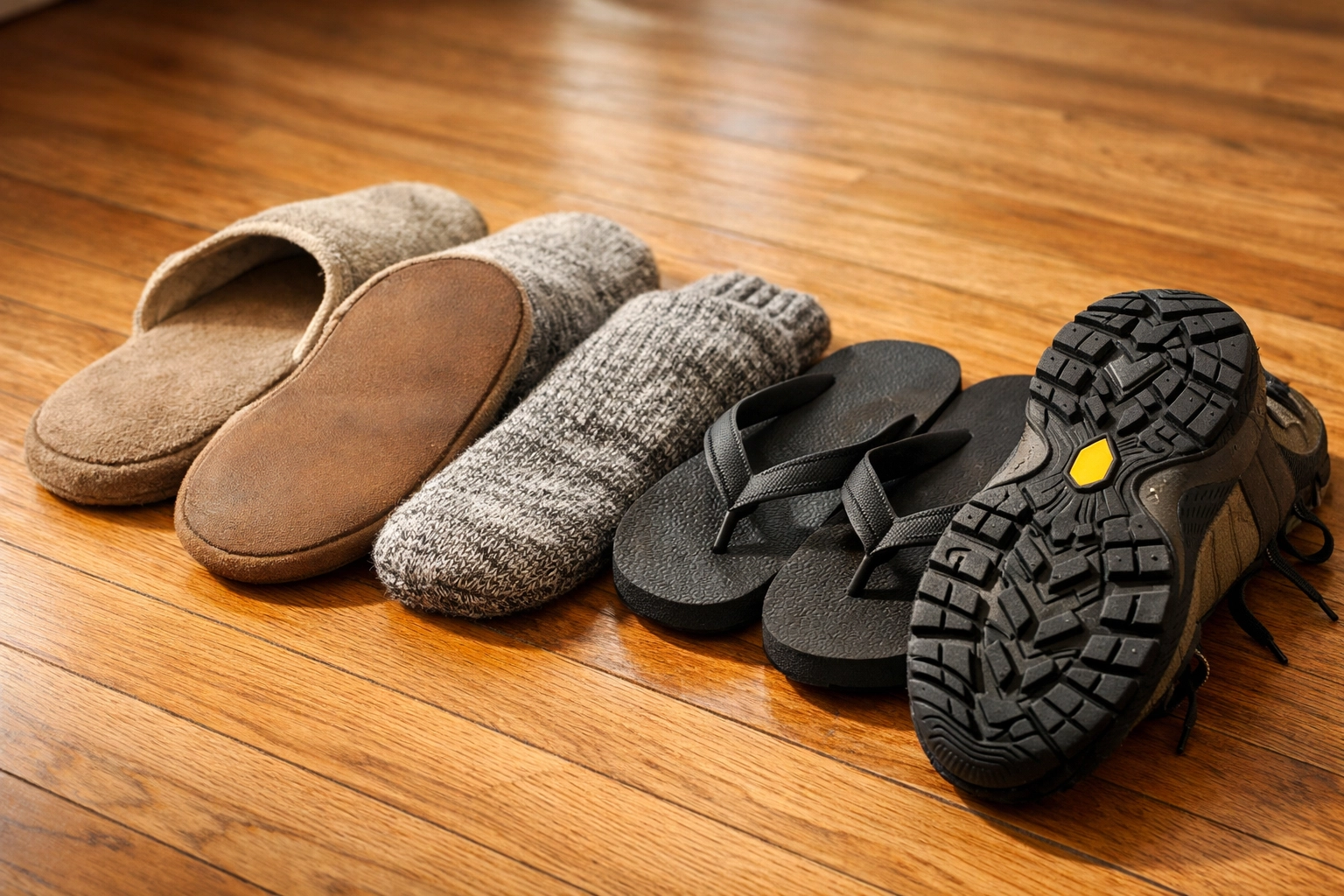
Even more striking: when looking specifically at footwear-related falls in aged care settings, socks alone were responsible for 74% of incidents. That cozy comfort comes with a serious safety cost.
The Worst Offenders: Footwear That Puts You at Risk
Not all footwear is created equal when it comes to fall prevention. Some types consistently show up in fall incident reports, and understanding why can help you make better choices.
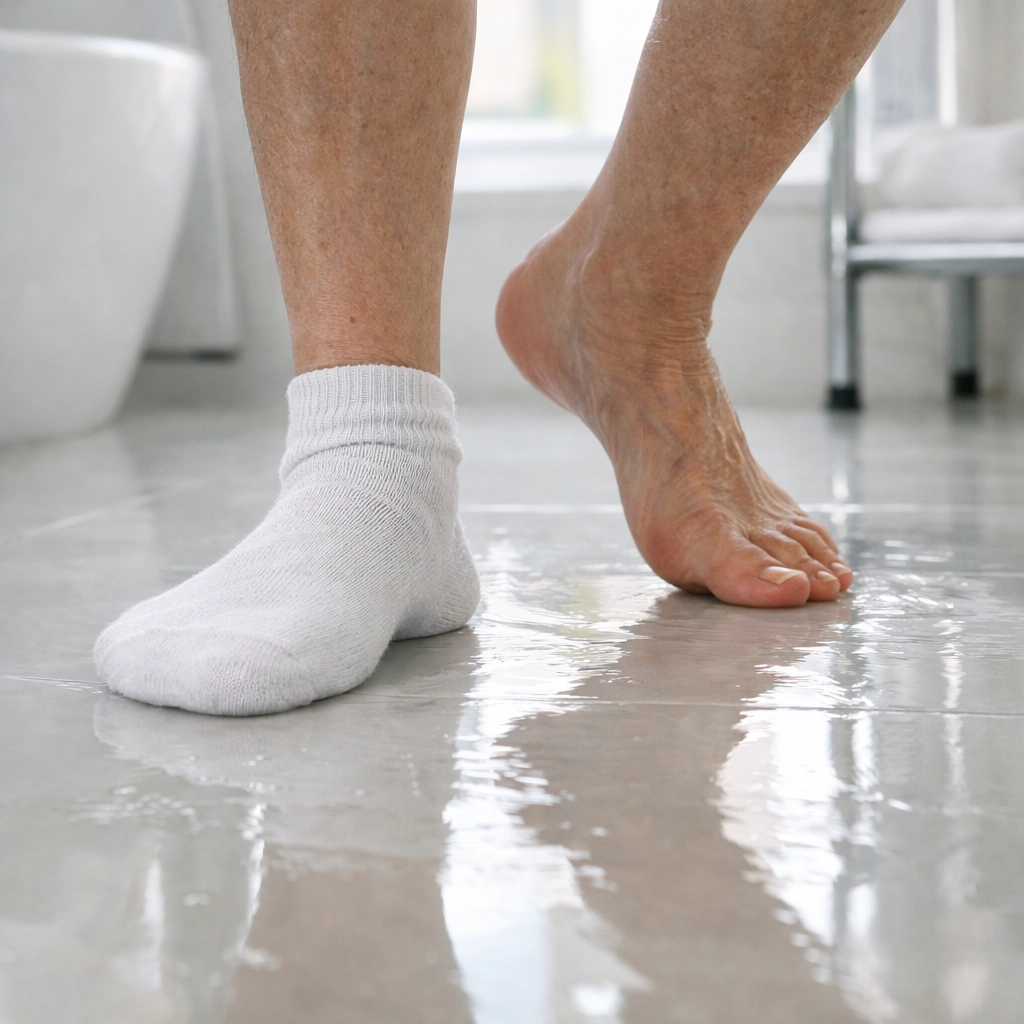
Socks alone top the list of problematic footwear. They provide virtually no grip on smooth surfaces like tile, hardwood, or linoleum. Beyond the obvious slipperiness, socks also limit the sensory feedback your feet need to maintain balance. Your feet contain thousands of nerve endings that help your brain understand where you are in space: socks muffle that critical information.
Slippers might seem like a safe indoor choice, but most slippers lack the structure and grip needed for safe movement. They typically have smooth or minimally textured soles, loose fits that can cause shuffling or tripping, and no secure fastening to keep them on your feet properly.
Flip-flops and slide sandals require you to change your gait to keep them on your feet. That altered walking pattern affects your balance and stability. They also lack heel support and ankle stability, both crucial for preventing falls.
High heels or elevated shoes shift your center of gravity forward, affecting balance. Heels higher than one inch, especially those with a narrow heel width, substantially increase fall risk. The elevated position makes it easier to roll an ankle or lose your footing.
Worn-out shoes with smooth, degraded soles lose their traction over time. Even shoes that were once safe can become hazards as the tread wears down.
Why These Shoes Are Dangerous
Understanding the mechanics behind unsafe footwear helps clarify why certain choices increase risk. Several factors come into play simultaneously.
Traction and grip are fundamental. When your shoes can't grip the floor properly, every step becomes a potential slip. This is especially problematic on smooth surfaces, during wet conditions, or when moving between different floor types.
Proprioception: your body's sense of position and movement: depends partly on feedback from your feet. Certain footwear interferes with this feedback system. When you can't accurately sense foot position or pressure distribution, your brain has less information to work with for maintaining balance.
Gait alteration occurs when footwear forces you to walk differently than your natural stride. Shoes that slip at the heel, require toe gripping to stay on, or restrict ankle movement all change how you walk. These compensatory movements can throw off your balance and increase fall risk.
Instability factors include lack of ankle support, inadequate heel counters (the stiff part at the back of the shoe), and flexible soles that don't provide a stable base. Your feet and ankles need support to maintain stability, especially when navigating uneven surfaces or changing direction quickly.
What Safe Footwear Actually Looks Like
Now for the good news: proper footwear can dramatically reduce fall risk. Studies show measurable improvements when people switch to appropriate shoes.
In one workplace study, when cafeteria workers switched to high-traction shoes, slip injuries dropped by 67%. A larger study of over 4,500 healthcare workers found that slip-resistant shoes reduced slip rates by 37% and slip-related falls by nearly 50%.
Effective fall-prevention footwear includes:
Slip-resistant soles with deep treads that provide grip on various surfaces. Look for soles made from rubber or similar materials that maintain traction even on wet or smooth floors. The tread pattern should be substantial enough to channel water away from the contact surface.
Secure fastening systems keep shoes firmly on your feet. Laces, Velcro straps, or buckles all work better than slip-on designs. The key is ensuring the shoe stays in place during movement without sliding at the heel or gaping at the sides.
Thin, firm soles might seem counterintuitive if you're used to cushioned footwear, but they prevent the foot from sliding within the shoe and improve stability. Excessive cushioning can actually reduce sensory feedback and create instability.
Low, wide heels provide better stability than elevated or narrow heels. If you need some heel height for comfort or medical reasons, keep it under one inch and ensure the heel base is wide enough for stable support.
Proper fit is non-negotiable. Shoes should fit snugly at the heel with about a thumb's width of space at the toe. Your foot shouldn't slide forward, backward, or side-to-side inside the shoe. Width matters too: shoes that are too narrow or too wide both create stability problems.
Supported heel collar refers to the back part of the shoe that wraps around your heel. This should grip firmly without cutting into your ankle, preventing the shoe from sliding off during movement.
Special Considerations for Indoor Footwear
Many falls happen at home, often during routine activities when people are wearing their most comfortable footwear. This makes indoor shoe choices particularly important.
The transition from outdoor to indoor footwear is where many people go wrong. You come home, kick off your proper shoes, and slip into whatever's easy. That's precisely when fall risk increases.
Consider keeping a pair of proper indoor shoes: real shoes with all the safety features mentioned above, just designated for home use. They don't need to be the same shoes you wear outside, but they should have the same safety characteristics.
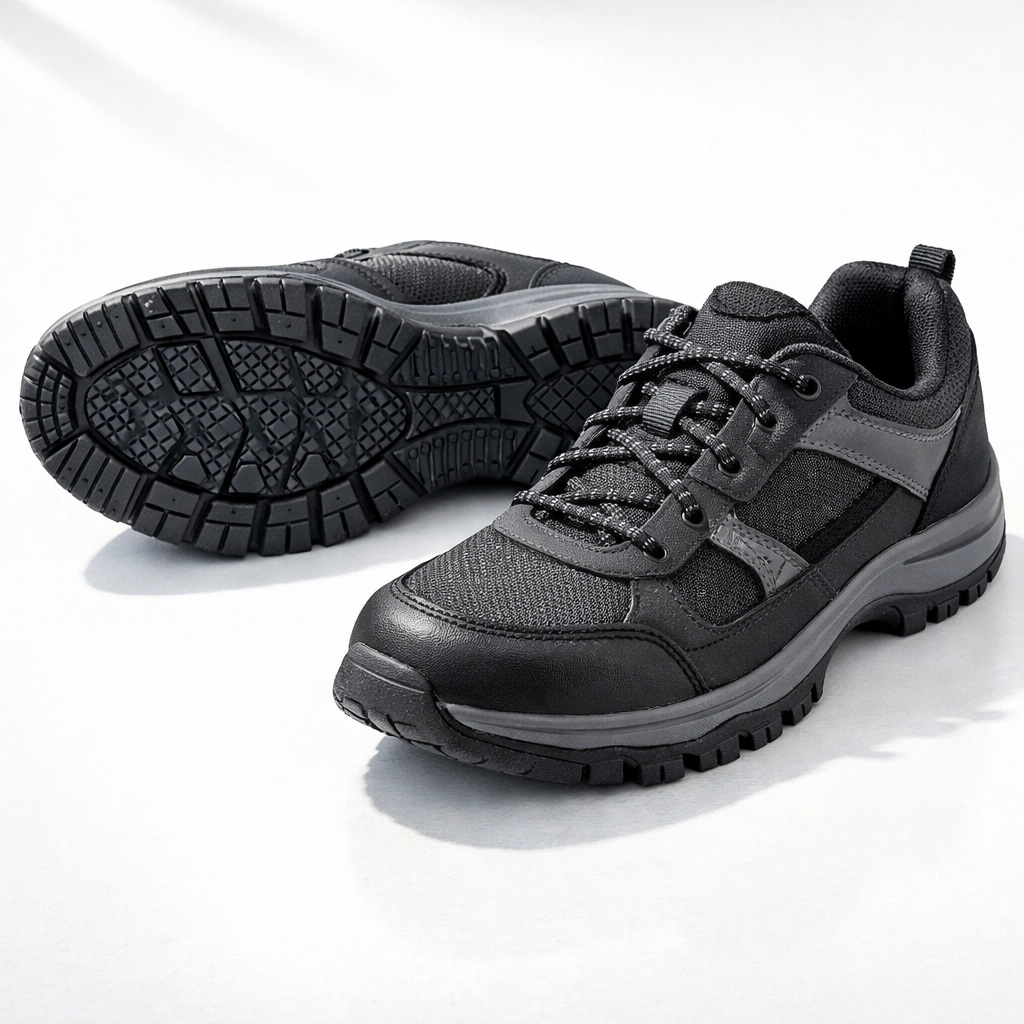
For nighttime bathroom trips, keep secure, slip-resistant shoes next to your bed. The middle of the night, when you're groggy and the lighting is dim, is a high-risk time for falls. Having proper footwear within easy reach can make a significant difference.
If you have specific foot conditions like diabetes, neuropathy, or severe arthritis, work with a podiatrist or physical therapist to identify footwear that addresses both your medical needs and fall prevention requirements. Sometimes custom orthotics or specialized shoes are necessary.
Beyond Footwear: The Complete Picture
While footwear is crucial, it's important to understand that falls result from multiple factors working together. Your shoes are one piece of a larger puzzle.
Physical factors include lower body strength, balance difficulties, vitamin D deficiency, and general fitness level. Even with perfect shoes, weakness or balance problems increase fall risk.
Vision issues affect your ability to see hazards and judge distances. Many people don't realize how much their vision has changed until they have a close call or actual fall.
Medications can cause dizziness, drowsiness, or blood pressure changes that affect stability. If you've started new medications or changed dosages, be extra cautious about fall risk.
Environmental hazards in your home: loose rugs, cluttered walkways, poor lighting, or lack of grab bars: work together with footwear to either increase or decrease fall risk.
Medical conditions like arthritis, Parkinson's disease, stroke recovery, or neuropathy all affect balance and gait. These conditions make proper footwear even more important, not less.
The most effective fall prevention approach addresses all these factors together. Think of proper footwear as a foundational element that supports other prevention strategies.
Making the Switch: Practical Steps
If you're looking at your shoe collection and realizing you need to make changes, here's how to approach it practically.
Start with an honest inventory. Look at what you actually wear daily, not what's theoretically in your closet. Those flip-flops you wear every morning? The worn-out slippers you've had for years? The slip-on shoes that are so easy? Identify the real culprits in your routine.
Replace gradually but deliberately. You don't need to throw everything out at once, but do prioritize replacing your most-worn footwear first. Focus on what you wear for the riskiest activities: nighttime bathroom trips, kitchen work, navigating stairs.
Try before you buy. If possible, test walk in new shoes on various surfaces. Walk on tile, carpet, and smooth floors. Try stops and starts, direction changes, and different speeds. Many shoe retailers have return policies that let you test shoes at home.
Get professional fitting. Foot size changes with age. The size you wore for decades might not be correct anymore. Professional fitting ensures you're starting with the right size and width.
Consider your daily routine. Think about the surfaces you walk on most, the activities you do, and the times you feel most unsteady. Choose footwear that addresses your specific risk factors.
Making these changes might feel inconvenient at first. That quick slip into loose slippers or going barefoot feels easier than lacing up proper shoes. But the few extra seconds it takes to put on secure, slip-resistant footwear is a small price to pay for significantly reducing your fall risk.
Your feet carry you through every day, and what you put on them matters more than most people realize. Taking footwear seriously is one of the simplest, most effective steps you can take toward preventing falls and maintaining your independence.

