
If you use a walker, you're already taking a smart step toward staying safe and independent. But here's something that might surprise you: most people who use walkers are making at least one mistake that actually increases their fall risk instead of reducing it.
These aren't complicated errors. They're simple habits that develop over time: adjusting the height incorrectly, rushing when you should take it slow, or forgetting one crucial step before sitting down. The good news? Once you know what to look for, these mistakes are easy to fix.
Let's walk through the seven most common walker mistakes and what to do instead.
Mistake #1: Your Walker Is the Wrong Height
This is probably the most common mistake, and it happens for a simple reason: people adjust their walker once and never check it again. Or they borrow someone else's walker without adjusting it to fit their body.
When your walker is too high, you'll find yourself reaching upward to grip the handles, which pulls your shoulders up and throws off your posture. When it's too low, you'll hunch forward, putting strain on your back and making it harder to maintain balance.
How to fix it:
Stand inside your walker in your regular shoes with your arms relaxed at your sides. The handles should align with the crease of your wrist. When you grip the handles, your elbows should have a slight bend: about 15 degrees.
If you need to adjust the height, most walkers have push-button mechanisms on each leg. Make sure both sides are adjusted to the same height, and always double-check that the buttons have clicked securely into place.
Check your walker height every few months. Your posture can change, especially if you've had surgery, gained or lost weight, or started wearing different shoes.

Mistake #2: Not Locking the Brakes Before You Sit
This mistake happens fast and can lead to serious falls. Many walkers come with a built-in seat, which is great for taking breaks. But if you don't fully engage the brakes before sitting down, the walker can slide right out from under you.
It's an easy step to forget when you're tired or in a hurry. You feel the seat, you start to sit, and suddenly the walker is rolling away.
How to fix it:
Make locking the brakes a non-negotiable habit. Before you even think about sitting, squeeze both brake handles fully until they lock. Give the walker a small push to make sure it's stable.
Only then should you lower yourself onto the seat. Keep your weight centered and avoid perching on the edge.
When you're ready to stand up again, keep the brakes locked until you're fully upright and have your balance. Then release the brakes and continue walking.
Mistake #3: Leaning Too Much on the Handles
Your walker is designed to help with balance, not to bear your full weight. When you lean heavily on the handles: especially your hands or wrists: you create an unstable situation. The walker can tip forward or slide on uneven surfaces.
This usually happens because you're tired, your legs feel weak, or you're trying to take pressure off a painful joint. While that's understandable, it's putting you at greater risk.
How to fix it:
Focus on keeping an upright posture. Your walker should move with you as a balance aid, not as a crutch supporting your entire body weight.
If you find yourself constantly leaning heavily on your walker, that's worth mentioning to your doctor or physical therapist. You might benefit from strengthening exercises, a different mobility device, or an adjustment to your current walker setup.
Some people do better with forearm platforms or other modifications that distribute weight more safely. Don't try to tough it out: there are better solutions.

Mistake #4: Walking Too Fast
Speed is often the enemy of safety when you're using a walker. It's tempting to rush, especially when you're trying to answer the phone, get to the bathroom, or keep up with someone else's pace.
But walking too fast reduces your reaction time. You're more likely to catch a wheel on something, misjudge a turn, or lose your balance on an uneven surface. The faster you go, the less control you have.
How to fix it:
Slow down. Seriously, that's the fix.
Move at a comfortable, controlled pace that lets you pay attention to your surroundings. Think of it as a deliberate rhythm: advance the walker, make sure it's stable, take your step. Advance, stabilize, step.
If you feel rushed, that's usually a sign you need to build more time into your routine. Leave a few extra minutes to get where you're going. Let phone calls go to voicemail if you need to.
This is especially important on slippery floors, outdoors, or anywhere the surface isn't perfectly level.
Mistake #5: Stepping Behind or Outside the Walker Frame
Your walker creates a zone of stability: the rectangular space between the four legs. When you step within that zone, you're using the walker as it's designed. But many people develop a habit of walking behind the walker, as if they're pushing a shopping cart.
When you walk behind your walker, you have to lean forward to maintain your grip. That forward lean shifts your center of gravity and makes you less stable. You're also more likely to trip over the back legs.
How to fix it:
Position yourself inside the walker's frame. Your body should be close to level with or slightly behind the front bar, not trailing behind the back legs.
Here's the proper sequence: Push the walker forward a comfortable distance: usually just a few inches. Make sure all four legs or wheels are touching the ground. Then step forward into the walker's frame.
Keep your steps small and controlled. You shouldn't have to stretch or reach to stay within the walker's support zone.
If you notice yourself consistently walking behind your walker, it might be too short or you might need a larger frame size.

Mistake #6: Overloading Your Walker with Bags and Items
It's convenient to hang grocery bags on your walker handles or pile things on the seat while you're moving around. But every item you add throws off the walker's balance and makes it harder to steer.
A heavy bag on one side can cause the walker to tip. Items on the seat raise the center of gravity. Bags hanging from handles can swing and pull the walker in unexpected directions.
How to fix it:
Use only the storage pouch or basket that came with your walker. These are designed to hold items in a position that maintains the walker's stability.
Never place items on the seat while you're walking. The seat is for sitting, period. If you need to carry something while moving, it should go in the designated storage area: and even then, keep it light.
For grocery shopping or errands, consider making multiple trips with lighter loads, or ask for help carrying heavier items. Your safety is worth the extra effort.
If you regularly need to transport items, talk to a medical supply specialist about walker accessories designed for safe carrying.
Mistake #7: Wearing the Wrong Shoes
Your footwear matters more than you might think. Slippery soles, shoes that don't fit properly, or worn-out treads all increase your risk of slipping: even with a walker.
Flip-flops, bedroom slippers with smooth bottoms, high heels, and shoes with laces that come untied are all problematic. So are shoes that are too big, causing your foot to slide around inside, or too tight, affecting your circulation and balance.
How to fix it:
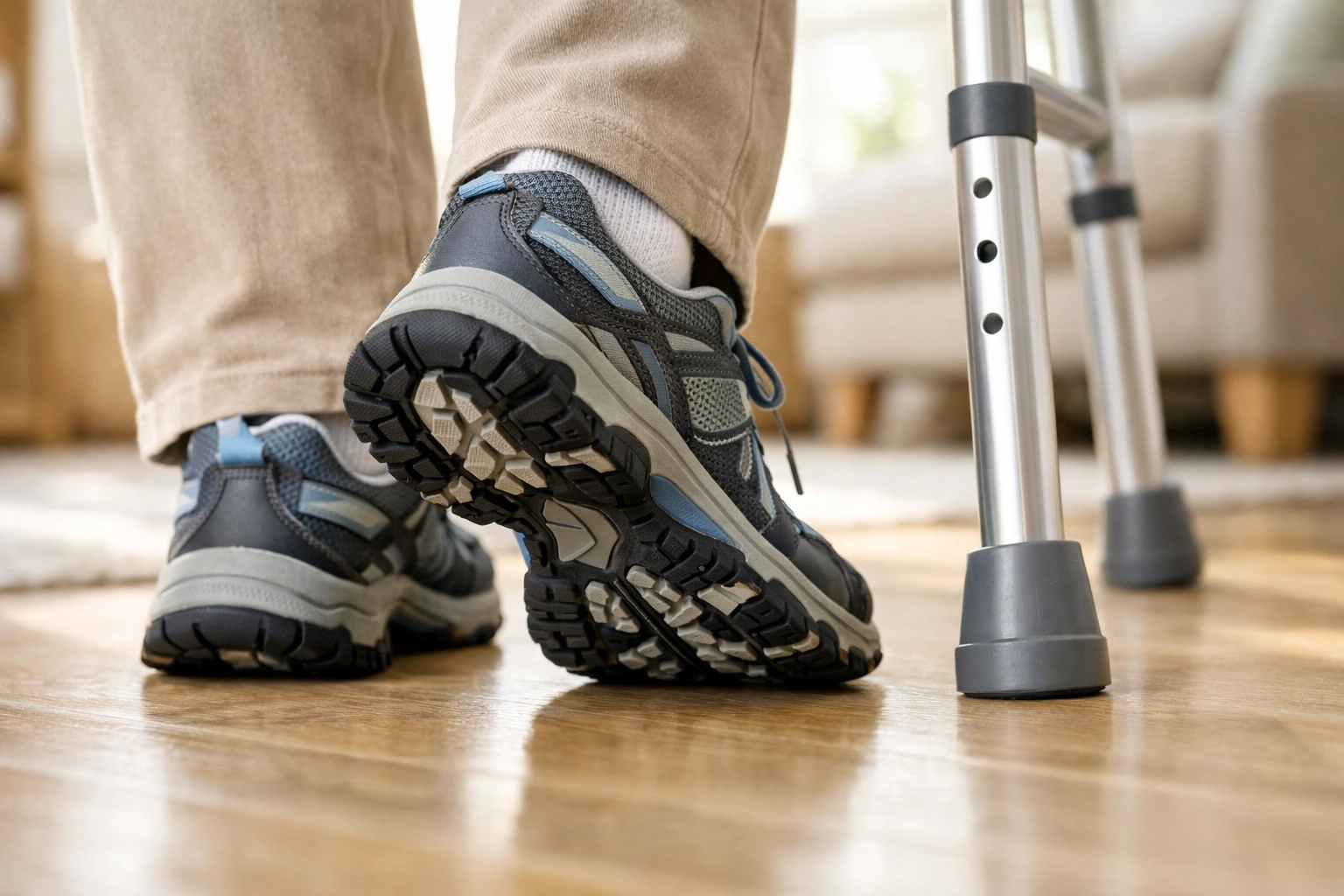
Wear supportive, non-slip shoes with good tread and a secure fit. They should stay on your feet without you having to clench your toes to hold them in place.
Look for shoes with rubber soles that provide traction. The shoes should have a low heel and good arch support. If you wear orthotics, make sure your shoes accommodate them properly.
Replace shoes when the tread wears down or when they start to lose their shape. Check your shoes regularly for wear patterns that might affect your stability.
Keep a pair of good walking shoes by the door so you're never tempted to "just quickly" go somewhere in slippers or bare feet.
Additional Safety Tips
Beyond these seven mistakes, a few other practices can help you use your walker safely:
Check your walker regularly. Look at the rubber tips on the bottom of the legs. If they're worn smooth or cracked, replace them. Test that all screws and bolts are tight. Make sure any wheels roll smoothly and aren't loose or wobbly.
Never use your walker on stairs. Walkers aren't designed for stairs. Use handrails, elevators, or ramps instead. If you absolutely must navigate stairs regularly, talk to your healthcare provider about whether you need a different mobility solution.
Avoid loose clothing. Long robes, baggy pants, or scarves can catch on the walker's frame or drag on the wheels. Wear clothes that fit close to your body when you're using your walker.
Use both hands. Keep both hands on the handles while walking. Carrying items in one hand throws off your balance and reduces your control.
Clear your path. Before you start moving, scan ahead for obstacles like cords, rugs, pets, or clutter. A clear path is a safer path.
Know your limits. Some days you'll have more energy and stability than others. On days when you're tired, dizzy, or feeling unwell, take extra precautions or ask for help.
When to Seek Professional Guidance
If you're making these mistakes frequently, or if you feel unstable even after correcting them, it's time to talk to a professional. A physical therapist can evaluate your gait, strength, and balance to make sure a standard walker is still the right choice for you.
Sometimes people need a different type of walker: one with wheels, a rollator with a seat and brakes, or a walker with forearm supports. Sometimes the issue isn't the walker at all, but underlying strength or balance problems that could improve with targeted exercises.
Your doctor can also review your medications to see if any are affecting your balance or causing dizziness.
The Bottom Line
Using a walker correctly isn't complicated, but it does require attention to a few key details. Check the height, lock those brakes, stay upright, slow down, walk within the frame, keep it uncluttered, and wear proper shoes.
These seven fixes can make a real difference in your safety and confidence. Take a few minutes today to evaluate how you're using your walker. Adjust what needs adjusting. Build better habits.
Your walker is a tool for independence. Use it right, and it will serve you well.

