
As a caregiver, you're doing your best to keep your loved one safe. You've probably already thought about the obvious hazards: wet bathroom floors, steep stairs, icy sidewalks. But some of the most dangerous fall risks hide in plain sight, quietly increasing the chance of a serious injury.
Falls are the leading cause of injury among older adults, but here's the encouraging news: most falls are preventable. Understanding the less obvious hazards in your loved one's environment can make all the difference. Let's walk through ten fall risks that caregivers often miss, along with practical steps you can take today to address them.
1. Poor Lighting Throughout the Home
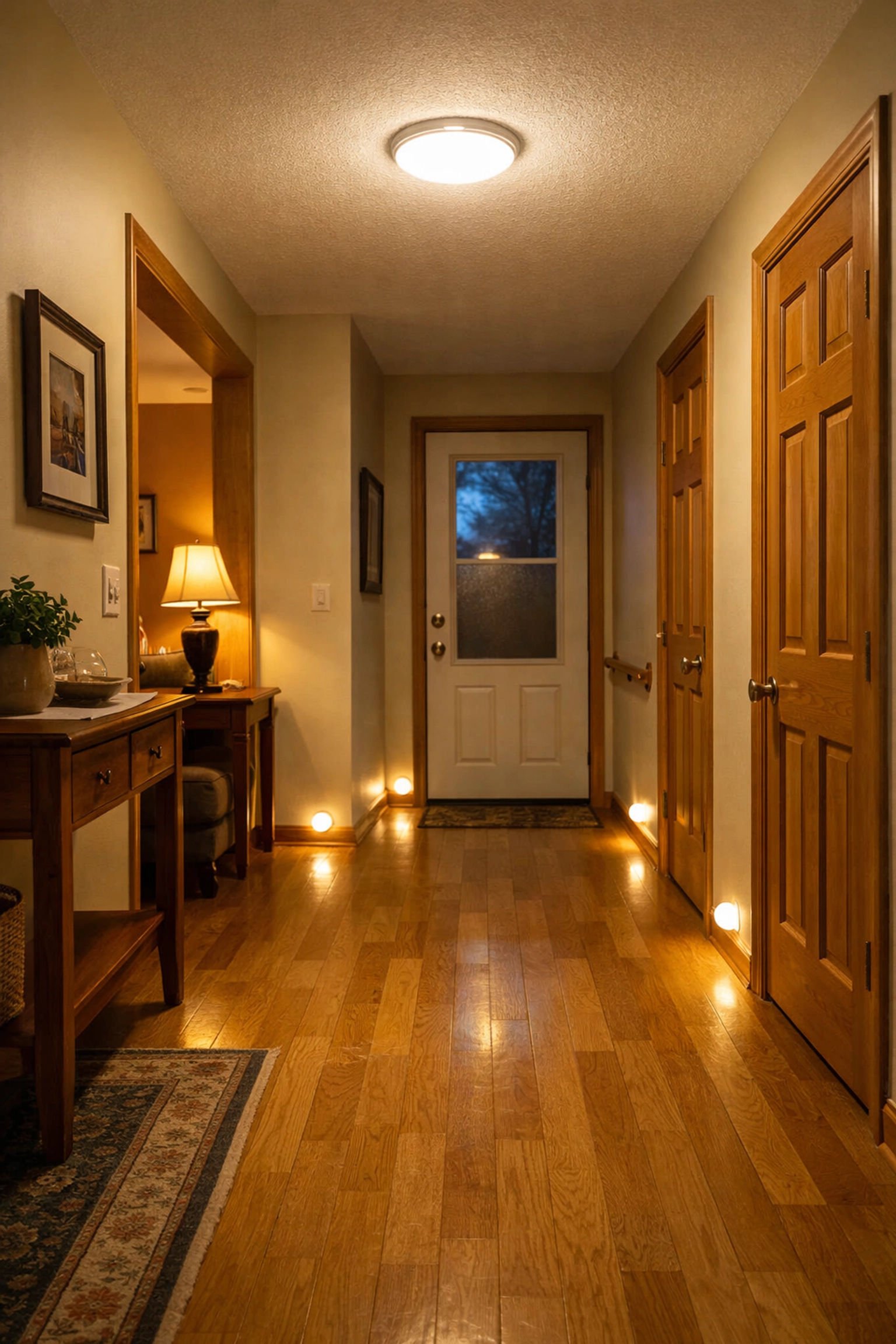
Dim lighting doesn't just make it hard to read: it makes it nearly impossible for seniors to spot obstacles, changes in floor height, or even the edge of a stair. As we age, our eyes need significantly more light to see clearly, yet many homes rely on outdated bulbs or fixtures that create shadows in high-traffic areas.
Hallways, staircases, bathrooms, and bedrooms deserve special attention. That 3 a.m. trip to the bathroom becomes exponentially more dangerous when your loved one is navigating in near darkness.
What you can do:
- Replace dim bulbs with brighter options (look for LED bulbs with higher lumens)
- Install motion-sensor lights in hallways and bathrooms
- Place nightlights along the path from bedroom to bathroom
- Ensure light switches are accessible at both the top and bottom of stairs
- Consider lamp timers that automatically turn on at dusk
2. Loose Rugs and Carpets
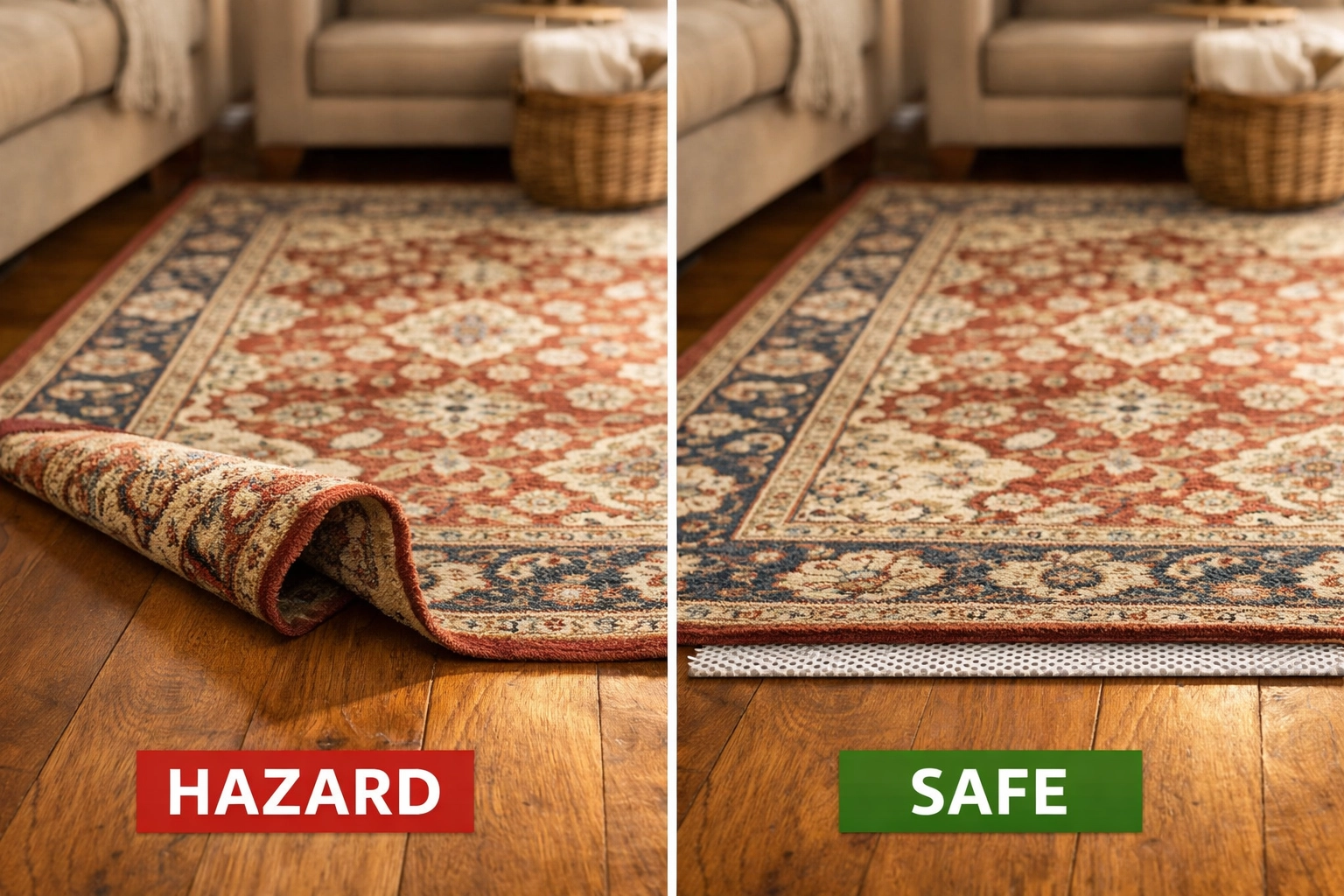
That decorative throw rug in the hallway or the bath mat that slides around might seem harmless, but for someone with balance issues or reduced mobility, they're accident magnets. Even a slight catch of a toe can send someone tumbling, and rugs that bunch up or have curled edges create trip hazards that are easy to overlook during a quick safety check.
What you can do:
- Use non-slip rug pads under all area rugs
- Secure rug corners with double-sided carpet tape
- Remove small rugs from high-traffic areas entirely
- Replace worn carpeting that has loose edges or tears
- Consider whether decorative rugs are worth the risk: sometimes less is more
3. Slippery Bathroom and Kitchen Floors
Water on smooth tile or linoleum creates one of the most dangerous combinations in a home. A few drops from a leaky faucet, condensation from a hot shower, or a minor spill while cooking can turn these spaces into skating rinks. Bathrooms are particularly hazardous because people are often barefoot and moving between wet and dry surfaces.
What you can do:
- Place non-slip mats in the shower, bathtub, and just outside these areas
- Clean up spills immediately
- Encourage the use of footwear with grip, even indoors
- Consider grip socks with rubber treads
- Apply non-slip strips or decals to smooth surfaces in wet areas
- Fix leaky faucets promptly to prevent water accumulation
4. Cluttered Walkways and Pathways
It's easy for items to accumulate in living spaces: magazines on the floor, electrical cords stretched across walking paths, pet toys, bags, or boxes waiting to be put away. When you're familiar with your environment, you can navigate around these obstacles without thinking. But for someone with limited vision, mobility challenges, or cognitive changes, these items become serious hazards.
What you can do:
- Create a daily habit of clearing floor space
- Secure electrical cords along walls or under rugs (with cord covers to prevent tripping)
- Rearrange furniture to create wider, clear pathways
- Keep stairways completely clear
- Store frequently used items at waist level to reduce bending
- Encourage the "one touch" rule: put things away immediately rather than setting them down
5. Unstable or Lightweight Furniture
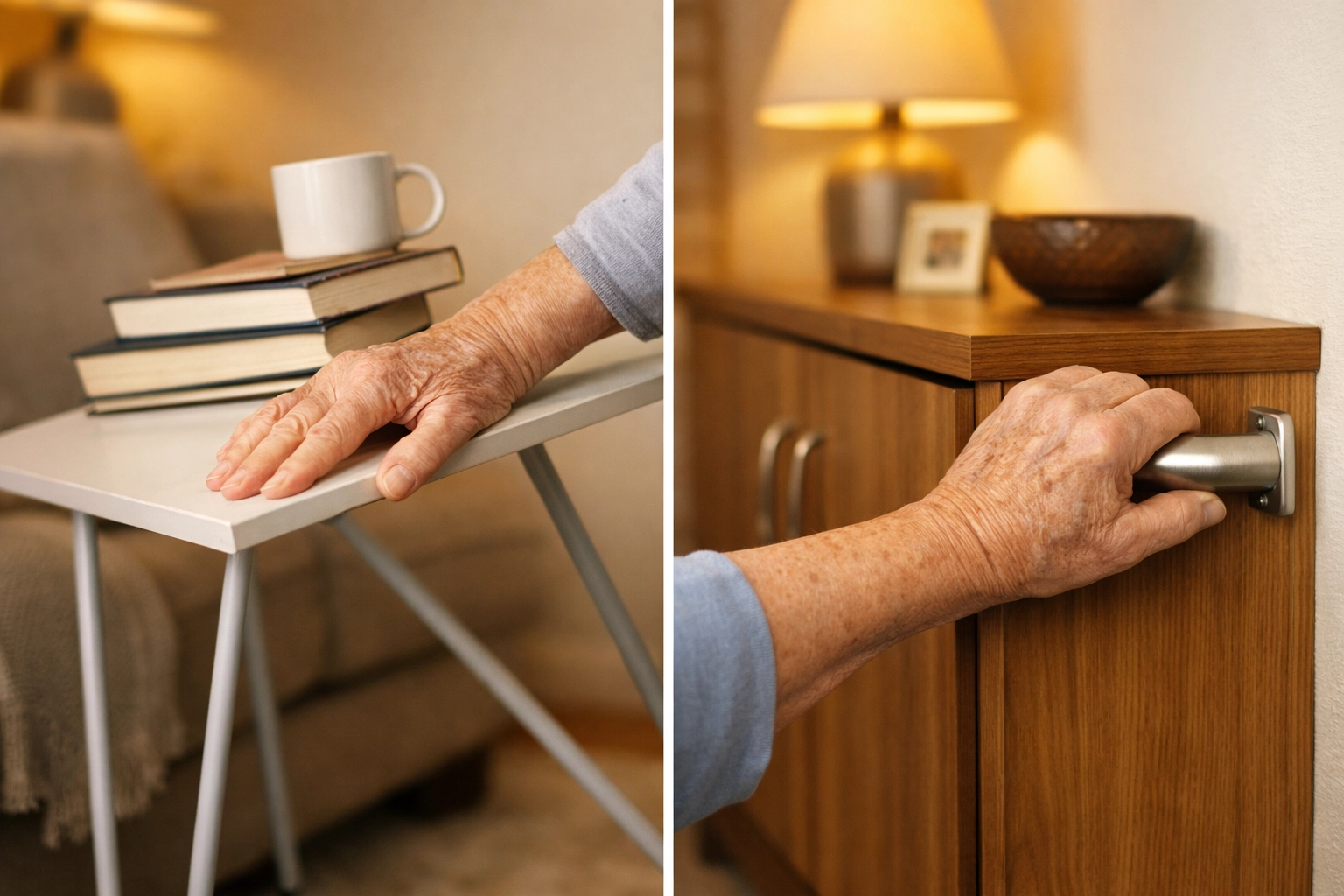
Here's a risk that catches many caregivers off guard: that decorative side table or lightweight chair becomes a support system when someone loses their balance. The problem? Most furniture isn't designed to bear sudden weight. When someone grabs an unstable piece of furniture to catch themselves, it often tips over, making the fall worse.
What you can do:
- Test furniture stability by applying downward and sideways pressure
- Secure tall bookshelves and cabinets to the wall with anchors
- Replace wobbly or lightweight furniture in high-traffic areas with sturdier options
- Ensure chairs have armrests and are stable enough to support someone when sitting down or standing up
- Remove furniture with wheels from areas where someone might grab for support
6. Missing or Unstable Stairway Railings
Stairs are inherently risky, but they become exponentially more dangerous without proper support. Missing railings, loose railings, or railings that only exist on one side of the staircase force people to navigate without adequate balance support. Even a small misstep on stairs can result in serious injury.
What you can do:
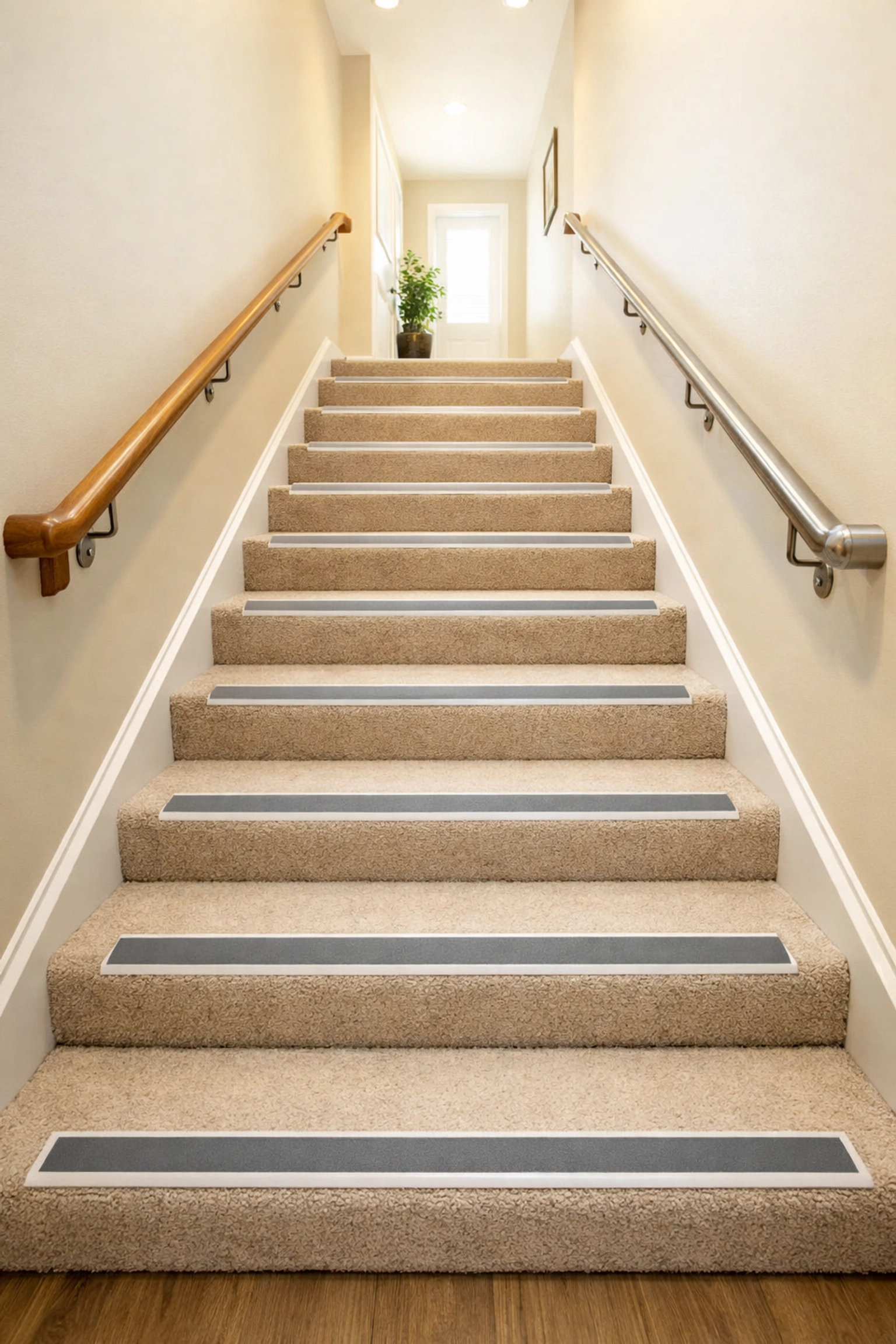
- Install sturdy handrails on both sides of all stairways
- Ensure railings extend beyond the top and bottom steps
- Tighten any loose railings immediately
- Apply brightly colored tape to the edge of each step to improve depth perception
- Consider adding a contrasting color to the first and last step
- Keep stairs well-lit and clear of all objects
7. Inappropriate Footwear
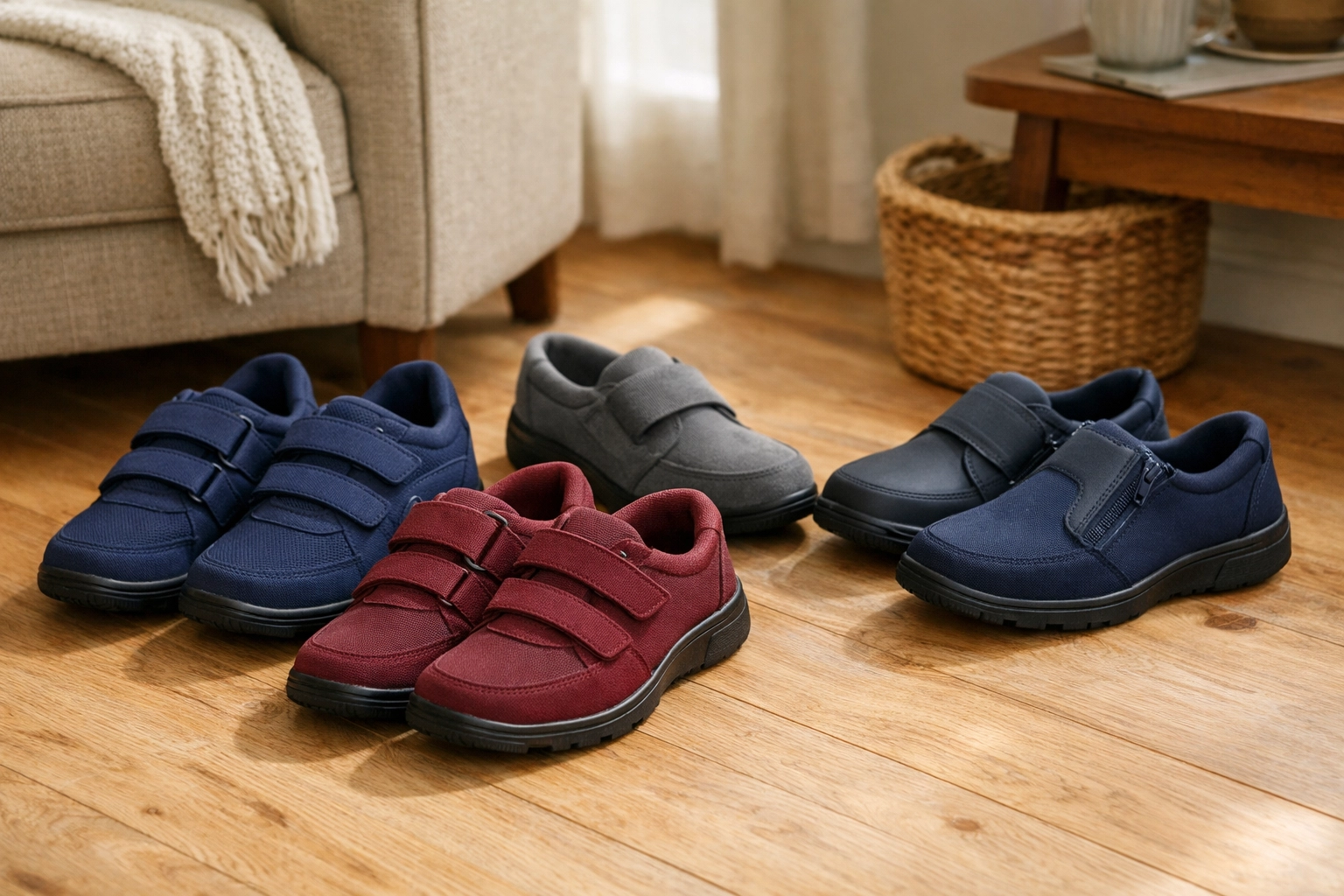
The slippers your loved one has worn for years might be comfortable, but if they're backless, have smooth soles, or are too loose, they're increasing fall risk with every step. Proper footwear provides stability, support, and traction: three things that become increasingly important as we age.
What you can do:
- Choose shoes with non-slip rubber soles
- Look for footwear with back support (no flip-flops or backless slippers)
- Ensure shoes fit properly: not too loose or too tight
- Replace worn-out shoes with smooth soles
- Consider shoes with Velcro closures if laces are difficult
- Encourage wearing shoes rather than socks alone, even indoors
8. Outdoor Hazards
While we focus heavily on indoor safety, outdoor environments present their own challenges. Uneven sidewalks, cracked pavement, wet leaves, ice, snow, and poor outdoor lighting can all lead to falls. These hazards change with the seasons and weather, requiring ongoing attention.
What you can do:
- Inspect walkways regularly for cracks, holes, or uneven surfaces
- Keep pathways clear of leaves, snow, and ice
- Use salt or sand to improve traction in winter
- Install outdoor lighting along walkways
- Add handrails to outdoor steps
- Ensure outdoor mats are secure and have drainage to prevent water pooling
- Trim bushes and vegetation that might obstruct paths
9. Medication Side Effects
This is perhaps the most overlooked fall risk because it's not visible in the environment. Many common medications: including those for blood pressure, sleep, anxiety, and pain: can cause dizziness, drowsiness, or balance problems. When multiple medications are taken together, these effects can compound.
What you can do:
- Keep an updated list of all medications, including over-the-counter drugs and supplements
- Review medications regularly with healthcare providers
- Ask specifically about fall risk as a side effect
- Be aware of timing: some medications cause increased dizziness when first taken
- Watch for signs of overmedication like confusion or excessive drowsiness
- Never adjust or stop medications without medical guidance
10. Declining Physical Strength and Balance
Age-related changes in strength, balance, and vision develop gradually, which means caregivers might not notice them until after a fall occurs. Muscle weakness, reduced flexibility, slower reflexes, and changes in depth perception all contribute to increased fall risk. These changes are natural but recognizing them early allows for proactive intervention.
What you can do:
- Watch for warning signs like shuffling feet, holding onto furniture while walking, or difficulty getting up from a chair
- Encourage regular, appropriate physical activity to maintain strength and balance
- Schedule regular vision and hearing checks
- Be aware of changes in gait or walking speed
- Consider an evaluation by a physical therapist who can assess fall risk and recommend exercises
- Don't dismiss near-misses: they're often warning signs of increasing risk
Taking a Comprehensive Approach
The good news is that you don't need to tackle all ten of these risks at once. Start with a systematic room-by-room assessment of your loved one's living space. Walk through as if you're seeing it for the first time, looking specifically for the hazards we've discussed.
Focus first on high-traffic areas and the spaces your loved one uses most frequently: the bedroom, bathroom, kitchen, and main living areas. Make changes gradually if needed, but prioritize the most serious risks like poor lighting, unstable stairs, and medication reviews.
Remember that fall prevention isn't about creating a sterile, overly cautious environment. It's about making thoughtful adjustments that allow your loved one to maintain independence safely. Many of these modifications are simple and inexpensive, yet they can significantly reduce fall risk.
Moving Forward with Confidence
Understanding these often-overlooked fall risks puts you in a better position to protect your loved one. You're not being paranoid or overprotective by addressing these hazards: you're being thoughtful and proactive.
Every small change you make contributes to a safer environment. Whether it's adding a nightlight, securing a rug, or having a medication review, you're actively reducing the chance of a serious fall. And that peace of mind: for both you and your loved one: is invaluable.
Start today with one or two changes. Walk through the home this week and identify which of these ten risks might be present. Then tackle them systematically, knowing that each step you take is making a real difference in your loved one's safety and ability to age confidently at home.

