
When it comes to maintaining independence at home, a walker is often one of the most valuable tools in your toolkit. It provides stability, reduces the fear of falling, and allows you to keep moving through your daily routine. However, simply having a walker isn’t enough; using it correctly is what actually keeps you safe.
In my years working in the mobility space, I’ve noticed that many people treat their walkers more like a suggestion than a precise medical instrument. There are small, subtle habits that creep in over time: habits that can actually increase the risk of a fall instead of preventing one.
If you or a loved one uses a walker or a rollator, it’s worth taking a few minutes to review the basics. Let’s look at the most common mistakes and, more importantly, how to fix them so you can stay mobile and confident.
The Most Common Error: Incorrect Height Adjustment
The most frequent mistake I see is a walker that is set at the wrong height. It sounds like a small detail, but it changes everything about how your body moves.
If the walker is set too low, you’ll find yourself hunching over. This puts immense strain on your lower back and neck. More dangerously, it shifts your center of gravity forward, making you much more likely to tip over if you hit a small bump or rug.
On the flip side, if the walker is too high, your arms will be bent at an awkward angle. This prevents you from putting your full weight into the device when you need to, and it leads to quick fatigue in your shoulders and wrists.
How to Fix It
To get the height just right, stand as naturally as you can with your arms hanging at your sides. The handgrips of the walker should be level with the crease of your wrist.
When you place your hands on the grips, your elbows should have a slight bend: usually about 15 to 20 degrees. This "sweet spot" allows your arms to act as shock absorbers while providing maximum support for your frame.

Walking "Behind" Instead of "Inside"
Think about how you push a shopping cart at the grocery store. You likely push it out in front of you and walk behind it. Many people try to use their walkers the exact same way. They push the walker a foot or two ahead and then "chase" after it.
This is a major safety risk. When the walker is far in front of you, it cannot support your weight if you trip. You end up leaning forward, which makes you unstable. If you lose your balance while the walker is extended out, the walker will likely roll away from you, leaving you with nothing to grab onto.
How to Fix It
You should always walk inside the frame of the walker. Your feet should generally stay between the two back legs of the device.
The rhythm should be:
- Move the walker forward just a few inches.
- Step into the center of the walker.
- Keep your back straight and your eyes looking forward, not down at your feet.
By staying inside the frame, the walker acts as a cage of support around your center of gravity.
The Danger of the Quick Pivot
Turning around is often when falls occur. Many walker users try to pivot their bodies quickly while keeping the walker stationary, or they try to swing the walker around in one big motion. This can cause the feet to get tangled in the legs of the walker or cause the user to lose their balance mid-turn.
How to Fix It
The key to turning safely is to take small, deliberate steps. Think of it like a slow dance rather than a quick turn.
If you need to turn right, move the walker slightly to the right, then step your right foot toward it, followed by your left. Continue these small "clock-hand" steps until you are facing the direction you want to go. Never cross your legs while turning; keep a wide, stable base at all times.
Sitting and Standing: The Walker Is Not a Handrail
One of the most dangerous things you can do with a walker is use it to pull yourself up from a seated position. Because most walkers are lightweight, they are not designed to take horizontal force. If you grab the handles and pull toward yourself to stand up, the walker can easily tip over onto you.
The same applies when sitting down. Many people reach back for the walker as they lower themselves into a chair. If the walker has wheels (a rollator), it might roll away, causing you to miss the chair entirely.
How to Fix It
Always use the "Push, Don't Pull" rule.
- To Stand: Move to the edge of your chair. Place your hands on the armrests of the chair or the seat itself. Push down through your legs and arms to stand up. Once you are steady on your feet, then reach forward and place your hands on the walker.
- To Sit: Back up until you feel the chair against the back of your legs. Reach back with your hands to find the armrests or the seat of the chair. Slowly lower yourself down while keeping your weight centered.

Rollator Safety: "Lock Before You Rock"
Rollators: the walkers with four wheels, a seat, and hand brakes: are incredibly popular because they allow for a more natural walking gait. However, they are also the source of many "runaway" accidents. Because they roll so easily, they can move when you don't want them to.
The most common mistake is forgetting to engage the parking brakes before sitting on the rollator’s seat or before standing up from it.
How to Fix It
Adopt the mantra: "Lock before you rock." Before you shift your weight to sit down or stand up, push the brake levers down until they click into the locked position. Give the walker a little nudge to make sure it isn't going anywhere.
Only after the brakes are firmly set should you attempt to sit or stand. Also, remember that the seat on a rollator is for resting, not for being pushed around by someone else while you sit on it. Most rollators are not designed to function as wheelchairs.
Neglecting Maintenance and Tips
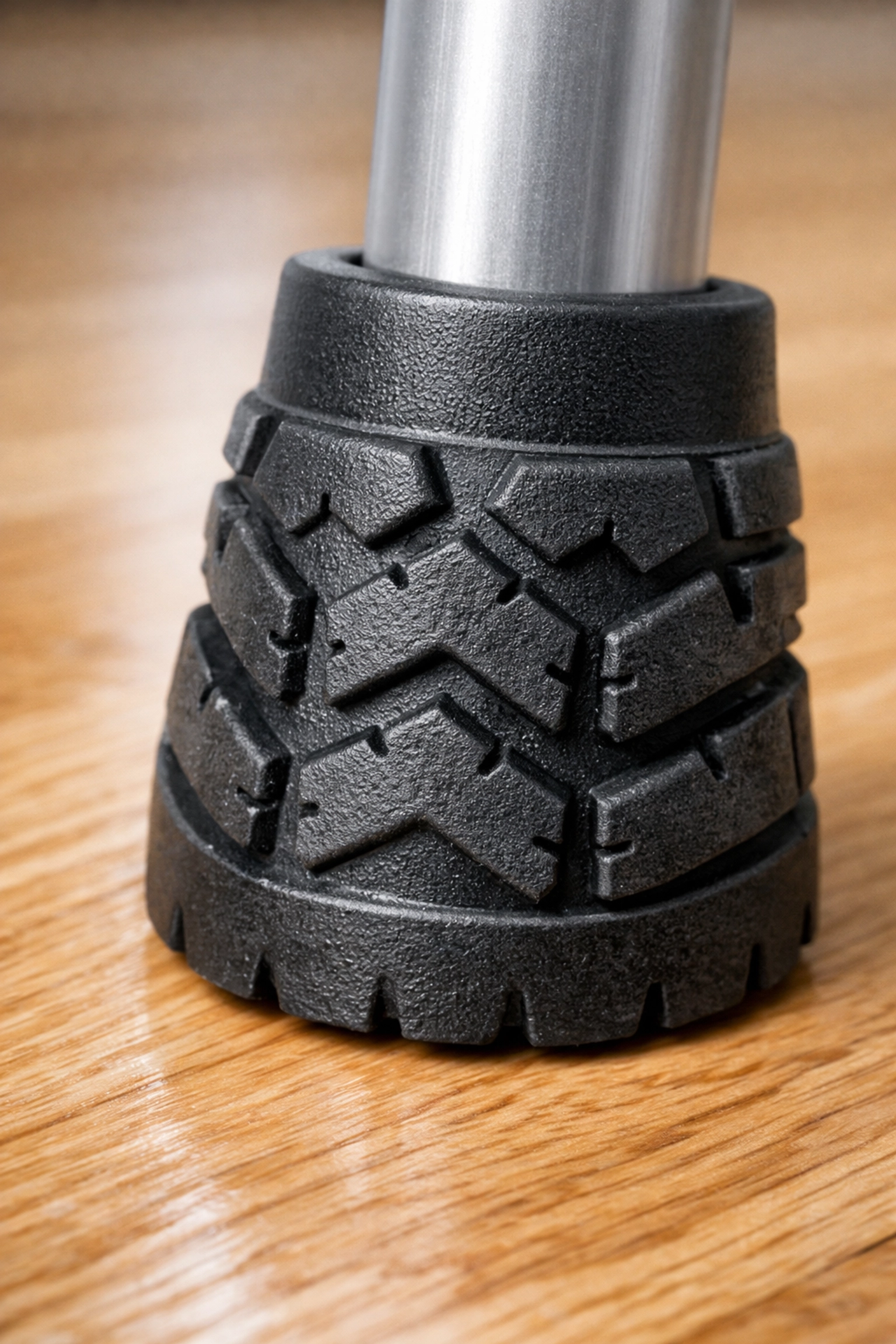
A walker is a mechanical tool, and like any tool, it wears out. I often see walkers with rubber tips that have been worn down to the metal or plastic. This is incredibly dangerous because it removes the "grip" that keeps the walker from sliding on smooth surfaces like tile or hardwood.
Another common issue is the "tennis ball" problem. While many people put tennis balls on the back legs of a walker to help it glide, those balls can actually pick up water or debris, making them slippery on certain surfaces or causing them to "stick" unexpectedly.
How to Fix It
Check your walker’s rubber tips once a month. If the tread is gone or you can see the metal through the bottom, replace them immediately. If you prefer glides (plastic caps) for the back legs, ensure they aren't cracked or heavily scarred.
Also, if you use a rollator, check that the brakes are still tight. If you squeeze the handle and the wheels still turn, it's time for an adjustment.
Carrying Too Much Weight
It’s tempting to hang grocery bags, purses, or heavy items over the front bar of the walker. However, adding weight to the front or sides of the walker significantly changes its balance. A front-heavy walker is much harder to lift over a threshold, and a side-heavy walker is prone to tipping during a turn.
How to Fix It
If you need to carry items, use a walker basket or a pouch specifically designed for your model. These accessories are designed to keep the weight centered and low. Avoid hanging anything from the handles or the top crossbar, as this can interfere with your grip and the walker’s stability.
Footwear and Environment
Even if you use your walker perfectly, the environment around you matters. Many falls occur because someone is using a walker while wearing loose slippers or socks on a slick floor. The walker provides stability, but your feet still need traction.
Additionally, throw rugs are the natural enemy of the walker. The front legs or wheels can easily catch on the edge of a rug, causing the walker to stop abruptly while your body continues to move forward.
How to Fix It
Always wear supportive, non-slip shoes when using your walker: even inside the house. Clear your "travel lanes" of any loose rugs, power cords, or clutter. Ensuring you have a clear path allows you to focus on your walking technique rather than navigating an obstacle course.

The Importance of Consistency
Finally, one of the biggest mistakes is "selective use." Many people only use their walker when they feel tired or when they are going for a long walk. They might "furniture surf" (grabbing onto tables and walls) when moving short distances at home.
The problem is that balance issues don't give a warning. You might feel fine one moment and dizzy the next. Consistent use of your mobility aid ensures that support is always there when you need it, not just when you expect to need it.
When to Consult a Professional
While these tips cover the basics of safe walker use, everyone’s needs are different. If you find that you are still struggling with balance, or if you aren't sure which type of walker is right for you (two wheels vs. four wheels vs. no wheels), it is always a good idea to speak with a Physical Therapist (PT).
A PT can perform a mobility assessment to ensure your device is fitted perfectly to your body and your specific gait. They can also teach you advanced techniques for navigating stairs, curbs, and uneven outdoor terrain safely.
Using a walker is a sign of wisdom: it means you value your independence and your safety. By avoiding these common mistakes, you can ensure that your walker remains a helpful partner in your daily life, keeping you upright, active, and confident for years to come.

