
When someone first brings a walker or a rollator into their home, it is usually a moment of mixed emotions. There is a sense of relief that help has arrived, but there is also a bit of a learning curve. Most people assume that using a walker is as simple as pushing it forward and walking, much like a grocery cart. However, as we see often here at Fall Guys Products, a walker is a specialized medical tool. When used correctly, it is a gateway to independence; when used incorrectly, it can actually increase the risk of a fall.
If you or a loved one has recently started using a mobility aid, it is important to realize that there is a "right way" to walk. It isn’t just about having the device; it’s about how your body interacts with it. I’m Brian Kerr, and I’ve spent a lot of time looking at how people move in their homes. My goal today is to walk you through the most common mistakes people make with their walkers and show you how to correct them so you can move with confidence.
The Foundation: Is Your Walker at the Right Height?
The most frequent mistake we encounter isn’t actually a movement: it’s the setup. Many people use walkers that are adjusted either too high or too low.
If the walker is too low, you will find yourself hunching over. This puts an incredible amount of strain on your lower back, neck, and shoulders. More importantly, it shifts your center of gravity forward, making you more likely to tip over. On the flip side, if the walker is too high, your elbows will be bent at a sharp angle, and your shoulders will be hiked up toward your ears. This prevents you from using your arm strength effectively to support your weight.
How to Find the Perfect Fit
To check the height, stand as straight as you comfortably can with your arms hanging naturally at your sides. Look at where your wrists fall. The handgrips of the walker should align perfectly with the crease of your wrist.
When you place your hands on the grips, your elbows should have a slight, comfortable bend: usually about 15 to 20 degrees. This "middle ground" allows you to push down for support without straining your joints. If you aren't sure, have a friend or family member help you measure, or better yet, ask a physical therapist to check the fit.

The "Shopping Cart" Mistake: Walking Behind the Frame
This is perhaps the most dangerous habit people develop. Because we are used to pushing grocery carts, our natural instinct is to push the walker far out in front of us and then "chase" after it.
When the walker is two feet ahead of you, it cannot support you. If you trip or lose your balance while the walker is that far away, the device will likely roll or slide further away, leaving you with nothing to grab onto.
The Correct Technique: Walk Inside the Frame
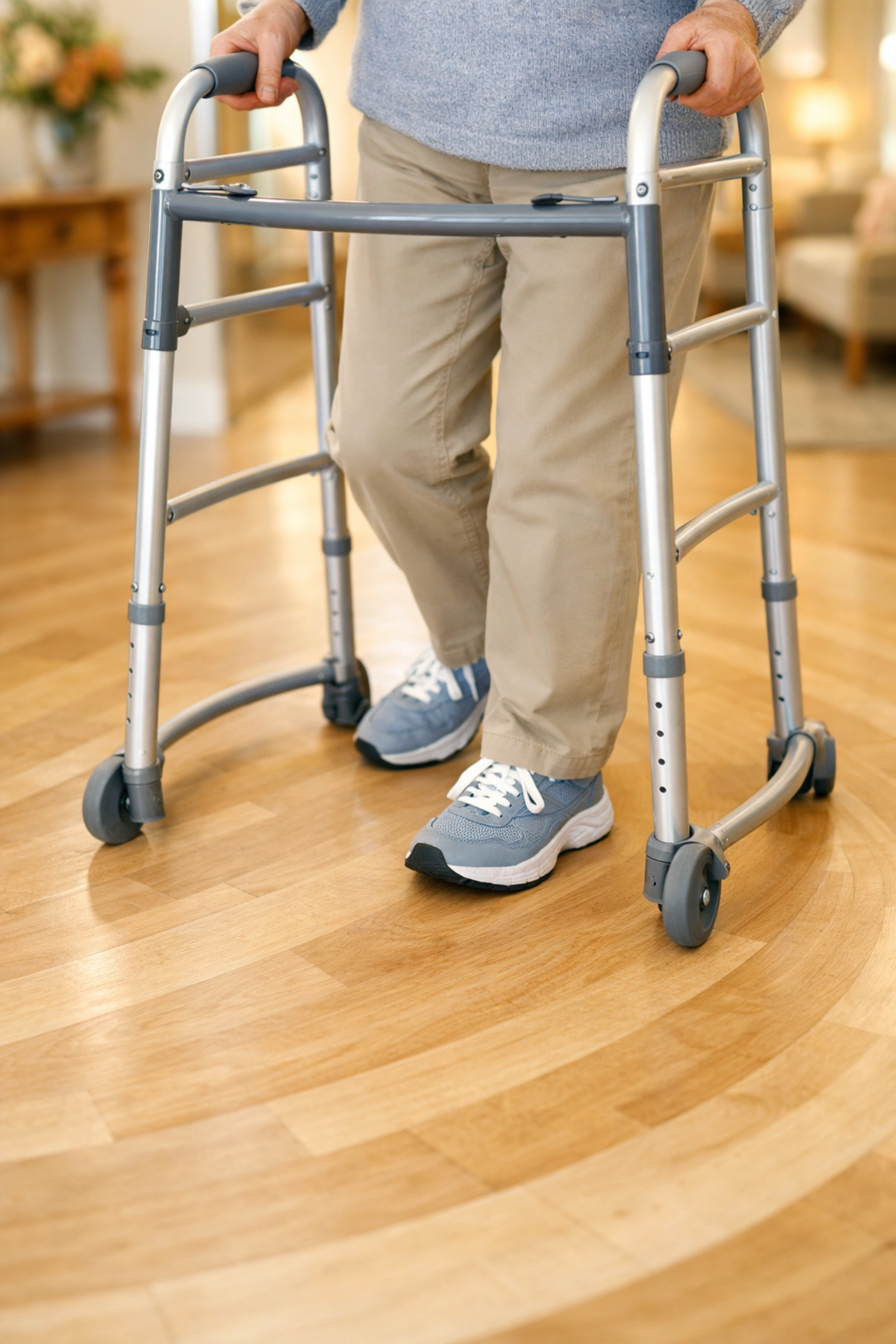
You should always be "inside" the walker. Think of the walker as a protective bubble. Your feet should stay between the two back legs of the walker.
- Move the walker forward just a small distance (about one step's length).
- Step into the walker with your weaker leg first.
- Follow with your stronger leg.
- Keep your torso upright.
By staying within the frame, the handles are always right there to catch your weight if you stumble.
The Transition Trap: Pushing vs. Pulling
Many falls happen during transitions: specifically when moving from a sitting to a standing position. The mistake most people make is grabbing the walker handles while they are still seated and trying to pull themselves up.
Walkers are lightweight by design. If you pull on them horizontally, they will tip toward you. They are not anchored to the floor.
How to Stand Up Safely
Always remember: Push up, don't pull up.
- Slide to the edge of your chair or bed.
- Place your feet firmly on the floor.
- Place your hands on the armrests of the chair or the surface of the bed.
- Push yourself upward using your legs and arms.
- Once you are steady on your feet, reach forward and place your hands on the walker grips one at a time.
When sitting back down, the process is reversed. Back up until you feel the chair against the back of your legs. Reach back for the armrests of the chair before you sit, rather than holding onto the walker as you go down.

Choosing the Wrong Device
Not all mobility aids are created equal. Sometimes, a fall happens because the person is using a device that doesn't match their specific physical needs.
For example, a standard cane provides about 25% weight-bearing support on one side. If you have significant balance issues or weakness in both legs, a cane isn't enough. Conversely, someone might use a rollator (the kind with four wheels and a seat) when they actually need a standard "front-wheeled" walker.
Rollators are great for endurance and outdoor use, but because they have four wheels, they can be "fast." If you lean too much weight on a rollator, it can roll away from you. A standard walker with wheels only on the front requires a bit more effort to move but provides much more stability for those with severe balance deficits. Consulting with a professional to ensure you have the right "tool" is a vital step in fall prevention.
The Pivot Problem: Turning Too Quickly
In our daily lives, we often pivot on one foot to turn around. When using a walker, this is a recipe for a trip. Pivoting can cause your feet to get tangled in the legs of the walker, or it can cause the walker to tip if you shift your weight too abruptly.
The Correct Way to Turn
Think of a large ship or a truck: you need to make a wide, gradual turn. Instead of twisting your body, take small, "marching" steps in a circle. Keep the walker in front of you at all times. If you need to turn around to sit down, take several small steps until your back is toward the chair. Never try to turn the walker and your body at the same time in one swift motion.
Rollator Safety: The Importance of Brakes
If you use a rollator (the four-wheeled version with a seat), the brakes are your best friend. A common mistake is forgetting to engage the "parking brake" when the device is stationary.
If you are using the seat of your rollator to take a rest, you must lock the brakes first. If you don't, the rollator could slide backward as you sit, leading to a fall. Similarly, if you are standing still to talk to someone, locking the brakes provides a stable "rail" to lean on. Always double-check that the "click" of the brake is engaged before you shift your weight.
Environmental Awareness and Footwear
Even with perfect walker technique, your environment and what you wear on your feet play a huge role.
Footwear Matters
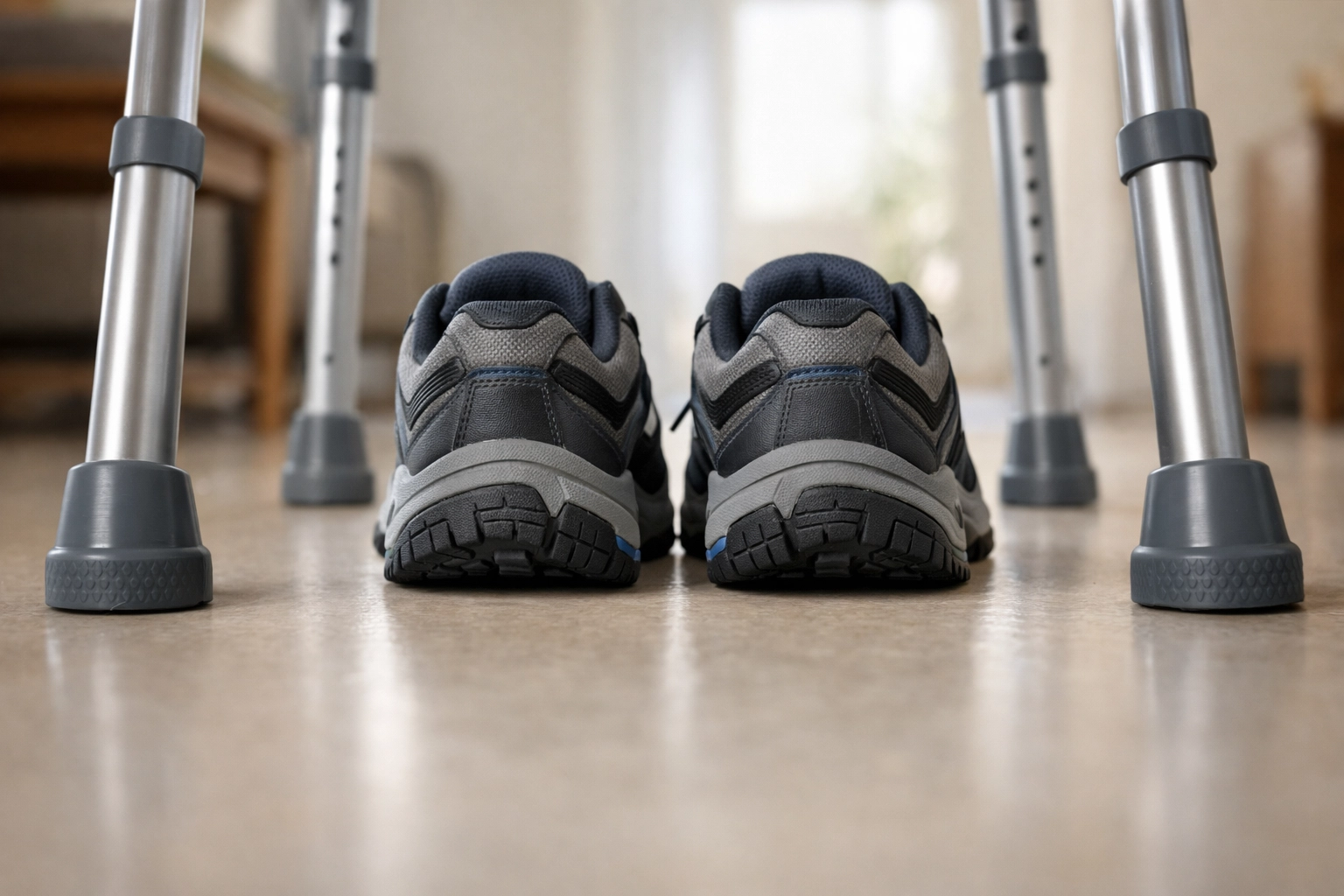
Slippers are a major culprit in walker-related falls. They often lack a back, meaning they can slip off, or they have slick soles that don't grip the floor. When using a mobility aid, you should ideally wear sturdy, closed-toe shoes with non-slip soles. This ensures that when you take those "marching steps" inside your walker, your feet are landing securely.
Clearing the Path
A walker makes you wider than you used to be. Many people try to "squeeze" through tight spaces or navigate around throw rugs while using their walker.
- Remove throw rugs: These are the number one trip hazard for walker users. The legs or wheels of the walker can easily catch the edge of a rug.
- Check for "furniture hopping": Some people use their walker in the hallway but then let go of it to grab onto furniture in the living room. This is called "furniture hopping," and it’s very risky. Once you start using a walker, use it for the entire trip, even if it's just a few steps to the kitchen.
Maintenance: Is Your Walker Healthy?
We often forget that walkers wear out. The rubber tips on the back legs of a front-wheeled walker act like brakes. Over time, these tips wear down, becoming smooth and slick. When that happens, they no longer provide the "grip" needed to keep the walker from sliding away from you.
Check your walker once a month:
- Are the rubber tips worn through to the metal?
- Are the wheels wobbling or squeaking?
- Are the handgrips loose or sticky?
- If it’s a rollator, do the brakes still "bite" the wheels firmly?
Replacing a set of rubber tips is a simple, inexpensive way to ensure your aid remains a safety tool rather than a hazard.
Working with a Professional
One of the best things you can do if you are new to a mobility aid is to have a few sessions with a physical therapist (PT). They are experts in gait training. A PT can watch you walk and identify the subtle mistakes you might not even realize you’re making: like leaning too heavily on one side or taking steps that are too long.
They can also help you navigate specific challenges in your home, such as how to get over a door threshold or how to move from the walker to a bathroom grab bar safely.
Final Thoughts
Using a walker is an adjustment, and it’s okay to feel a bit frustrated at first. But remember, the goal of a mobility aid is to keep you moving safely so you can continue to enjoy your life, your home, and your family.
By avoiding these common mistakes: adjusting for height, walking inside the frame, pushing up from chairs, and maintaining your equipment: you are taking a proactive step in your own safety. It isn’t just about the walker; it’s about how you move through the world. Stay upright, stay inside the frame, and keep moving forward with confidence.

