
Stairs are often the most intimidating part of a home as we age. For many, they represent a crossroads between staying in a beloved multi-level house or moving to a single-story residence. Physical therapists (PTs) work on the front lines of mobility, and they often see a recurring pattern of "minor" mistakes that lead to significant falls on stairs.
The good news is that most stair-related accidents aren't caused by a lack of strength alone; they are frequently the result of habits and environmental factors that can be corrected. By understanding what a professional physical therapist looks for, you can transform your staircase from a source of anxiety into a safe, manageable part of your daily routine.
Why Stairs Pose a Unique Challenge
To a physical therapist, climbing stairs isn't just one movement: it’s a complex series of "single-leg stances." Every time you take a step, you are momentarily balancing all your weight on one leg while the other moves to the next level. This requires coordination, vision, strength, and proprioception (your body's ability to sense its position in space).
Because the stakes are higher on an incline, even a small error in judgment or a minor trip hazard is magnified. Let’s look at the specific mistakes PTs see most often and, more importantly, how to fix them.
Mistake #1: The "Hovering" Handrail Technique
One of the most common habits PTs observe is the "hovering" handrail. This is when someone walks near the rail but doesn't actually touch it, or perhaps they only touch it lightly with their fingertips "just in case."
The mistake here is waiting until you lose your balance to grab the rail. By the time you feel a stumble, your momentum is already moving downward. Trying to catch yourself at that speed requires immense upper-body strength and can often lead to shoulder or wrist injuries, even if you manage to stop the fall.
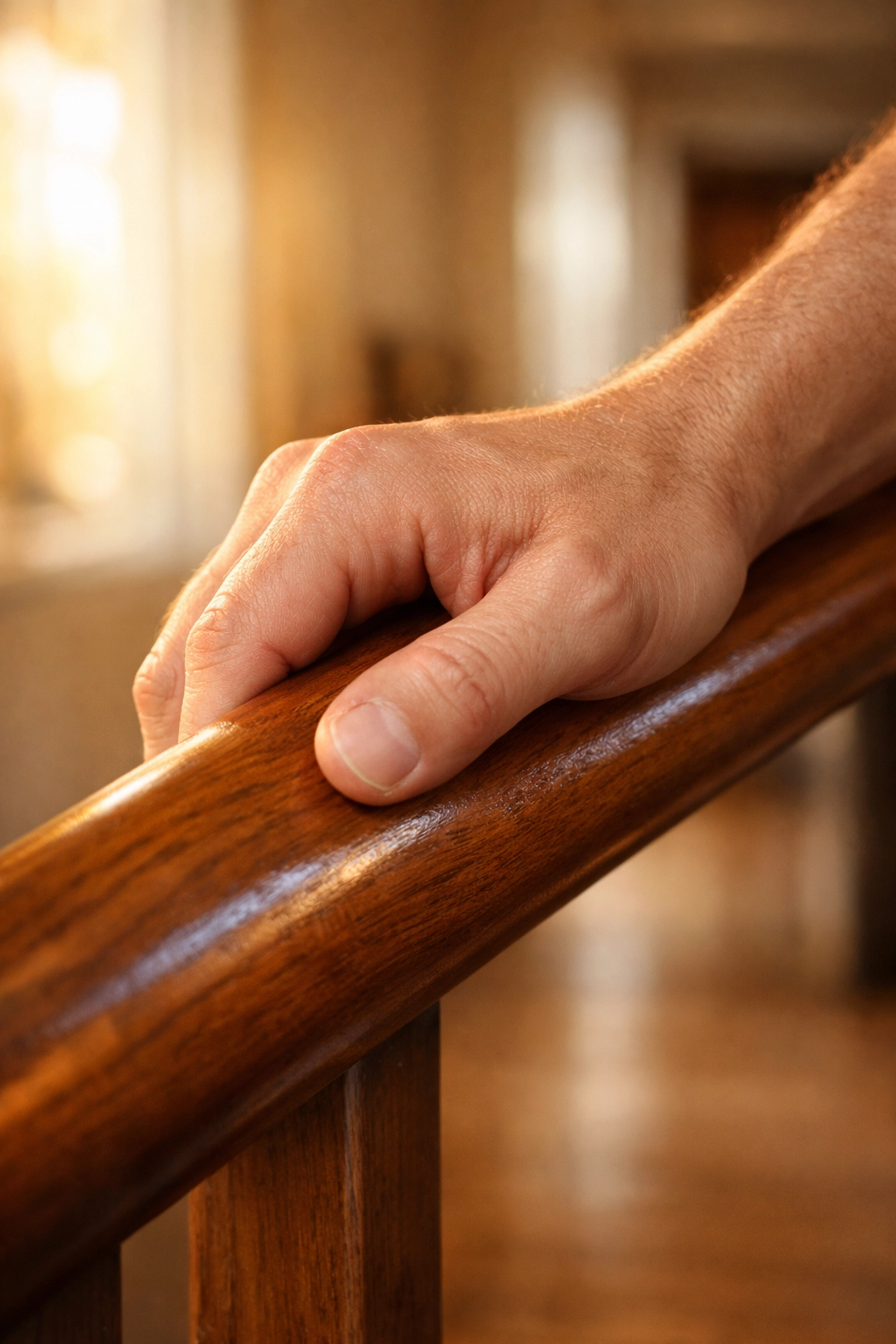
The PT Solution: Physical therapists recommend a "continuous contact" approach. Your hand should be firmly on the rail before your first foot moves. As you climb or descend, slide your hand along the rail so that if a slip occurs, you are already anchored. If your stairs only have a rail on one side, consider installing a second one. Having "dual-rail" support allows you to distribute your weight evenly and provides a much higher level of stability.
Mistake #2: Choosing Comfort Over Stability (Footwear)
We all love the comfort of a pair of loose-fitting slippers or the ease of walking in socks. However, from a safety perspective, these are among the most dangerous choices you can make on stairs.
Socks provide almost zero traction on wooden or tile stairs, turning the steps into a slide. Slippers, especially the "scuff" or "mule" variety with no back, allow the foot to slide around inside the shoe. If the heel of the slipper catches on the edge of a step (the "nosing"), it can easily cause a forward trip.
The PT Solution: The safest way to navigate stairs is in a sturdy, well-fitting shoe with a rubber, non-slip sole. Look for "full-back" shoes that stay secured to your heel. If you prefer to be shoeless indoors, "grip socks" with rubberized bottoms are a better alternative than plain socks, though they still lack the lateral support of a shoe. PTs often suggest having a dedicated pair of "indoor-only" sneakers that stay by the stairs or your favorite chair.
Mistake #3: The Vision Trap (Bifocals and Trifocals)
This is a mistake that many people don't even realize they are making. If you wear bifocals or progressive lenses, the bottom portion of the lens is designed for reading or close-up work. When you look down at your feet to see the stairs, you are looking through that reading portion of the lens.
This creates a serious problem: it blurs the steps and distorts your depth perception. You might think the edge of the step is two inches further away than it actually is, leading to a "missed step" or a "toe-catch."
The PT Solution: If you struggle with balance on the stairs and wear multifocal lenses, talk to your eye doctor. Many physical therapists recommend having a pair of single-vision glasses specifically for walking around the house. When you can see the edges of the steps clearly, your brain can more accurately coordinate your foot placement.
Mistake #4: Using Stairs as a "Waiting Room" for Clutter
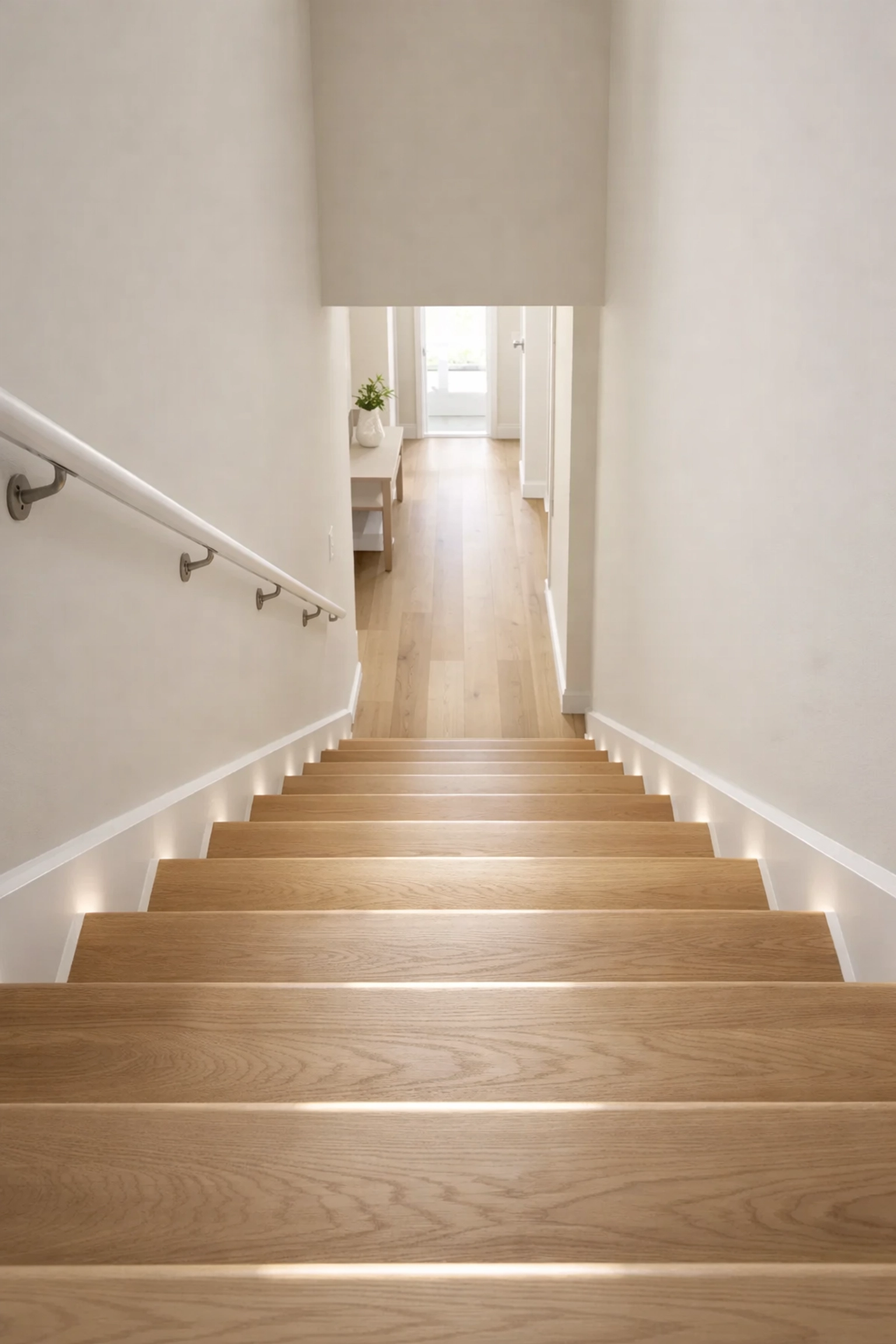
It is a common habit to place items on the bottom or top steps that need to go up or down "later." A stack of books, a basket of laundry, or even a pair of shoes sitting on the periphery of a step might seem harmless, but they significantly narrow your path.
In an environment where you need every inch of space for stable foot placement, clutter is a recipe for disaster. Furthermore, the human brain is easily distracted; if you are looking at the clutter to avoid it, you aren't looking at the step itself.
The PT Solution: Adopt a "clear stairs" policy. Nothing should ever sit on a step, even for a moment. If you have items that need to change floors, keep a small table at the top and bottom of the stairs to hold them. This ensures the walking surface remains 100% unobstructed.
Mistake #5: Rushing and Multi-tasking
We often rush when we hear the phone ringing or someone at the door. Physical therapists frequently hear patients say, "I was just trying to get to the kitchen before the timer went off."
Rushing changes your gait. It makes your steps shallower and moves your center of gravity too far forward. Similarly, trying to carry a heavy laundry basket or a tray of food while using the stairs is a major risk factor. If both hands are full, you have no way to use the handrail.
The PT Solution: Treat stairs as a "single-task" zone. When you are on the stairs, that is the only thing you are doing. If you must carry items, use the "one-hand rule": one hand must always be free to grip the rail. If you have a large load, consider breaking it into smaller trips or using a backpack to keep your hands free.
Mistake #6: Inadequate Lighting and Shadows
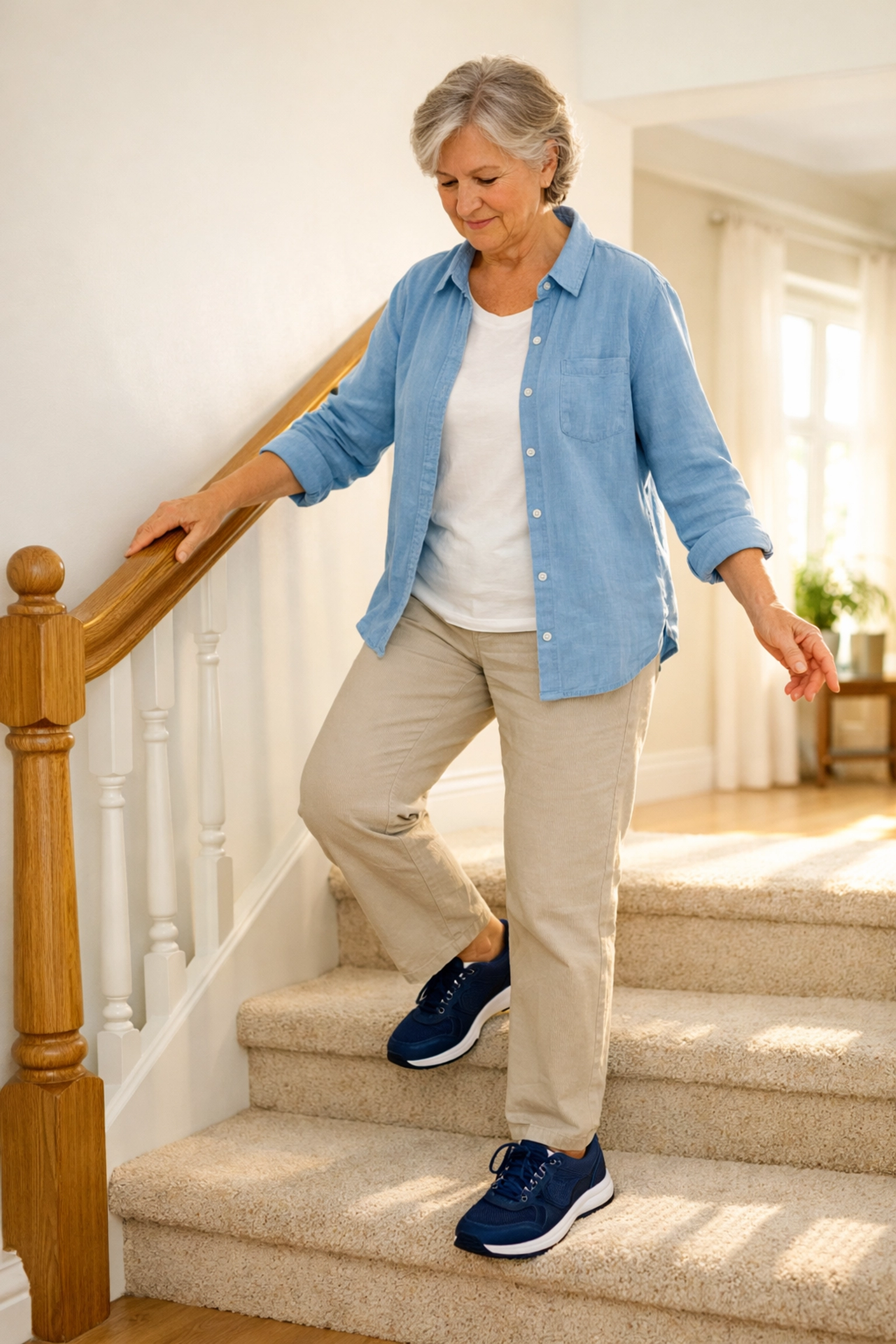
Standard hallway lighting often fails to properly illuminate the "nose" of each step. If the light source is behind you as you descend, your body casts a shadow over exactly where your foot needs to land. This lack of contrast makes it difficult for the eyes to distinguish where one step ends and the next begins.
The PT Solution: Ensure there are light switches at both the top and bottom of the stairs so you never have to navigate them in the dark. To improve visibility, PTs often recommend adding "contrast strips." This can be as simple as a strip of colored tape or a non-slip tread in a color that contrasts with the stair itself (for example, a white strip on dark wood). This provides a clear visual "target" for your feet.
Mistake #7: Neglecting Stair Maintenance
Over time, wooden steps can become slick, or carpet can become loose. A carpet that "bubbles" or a metal transition strip that has popped up even a fraction of an inch can catch a toe. Additionally, many older homes have handrails that have become "wobbly" over years of use. If the rail isn't secure in the wall, it won't support you during a fall.
The PT Solution: Periodically check the "integrity" of your stairs. Give the handrail a firm shake; if it moves, it needs to be re-anchored into a wall stud. If you have wooden stairs that feel slippery, consider adding transparent non-slip adhesive strips. If your carpet is worn or loose, it should be repaired or replaced with a more secure surface.
The Mechanics of a Safe Step: PT Techniques
Physical therapists don't just tell you what not to do; they teach you how to move more efficiently. If you find yourself feeling winded or unsteady, try these two common PT techniques:
1. The "Step-To" Pattern
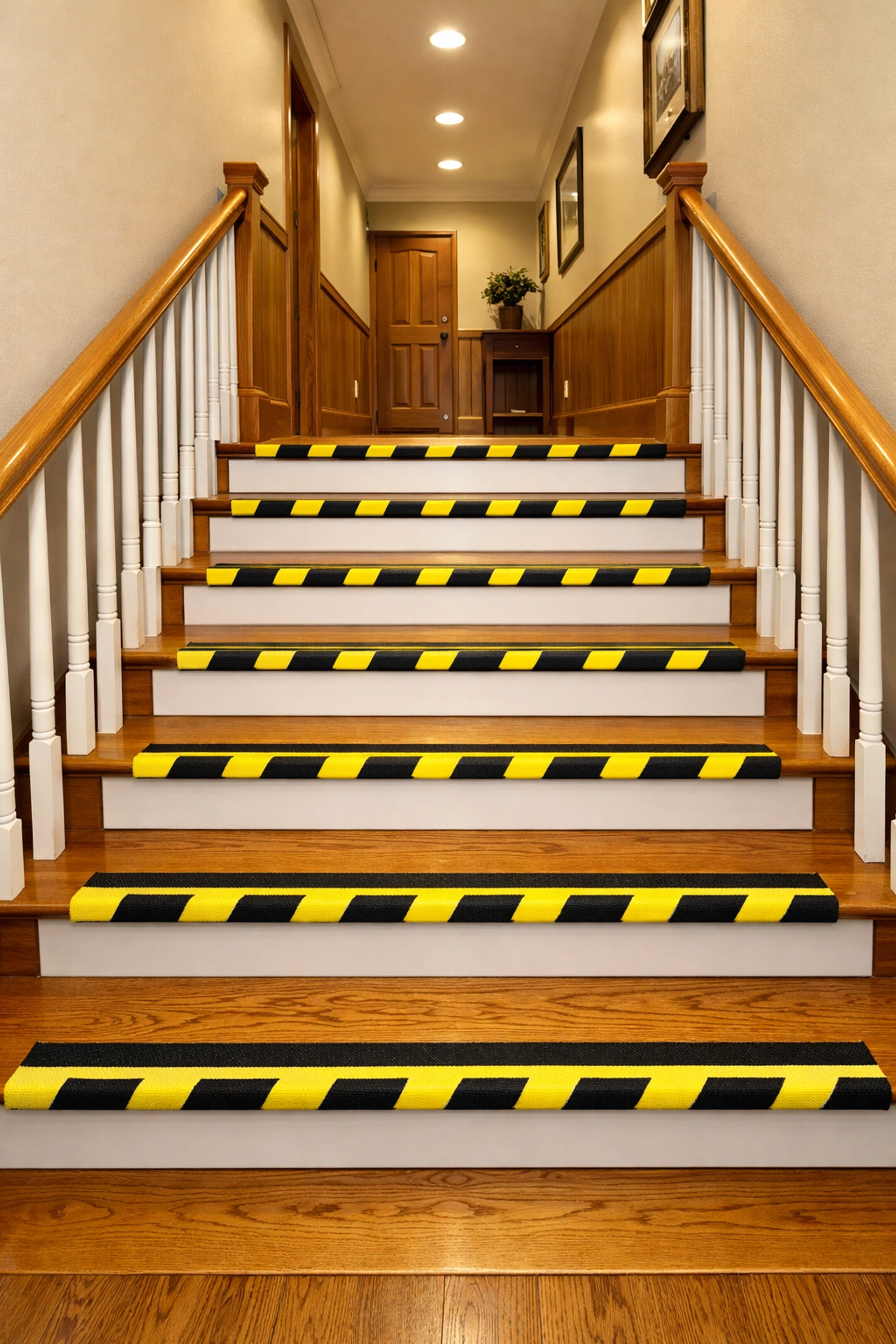
Instead of alternating feet (reciprocal stepping), use the "step-to" method. This involves placing your strongest foot on the step, then bringing your other foot up to meet it on the same step. This ensures that you always have a stable base of two feet together before you attempt the next height. It is slower, but significantly more stable.
2. "Up with the Good, Down with the Bad"
If you have one leg that is weaker or a knee that is painful, use this classic PT mnemonic.
- Going Up: Lead with your "good" (stronger) leg. The stronger leg does the work of lifting your body weight up.
- Going Down: Lead with your "bad" (weaker or more painful) leg. This allows the stronger leg to stay on the higher step and slowly lower your weight with control.
Creating a Stair Safety Routine
Safety is as much about habits as it is about the environment. Before you take your first step on the stairs, run through a mental "pre-flight" checklist:
- Stop: Take a breath and focus.
- Look: Is the path clear? Is the light on?
- Grip: Is my hand firmly on the rail?
- Pause: If I am carrying something, can I do it safely with one hand?
By slowing down and addressing these common mistakes, you aren't just preventing a fall; you are preserving your mobility and your ability to live independently in the home you love. If you still feel unsteady, consider a consultation with a physical therapist for a personalized assessment. They can provide specific exercises to strengthen the muscles used in stair climbing, such as your quadriceps, glutes, and calves, further increasing your confidence and safety.

