
Stairs are one of those things we use every single day without a second thought: until something goes wrong. For many of us, the staircase represents the biggest challenge to staying independent in our own homes. As the founder of Fall Guys Products, I’ve seen how even the smallest oversight on a set of stairs can turn into a major safety concern.
The good news is that most stair-related accidents aren't caused by a lack of ability, but by common mistakes in how the stairs are maintained, lit, or designed. By identifying these "hidden" hazards, you can create a much safer environment for yourself or your loved ones. Let’s walk through the most frequent mistakes and, more importantly, how to fix them.
The Danger of Dim Lighting
It sounds simple, but poor lighting is arguably the number one contributor to falls on stairs. When we can’t clearly see where one step ends and the next begins, our depth perception suffers. This is especially true for seniors, as aging eyes often require significantly more light to process visual information.
Many people rely on a single overhead light at the top or bottom of the landing. This often creates long, confusing shadows that can mask the edge of a step. If you find yourself squinting or "feeling" for the next step with your toe, your lighting isn't doing its job.
Smart Lighting Solutions
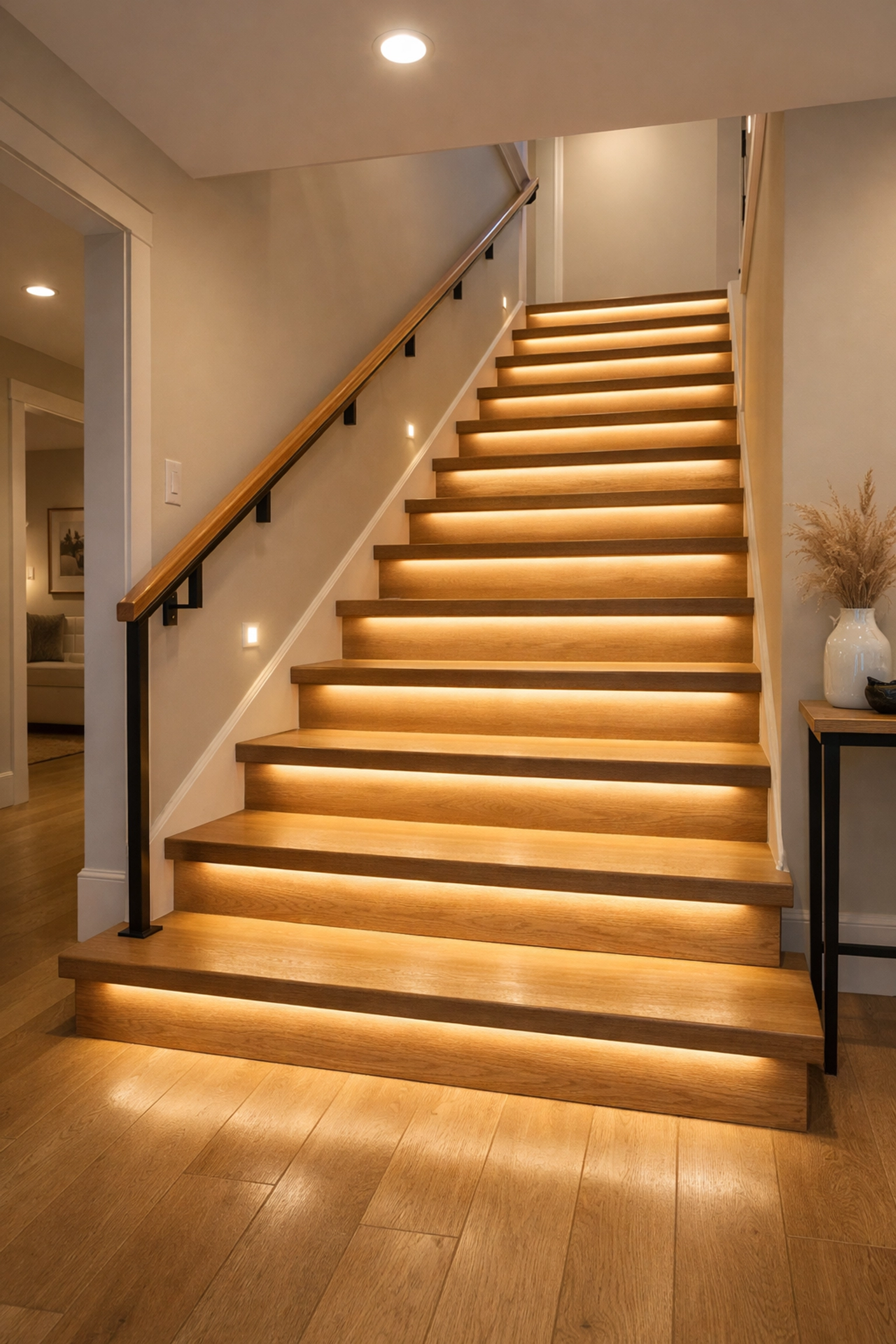
To fix this, consider installing motion-activated lights. These are great because they ensure the path is illuminated before you even set foot on the first step: no more fumbling for a switch in the dark. LED strip lighting installed along the underside of the handrail or along the baseboards can also provide a clear, continuous "runway" of light that defines each individual tread.
Slippery Surfaces: Beauty vs. Safety
We all love the look of polished hardwood or glossy stone stairs. They look elegant and high-end. However, from a safety perspective, a high-gloss finish is often a recipe for disaster. Polished wood, especially when paired with socks or smooth-soled slippers, offers almost zero traction.
If your stairs are made of a smooth material, even a tiny bit of moisture: perhaps from a spilled drink or a wet umbrella: can make them as slick as an ice rink.
Adding Traction Without Losing Style
You don't have to tear out your beautiful stairs to make them safer. Non-slip stair treads are a practical solution. These come in various materials, from transparent adhesive strips that barely change the look of the wood to textured rubber mats. If you prefer a softer feel, a carpet runner is a classic choice, provided it is installed correctly. A loose or poorly tacked-down carpet is actually a bigger hazard than a bare floor, so ensure it is stretched tight and secured with heavy-duty staples or rods.
The Geometry of a Safe Step
Sometimes the mistake isn't something you've done, but how the stairs were built in the first place. Older homes, in particular, often have stairs that don't meet modern safety standards. There is a "science" to stair dimensions that determines how comfortable and safe they are to climb.
Tread Depth and Riser Height
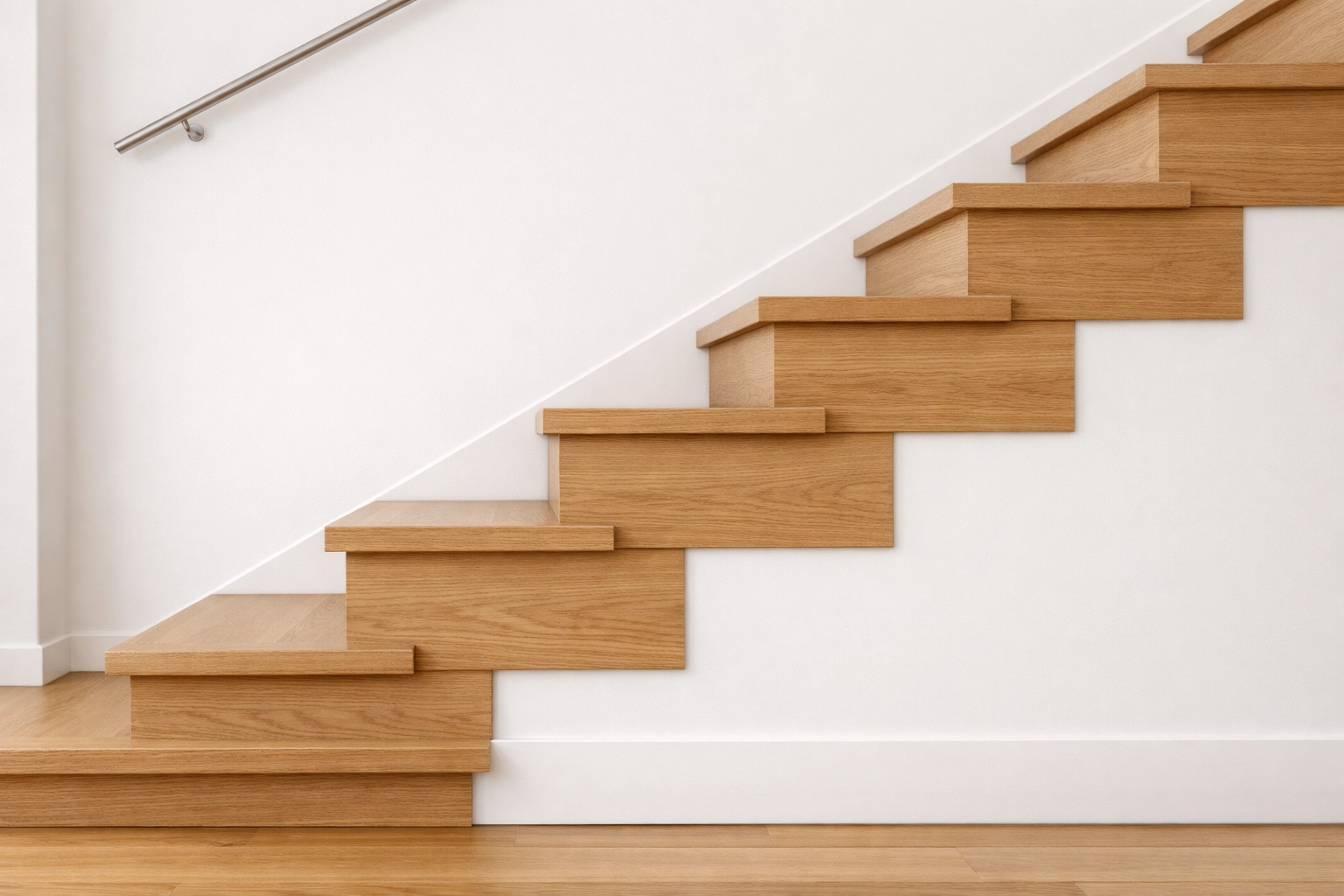
The "tread" is the horizontal part you step on, and the "riser" is the vertical part between steps.
- Treads that are too narrow: If the tread is less than 250mm (about 10 inches), your foot doesn't have enough surface area to land securely. This often leads to people "sidestepping" or catching their heel on the edge.
- Risers that are too high: If the riser is over 180mm (about 7 inches), it requires more physical exertion to climb, which can lead to fatigue and tripping.
Ideally, you want a slope between 30 and 50 degrees, with 37 degrees being the "sweet spot" for most people. If your stairs feel unusually steep or narrow, it might be worth consulting a professional to see if a second handrail or a visual cue (like a contrasting strip on the edge of the step) can help compensate for the structural design.
Weak or Missing Handrails
A handrail is not just a decorative accent; it is a critical safety tool. One of the most common mistakes I see is a handrail that stops exactly where the steps stop.
Think about the physics of walking down stairs: the moment of greatest instability is often that very last step when you are transitioning back to flat ground. If the handrail ends early, you lose your support right when you need it most.
Grip and Placement
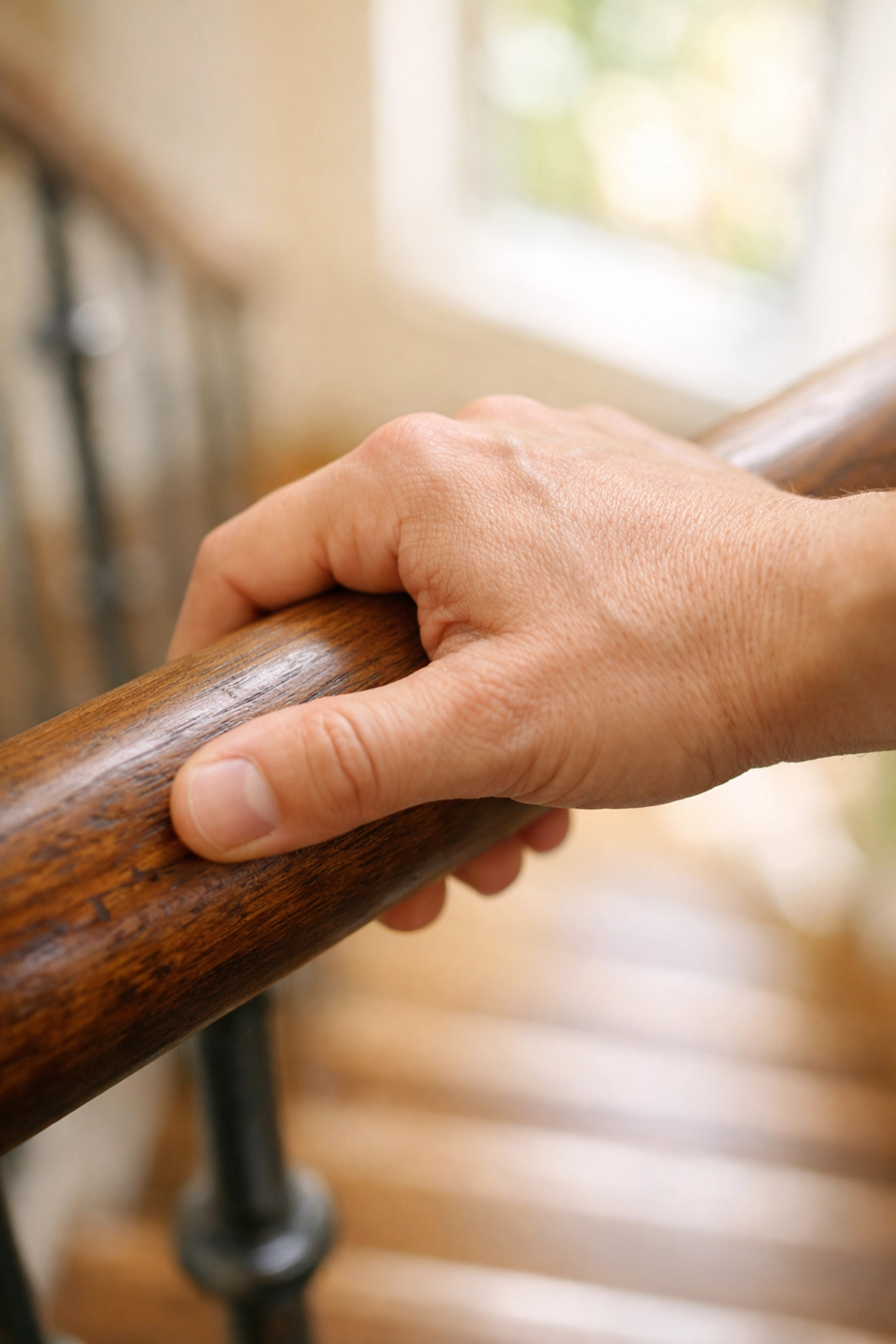
Another issue is the "graspability" of the rail. If a handrail is too wide to wrap your hand around, or if it’s decorative but lacks a solid grip, it won't help you catch yourself if you stumble.
- Security: A handrail must be able to support the full weight of an adult. If it wiggles when you pull on it, it needs to be reinforced immediately.
- Extensions: A safe handrail should extend at least 300mm (about 12 inches) beyond the top and bottom steps. This allows you to maintain a steady grip until your feet are firmly on level ground.
- Double Rails: If your staircase only has a rail on one side, consider adding a second one on the opposite wall. Having "bilateral" support allows you to use both arms for balance, which significantly reduces the load on your joints.
The "Catch-All" Step: A Tripping Hazard
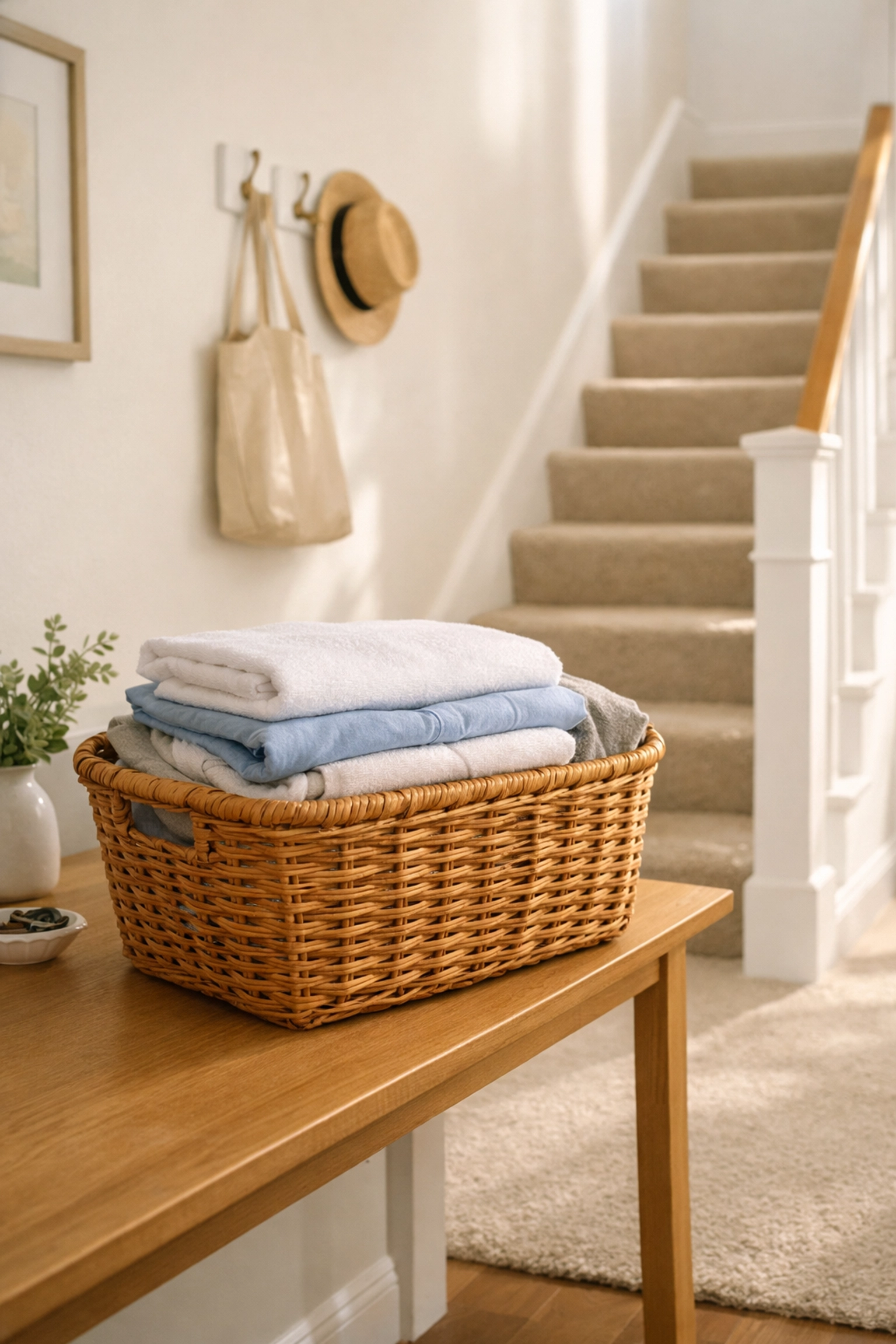
We’ve all done it. You have a pile of mail, a pair of shoes, or a basket of laundry that needs to go upstairs, so you set it on the bottom step to take up "next time."
This is one of the most dangerous habits you can have. Objects left on stairs are a primary cause of tripping. Even if you think you’ll remember the item is there, in a moment of distraction or in low light, that basket of laundry becomes a major obstacle.
Creating New Habits
Clear the clutter immediately. If you have a habit of staging items for the "next trip," place a small table or a decorative basket near the stairs, but never on them. Keeping the entire width of the staircase clear ensures that your path is predictable and your access to the handrail is never blocked.
Identifying Worn or Damaged Steps
Maintenance is often overlooked until a problem becomes obvious. Over time, wood can warp, nails can pop up, and outdoor steps can crack due to weather. Even a slight variation in the height of one step compared to the others can throw off your rhythm and cause a fall.
Regular Inspections
It’s a good idea to perform a "stair audit" every few months:
- Check for "Creaks": If a step squeaks or feels "springy," the tread may be coming loose from the stringer.
- Look for Wear: Check the edges of the steps. If they are rounded or splintered, they lose their ability to provide a "lip" for your foot to grip.
- Inspect the Balusters: These are the vertical poles holding up the handrail. If they are loose or spaced too far apart, they pose a risk, especially for visiting grandchildren or pets.
Behavioral Mistakes and Footwear
Sometimes the safety hazard isn't the house: it's us. How we navigate the stairs is just as important as how they are built.
The Footwear Factor
Walking up or down stairs in just socks is one of the most common ways people slip. Socks provide almost no friction on wood or tile. Similarly, loose-fitting slippers or "flip-flops" can easily catch on the edge of a tread.
The safest way to use stairs is either barefoot (which allows your toes to grip) or in supportive, thin-soled shoes with rubber grips.
Distraction and Speed
In our busy lives, we often rush. We might be looking at a phone, carrying a heavy load that blocks our view of our feet, or trying to talk to someone in another room.
- The Golden Rule: Always keep one hand on the rail.
- Visual Focus: Look at the steps, not your phone.
- Load Management: If you have to carry something, try to keep one hand free. It’s better to make two trips than to risk a fall by carrying a bulky item that obscures your vision and takes away your ability to use the handrail.
Insufficient Headroom
This is a less common mistake, but a significant one in older homes or basement conversions. If the ceiling clearance is below two meters (about 6.5 feet), people tend to subconsciously duck as they descend.
Ducking shifts your center of gravity forward, making you more likely to lose your balance. If your staircase has low headroom, it’s vital to use high-contrast tape on the low-hanging beam to alert users, or better yet, ensure the lighting in that specific area is exceptionally bright to prevent a sudden "startle" reaction.
Final Thoughts on Stair Safety
Improving stair safety doesn't always require a major renovation. Often, it's about the "small wins": changing a lightbulb, clearing off the clutter, or adding a second handrail.
By taking a proactive look at your stairs and identifying these common mistakes, you’re not just preventing a fall; you’re investing in your peace of mind. A staircase should be a functional part of your home, not a source of anxiety. Take it one step at a time, and don't hesitate to make those small adjustments that make a world of difference in your daily safety.
Remember, the goal is to make your home work for you, not the other way around. Stay safe, stay observant, and keep those pathways clear!

