
If you or a loved one has recently started using a walker, you know it represents much more than just a piece of medical equipment. It represents independence. It’s the tool that allows you to keep moving, stay active in your home, and maintain your quality of life.
I’m Brian Kerr, the founder of Fall Guys Products, and I’ve spent a lot of time talking with families about mobility. One thing I’ve noticed is that while a walker is designed to prevent falls, using one incorrectly can actually increase your risk of an accident. Most people receive their walker, give it a quick "test drive," and assume they’re good to go. However, there is a specific rhythm and technique required to stay safe.
In this guide, we’re going to walk through the most common mistakes people make with their walkers and, more importantly, how to fix them. My goal is to help you feel confident and secure every time you stand up to take a stroll.
1. Setting the Height Incorrectly
The most frequent mistake I see is a walker that is either too high or too low. This might seem like a minor comfort issue, but it has a massive impact on your stability and your body's mechanics.
If the walker is too low, you’ll find yourself hunching over. This puts immense strain on your lower back and neck. More dangerously, it shifts your center of gravity forward, making it much easier to lose your balance and tip over the front of the device.
If the walker is too high, your arms will be bent at an awkward angle. You won't be able to put the necessary weight through your arms to support your legs, and your shoulders will likely end up shrugged toward your ears, causing muscle fatigue.
The Fix:
To find the perfect height, stand up straight with your arms hanging naturally at your sides. The handgrips of the walker should be level with the crease of your wrist. When you place your hands on the grips, your elbows should have a slight bend, about 15 degrees. This "sweet spot" allows you to push down effectively while maintaining an upright posture.

2. Using the Walker to Pull Yourself Up
When you’re sitting in a chair and getting ready to stand, the walker is right there in front of you. It’s incredibly tempting to grab the handles and pull yourself up.
However, walkers are lightweight by design. If you pull on the handles horizontally, the walker can easily tip toward you or slide out from under you. This is a common cause of falls in the living room or bedroom.
The Fix:
Always remember: "Push from the chair, don't pull on the walker." Place your hands on the armrests of your chair or the surface of the bed. Lean your nose over your toes and push upward using your legs and your arms against the stable furniture. Once you are fully upright and have found your balance, then reach forward and place your hands on the walker grips.
3. Walking "Behind" Instead of "Inside"
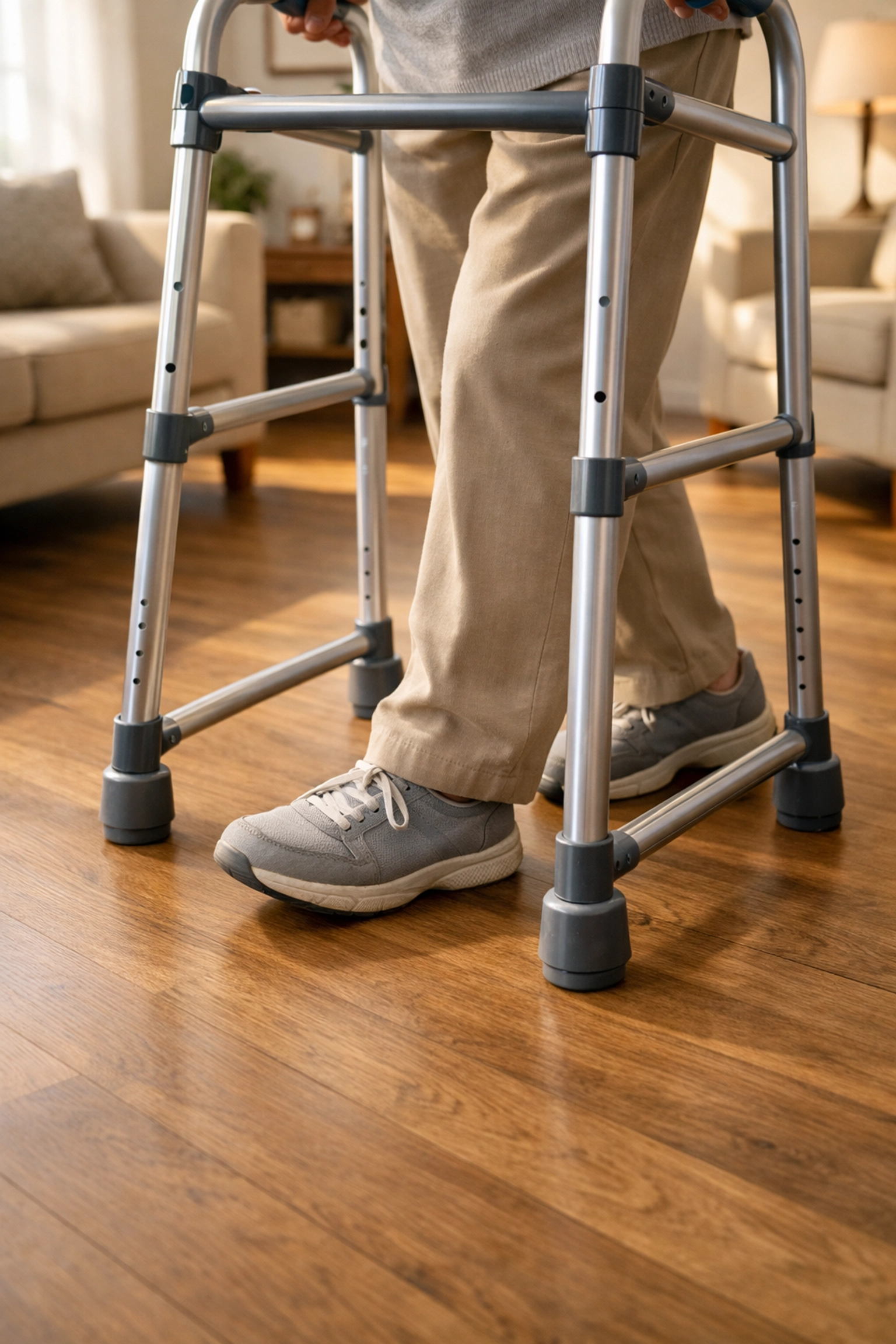
Many people treat a walker like a grocery cart, pushing it far out in front of them and walking behind it. When the walker is too far forward, you aren't actually getting the support you need. If you trip while the walker is two feet ahead of you, you won't be able to use it to catch yourself.
Conversely, some people step too far forward, "crowding" the walker. This can lead to your feet getting tangled in the frame or hitting the crossbar, which is a significant trip hazard.
The Fix:
You want to walk "inside" the frame of the walker. Your feet should generally stay between the back legs of the device. Think of the walker as an extension of your own body rather than a separate object you are pushing. By staying within that frame, you maintain a more vertical center of gravity, and the support stays directly under your weight.
4. The "Pivot" Turn
When it’s time to turn around, perhaps to sit back down or navigate a corner, many people tend to plant one foot and pivot their body in one large motion. This is one of the leading causes of falls with a walker. Pivoting can cause your feet to tangle, or it can cause the walker to tip if your weight isn't distributed evenly during the turn.
The Fix:
Think of a turn as a series of small, deliberate steps. Move the walker slightly, then move your feet to follow. Keep your body centered within the frame at all times. It takes a few extra seconds to turn in a "U" shape rather than a sharp pivot, but those seconds are well worth the added safety.
5. Looking Down at Your Feet
It’s a natural instinct, especially if you’re feeling a bit unsteady, to look down at your feet and the floor immediately in front of you. While it’s important to know where you’re stepping, staring at your feet ruins your posture and limits your situational awareness.
When you look down, you can’t see obstacles coming up, like a rug, a pet, or a change in floor surface. It also shifts your head weight forward, which can make you feel more off-balance.
The Fix:
Try to keep your chin up and your eyes looking about 10 to 15 feet ahead of you. This allows you to scan the environment for hazards while your peripheral vision handles the placement of the walker. Trust that your feet will follow where your eyes lead.
6. Forgetting the Brakes (Rollators)
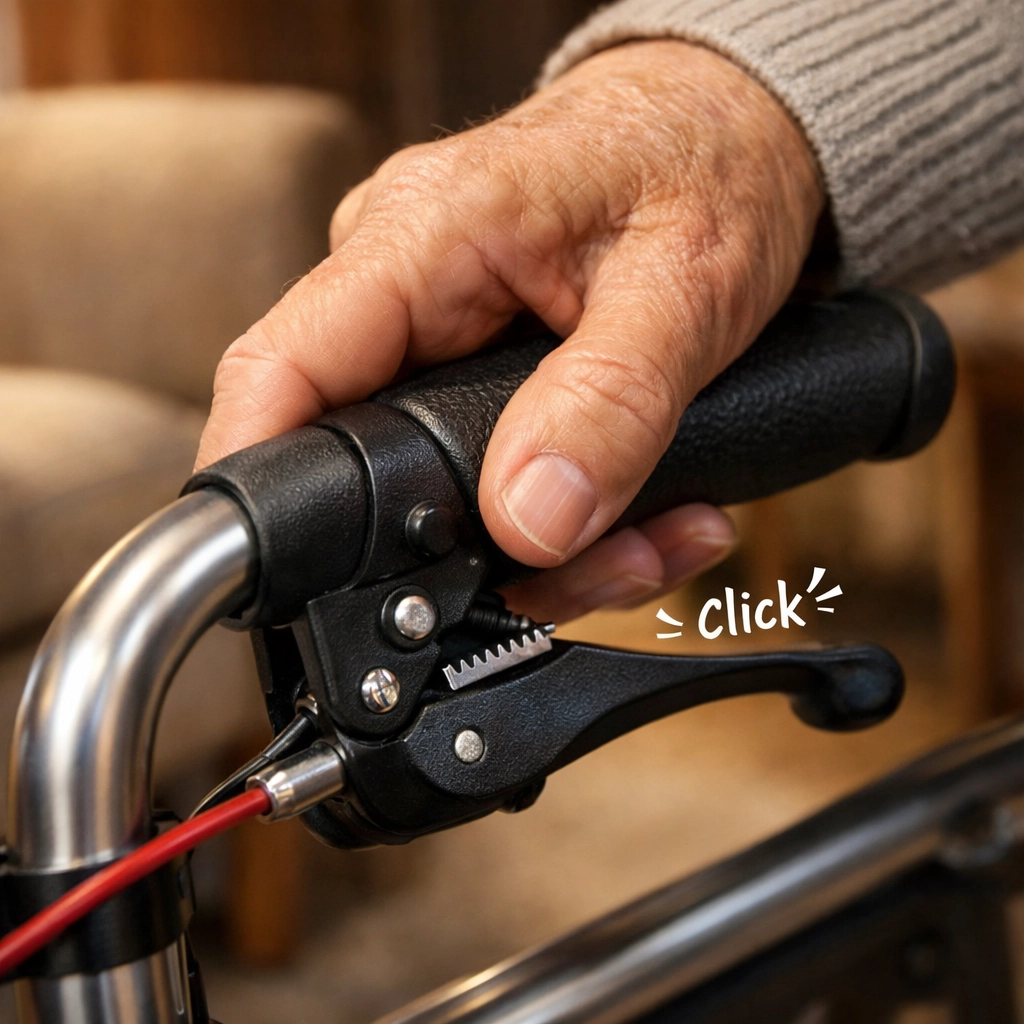
If you use a rollator, a walker with four wheels and a seat, the brakes are your best friend. However, they are often forgotten. The most dangerous moment is when someone goes to sit down on the built-in seat without engaging the brakes. The rollator can roll backward as you lower your weight, leading to a fall.
The same risk applies when standing up from the rollator or when you’ve stopped to have a conversation.
The Fix:
Make it a habit to "lock before you sit." Always click the brakes into the locked position before you attempt to sit on the rollator seat or before you stand up from a chair to grab the handles. If you are standing still for more than a few seconds, lock the brakes just to be safe.
7. Overloading the Walker
It’s tempting to hang heavy bags, purses, or groceries over the handles or the front crossbar of a walker. However, walkers are precision-balanced tools. Adding weight to the handles makes the walker "top-heavy" and prone to tipping backward. Adding weight to the front can make it harder to maneuver over small obstacles like door thresholds.
The Fix:
If you need to carry items, use a basket or a pouch designed specifically for your model of walker. These are usually positioned low and centered to maintain the device's stability. If you must carry something, keep it light and ensure it doesn't interfere with your hand placement or your ability to see your path.
8. Misjudging Transitions and Thresholds
The transition from a hard floor (like tile or wood) to a carpeted area is a common place for the front legs of a walker to "stick." Similarly, door thresholds, the small raised strips between rooms, can catch the rubber tips or wheels.
If you are pushing forward and the walker stops abruptly on a rug, your momentum can carry your body forward, potentially causing a fall.
The Fix:
Approach transitions with caution. If you use a standard walker (no wheels), lift it slightly and place it firmly onto the new surface before stepping. If you use a wheeled walker, slow down as you approach a rug or threshold. Ensure you are standing upright and have a firm grip before navigating the change in surface.
9. Neglecting Maintenance
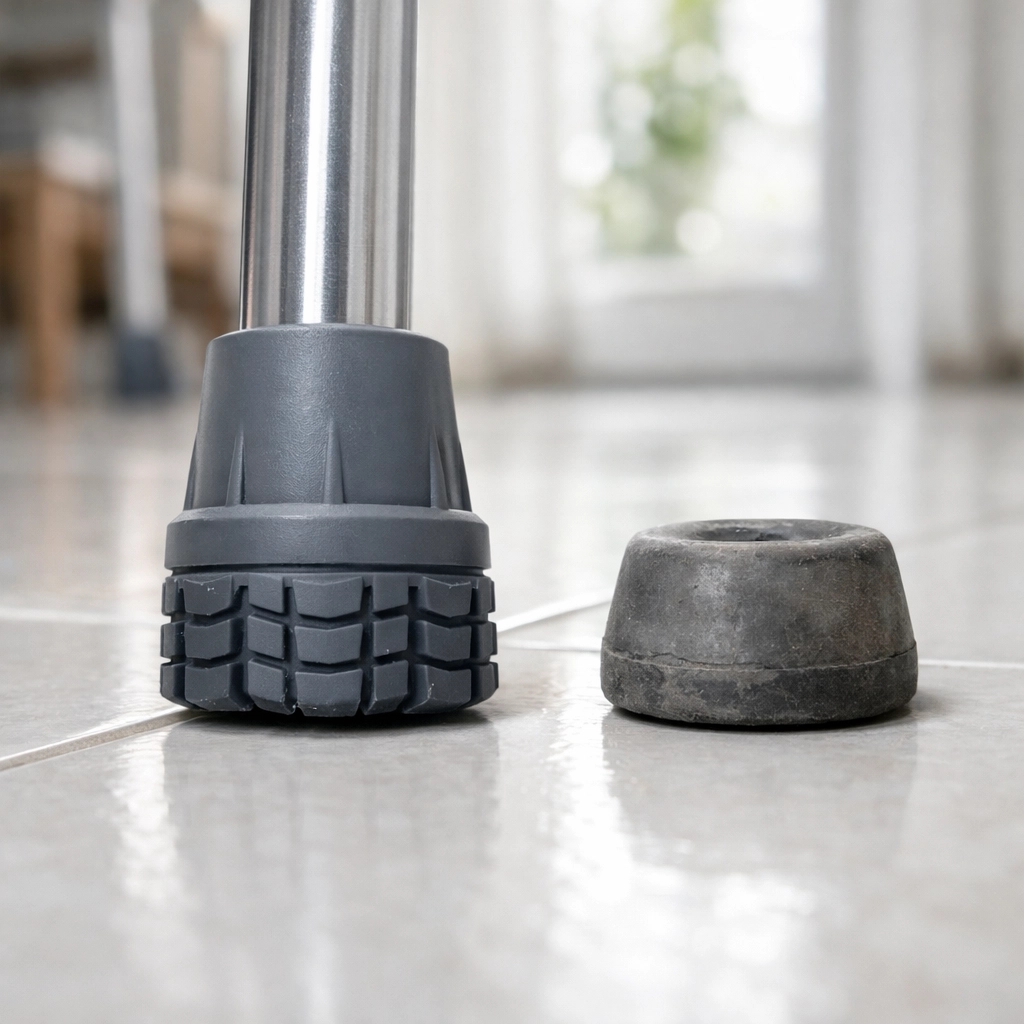
We often forget that walkers have "tires" too. The rubber tips on the bottom of a standard walker or the wheels on a rollator provide the necessary grip to keep you stable. Over time, these rubber tips wear down, becoming smooth and slippery. They can also crack or become uneven.
Loose handgrips are another maintenance issue. If the grip slides while you’re putting weight on it, it can cause a sudden loss of balance.
The Fix:
Once a month, do a quick "safety check" on your walker:
- Check the tips: Are they worn down to the plastic? Do they look lopsided? If so, replace them.
- Check the brakes: Do they still hold firmly, or do the wheels slide even when locked?
- Check the handles: Are they tight and secure?
- Check for wobbles: Ensure all the folding mechanisms and height-adjustment pins are clicked firmly into place.
10. Using a Walker on Stairs
This is perhaps the most important rule of all: Standard walkers and rollators are not designed for use on stairs. Attempting to navigate a flight of stairs with a walker is incredibly dangerous. The base of the walker is typically wider and deeper than a standard stair tread, meaning the walker will not be stable.
The Fix:
If your home has multiple levels, the safest practice is to have a walker on each floor. This prevents the need to carry the device up and down. If you must navigate stairs, you should use a sturdy handrail and have a caregiver assist you, leaving the walker behind and using another one at the top or bottom of the stairs. If you find yourself in a situation where you must navigate stairs and have no other choice, please consult with a Physical Therapist to learn the "one-side" technique using a handrail, though this is still considered a high-risk activity.
A Reassuring Step Forward
Learning to use a walker correctly takes a little bit of practice and a lot of mindfulness. It’s not just about having the equipment; it’s about mastering the technique. If you find yourself struggling, don't hesitate to ask for a "tune-up" from a physical therapist. They are experts at watching how people move and can give you personalized tips to make your walking much smoother.
At the end of the day, a walker is a tool for freedom. By avoiding these common mistakes, you’re ensuring that your tool is working for you, not against you. Stay upright, keep your eyes on the horizon, and take it one steady step at a time. You've got this!

