
When it comes to fall prevention, most people think about grab bars, lighting, and removing tripping hazards around the home. But there's one factor that literally follows you everywhere you go: your footwear.
The shoes you wear play a surprisingly significant role in your stability and balance. Research from long-term care facilities found that in falls where footwear was documented, 43% occurred while wearing slippers or sandals, 35% while wearing only socks, and just 7% while wearing proper shoes. Those numbers tell a clear story: what's on your feet matters.
Let's walk through seven common footwear mistakes that could be putting you at risk: and what to do instead.
Mistake #1: Treating Slippers as Everyday Shoes
Slippers feel cozy and comfortable, which is exactly why so many people wear them throughout the day. But comfort doesn't equal safety.
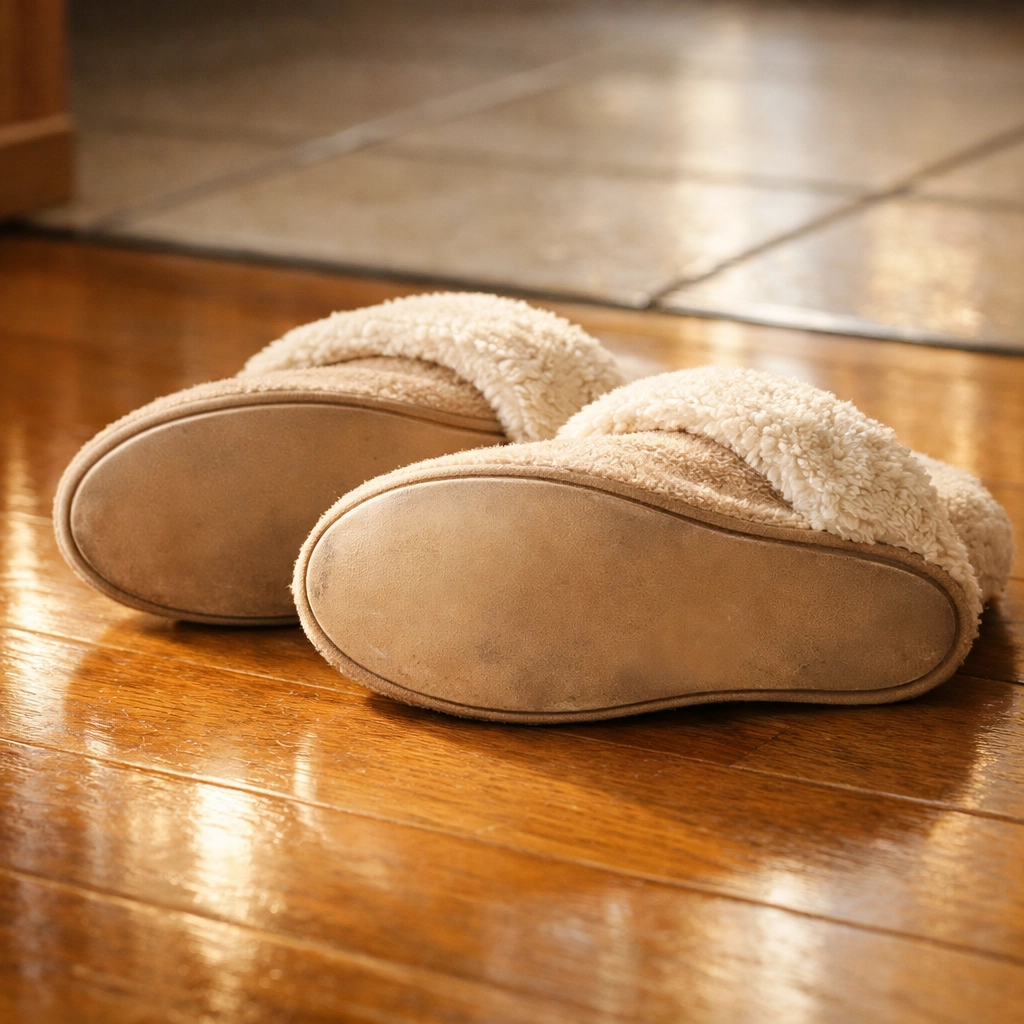
Most slippers are designed for shuffling around on carpet for short periods: not for navigating kitchens, bathrooms, or outdoor patios. They typically lack structured heel counters, proper arch support, and adequate tread. When you turn quickly or walk on a smooth surface like tile or hardwood, slippers can slide right out from under you.
The backless design of many slippers is particularly problematic. Without a secure fit around your heel, your foot can slip forward or sideways inside the slipper, throwing off your balance. Your toes also have to work overtime to keep the slipper on, which changes your natural gait and can lead to tripping.
Better approach: Reserve slippers for brief moments of comfort, like sitting on the couch. For moving around your home, switch to supportive shoes with backs and non-slip soles.
Mistake #2: Choosing Sandals or Flip-Flops for Convenience
Sandals and flip-flops are easy to slip on, breathe well, and feel light on your feet. Unfortunately, these benefits come at the cost of stability.
Flip-flops require you to grip with your toes to keep them on, which alters your walking pattern and reduces your ability to respond quickly if you start to lose balance. Sandals with minimal straps offer little lateral support, meaning your foot can roll to the side more easily on uneven surfaces.
Both types of footwear typically have flat, smooth soles that don't provide much traction. On wet surfaces: think bathroom floors, pool decks, or even just a kitchen floor after mopping: the slip risk increases dramatically.
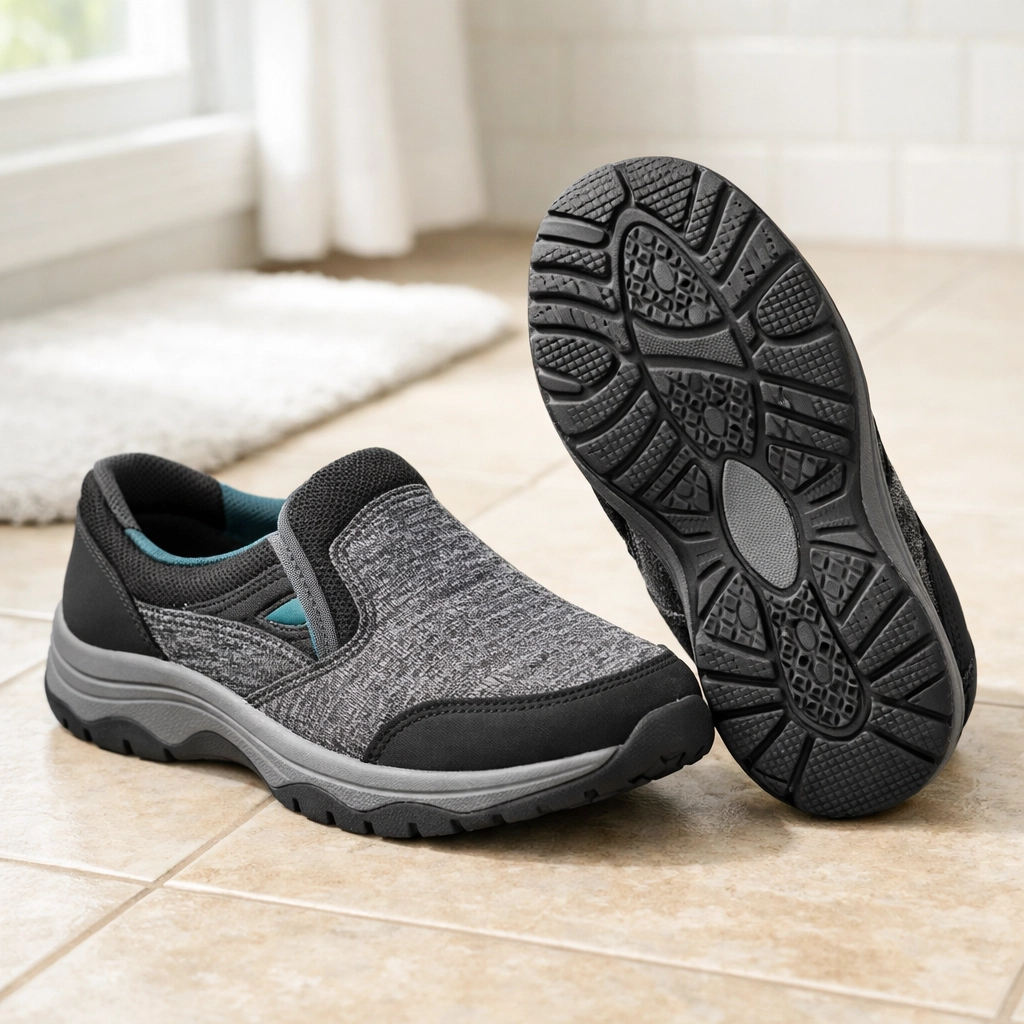
Better approach: If you need easy-on footwear, look for slip-on shoes with closed toes, heel backs, and textured soles. Adjustable straps on sandals can provide better security, but save them for seated outdoor activities rather than walking.
Mistake #3: Walking Around in Socks
Walking in socks might seem harmless when you're at home, but it's one of the riskiest choices you can make for fall prevention.
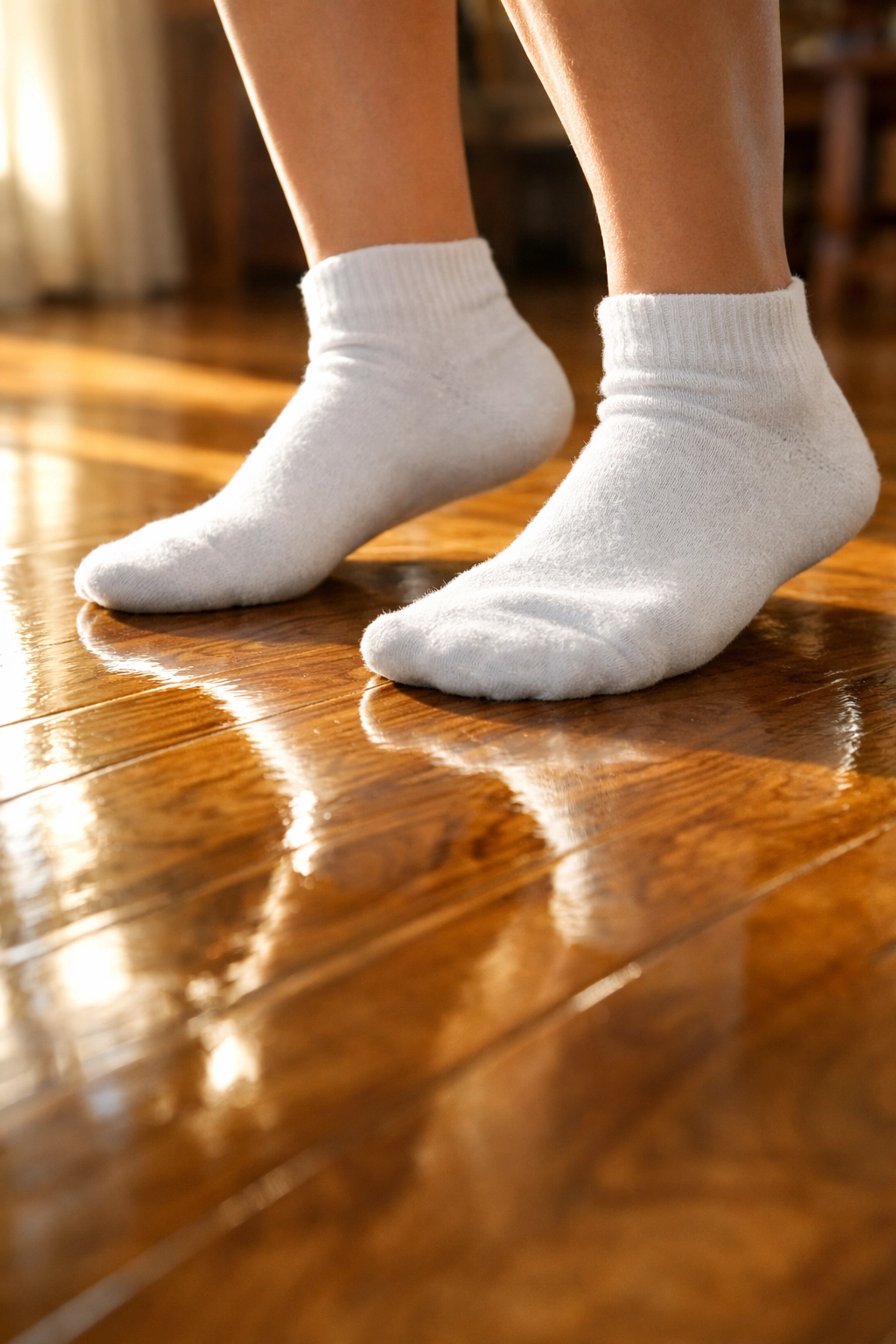
Socks provide virtually no traction on smooth flooring like hardwood, tile, laminate, or linoleum. Even carpeted stairs can be slippery in socks. The problem isn't just that you might slip: it's that you have no warning. One moment you're walking normally, and the next your feet shoot out from under you.
Some people wear socks because their feet get cold or because they want to protect their floors from shoes. Both concerns are valid, but they don't outweigh the fall risk.
Better approach: Wear shoes with non-slip soles indoors. If you prefer the feel of socks, look for indoor shoes that provide warmth along with traction. Some people find success with grippy slipper-socks that have rubber treads on the bottom, though these still don't match the security of proper shoes.
Mistake #4: Hanging Onto High Heels or Flimsy Fashion Shoes
High heels might be part of your professional wardrobe or special occasion attire, but they fundamentally compromise your stability. They shift your center of gravity forward, shorten your stride, and reduce the surface area of your foot that contacts the ground.
Even a modest heel height of two inches increases your fall risk, particularly on stairs or uneven surfaces. The higher and thinner the heel, the greater the instability.
Fashion flats aren't much better. Ballet flats, thin-soled loafers, and similar styles often lack arch support, cushioning, and structured construction. They may look polished, but they offer minimal protection and support for your feet and ankles.
Better approach: Choose shoes with low, wide heels: no more than one inch tall. Look for styles that balance professional appearance with functional support. Many shoe manufacturers now design dress shoes with hidden comfort features like cushioned insoles and stability-enhancing construction.
Mistake #5: Wearing Shoes That Don't Fit Properly
Here's something many people don't realize: your foot size changes as you age. Feet tend to become longer and wider over time, and the fatty padding on the bottom of your feet decreases. If you're still wearing the same shoe size you wore twenty years ago, there's a good chance your shoes don't fit correctly anymore.
Shoes that are too tight restrict circulation, cause pain, and can create pressure points that affect your gait. You might start walking differently to avoid discomfort, which throws off your balance and increases fall risk.
Shoes that are too loose are equally problematic. When your heel lifts out of the shoe with each step, you lose stability. Loose shoes also increase the chance that you'll catch your toe on the ground or trip over your own feet.
Better approach: Get your feet measured every time you buy new shoes. Measure both feet, since many people have one foot slightly larger than the other: buy for the larger foot. Shoes should fit snugly around the heel and midfoot while allowing your toes to move freely. You should be able to wiggle your toes without the shoe sliding around on your foot.
Mistake #6: Ignoring Worn-Out Soles
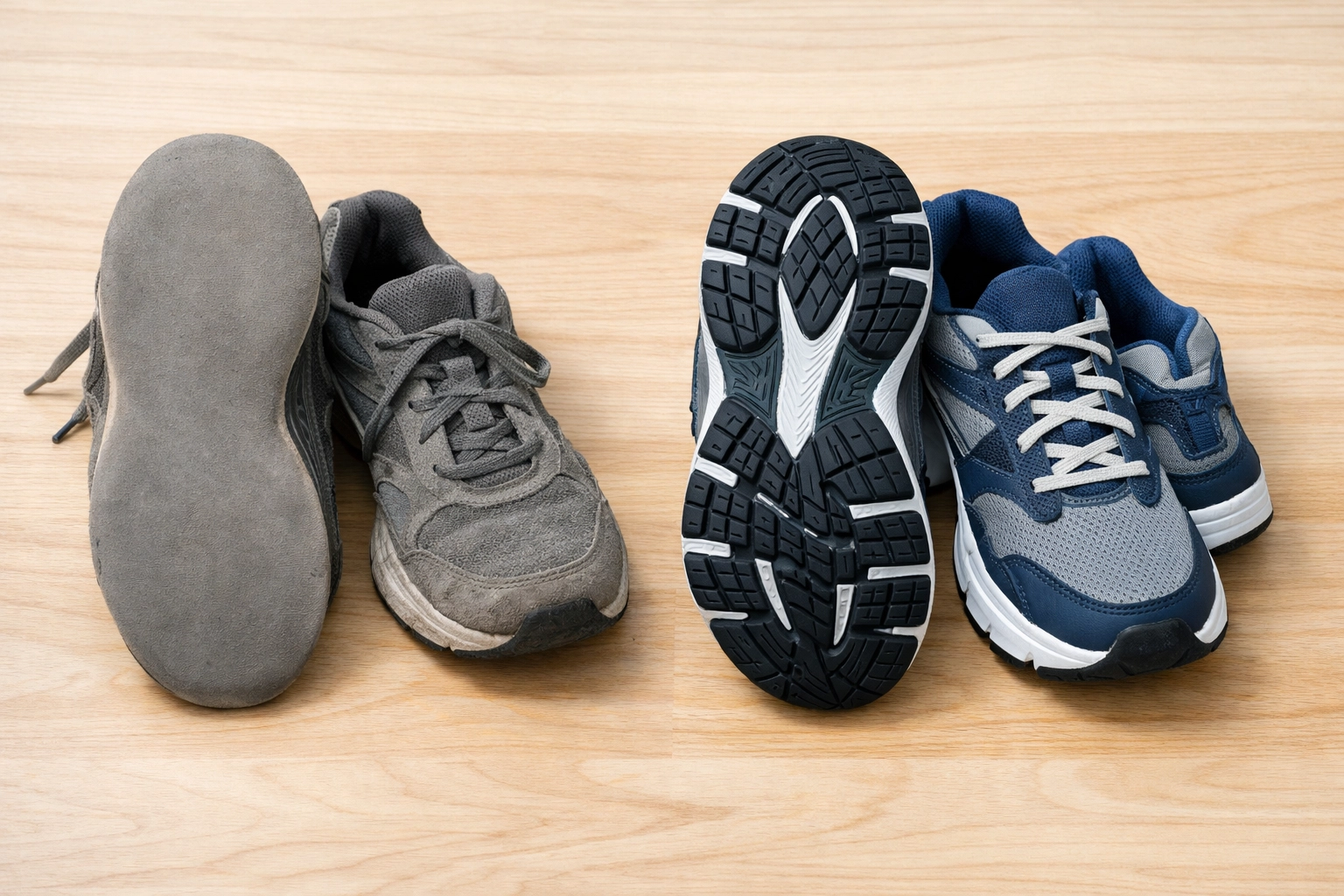
Even good shoes don't last forever. The tread on the bottom of your shoes gradually wears down with use, reducing traction. The midsole cushioning compresses and loses its shock-absorbing capability. The structural components weaken.
Many people continue wearing shoes well past their functional lifespan because they still look acceptable on the outside. But the wear that matters most is on the bottom and inside the shoe: places you don't see while wearing them.
Athletic shoes and walking shoes typically last 300-500 miles or about six months of regular use. Dress shoes and casual shoes vary depending on construction quality and how often you wear them.
Better approach: Inspect your shoes regularly. Look at the tread pattern on the soles: if it's worn smooth, it's time to replace them. Check inside for deteriorating insoles or loss of cushioning. Set a reminder to evaluate your most-used shoes every few months.
Mistake #7: Not Adjusting Your Footwear as Your Feet Change
Beyond size changes, aging feet experience other transformations that affect footwear needs. You might develop bunions, hammertoes, arthritis, or diabetic neuropathy. Your ankles might become less flexible. Your balance and proprioception: your sense of where your body is in space: may decline.
The shoes that worked perfectly five years ago might not meet your current needs. Continuing to wear them out of habit or attachment puts you at increased risk.
Better approach: Reassess your footwear needs whenever you notice changes in foot comfort, mobility, or balance. Consider consulting with a podiatrist who can recommend specific features based on your foot structure and any developing conditions. Don't let attachment to a favorite pair of shoes compromise your safety.
What to Look for in Fall-Prevention Footwear
Now that we've covered what to avoid, let's talk about what makes footwear safe and supportive:
Non-slip soles: Look for rubber outsoles with textured patterns or grooves that provide traction on various surfaces.
Low, wide heels: A heel height of one inch or less gives you stability without completely flat construction, which some people find uncomfortable.
Proper fit: Snug around the heel and midfoot, with room for toes to move. Adjustable closures like laces, Velcro, or buckles let you fine-tune the fit.
Arch support: Your arch should feel supported throughout the day, reducing foot fatigue that can affect your gait.
Cushioning: Adequate padding in the insole helps absorb shock and provides comfort, especially important if you have reduced fat padding in your feet.
Structured heel counter: The back of the shoe should be firm enough to keep your heel in place without excessive movement.
Closed toe and back: Full coverage protects your feet and keeps the shoe securely on your foot.
Making the Switch
Changing your footwear habits might feel inconvenient at first. Slipping on shoes takes a few extra seconds compared to shuffling into slippers. Supportive shoes cost more than cheap flip-flops. But the investment of time and money pays off in reduced fall risk and better overall foot health.
Start by replacing the footwear you use most often. If you spend most of your day at home, invest in a quality pair of indoor shoes first. If you're frequently out running errands, prioritize your outdoor shoes.
Keep your shoes in convenient locations so you're more likely to put them on. A shoe rack by your bed means you can put on proper footwear as soon as you get up. Another pair by the back door makes it easy to wear appropriate shoes when you step outside to get the mail.
Pay attention to how your feet and body feel in different shoes. The right footwear should feel comfortable and secure. Your stride should feel natural, not awkward or restrictive. If shoes cause pain, alter your gait, or make you feel unsteady, they're not the right choice regardless of how they look or how much they cost.
The Foundation of Fall Prevention
Your shoes are literally the foundation of your stability and mobility. Making thoughtful choices about footwear is one of the simplest and most effective fall prevention strategies available. Unlike some safety modifications that require professional installation or significant expense, choosing appropriate shoes is entirely within your control.
Take a few minutes today to evaluate the shoes you wear most often. Are they providing the support, fit, and traction you need? If not, it's time to make a change. Your future self: steady on your feet and confidently mobile( will thank you.)

