
Stairs are one of those features in our homes that we use dozens of times a day without a second thought. Whether it’s heading up to bed or down to grab a laundry basket, we often move through these transitions on autopilot. However, for many individuals: especially seniors or those recovering from surgery: the staircase represents the most significant fall risk in the entire home.
Statistics consistently show that a large percentage of home-based falls occur on or near stairs. The good news is that most of these incidents aren’t caused by "freak accidents." Instead, they are often the result of small, overlooked hazards that have become part of our daily environment.
As part of the team at Fall Guys Products, we believe that education is the first step toward a safer home. In this guide, we’re going to walk through seven common stair safety mistakes and, more importantly, provide practical, low-stress ways to fix them. Our goal isn’t to make you feel anxious about your home, but to give you the tools to make it a more reassuring and secure place to live.
1. Underestimating the Importance of Lighting
One of the most frequent mistakes people make is relying on "ambient" light from an adjacent room or a single, dim hallway bulb to illuminate a flight of stairs. When the lighting is insufficient, the edges of the steps (the "nosings") become blurred. This makes it incredibly difficult for the brain to judge exactly where to place the foot, leading to missteps or overreaching.
Shadows can be just as dangerous as darkness. If a light source is positioned poorly, it can cast long shadows that look like additional steps or hide the actual depth of a tread. This "visual noise" is a leading cause of trips for individuals with changing vision or depth perception issues.
How to Fix It:
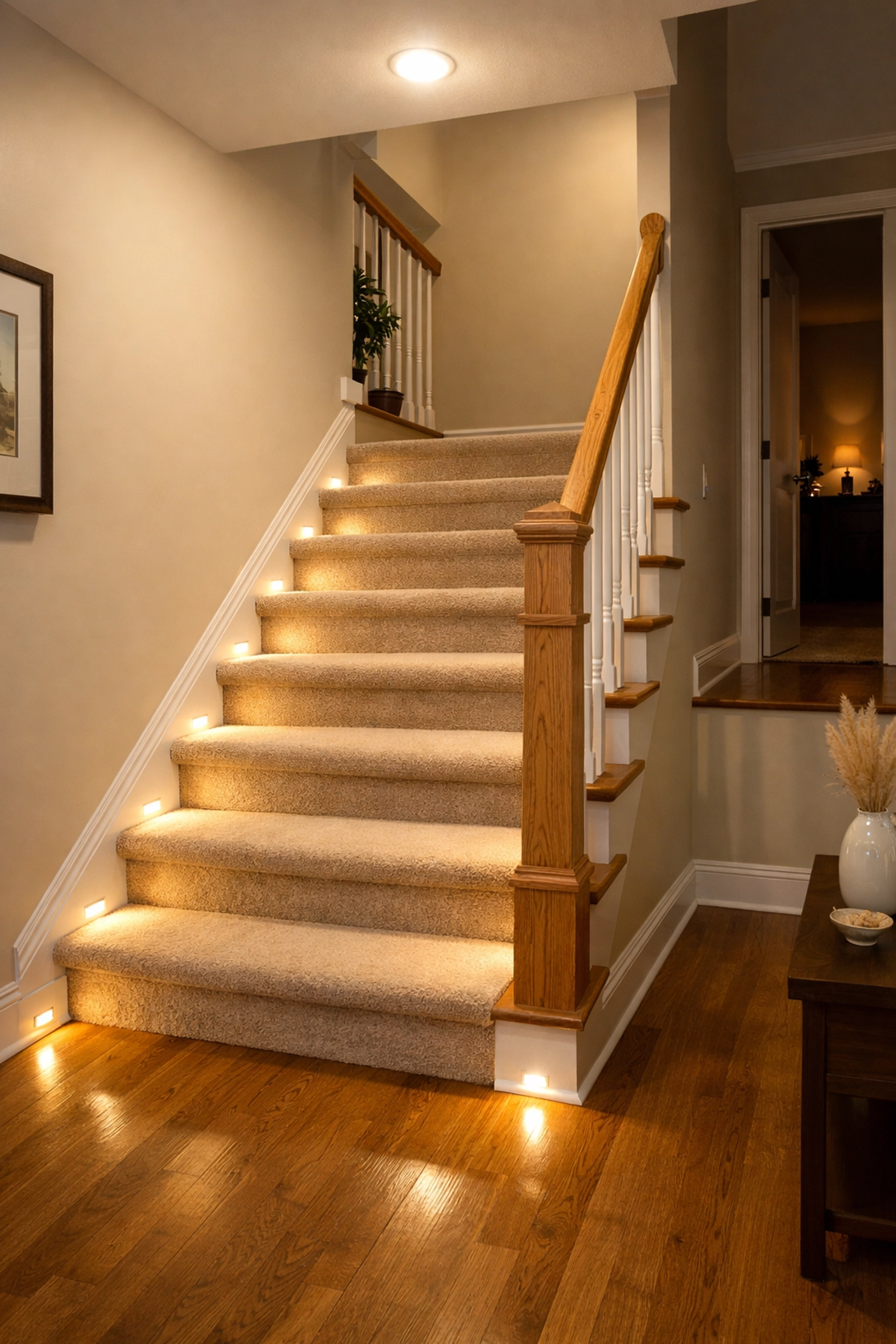
- Increase Lumens: Ensure that your light bulbs are bright enough. LED bulbs are excellent because they offer high brightness (lumens) while keeping energy costs low. Aim for "daylight" or "cool white" bulbs to provide the best contrast.
- Install Motion Sensors: You shouldn't have to fledge for a light switch in the dark. Battery-operated, motion-sensing LED lights can be placed along the baseboards of the stairs. They light up automatically as you approach and turn off when you're gone.
- Two-Way Switches: Make sure there is a light switch at both the top and the bottom of the stairs. If your home isn't wired this way, there are wireless remote switches available that can be adhered to the wall without any electrical work.
2. Using the Stairs as a Temporary Storage Shelf
We’ve all done it. You have a stack of mail, a pair of shoes, or a book that needs to go upstairs, so you set it on the bottom step to take up "on the next trip." This habit, while convenient, turns a functional part of your home into a literal obstacle course.
Objects on the stairs narrow the available walking path and create a significant tripping hazard. Even if you think you’ll remember the item is there, it’s easy to get distracted by a ringing phone or a pet, leading you to step on the object or lose your balance while trying to avoid it.
How to Fix It:
- The "Zero Tolerance" Rule: Commit to never placing items on the steps. If something needs to go up or down, place it on a side table or a dedicated "stair basket" that sits completely off the stairs.
- The Landing Zone: Create a designated spot at the top and bottom of the staircase for items in transition. A small bench or table near the stairs serves the same purpose as the steps themselves but keeps the walkway clear.
- Clear the Path: Regularly check for loose rugs or mats at the entrance and exit of the stairs. These should be secured with non-slip backing or removed entirely if they have curled edges.
3. Relying on a Single, Unstable Handrail
Many older homes were built with only one handrail, or worse, a decorative railing that isn't actually designed to support a person's weight during a stumble. A single rail forces you to rely on one side of your body, which can be problematic if you have weakness in one leg or a dominant hand that isn't on the "rail side."
Furthermore, handrails often end too soon. If the rail stops before the very last step, you are left without support exactly when you are most likely to lose your balance: at the transition point between the stairs and the flat floor.
How to Fix It:
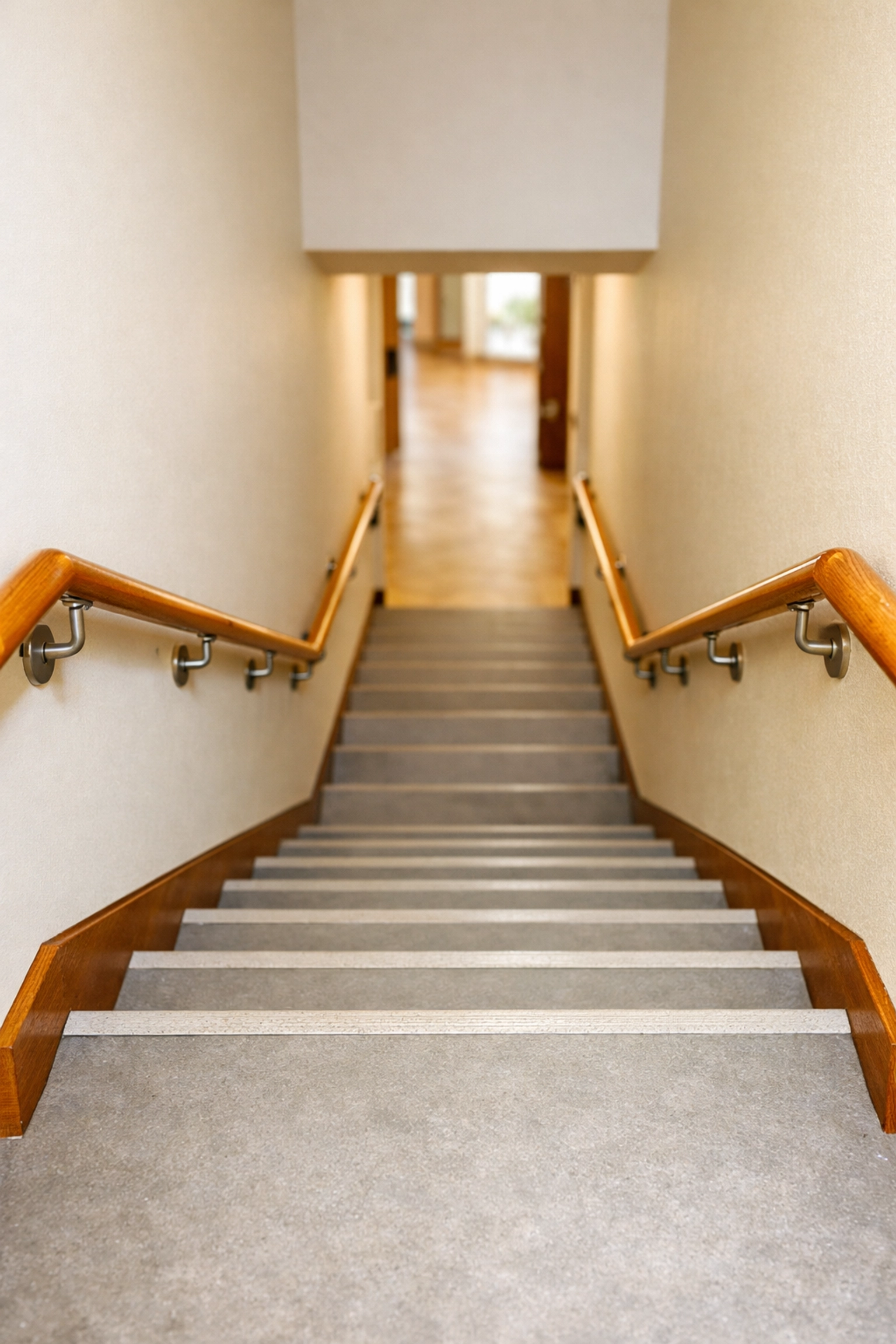
- Double Up: Ideally, every staircase should have sturdy handrails on both sides. This allows for a "power grip" with both hands, significantly increasing stability and reducing the load on the knees and hips.
- Check the Extension: Ensure the handrails extend about 12 inches beyond the top and bottom steps. This allows you to maintain your grip until your feet are firmly on level ground.
- The "Shake Test": Periodically check the brackets holding your handrail. If there is any "give" or wobbling when you pull on it, it needs to be tightened or reinforced into a wall stud immediately.
4. Neglecting the "Slip Factor" of Flooring Surfaces
Aesthetics often trump safety when it comes to stair design. Polished hardwood, glossy tile, or even worn-out, low-pile carpet can be incredibly slippery. This is especially true if you are wearing socks or smooth-soled slippers.
While hardwood looks beautiful, it provides very little friction. If your foot lands slightly off-center, there is nothing to "catch" it, often resulting in a slide. Similarly, old carpet that has become flattened or "shiny" over years of use can lose its grip.
How to Fix It:
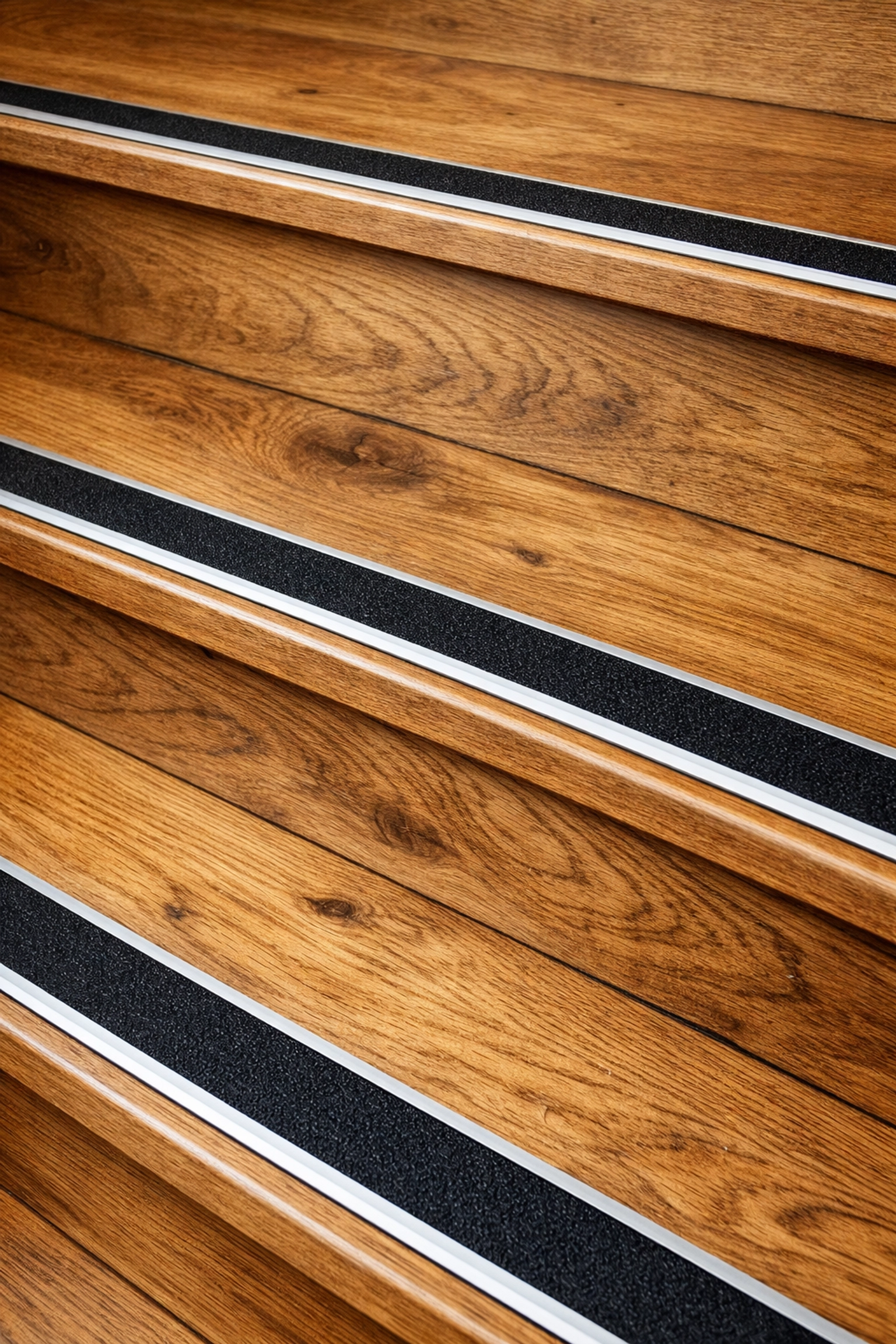
- Non-Slip Treads: For wooden or tiled stairs, you can apply clear, adhesive non-slip strips. These provide texture without significantly altering the look of the wood.
- Carpet Runners: If you prefer carpet, ensure it is a tight, low-pile weave and that it is securely attached to every riser and tread. Avoid thick, "shag" style carpets which can hide the edge of the step.
- Check Your Footwear: The "fix" isn't just on the stairs; it's on your feet. Avoid walking on stairs in stocking feet. Opt for shoes with rubber soles or "gripper" socks if you prefer not to wear shoes inside.
5. Ignoring Structural Inconsistencies (The "Riser" Problem)
Did you know that the human brain "maps" a staircase after the first two steps? Your body adjusts its gait based on the height (riser) and depth (tread) of those initial steps. If a middle step is even half an inch higher or lower than the others, your foot will likely catch on the edge or "drop" unexpectedly.
In older homes, stairs can settle or warp over time. DIY repairs or the addition of new flooring can also create uneven steps at the top or bottom of the flight.
How to Fix It:
- Measure Your Steps: Use a tape measure to check the height of every riser and the depth of every tread. If you find a variance of more than 3/8 of an inch between steps, you have a structural hazard.
- Visual Warnings: If a step is slightly uneven and cannot be immediately repaired by a contractor, use high-contrast tape on the edge of that specific step to alert your brain to the change in height.
- Consult a Professional: Structural stair issues are rarely a DIY fix. If your stairs are sloping or uneven, it is worth having a professional assessment to ensure they meet modern safety codes.
6. Overlooking Vision and Depth Perception Challenges
As we age, our ability to distinguish between similar colors and textures decreases. On a staircase where the stairs and the floor are the same color: such as all-oak stairs or uniform beige carpeting: it becomes difficult to see where one step ends and the next begins. This is known as "low contrast."
Additionally, those who wear bifocals or trifocals face a unique challenge. Looking down through the bottom portion of the lens (the reading part) can blur your view of your feet, making the steps appear distorted or closer than they actually are.
How to Fix It:
- Contrast Strips: Apply a strip of tape or paint in a contrasting color (like white on dark wood or black on light tile) along the edge of each step. This "nosing" highlight helps the brain instantly identify the edge of the tread.
- Bifocal Awareness: If you wear multi-focal lenses, be extra cautious on the stairs. Some people find it safer to have a dedicated pair of "single vision" glasses for moving around the house, or simply ensure they tuck their chin down to look through the top part of their lenses when descending.
- Regular Eye Exams: Vision is your primary defense against falls. Ensure your prescription is up to date and that any issues like cataracts or glaucoma are being managed.
7. The "Hurry and Carry" Habit
The final mistake is behavioral rather than environmental. We often treat stairs as a hurdle to get over as quickly as possible. We might carry a large laundry basket that blocks our view of our feet, or we might be talking on the phone while descending.
Rushing leads to a "forward-leaning" posture, which shifts your center of gravity away from your base of support. If you trip while rushing, the momentum makes it much harder to recover.
How to Fix It:
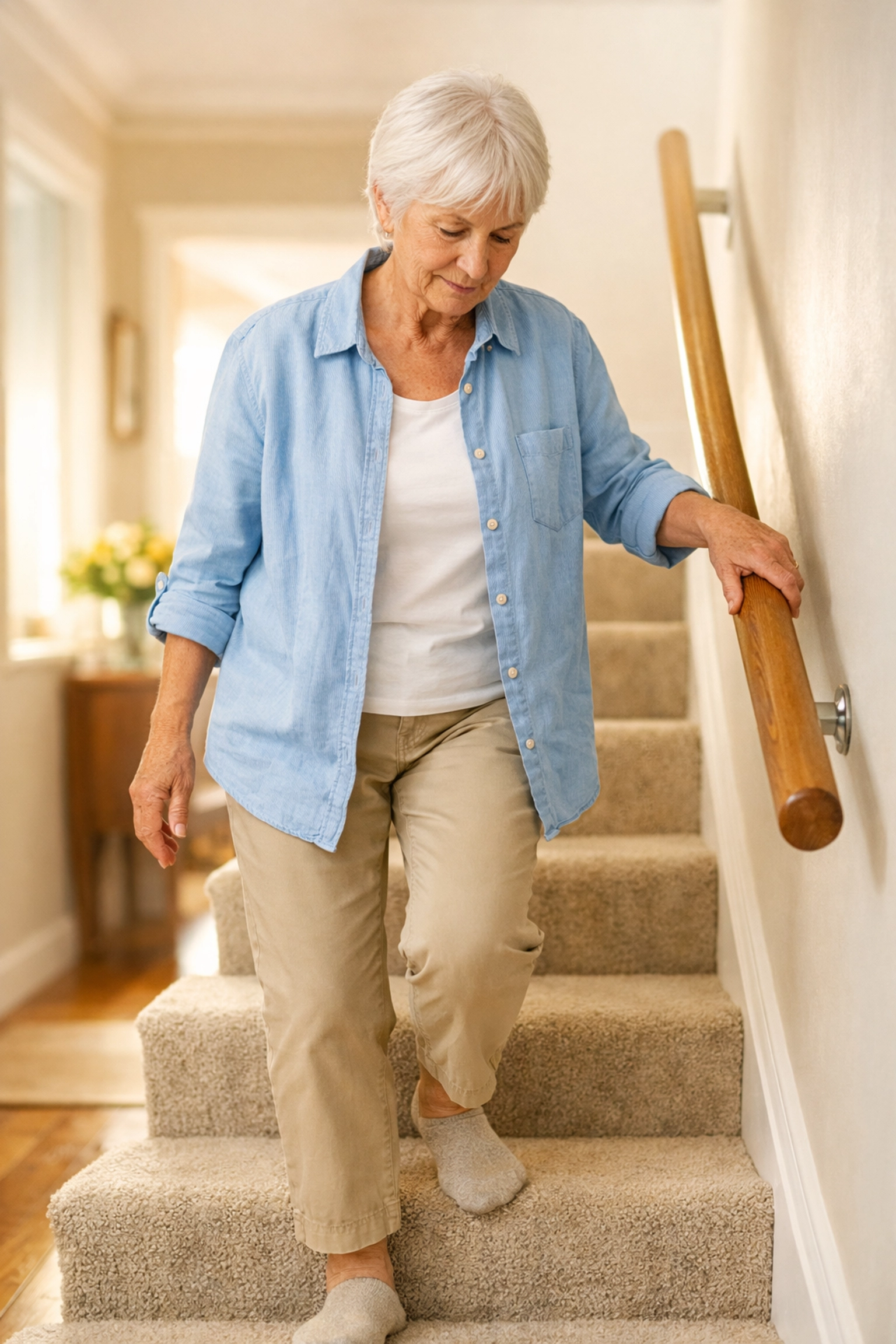
- The One-Hand Rule: Always keep at least one hand free to grip the handrail. If you have to move a large load, consider using a "stair-climbing" cart, or break the load into smaller, manageable trips that can be carried in one arm.
- Take a Breath: Before you start up or down, pause for a second. Make sure you are focused on the task at hand.
- Full Foot Placement: Ensure your entire foot is placed firmly on each tread. Many people tend to walk on the "balls" of their feet when going upstairs, which provides less stability.
Creating a Culture of Safety
Addressing these seven mistakes isn't about rebuilding your home from scratch. Most of these solutions: like adding a motion-sensing light, clearing away clutter, or applying contrast tape: can be done in a single afternoon for very little cost.
Stair safety is about building layers of protection. No single fix will eliminate every risk, but when you combine good lighting with sturdy rails, clear paths, and mindful movement, you significantly tip the scales in your favor.
At Fall Guys Products, we believe that staying independent in your home starts with respecting the hazards that are already there and taking simple, proactive steps to mitigate them. By taking a critical look at your staircase today, you aren't just preventing a fall; you’re investing in your long-term peace of mind.
If you're unsure where to start, begin with the easiest fix: clear the clutter. Once the path is clear, move on to lighting. Step by step, you can transform your stairs from a point of concern into a safe, functional part of your daily routine.

