
Hi there, I’m Brian Kerr, founder of Fall Guys Products. If you are reading this, it’s likely because you care deeply about someone who wants to maintain their independence at home. Maybe it’s a parent, a spouse, or a long-time friend. We all want our homes to be our sanctuary, the place where we feel most comfortable and secure. However, as we age, the very place we love can become a landscape of hidden hazards.
Falls are one of those topics people often avoid talking about until they actually happen. But as a caregiver, taking a proactive approach to home safety is one of the greatest gifts of peace of mind you can give yourself and your loved one. You don’t need to be a professional contractor or a doctor to make a massive difference.
This guide is designed to help you walk through the home with fresh eyes. We’re going to break down fall prevention into five manageable steps that focus on clarity, safety, and most importantly, keeping your loved one moving confidently.
Step 1: Evaluate Your Loved One’s Current Fall Risk
Before you pick up a screwdriver or move a single rug, you need to understand the baseline. Not everyone has the same level of risk, and understanding where your loved one stands will help you prioritize which modifications are most urgent.
Professionals often use two common methods to determine fall risk, and you can actually use versions of these at home to get a better sense of the situation.
The Timed Up and Go (TUG) Test
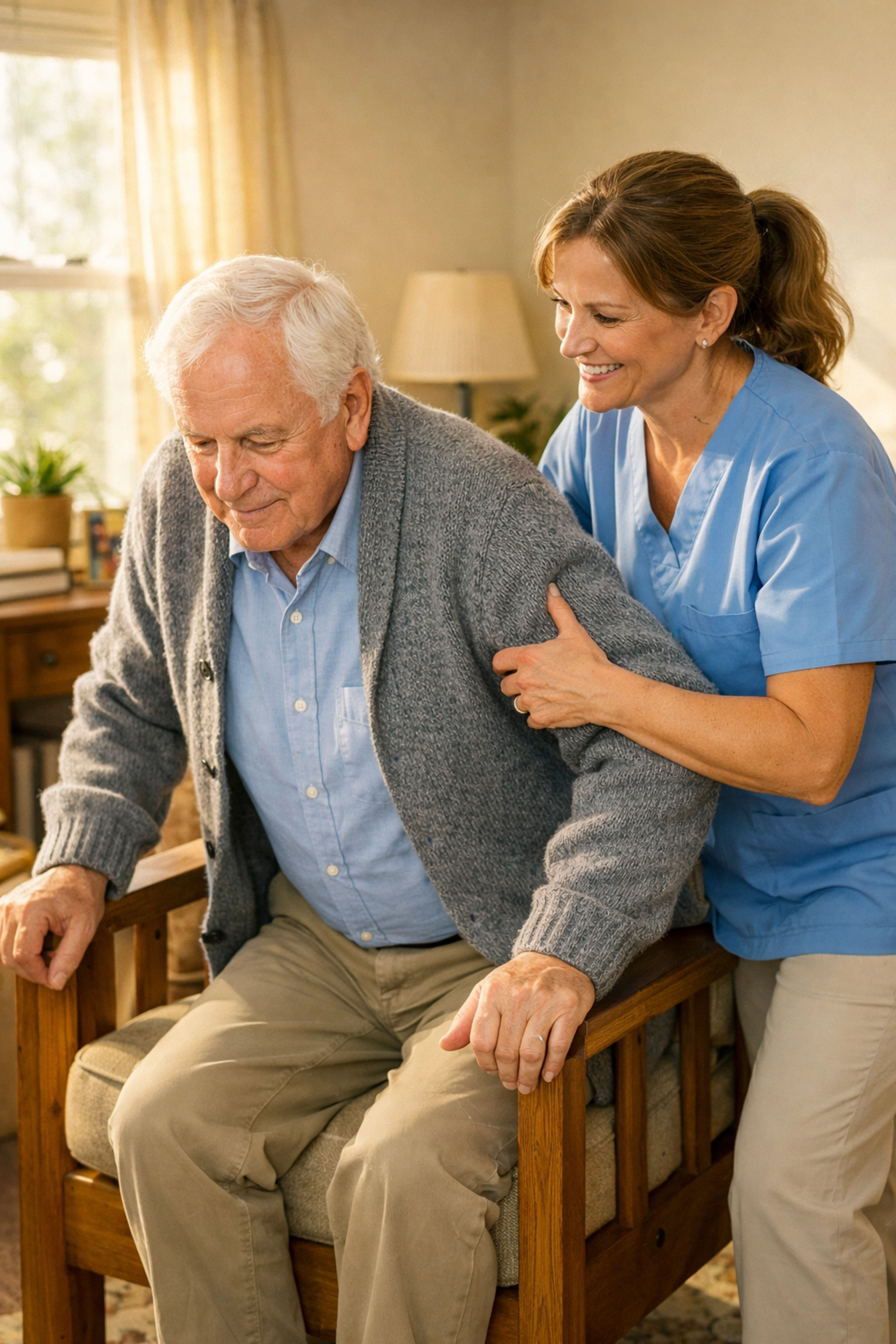
This is a simple assessment you can do in the living room. Ask your loved one to sit in a standard armchair. Place a marker (like a piece of tape) on the floor 10 feet away. Time how long it takes for them to stand up, walk to the mark, turn around, walk back, and sit down again.
- Results: If it takes longer than 12 seconds, it generally indicates a higher risk of falling. It’s a great way to see how they handle transitions and turns, which is often where balance is lost.
The Morse Fall Scale Factors
While clinical, the logic behind the Morse Fall Scale is very helpful for caregivers. Ask yourself:
- History of falling: Have they had a fall in the last three months?
- Secondary diagnoses: Do they have more than one medical condition that affects their health?
- Ambulatory aid: Do they use a cane, walker, or do they "furniture walk" (holding onto walls and tables)?
- Gait: Is their walk steady, or do they shuffle or hesitate?
- Mental status: Are they fully aware of their own physical limitations, or do they sometimes forget they need help?
Evaluating these factors gives you a "risk profile." If they shuffle their feet and have fallen recently, your home assessment needs to be much more rigorous than if they are perfectly steady but just want to be prepared for the future.
Step 2: Conduct a Room-by-Room Safety Walk-Through
Once you know the risk level, it’s time to play detective. Grab a notepad and walk through the house exactly as your loved one does. Start from the driveway and work your way to the bedroom.
The Entryway and Porch
Most people start inside, but many falls happen right at the threshold. Check for:
- Uneven pavement: Are there cracks in the sidewalk or shifting bricks?
- Steps: Are the steps crumbling? Is there a sturdy handrail on at least one side (ideally both)?
- Thresholds: Is the "lip" of the door too high? A small ramp or a simple adjustment can prevent a trip as they enter.
The Living Room
This is where people spend the most time. Look for "traps."
- The "Recliner Struggle": Is the favorite chair too deep or too soft? If it’s hard for them to get out of, they might lose their balance while straining to stand.
- Clear Paths: Is there enough room for a walker or cane to pass through without bumping into coffee tables?
- Furniture Stability: Do they lean on a light table for balance? If so, that table needs to be replaced with something heavy or moved out of the path.
The Kitchen
The kitchen is a high-traffic area with unique risks like spills and reaching.
- Storage Height: Move the coffee mugs, plates, and frequently used pans to counter level. Reaching for high shelves or bending for low ones is a common cause of dizziness or loss of balance.
- Flooring: Is the floor extra slippery when wet? Consider a non-slip treatment or a low-pile, secured mat in front of the sink.
Step 3: Remove and Fix Environmental Hazards
Now that you’ve identified the trouble spots, it’s time to act. This step is about "editing" the home. We often get attached to our belongings, but as a caregiver, you may need to have some gentle conversations about what stays and what goes.
The Rug Debate
I’ll be honest: throw rugs are the enemy of fall prevention. They are the number one tripping hazard in most homes. If you can’t bear to get rid of them, they must be secured with double-sided heavy-duty rug tape or a high-quality non-slip backing. However, the safest option is always to remove them entirely, especially in transition areas like hallways.
Clutter and Cords
We all accumulate "stuff," but for someone with declining vision or mobility, clutter is a minefield.
- Clear the floor: Remove magazines, shoes, and pet toys from walkways.
- Cable management: Use zip ties or cord covers to keep phone chargers and lamp cords tucked against the wall. Never run a cord across a walkway or under a rug.
Pet Safety
We love our furry friends, but small dogs and cats are notorious for getting underfoot. If your loved one has a pet, consider putting a small bell on the pet’s collar so the senior can hear when the animal is nearby.
Step 4: Improve Lighting and Install Safety Features
Lighting is perhaps the most underrated tool in fall prevention. As we age, our eyes require significantly more light to see clearly, and our ability to adjust to changes in light (like moving from a bright room to a dark hallway) slows down.
Brighten the Pathways
- Automated Lighting: Install motion-sensor night lights in the hallways, bathroom, and bedroom. This ensures that if they wake up at 2:00 AM, the path is illuminated before their feet even hit the floor.
- Entryway Lights: Ensure the outdoor lights are bright and, ideally, on a timer or dusk-to-dawn sensor.
- Contrast: If the stairs are the same color as the floor, it’s hard to see where the step ends. You can apply a strip of contrasting colored tape to the edge of each step to provide a visual cue.
Install Sturdy Supports
In areas where balance is most tested, "furniture walking" isn't enough. You need dedicated support.
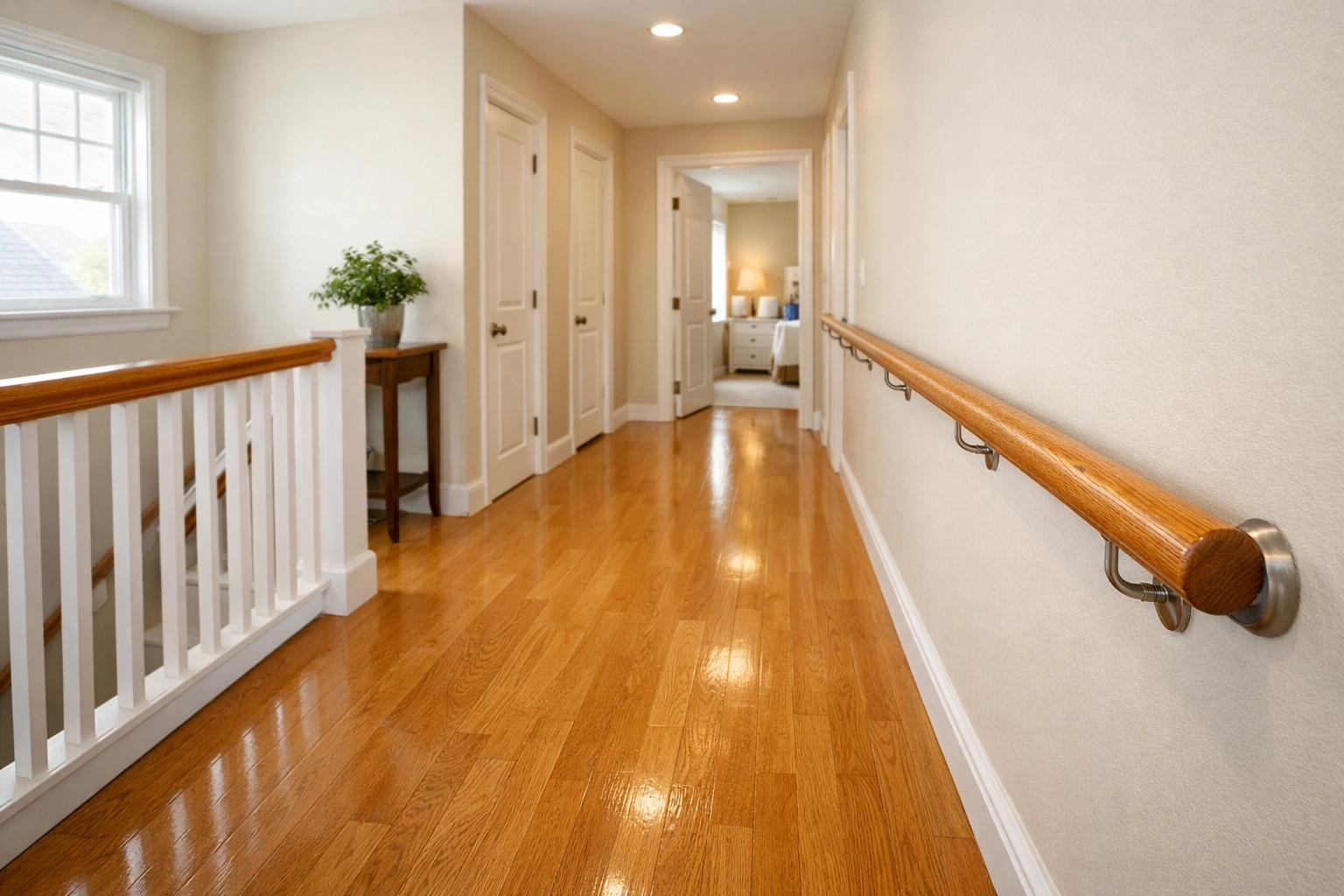
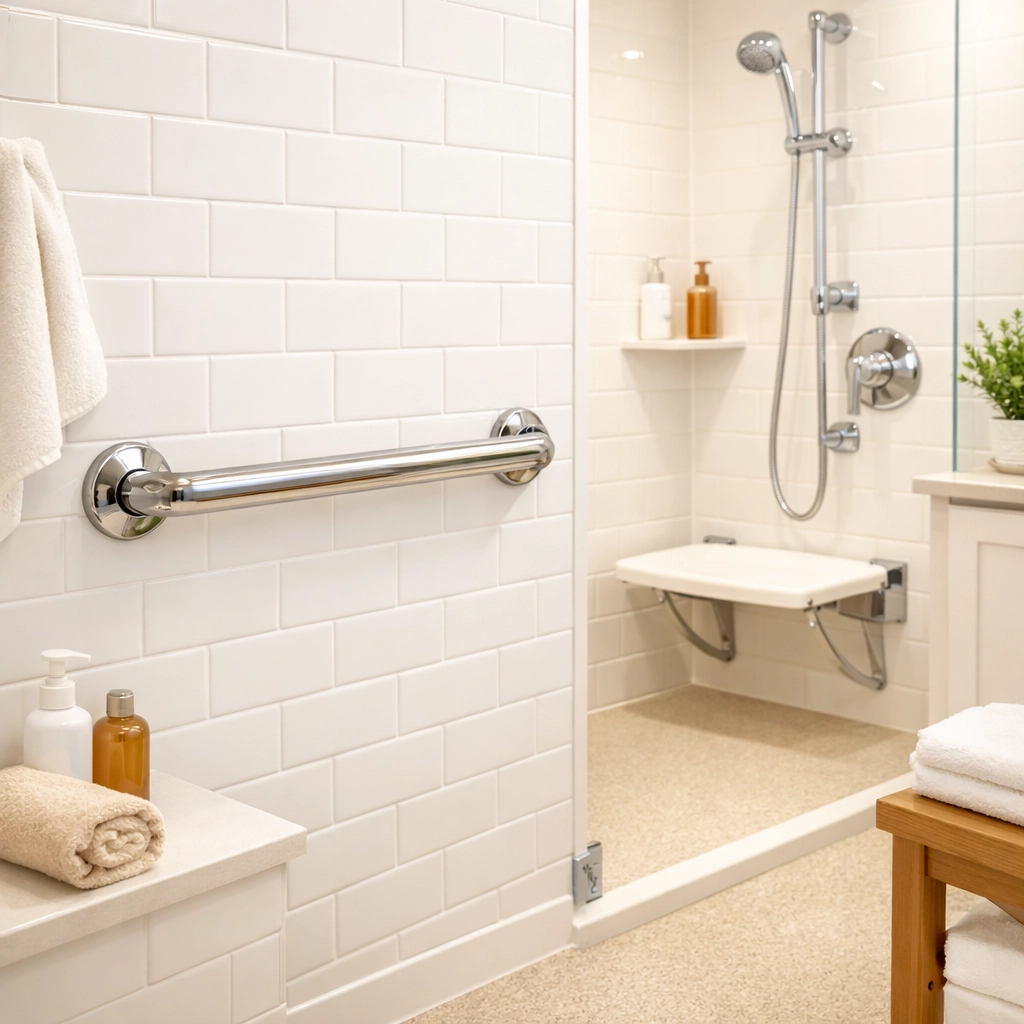
- The Bathroom: This is the most dangerous room in the house. Install grab bars near the toilet and inside the shower. Please avoid "suction cup" bars: they are not designed to hold a person’s full weight during a fall. Only use bars that are securely anchored into the wall studs.
- The Bedroom: A bed rail or a floor-to-ceiling transfer pole can provide a steady handhold for getting in and out of bed safely.
- Stairways: Ensure handrails extend beyond the last step so the person has support until they are fully on level ground.
Step 5: Focus on Physical Strength and Personal Care
The final step isn't about the house; it's about the person living in it. A fall-safe home works best when paired with a body that is as strong and stable as possible.
Exercise and Balance
Movement is medicine. Encourage your loved one to stay active in ways that improve balance.
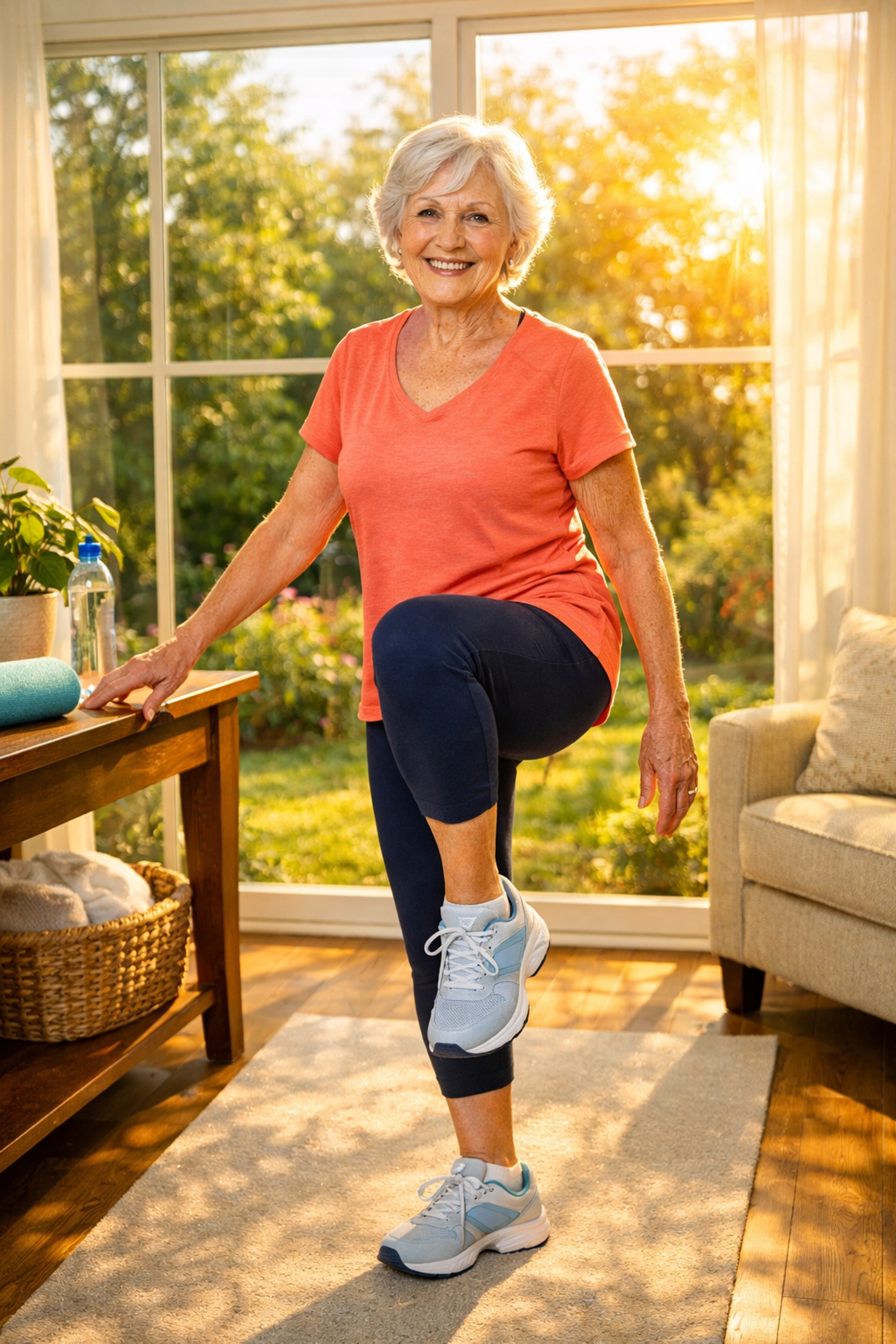
- Tai Chi: This is often cited by health professionals as one of the best activities for seniors. It focuses on slow, controlled movements and weight shifting, which directly translates to better balance in daily life.
- Heel-to-Toe Walking: A simple exercise they can do down a hallway while holding onto a railing.
- Physical Therapy: If you’re worried, ask a doctor for a physical therapy referral. A PT can provide a personalized exercise plan to strengthen the specific muscles used for standing and walking.
Vision and Hearing
If you can’t see a hazard, you can’t avoid it. Ensure your loved one has an annual eye exam. Bifocals can sometimes be tricky on stairs, as they can distort depth perception; talk to the optometrist about the best lens options for home safety. Similarly, hearing plays a role in balance (the inner ear), so regular check-ups are vital.
Footwear Matters
Floppy slippers or walking in socks is a recipe for a slip. Encourage the use of sturdy, well-fitting shoes with non-slip soles, even inside the house. If they insist on socks, ensure they are the "gripper" variety with rubber treads on the bottom.
A Final Note of Reassurance
Assessing a home can feel like a big project, but remember: you don’t have to do it all in one afternoon. Start with the biggest risks: usually the bathroom and the lighting: and work your way through the rest.
By taking these steps, you are doing more than just moving furniture; you are protecting your loved one’s dignity and independence. You are making it possible for them to stay in the home they love for as long as possible.
If you ever feel overwhelmed, don’t hesitate to reach out to an occupational therapist. They are experts at home evaluations and can provide specific recommendations tailored to your loved one’s unique needs. You’re doing a great job, and taking this first step of assessment is exactly what a great caregiver does. Stay steady!

