
When we think about home, we think about comfort, memories, and safety. It is the place where we feel most in control. However, for many seniors and their families, the home can quietly develop "blind spots": small hazards that we walk past every day until they suddenly become a problem.
I’m Brian Kerr, and here at Fall Guys Products, we spend a lot of time thinking about how to make environments more supportive for those with mobility challenges. One thing I’ve noticed over the years is that most falls don't happen because of a massive structural failure; they happen because of a series of tiny, overlooked details.
Preventing a fall isn't about turning a home into a hospital. It’s about fine-tuning the environment so that it works with you, not against you. In this guide, we’re going to look at ten critical areas that families often overlook. By checking these today, you can create a much safer space for your loved ones to enjoy their independence.
1. The Double Handrail Rule
Most homes come standard with a single handrail on one side of the staircase. For a long time, building codes considered this sufficient. However, as we age, our center of gravity shifts, and our grip strength can vary from one side of the body to the other.
If a senior is carrying an item in one hand or if one side of their body is weaker due to arthritis or a previous injury, a single handrail leaves them vulnerable on the "open" side.
What to check: Walk your stairs and try to ascend and descend using only the side without a rail. Does it feel unstable? Every set of stairs: including those short three-step transitions into a garage or sunroom: should ideally have sturdy handrails on both sides. They should be "continuous," meaning you don't have to let go to navigate a turn.
2. Shadows and Transitions: The Lighting Gap
We often check if a room has "a light," but we rarely check if it has the right light. As the eyes age, they require significantly more light to see clearly and more time to adjust to changes in brightness.
A common hidden risk is the "transition zone": the space between a brightly lit living room and a dim hallway. If a senior steps into a dark hallway, their eyes may take several seconds to adjust. During those seconds, they are walking essentially blind to any small obstacles.
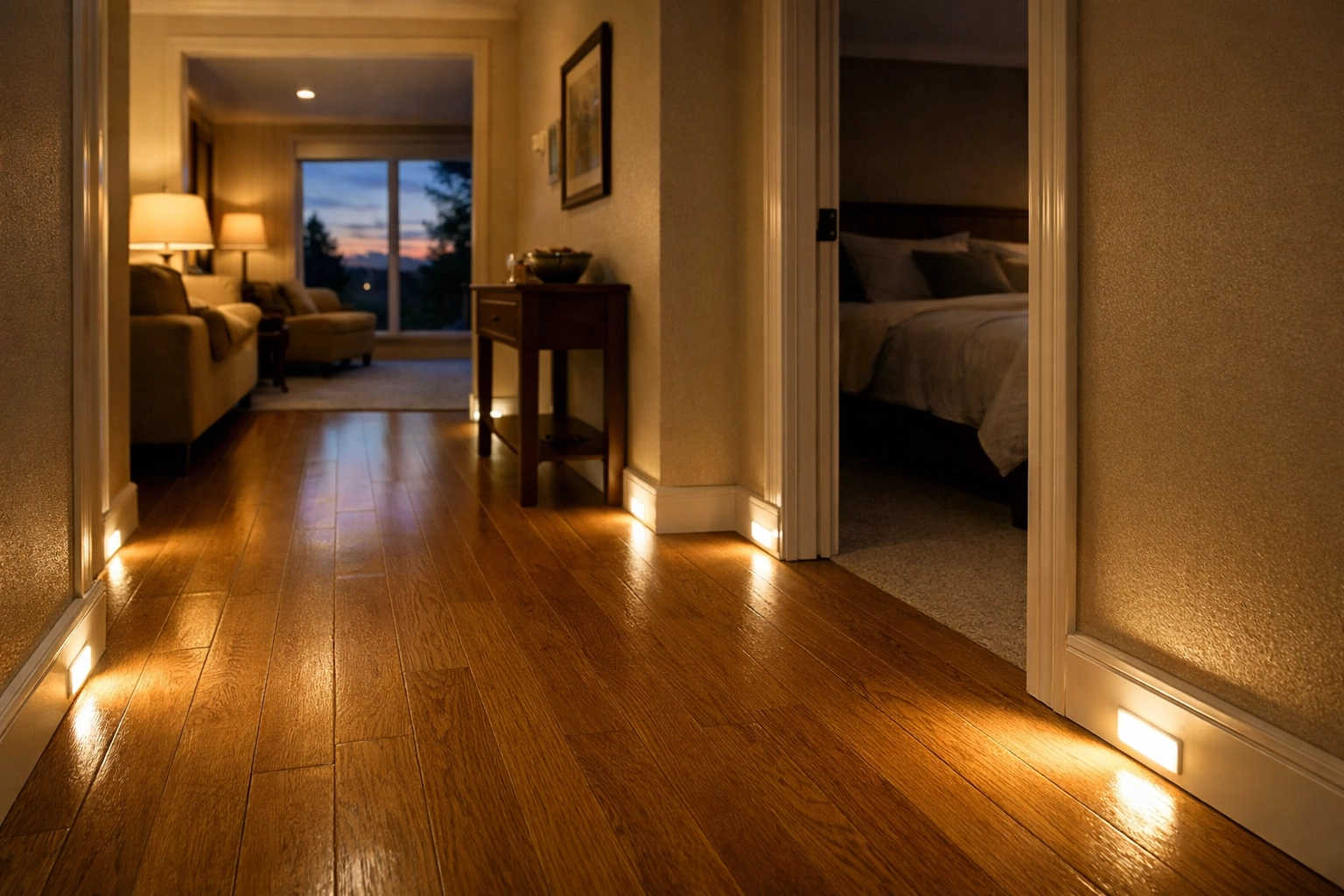
What to check: Look for "pools of darkness" in hallways and on landings. Install motion-activated lights that trigger as soon as someone approaches a doorway. Pay special attention to the top and bottom of the stairs; shadows can make it difficult to distinguish where one step ends and the next begins.
3. The "Clutter Creep" in High-Traffic Lanes
We all have "stuff." Over decades, we collect books, magazines, decorative plants, and footstools. Clutter creep happens when the walking paths through a house begin to narrow. A path that was once four feet wide might slowly shrink to two feet because of a new side table or a stack of mail.
For someone using a walker or a cane, or even someone who occasionally needs to "furniture surf" (touching furniture for balance), narrow paths are a major trip hazard.
What to check: Take a walk through the house specifically looking at the floor-level width of the "main arteries" (the paths from the bed to the bathroom, or the kitchen to the living room). If you have to turn sideways to get through, or if a walker would snag on a rug corner or table leg, it’s time to clear the path.
4. The Myth of the "Safe" Area Rug
Area rugs are beautiful, but they are one of the leading causes of trips in the home. Even if a rug feels heavy, the edges can curl over time, or the rug itself can slide across a hardwood floor.
Many families try to "fix" this with double-sided tape. While tape helps, it can lose its grip or create a small lip that a foot can still catch on.
What to check: The safest floor is a clear, flat surface. If possible, remove throw rugs entirely, especially in transition areas like doorways. If a rug must stay, ensure it is low-pile and secured with a high-quality, non-slip rubber backing that covers the entire underside of the rug, not just the corners.
5. Bathroom Surfaces: Beyond the Tub
We usually focus on the bathtub, but the entire bathroom is a high-risk zone due to moisture and hard surfaces. A common overlooked risk is the bath mat. Traditional fabric bath mats often lack a grip on the bottom and can slide the moment a foot hits them.
Furthermore, consider the "splash zone" around the sink. Small drips from washing hands or brushing teeth can make tile floors incredibly slick.
What to check: Replace standard bath mats with non-slip rubber versions. Check the floor around the sink and toilet for any leaks or areas where water tends to pool. Ensuring a dry, high-friction floor is the first line of defense in the bathroom.
6. Towel Bars vs. Grab Bars
This is a classic "hidden" risk. In a moment of instability, a person’s instinct is to grab the nearest solid object. Often, that is a towel bar or a soap dish.
The problem? Towel bars are designed to hold the weight of a damp towel (maybe 2–5 pounds), not a human being (150–200+ pounds). When grabbed during a fall, they often rip out of the drywall, providing no support and potentially causing a more awkward, dangerous fall.
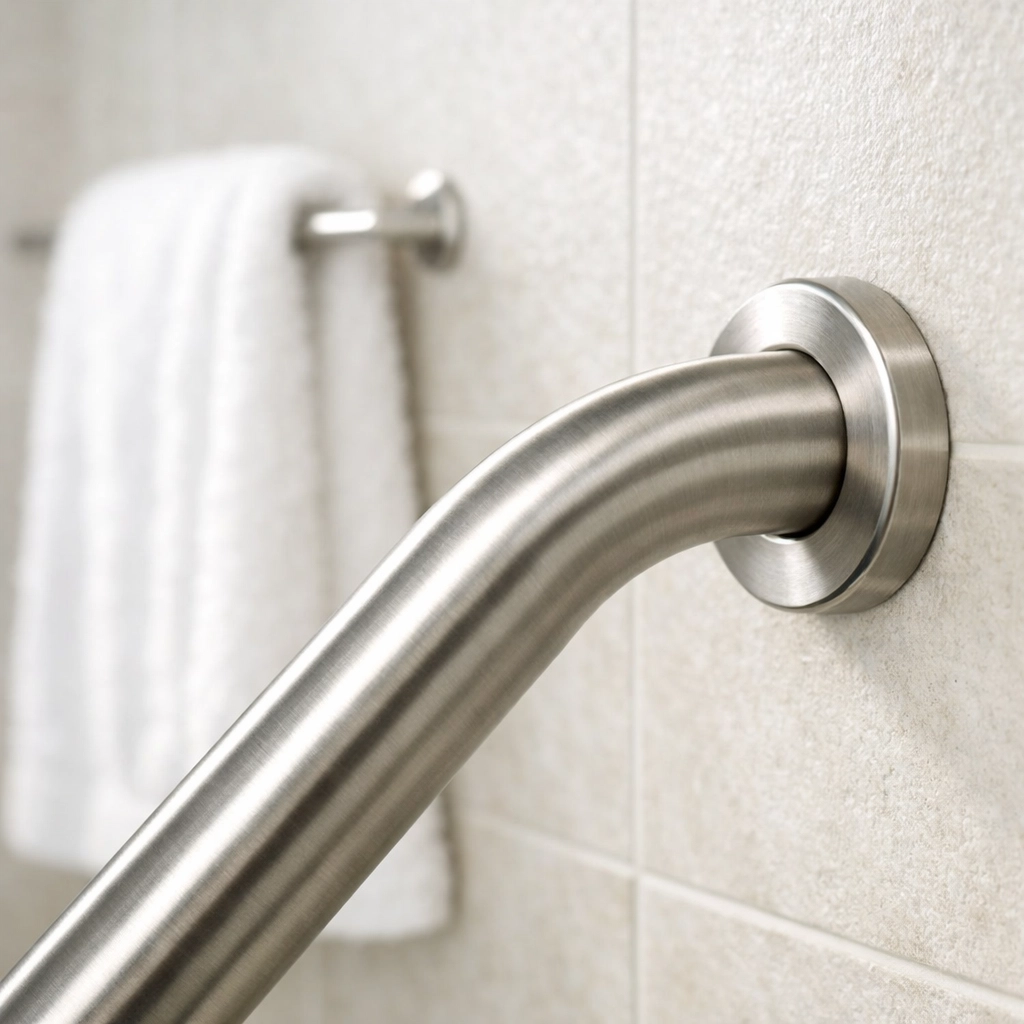
What to check: Go into the bathroom and give the towel bars a firm tug (within reason). If they feel even slightly loose, they are not a safety device. Replace them with actual, ADA-compliant grab bars that are anchored into the wall studs. Modern grab bars come in many finishes and can even double as towel racks, so you don't have to sacrifice the look of the room for safety.
7. The 2 AM Bedroom Path
Falls frequently happen in the middle of the night when someone is groggy, perhaps dealing with the effects of medication, and moving toward the bathroom.
In many bedrooms, the "path" is cluttered with slippers, charging cables, or bedspreads that drape onto the floor. Additionally, if the light switch is across the room from the bed, the senior is forced to navigate the first few steps in total darkness.
What to check: Ensure there is a lamp or light switch within arm's reach of the bed. Check that the bedspread is tucked in or short enough that it doesn't touch the floor. Clear all cords away from the walking path and consider a "glow-in-the-dark" tape or motion-sensing strip lighting under the bed frame to illuminate the floor as soon as feet hit the ground.
8. Kitchen Spills and Reach
The kitchen is a hub of activity, which means it’s a hub of potential spills. A dropped ice cube or a splash of cooking oil can turn a linoleum floor into a skating rink.
Another risk is "vertical reaching." If a senior has to use a step stool to reach a favorite coffee mug or a box of cereal, they are putting themselves at a high risk of a fall. Balance is much harder to maintain while reaching upward and standing on a narrow step.
What to check: Reorganize the kitchen so that all daily-use items are between waist and eye level. If a spill happens, it should be cleaned immediately with a degreasing cleaner. Consider placing a non-slip, beveled-edge kitchen mat in front of the sink and stove to provide extra grip and comfort.
9. Clothing and Footwear Failures
We often focus on the house, but the things we wear are part of our environment too. Long robes, loose-fitting trousers, or flared pajama bottoms can easily catch on a corner or get stepped on while rising from a chair.
Footwear is equally important. "House shoes" or slippers with no backs (scuffs) are notorious for sliding off or causing a stumble. Conversely, walking in just socks on a smooth floor offers almost zero traction.
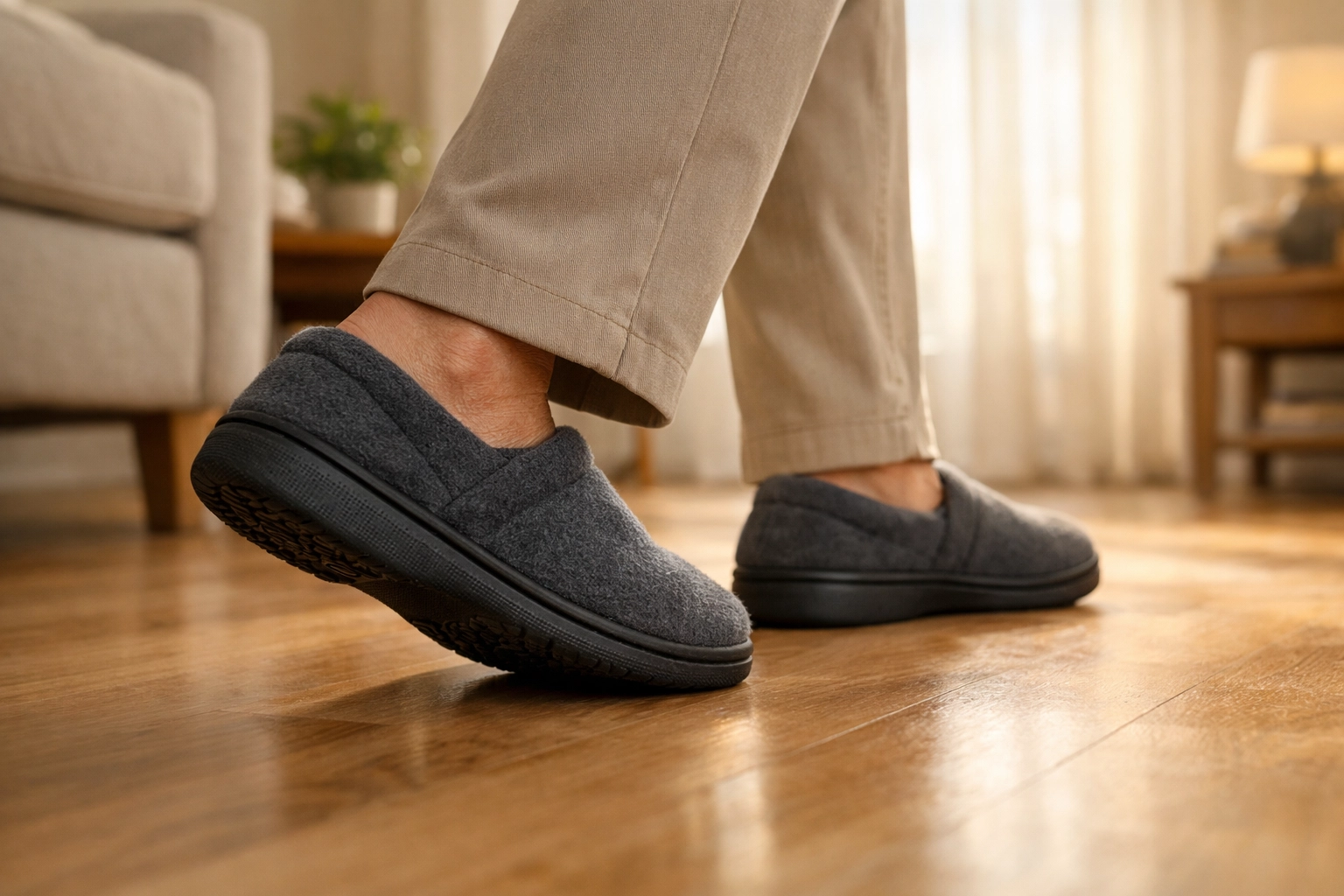
What to check: Look at the hemlines of your loved one's favorite loungewear. If it’s touching the floor, it needs to be hemmed. For footwear, encourage sturdy, closed-back slippers with rubber soles, or better yet, a pair of "indoor-only" sneakers that provide arch support and grip.
10. The Threshold of the Home
The transition from the driveway to the front door is where many outdoor falls occur. Uneven pavement, cracked concrete, or a small "lip" at the doorway can easily trip someone up, especially if they are carrying groceries or mail.
Lighting is also a major factor here. If the porch light only illuminates the door handle and not the steps leading up to it, the walk from the car becomes a hazard.
What to check: Inspect the driveway and walkways for any cracks or heaving (often caused by tree roots). Ensure the porch light is bright and that the stairs have non-slip tread tape if they are made of wood or smooth concrete. Clear away any leaves, moss, or ice immediately, as these create an invisible layer of slipperiness.
The Physical Factor: Strength and Balance
While the environment is half the battle, the person’s physical state is the other half. Fall prevention isn't just about moving furniture; it’s about maintaining the body’s ability to react to a slip.
Balance and strength are "use it or lose it" skills. Simple exercises, like standing on one leg while holding onto a counter or performing seated leg lifts, can significantly improve stability.
Proactive Steps:
- Vision Checks: Ensure eye exams are done annually. Bifocals can sometimes make it harder to judge the distance of stairs, so discuss this with an optometrist.
- Medication Reviews: Some medications cause dizziness or drowsiness. A pharmacist can review a list of medications to see if any combinations might increase the risk of a fall.
- Stay Active: Walking, Tai Chi, and basic strength training are excellent ways to keep the "internal stabilizers" working properly.
Starting the Conversation
For many families, the hardest part isn't fixing the rug: it’s talking to a parent or loved one about it. Many seniors feel that "fall proofing" is a sign that they are losing their independence.
The best way to approach this is through the lens of preserving independence. You aren't changing the house because they are "old"; you are optimizing the house so they can keep living there safely for as long as possible.
Instead of saying, "You’re going to fall if we don't move this rug," try saying, "I noticed this rug is a bit slippery, and I want to make sure the floor is as solid as possible so you don't have to worry about it." Frame it as a team effort to keep the home comfortable and functional.
Summary Checklist for Families
If you’re visiting a loved one this weekend, take 15 minutes to do a quick walk-through. You don't need a degree in physical therapy to spot these risks. Just look at the home through a new lens:
- Stairs: Are there rails on both sides? Are they tight?
- Lights: Are the transitions between rooms bright enough?
- Paths: Can a walker fit through every main walkway easily?
- Rugs: Are there any loose edges or sliding carpets?
- Bathroom: Is the floor non-slip? Are there grab bars (not towel bars)?
- Nighttime: Is there a clear, lit path to the bathroom?
- Kitchen: Are the most-used items within easy reach?
- Clothing: Are pant legs or robes dragging on the floor?
- Shoes: Do their slippers have backs and rubber soles?
- Entrance: Is the porch well-lit and the walkway even?
At Fall Guys Products, we believe that safety is a quiet, everyday practice. By addressing these ten hidden risks, you’re doing more than just preventing a trip; you’re providing peace of mind for your loved one and yourself. Home should be the safest place in the world, and with a few small adjustments, we can keep it that way.

