
Stairs are often the most daunting part of a home for seniors and caregivers alike. They represent a paradox: a necessary path to the rest of the house, but also a significant obstacle that requires balance, strength, and concentration. At Fall Guys Products, we believe that staying in the home you love starts with making that home as safe as possible.
The statistics can be intimidating, nearly one million stair-related injuries occur annually in the United States, but the good news is that many of these incidents are preventable. Most stair-related falls aren't just "accidents"; they are often the result of small, fixable issues in the environment or our habits.
Hi, I’m Brian Kerr, and I’ve spent years looking at how we can modify our living spaces to support independence. Today, I want to walk you through seven common mistakes people make with their stairs and, more importantly, how you can fix them to create a safer, more reassuring environment for everyone in your family.
1. Living with Inconsistent Step Heights
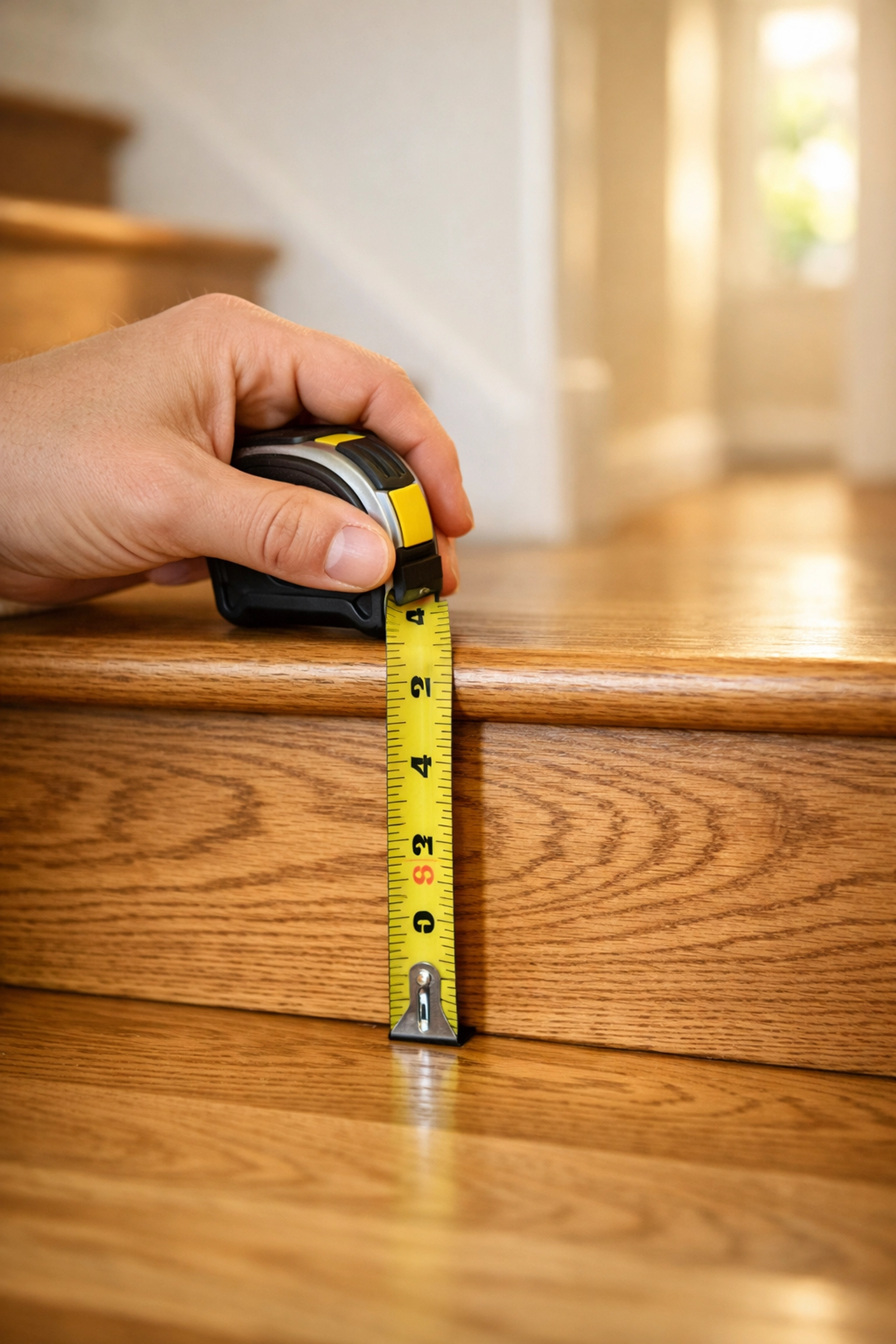
Have you ever walked up a flight of stairs and felt yourself stumble on a step that felt "off"? That’s usually because of an inconsistent riser height. Our brains are incredibly good at "mapping" a staircase within the first two steps. Once your brain determines the height of the first step, it automates your leg movement for the rest of the climb.
The Mistake: Even a difference of a quarter-inch between steps can disrupt your gait and cause a trip. Many older homes have stairs that have settled over time, or DIY repairs that resulted in uneven treads.
The Fix:
- Measure your steps: Use a tape measure to check the height (the riser) of every single step. Standard riser heights should ideally be between 6 and 7 inches (15–18 cm).
- Check for levelness: Use a spirit level to ensure the treads (where you place your foot) aren't sloping forward or to the side.
- Professional Correction: If your stairs are significantly uneven, it may be time to consult a carpenter. Replacing worn treads or using shims to level them out can make a world of difference.
2. Neglecting the "Three Points of Contact" Rule (Missing Rails)
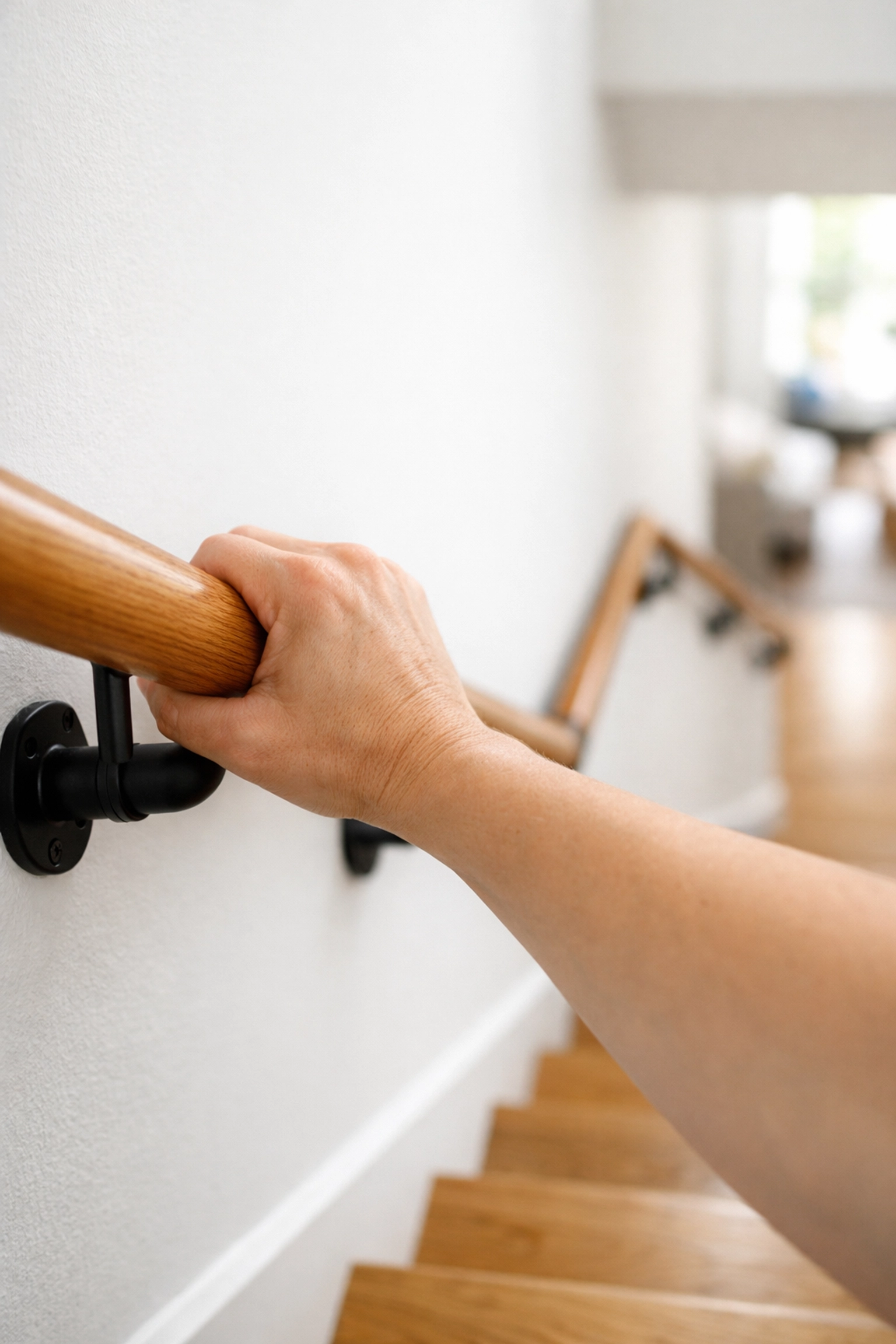
One of the most frequent issues we see in home assessments is a lack of proper handrails. Often, a staircase will have a rail on only one side, or worse, the rail stops before the staircase actually ends.
The Mistake: Relying on a single handrail or using a rail that is too short. If you have to let go of the rail to reach the last step, you are at your most vulnerable point without any support.
The Fix:
- Install Dual Handrails: If possible, have rails on both sides of the stairs. This allows you to use both hands for stability, which is especially helpful if one side of your body is weaker than the other.
- The Extension Rule: Ensure your handrails extend at least 12 inches (300mm) beyond the top and bottom steps. This allows you to maintain a grip while you are transitioning from the stairs to the flat floor.
- Check the Grip: A handrail should be easy to wrap your hand around. If it’s too wide or decorative to get a firm "power grip" on, it’s not doing its job.
3. Treating the Stairs Like a Storage Unit
We’ve all done it: placing a book, a pair of shoes, or a basket of laundry on the bottom step to "take up later." While it seems like a time-saver, it’s one of the most dangerous habits you can have in a home.
The Mistake: Using the stairs or the landings as temporary storage. These items narrow the walking path and create an immediate tripping hazard. In a moment of distraction, or in dim light, those shoes become a recipe for a fall.
The Fix:
- The "Clear Path" Policy: Make it a strict household rule that nothing: ever: sits on the stairs.
- Landing Zones: Place a small table or a designated "upstairs" bin at the top and bottom of the stairs, but ensure they are at least three feet away from the actual steps. This keeps the walkway clear while still giving you a place to put items that need to move between floors.
4. Inadequate or "Shadowy" Lighting
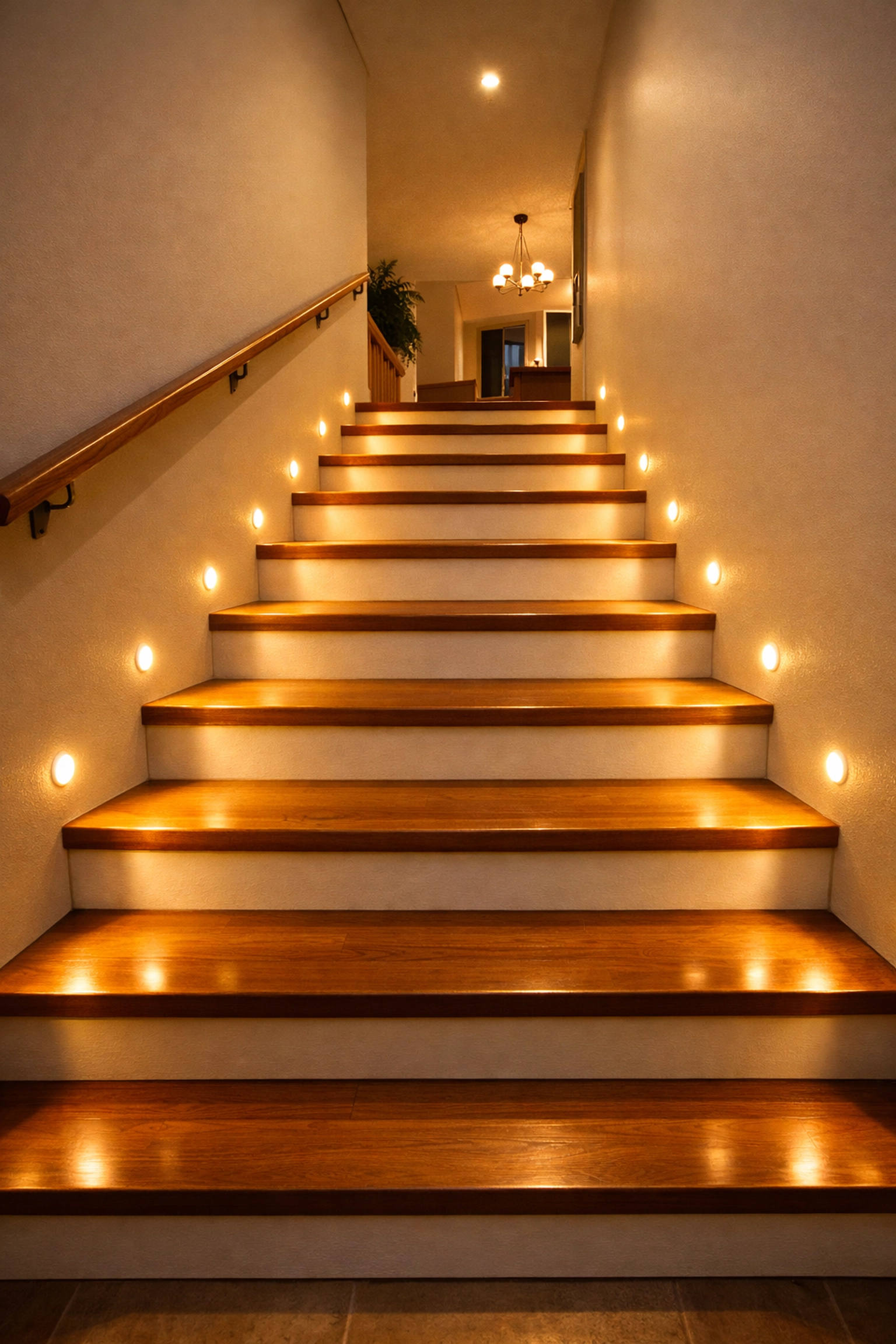
Vision is our primary source of balance. As we age, our eyes require more light to see clearly, and our ability to perceive depth can diminish. A stairway that looks "fine" during the day can become a dark tunnel at night.
The Mistake: Relying on a single overhead light that creates long shadows. Shadows can mask the edge of a step, making it look like the tread continues when it actually ends.
The Fix:
- Increase Lumens: Switch to brighter, "daylight" LED bulbs in your existing fixtures.
- Motion Sensors: Install motion-activated lights at the top and bottom of the stairs. This ensures the path is lit the moment you approach, without you having to fumbling for a switch in the dark.
- Task Lighting: Consider LED strip lighting under the lip of each tread or recessed wall lights that shine directly onto the steps.
- Contrast Strips: Apply a strip of high-contrast tape (like white on dark wood) to the edge of each step. This helps the eye quickly identify where the step ends and the drop begins.
5. Ignoring Slippery Surfaces
Aesthetically, polished hardwood or sleek tile stairs are beautiful. Practically, they can be as slippery as ice, especially if you are wearing socks or slippers without a rubber sole.
The Mistake: Leaving stairs as bare, smooth surfaces. Moisture from a spill or even humidity can make these surfaces treacherous.
The Fix:
- Non-Slip Treads: Add transparent or decorative non-slip adhesive strips to each step. They provide essential friction without ruining the look of your stairs.
- Low-Pile Carpet: If you prefer carpet, ensure it is a low-pile, tight-weave variety. Shag or thick carpeting can actually make the edge of the step "round" and harder to feel with your feet.
- Stair Mats: Individual rubber-backed stair mats can be placed on each step. Just ensure they are securely fastened so they don't become a trip hazard themselves.
6. Navigating the "Steep Slope"
Some homes, particularly older ones, have staircases built at a very sharp angle. These are often referred to as "ladder stairs" or "attic stairs," but they are sometimes found as the primary path to a second floor.
The Mistake: Trying to navigate a steep slope without adjusting your technique or environment. A steep stairs requires more hip and knee flexion, which can be difficult for those with arthritis or limited mobility.
The Fix:
- Slope Evaluation: The optimal angle for a home staircase is between 30 and 37 degrees. If yours is steeper, you need to be extra vigilant.
- Side-Stepping: If you find a staircase too steep, some people find it safer to turn slightly to the side and hold both rails while descending, though this should be discussed with a physical therapist first.
- The Power of Rest: If the staircase is long and steep, consider if there is room for a small "resting seat" on a landing.
7. Overlooking Minor Structural Damage
We often ignore a squeaky board or a slightly loose banister, thinking of it as "character" of an old house. However, in the world of fall prevention, these are early warning signs.
The Mistake: Waiting for something to break before fixing it. A loose handrail that gives way when you put your weight on it can turn a minor stumble into a major fall.
The Fix:
- The "Shake Test": Once a month, give your handrails a firm shake. If there is any "give," tighten the brackets or add new ones.
- Secure the Treads: If a step feels loose or squeaks, it likely needs to be re-secured. Use wood screws rather than nails; screws have much better "grip" and won't pop back out over time as the wood expands and contracts.
- Check for Splinters or Cracks: Run a gloved hand (to avoid splinters!) over the rails and treads to ensure everything is smooth and intact.
The Role of Footwear and Habit
While the environment is half the battle, our personal habits make up the other half. Even the safest staircase in the world is dangerous if you are navigating it in floppy slippers or while carrying a bulky item that blocks your view of your feet.
Footwear Matters
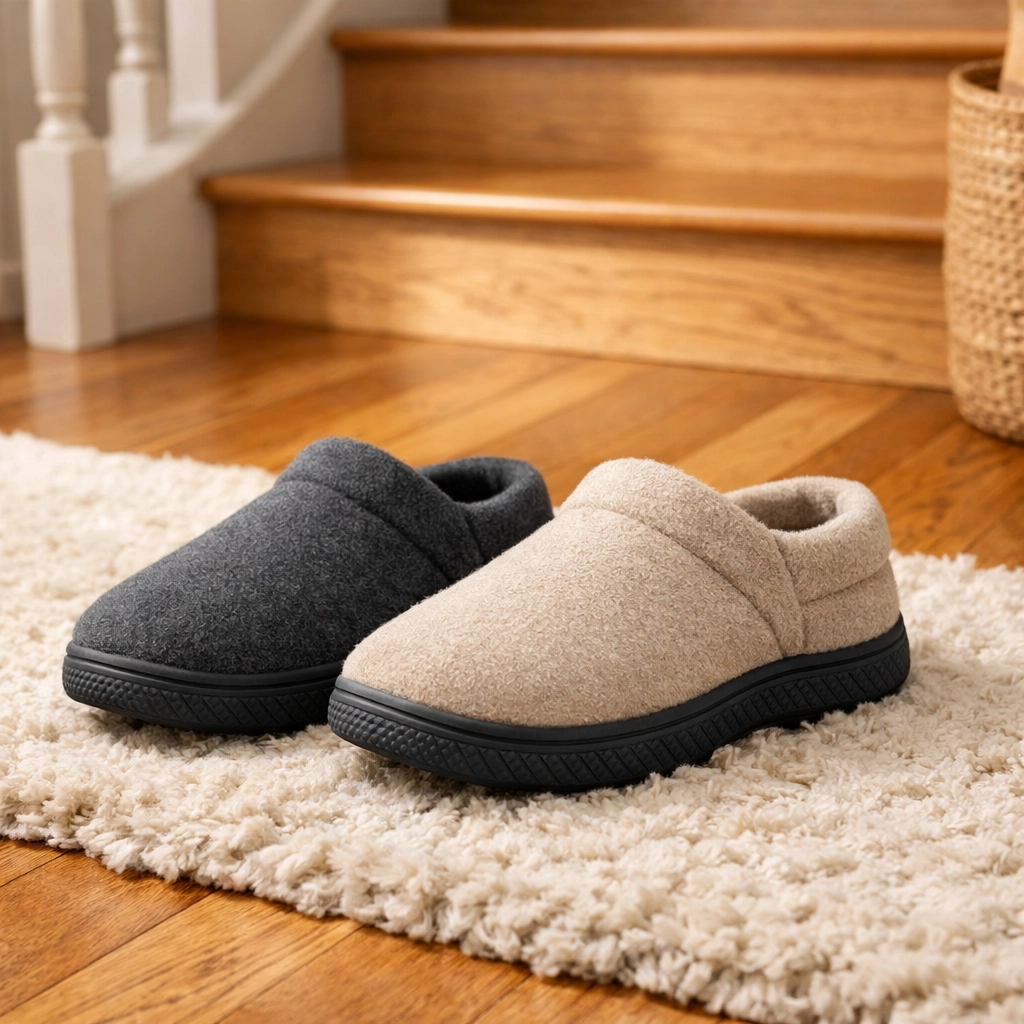
The best footwear for stairs is a sturdy shoe with a rubber sole that fits snugly to the foot. Walking in socks is one of the leading causes of indoor slips. If you prefer to be "shoes-off" in the house, invest in a pair of high-quality indoor slippers with non-skid soles and a closed heel.
Safe Carrying
If you must move items between floors, try to keep one hand free for the rail. This might mean making two trips instead of one, or using a small backpack to carry items upstairs so your hands remain free to grip the rails.
The "Step-By-Step" Approach
When you are feeling tired or rushed, it’s tempting to "gallop" down the stairs. Instead, practice mindful walking. Place your entire foot on the tread, not just the ball of your foot. If balance is a major concern, the "step-to" pattern (where both feet meet on the same step before moving to the next) is the safest way to descend.
A Final Thought on Confidence
Fear of falling is a real and documented condition that can actually increase your risk of a fall because it makes you stiffen your muscles and look down at your feet rather than ahead. By fixing these seven common mistakes, you aren't just making the stairs physically safer; you are giving yourself the confidence to move freely in your home.
When the rails are sturdy, the steps are bright, and the path is clear, the stairs stop being a source of stress and return to being just another part of your house. Take it one step at a time, literally: and you'll find that staying safe at home is well within your reach.
If you are unsure about the safety of your stairs, we always recommend reaching out to a professional, such as a physical therapist or a certified aging-in-place specialist, for a personalized assessment. They can provide specific recommendations tailored to your unique mobility needs and home layout.
Stay safe, stay mobile, and remember that a few small changes today can prevent a big problem tomorrow.

