
Hi, I’m Brian Kerr, the founder of Fall Guys Products. Over the years, I’ve had many conversations with families and seniors who tell me the same thing: the stairs have started to feel like a mountain. Whether it’s the three steps leading into the house from the garage or the full flight going up to the bedroom, stairways often represent the biggest challenge to staying independent at home.
It’s completely normal to feel a bit of hesitation as we get older or deal with mobility changes. But here’s the thing: safety isn’t about luck. It’s about design, behavior, and a few smart adjustments. This guide is designed to take the mystery out of stair safety. We are going to look at everything from the way your body moves to the specific measurements of your steps, ensuring your entryways and internal stairs are as safe as possible.
The Mental Game: Focus and Awareness
Most falls on stairs don’t happen because of a catastrophic structural failure. They happen because of a momentary lapse in focus. When we are in our own homes, we tend to move on "autopilot." We’ve walked these stairs thousands of times, so we stop thinking about them.
Avoiding Distractions
The most common cause of stair accidents is simple inattention. In our modern world, that usually means a smartphone. Never use your phone while ascending or descending stairs. Even if it’s just a quick glance at a text, your brain loses its "proprioception": the sense of where your limbs are in space.
If you need to check your phone or a piece of mail, stop, find a flat landing, and finish your task before continuing.
One Step at a Time
Rushing is the second major behavioral risk. We often try to carry too many things at once: laundry baskets, groceries, or even a heavy book: which blocks our view of our feet. If you can’t see the "nose" or edge of the next step, you are at a significantly higher risk of a misstep.
Always take the stairs one step at a time. Plant your foot firmly, ensure your balance is centered, and then move to the next. It sounds simple, but consciously slowing down is the most effective safety measure you can implement today.
Body Mechanics: The Science of the Climb
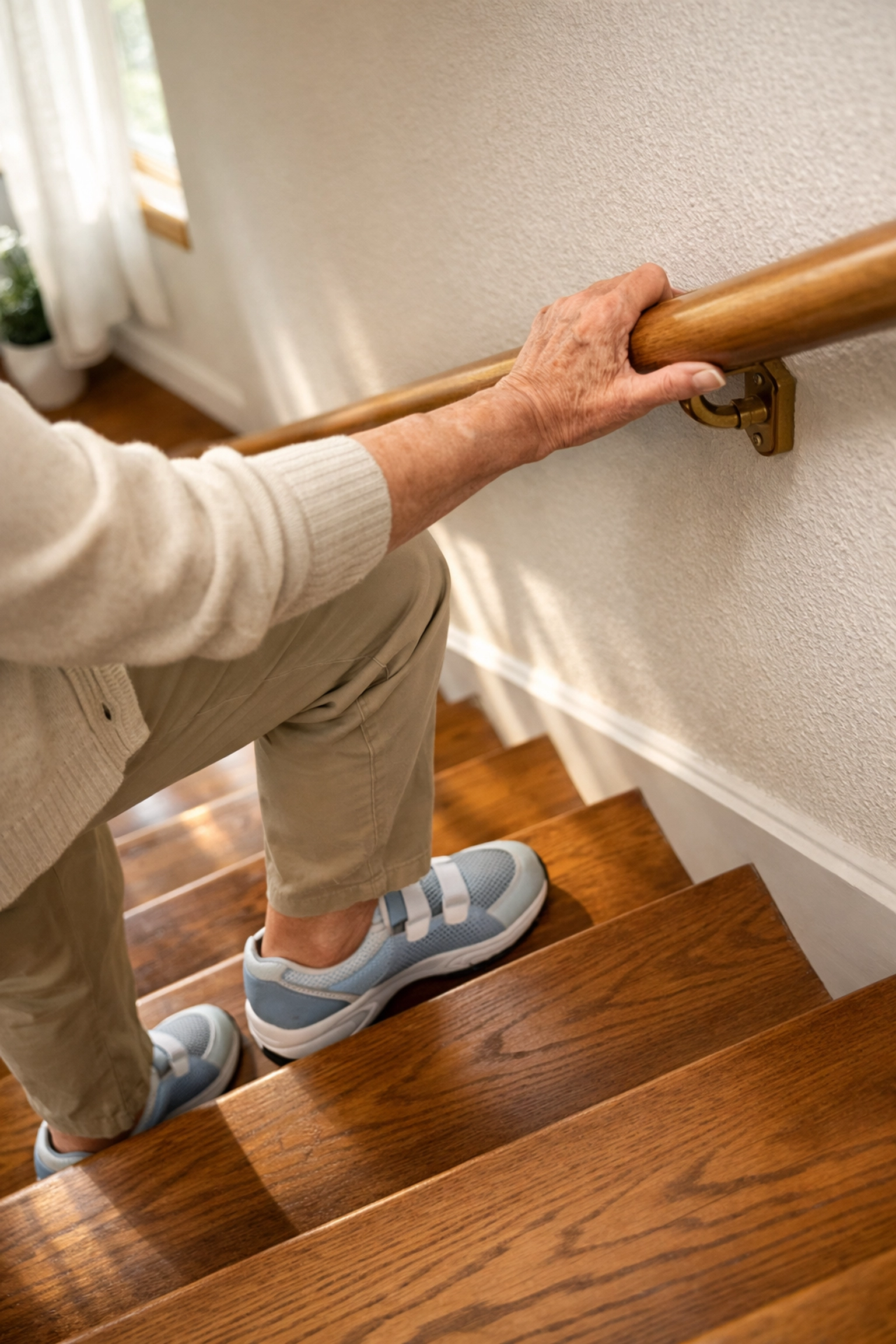
The way you physically interact with the stairs matters. Occupational therapists often talk about "points of contact." On a ladder, you want three points of contact. On stairs, the standard for safety is keeping at least two points of contact at all times.
Two Points of Contact
This usually means having one hand firmly on the handrail and at least one foot securely on a tread. By keeping your hand on the rail, you create an anchor point. If your foot slips, your hand is already in position to stabilize your weight.
Foot Positioning
When you walk on flat ground, you usually land on your heel. On stairs, especially when going down, many people tend to place only the front half of their foot on the step. This is a recipe for a slip.
Try to ensure that as much of your foot as possible is on the stair tread. If your stairs are too narrow to accommodate your whole foot, you may need to angle your feet slightly outward to increase the surface area of contact.
The Anatomy of a Safe Staircase
If you are looking at your home and wondering if your stairs are "up to code" or safe for aging in place, there are specific numbers you should know. Stair design is a science, and even a small inconsistency can lead to a fall.
Riser Height and Tread Depth
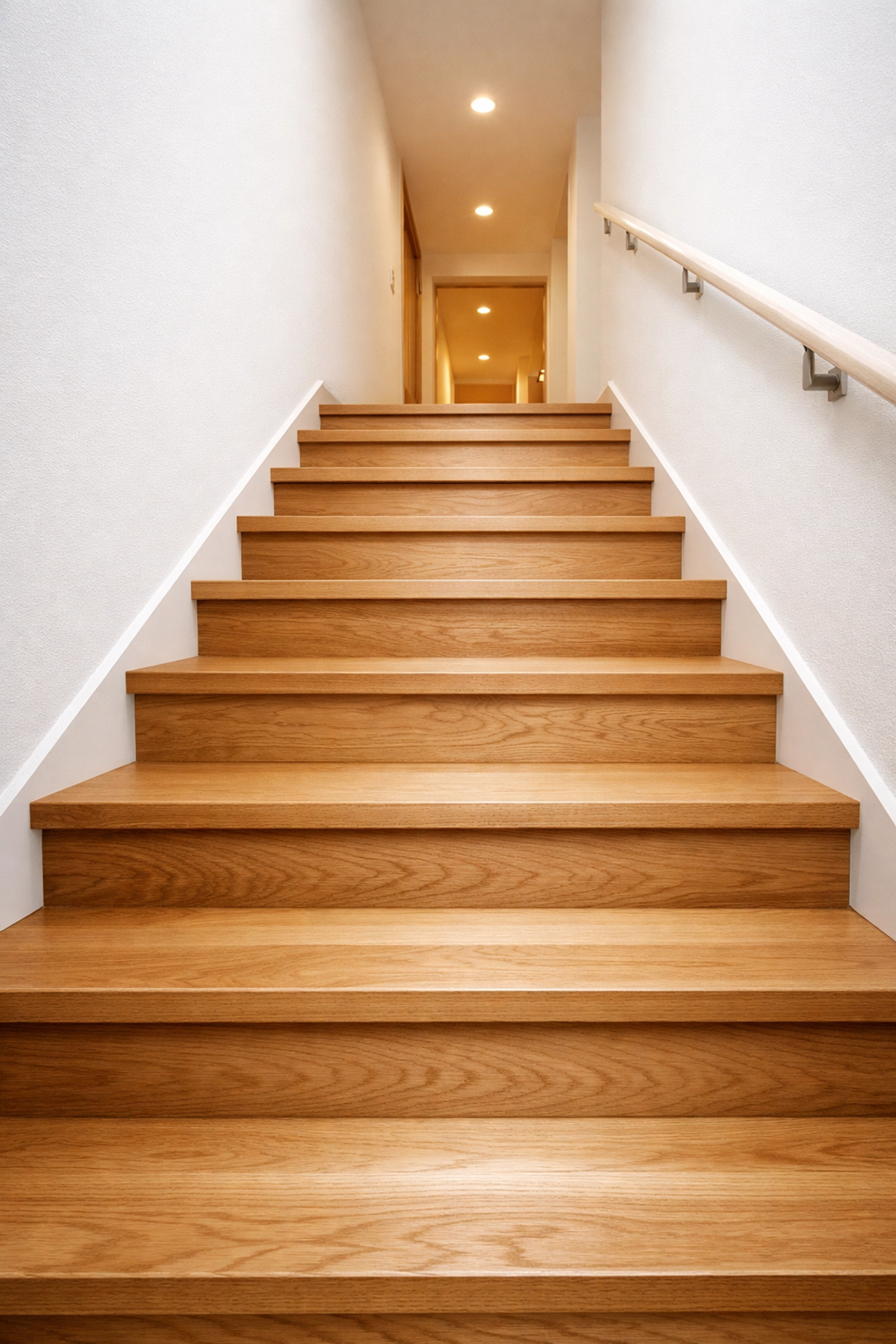
The riser is the vertical part of the step, and the tread is the horizontal part where you place your foot.
- Uniformity is Key: Your brain builds a "rhythmic memory" as you climb. If one riser is 7 inches high and the next is 7.5 inches, your foot might snag on the edge. All steps in a flight should be identical in height and depth.
- The Ideal Riser: Generally, a riser height of about 7 inches is considered the "sweet spot." Anything over 9.5 inches is considered a high-risk zone for most seniors.
- The Ideal Tread: A tread depth of 11 inches is optimal. This allows most people to place their entire foot on the step without their toes hanging over the edge.
Clearances
Entryways often have overhead obstructions. Per standard safety codes, you should have at least 6 feet, 8 inches of vertical clearance. If you have to duck while using the stairs, you are shifting your center of gravity and looking away from your feet: both of which increase fall risk.
Handrails: Your Primary Lifeline
A handrail shouldn't just be a piece of wood attached to the wall; it needs to be a functional tool. Research shows that just having a handrail within reach can prevent a fall, even if you aren't actively gripping it, because it provides a visual guide for your brain.
Double Up
Most homes only have a handrail on one side. If possible, install handrails on both sides of the stairway. This is especially helpful if one side of your body is weaker than the other (for example, following a hip replacement or a stroke). Having a rail on both sides ensures you always have a "strong" side to lean on, whether you are going up or down.
Grip and Sturdiness
Can you wrap your hand entirely around your handrail? Many decorative handrails are too wide or too flat, making them hard to "power grip" in an emergency. A round or oval rail that is roughly 1.5 to 2 inches in diameter is usually best.
The rail must also be rock solid. If you pull on it and see the brackets moving or hear the wood creaking, it needs immediate attention. A handrail that gives way when you lean on it is more dangerous than having no rail at all.
Lighting and Visibility
Falls often happen because we simply can't see where one step ends and the next begins. This is especially true for those of us with declining vision or depth perception issues.
Eliminate Shadows
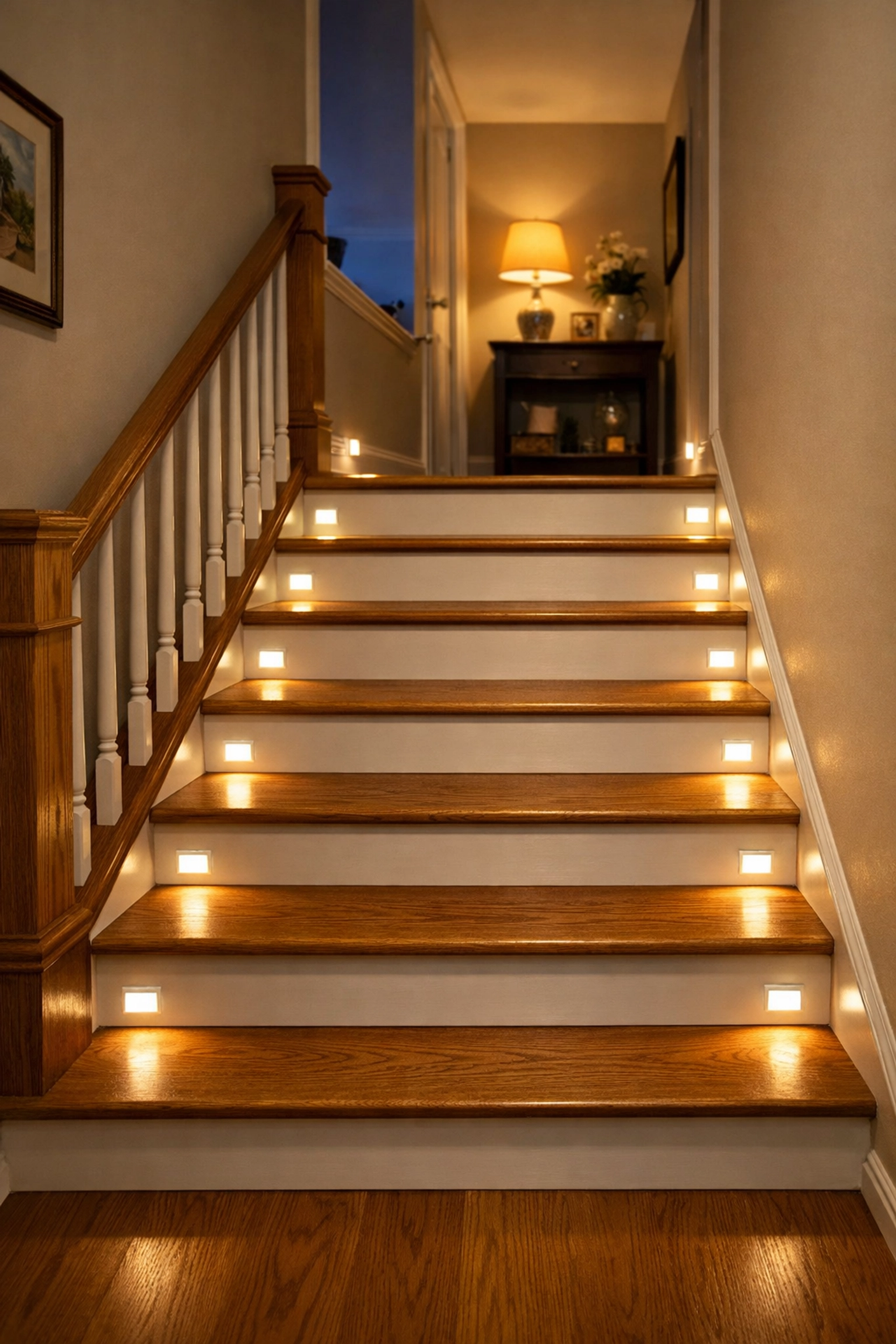
Poorly placed overhead lights can create long shadows that hide the edge of the step. The goal is even, bright light across the entire flight.
- Toggle Switches: Ensure there is a light switch at both the top and the bottom of the stairs. Never "climb in the dark" to reach a switch.
- Motion Sensors: Battery-operated LED motion lights are a fantastic, low-cost way to illuminate stairs automatically as you approach.
High-Contrast Marking
If your stairs are all one color: like dark wood or beige carpet: it can be hard to distinguish the "nose" of the step. You can apply high-contrast anti-slip tape to the edge of each step. For example, a strip of yellow or white tape on dark wood provides a clear visual cue of where to step.
Mastering Entryways and Thresholds
The transition from outside to inside is one of the most hazardous zones in the home. You are often dealing with changing surfaces (concrete to wood), weather elements (rain or ice), and thresholds.
The Threshold Problem
That little "lip" at the bottom of your front door is a major tripping hazard. If the threshold is higher than half an inch, it acts like a tiny wall. If you can’t remove the threshold, consider a small "threshold ramp" or a rubber wedge that creates a smooth slope instead of a sharp drop.
Non-Slip Mats
We often use mats at entryways to keep the floor clean, but a loose mat on a slippery floor is a "slip-and-slide" waiting to happen. Use only heavy-duty mats with rubberized, non-slip backing. Better yet, secure the edges of the mat to the floor using double-sided rug tape.
Footwear: The Often Forgotten Factor
You can have the safest stairs in the world, but if you are wearing the wrong shoes, you are still at risk.
- No "Socks Only": Never walk on wooden or tile stairs in just socks. You have almost zero traction.
- Avoid "Floppy" Slippers: Slippers without a back (clogs) can easily slide off your foot mid-step.
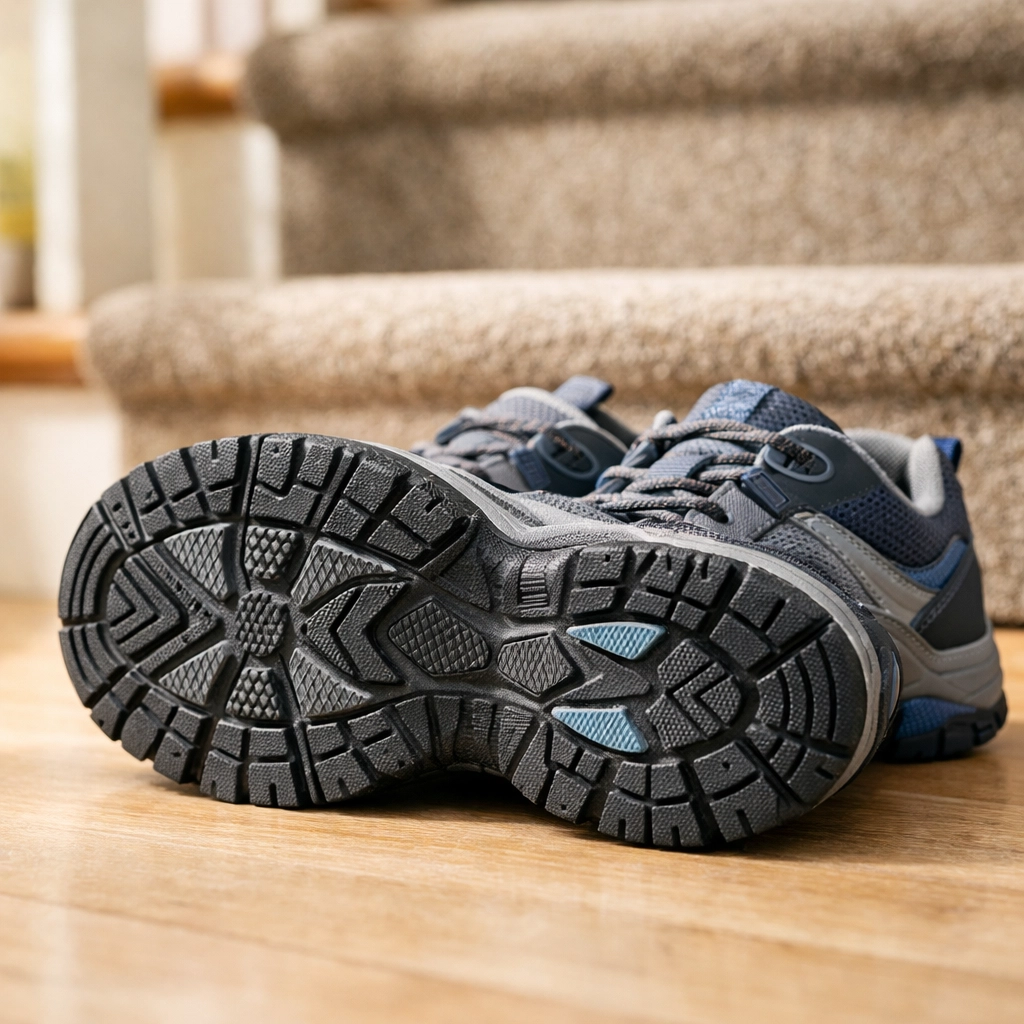
- Proper Soles: Look for footwear with a thin but firm rubber sole. A sole that is too thick can actually decrease your "feel" for the step, while a rubberized grip prevents sliding.
Maintenance and Inspections
Finally, a safe stairway requires regular check-ups. Our homes "settle" and materials wear out over time.
The Clutter-Free Rule
It is tempting to leave things at the bottom of the stairs to "take up later." This is a habit we have to break. A stray shoe, a stack of books, or a rogue pet toy on a staircase is an invitation for an accident. Keep the stairs 100% clear at all times.
Surface Integrity
- Carpet: Check for any loose threads or bulging areas. If the carpet is loose, it can snag your toe.
- Wood: Look for splinters or areas where the finish has become excessively slick.
- Exterior Stairs: Check for moss or algae growth, which becomes incredibly slippery when wet. A quick power wash or a specialized anti-slip outdoor coating can make a world of difference.
Taking the First Step
Making your stairs safe doesn't have to happen all at once. Start by clearing the clutter and checking your lighting. Then, move on to checking the sturdiness of your handrails.
Independence is about being able to move through your own home with confidence. By taking the time to understand the mechanics of stair safety: and making the necessary environmental adjustments: you aren't just preventing a fall; you're ensuring that you can continue to enjoy every level of your home for years to come.
Stay safe out there. Be mindful, take your time, and remember that every small change you make adds a layer of protection to your daily life.

