
Starting the conversation about mobility aids can feel like a heavy topic. For many seniors and their families, there is a natural hesitation. It often feels like a milestone that signifies a loss of independence. But here at Fall Guys Products, we like to look at it differently. My name is Brian Kerr, and I’ve spent a lot of time talking to folks about this transition. In my experience, the right mobility aid isn’t a sign of slowing down: it’s a tool that helps you keep going.
Think of it like a pair of glasses. You don't wear glasses because you’ve "given up" on seeing; you wear them so you can keep reading, driving, and enjoying the view. Mobility aids are exactly the same. They are designed to bridge the gap between where you are and where you want to go, ensuring you get there safely.
In this guide, we’re going to break down the basics. If you’re just starting to notice a little wobble in your step or if you’re helping a loved one navigate their options, this 101 guide is for you.
Recognizing the Signs: When Is It Time?
Knowing when to introduce a mobility aid is often the hardest part. Usually, the need doesn't appear overnight. It’s a gradual realization. You might notice yourself "furniture walking": touching tables, chair backs, or walls as you move through a room for extra stability. You might feel a bit of "heavy-headedness" or find that you’re avoiding certain activities, like walking to the mailbox, because it feels too tiring or risky.
The most important thing to remember is that you shouldn't wait for a fall to occur before considering an aid. Proactive safety is the goal. If you find yourself feeling fatigued after short walks, or if your balance feels "off" when you first stand up, it’s worth exploring the options available.

The Humble Cane: The First Line of Support
The cane is perhaps the most common mobility aid, and for good reason. It’s lightweight, portable, and provides just enough support for those who still have a relatively steady gait but need a bit of extra confidence.
Standard Canes vs. Quad Canes
A standard single-point cane is excellent for minor balance issues or for taking pressure off a slightly painful knee or hip. It can support up to about 25% of your body weight.
However, if you need more stability, a quad cane might be the better choice. These have a four-point base that stays flat on the floor. One of the biggest perks of a quad cane is that it can stand up on its own. You don’t have to worry about it leaning against a chair and falling over, which prevents the user from having to bend down to pick it up: a common cause of falls.
The Secret to Using a Cane Correctly
One of the most common mistakes people make is using the cane on the "wrong" side. If your left knee is the one causing you trouble, you should actually hold the cane in your right hand. This might feel counterintuitive at first, but it allows the cane to mimic the natural swing of your arms and provides support to the opposite side of the body as you step forward with the weaker leg.
Walkers and Rollators: Step-Up Support
When a cane isn't quite enough to provide the stability needed, we look toward walkers. There are two primary types you’ll encounter: the standard walker and the rollator.
The Standard Walker
The standard walker (often called a "pick-up walker") has no wheels. It provides the maximum amount of stability because all four legs stay on the ground until you lift it. These are often used for short distances or during recovery from surgery (like a hip or knee replacement). Because you have to lift the walker with every step, it does require some upper-body strength and can be a bit slower to use.
The Rolling Walker (Rollator)
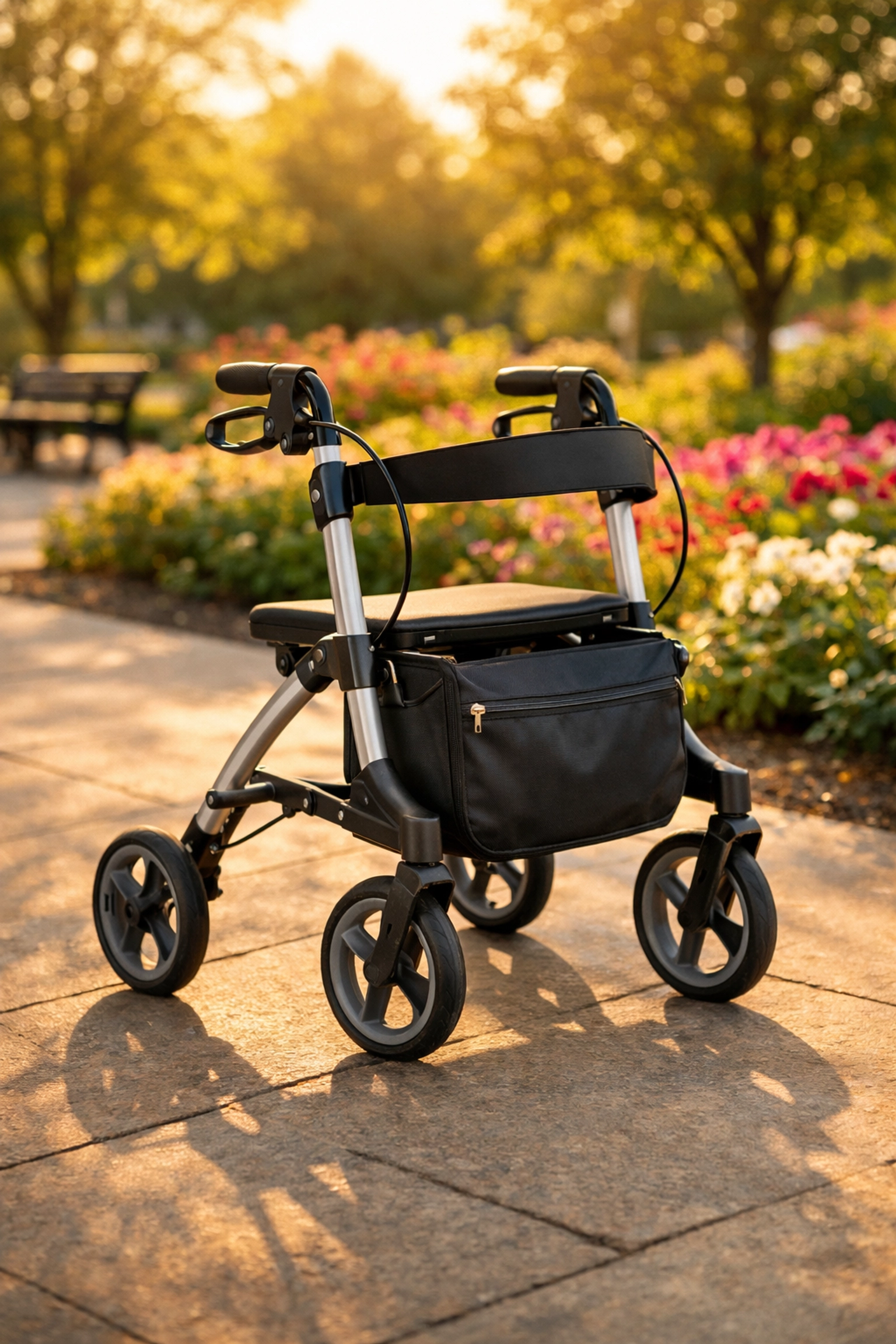
A rollator is a walker with wheels on all four legs, hand brakes, and: most importantly: a built-in seat. These are fantastic for seniors who can walk but need to take frequent breaks. If you’re heading to the grocery store or a park, a rollator gives you the peace of mind that a chair is always behind you if you feel fatigued.
It’s important to note that because rollators have wheels, they move more easily. This is great for maintaining a natural walking rhythm, but it requires the user to have enough hand strength to operate the brakes effectively.
Specialized Aids for the Home
Mobility isn't just about walking; it’s about getting in and out of bed, up from a chair, or safely through a doorway. These are often called "stationary" or "transfer" aids.
Assist Rails and Bed Rails
Getting out of bed is a high-risk moment for falls, especially if you experience "orthostatic hypotension" (that dizzy feeling when you stand up too fast). An assist rail provides a solid handle to grip while sitting up and standing. Unlike a full bed rail, which is meant to keep someone from falling out of bed, an assist rail is specifically designed to help with the transition from sitting to standing.
Transfer Poles
A transfer pole (sometimes called a floor-to-ceiling pole) is a tension-mounted pole that can be placed almost anywhere in the home. They are incredibly useful in the bathroom or next to a favorite recliner. Because they are vertical, they allow you to "climb" up to a standing position using your arm strength, which is much safer than pushing off a soft, unstable chair arm.
Getting the Right Fit: Why Measurement Matters
You wouldn't wear shoes that are three sizes too big, and you shouldn't use a mobility aid that isn't fitted to your body. Using a walker or cane that is too high or too low can lead to back pain, poor posture, and actually increase your risk of falling.
The "Wrist Crease" Rule
Whether you are using a cane or a walker, the general rule of thumb for height is the "wrist crease" rule.
- Stand up as straight as possible with your arms hanging naturally at your sides.
- The handle of the cane or walker should align with the crease of your wrist.
- When you grip the handle, your elbow should have a slight bend (about 15 to 20 degrees).
If the aid is too high, it will push your shoulders up toward your ears. If it’s too low, you’ll find yourself leaning forward, which shifts your center of gravity and makes you less stable.

Maintaining Your Mobility Aid
Once you have the right equipment, it needs a little "TLC" to stay safe. Much like a car, mobility aids have parts that wear down over time.
- Check the Rubber Tips: The rubber "ferrules" at the bottom of canes and walkers are what provide the grip. If the tread is worn smooth, it becomes slippery on tile or wood floors. Check these monthly and replace them if they look worn.
- Brake Checks: For rollators, ensure the brakes "lock" firmly. If the wheels still slide when the brakes are engaged, the cables might need tightening.
- Wobble Test: Periodically check that all screws are tight and that the frame doesn't feel "loose" or shaky.
The Role of Physical Therapy
I always tell people: the equipment is only half of the equation. The other half is knowing how to use it. If you’re considering a mobility aid, I highly recommend asking your doctor for a referral to a Physical Therapist (PT).
A PT can perform a professional mobility assessment. They can look at your gait, evaluate your strength, and tell you exactly which device fits your specific needs. They can also teach you the "tricks of the trade," like how to safely go up and down curbs or how to navigate narrow hallways with a walker. This professional guidance turns a piece of metal and plastic into a true extension of your body.

Home Preparation: Clearing the Path
A mobility aid is only as effective as the environment it’s used in. If your home is cluttered, even the best walker in the world won’t prevent a fall.
- Remove Rugs: Throw rugs are the number one enemy of walkers and canes. They can bunch up or slide, catching the tip of a cane or the wheel of a rollator.
- Clear Walkways: Ensure there is a wide, clear path between the bedroom, bathroom, and kitchen.
- Check Lighting: Make sure paths are well-lit so you can see any obstacles in your way.
Embracing the Change
Transitioning to a mobility aid is an emotional journey. It’s okay to feel a bit frustrated or self-conscious at first. But I’ve seen thousands of seniors regain their lives because they chose to use a tool that kept them safe.
When you can go to your grandson's graduation because you have a rollator to sit on, or when you can keep gardening because you have a steady cane to help you through the yard, the aid isn't a "crutch": it’s a key. It’s the key to staying active, staying involved, and staying independent.
Safe movement is a skill, and like any skill, it takes the right tools and a bit of practice. Start slow, get the right fit, and don't be afraid to lean on a little extra support. That’s what it’s there for.

Final Thoughts on Safety
As you begin this journey, remember that safety is a continuous process. Your needs might change over time, and that’s perfectly normal. Keep an open line of communication with your healthcare providers and stay proactive about your home environment. Movement is life, and we’re here to help you keep moving safely, one step at a time.

