
Stairs are often the most challenging part of a home to navigate as we age. While we might think of them simply as a way to get from point A to point B, they represent a complex physical task that requires balance, strength, and spatial awareness. For many, maintaining the ability to use the stairs is a point of pride and a key component of staying independent in a multi-level home.
However, familiarity can sometimes lead to complacency. Because we climb these steps every day, we often overlook small hazards that gradually increase the risk of a slip or trip. Ensuring stair safety isn’t about being fearful; it’s about being prepared and making small, smart adjustments to the environment and our habits.
Here are seven common mistakes people make with stair safety and, more importantly, the practical steps you can take to fix them.
1. The "Hurry-Up" Habit
One of the most frequent causes of incidents on stairs is simply being in a rush. Whether it’s answering a ringing phone, catching a delivery person at the door, or just trying to get a chore done quickly, rushing changes the way our bodies move. When we hurry, our center of gravity shifts forward, and our steps become shallower. We are more likely to catch a toe on a riser or miss the edge of a tread entirely.
As we age, our proprioception: the body’s ability to sense its position in space: can slow down slightly. When we move too fast, our brain and limbs might not communicate quickly enough to correct a slight wobble.
How to Fix It:
Make "intentional movement" your new rule for the stairs. Before you take the first step, pause for a second. Ensure you are focused on the task at hand rather than what you need to do once you get to the other floor. If the phone is ringing, let it go to voicemail. If someone is at the door, they can wait an extra thirty seconds. Taking each step one at a time, with full foot placement on each tread, significantly reduces the likelihood of a misstep.
2. Neglecting the Handrail
It is common for people to feel they don’t "need" the handrail, especially if they feel strong or are in their own home. You might find yourself walking up the middle of the stairs or carrying items in both hands, leaving no way to steady yourself if you lose balance. A handrail isn’t just a crutch for when you feel weak; it is a critical safety tool that provides a point of stability and a way to arrest a fall before it happens.
In many older homes, handrails may only be on one side, or they may be decorative rather than functional. A railing that is too wide to grip properly or one that is loose is almost as risky as having no railing at all.
How to Fix It:
The gold standard for stair safety is having sturdy handrails on both sides of the staircase. This allows for "bilateral support," which is especially helpful if one side of your body is weaker than the other. Ensure the handrails are at a comfortable height (usually between 34 and 38 inches) and that they are rounded. A circular or oval handrail is much easier to grip firmly than a wide, flat decorative one. Most importantly, make it a habit to keep at least one hand on the rail at all times, even if you feel perfectly steady.
3. Using Stairs as Temporary Storage
We’ve all done it: placing a book, a pair of shoes, or a basket of laundry on the bottom steps to "take up later." This creates a significant tripping hazard. Stairs are narrow by design, and any object placed on a tread reduces the amount of space your foot has to land. Furthermore, objects on stairs can be difficult to see when descending, as they may blend into the shadows or the pattern of the carpet.
Even small items, like a stray slipper or a rogue power cord running across a landing, can lead to a loss of balance.
How to Fix It:
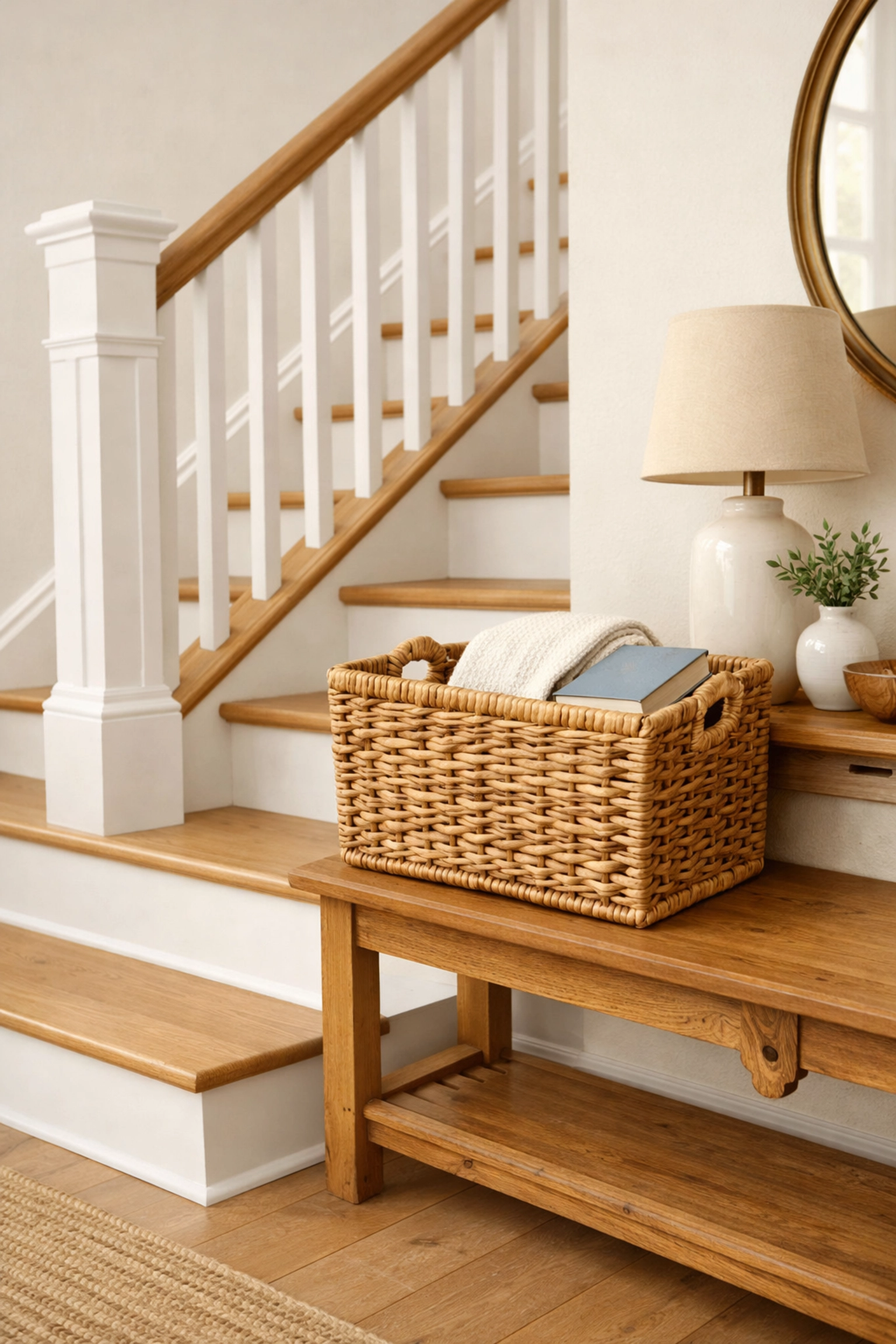
Establish a "Zero Objects" policy for your staircases. Nothing should ever be placed on a step, even "just for a minute." If you have items that need to go to another floor, place them in a dedicated "to go up" basket kept on a table near the stairs, rather than on the steps themselves. This keeps the walkway completely clear and ensures that your focus remains on your footing rather than navigating around obstacles.
4. Inadequate Lighting and Poor Contrast
Vision plays a massive role in how we navigate stairs. As we age, our eyes require more light to see clearly, and our ability to perceive depth can diminish. If a stairwell is dimly lit, it becomes difficult to tell where one step ends and the next begins. This is particularly dangerous at the top and bottom of the staircase, where transitions occur.
Shadows can also be deceptive. A shadow cast by a handrail or a nearby piece of furniture can look like the edge of a step, causing you to overextend or understep.
How to Fix It:
Ensure there is bright, overhead lighting at both the top and bottom of the stairs. Light switches should be accessible at both ends so you never have to navigate the stairs in the dark to reach a switch. Consider installing motion-activated LED strip lighting under the lip of each step or along the baseboard; these provide a clear path without being blindingly bright at night.
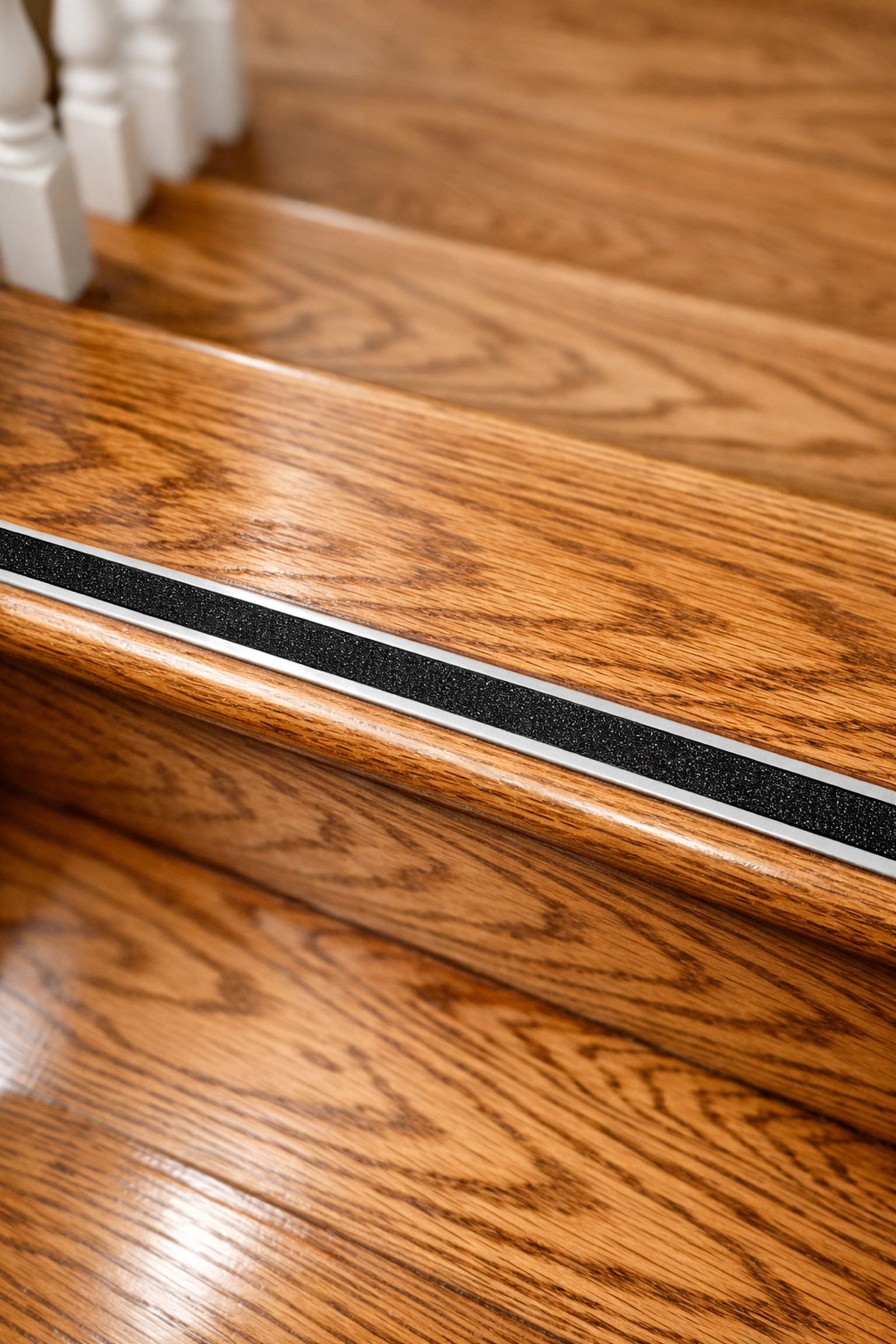
Another effective fix is adding "contrast strips." If your stairs are dark wood or uniform carpeting, it can be hard to see the edge. Adding a strip of high-contrast tape or a different colored tread edge can help your brain quickly identify exactly where to place your foot.
5. Overlooking Wear and Tear
Stairs endure a lot of traffic, and over time, they can become physically unsafe. Common issues include:
- Loose Carpeting: Carpet that has stretched or come unfastened can create a "bubble" that catches your toe.
- Worn Treads: Wooden or tile steps can become smoothed down over decades, making them incredibly slick, especially if you are wearing socks.
- Loose Floorboards: A creaking step might seem like a minor annoyance, but if the wood is shifting, it can cause a momentary loss of balance.
How to Fix It:
Perform a monthly "stair audit." Walk the stairs slowly and look for any signs of fraying carpet, loose nails, or wobbling railings. If you have wooden stairs that feel slippery, consider adding non-slip adhesive transparent strips. They provide extra friction without changing the look of your stairs. If the carpet is loose, have a professional re-stretch and tack it down immediately. Maintenance is much easier and cheaper than recovering from an injury.
6. Wearing the Wrong Footwear
What you wear on your feet is just as important as the stairs themselves. Many people prefer to walk around their homes in socks or stockings, but on wooden or laminate stairs, this is essentially like walking on ice. Conversely, floppy slippers or "backless" shoes can easily slide off your foot mid-step, causing a trip.
Even being barefoot isn't always ideal, as it provides no arch support and can be less stable if your feet are prone to swelling or fatigue.
How to Fix It:
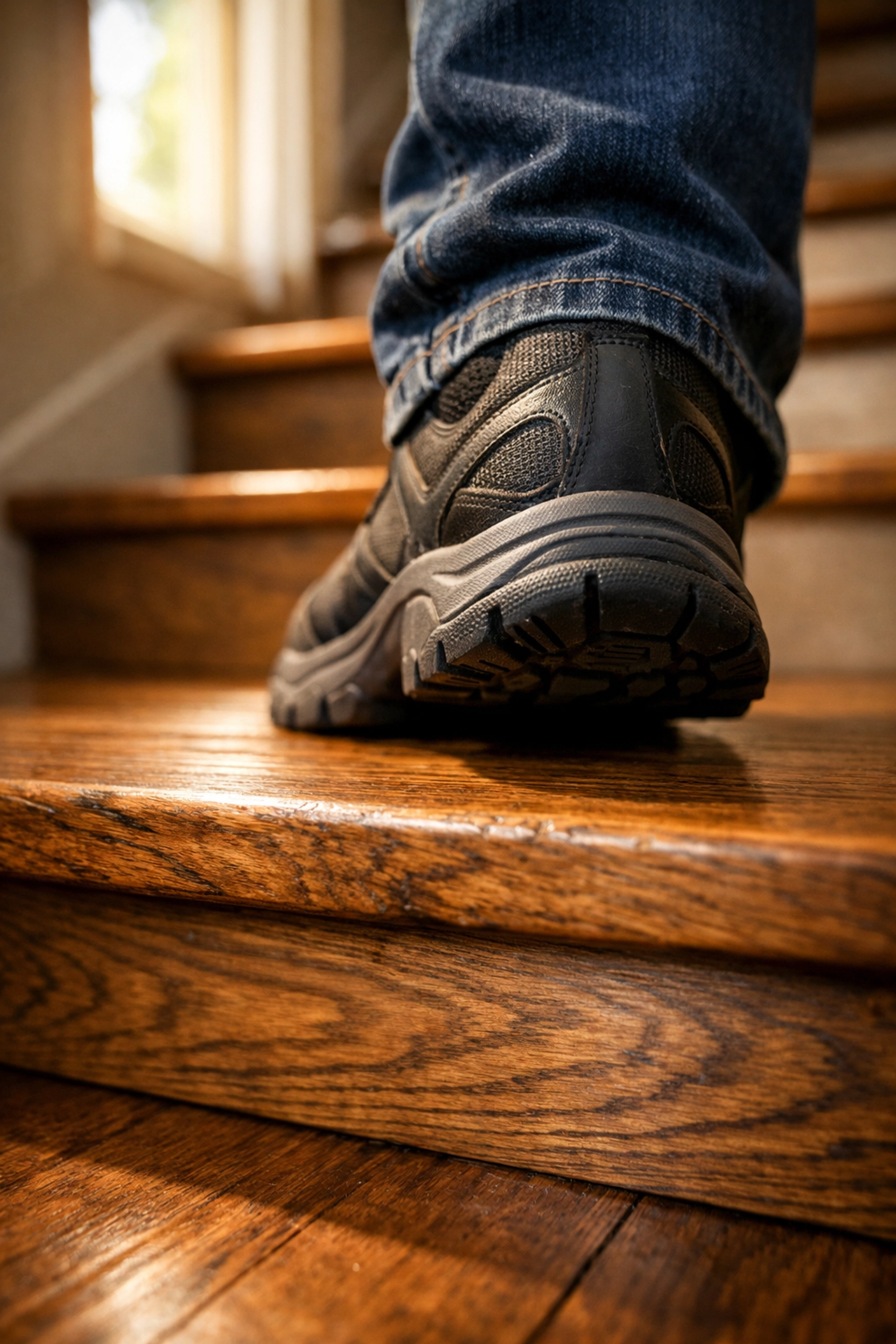
The safest option for navigating stairs is a sturdy, well-fitting shoe with a rubber, non-slip sole. If you prefer to be comfortable at home, look for "house shoes" that have a full back (no scuffs or clogs) and a grip-friendly bottom. Avoid walking on stairs in just socks at all costs. If you absolutely must go without shoes, bare feet are safer than socks, but a dedicated indoor shoe is always the best choice for stability and traction.
7. Carrying Too Much at Once
It is tempting to try and save a trip by carrying several items at once. However, carrying a large laundry basket or a stack of boxes creates two major risks. First, it blocks your line of sight; if you can’t see your feet and the steps below you, you are relying entirely on memory and feel, which is dangerous. Second, it occupies your hands, preventing you from using the handrail.
Even carrying a small pet or a heavy tray can shift your center of gravity and make it harder to recover if you stumble.
How to Fix It:
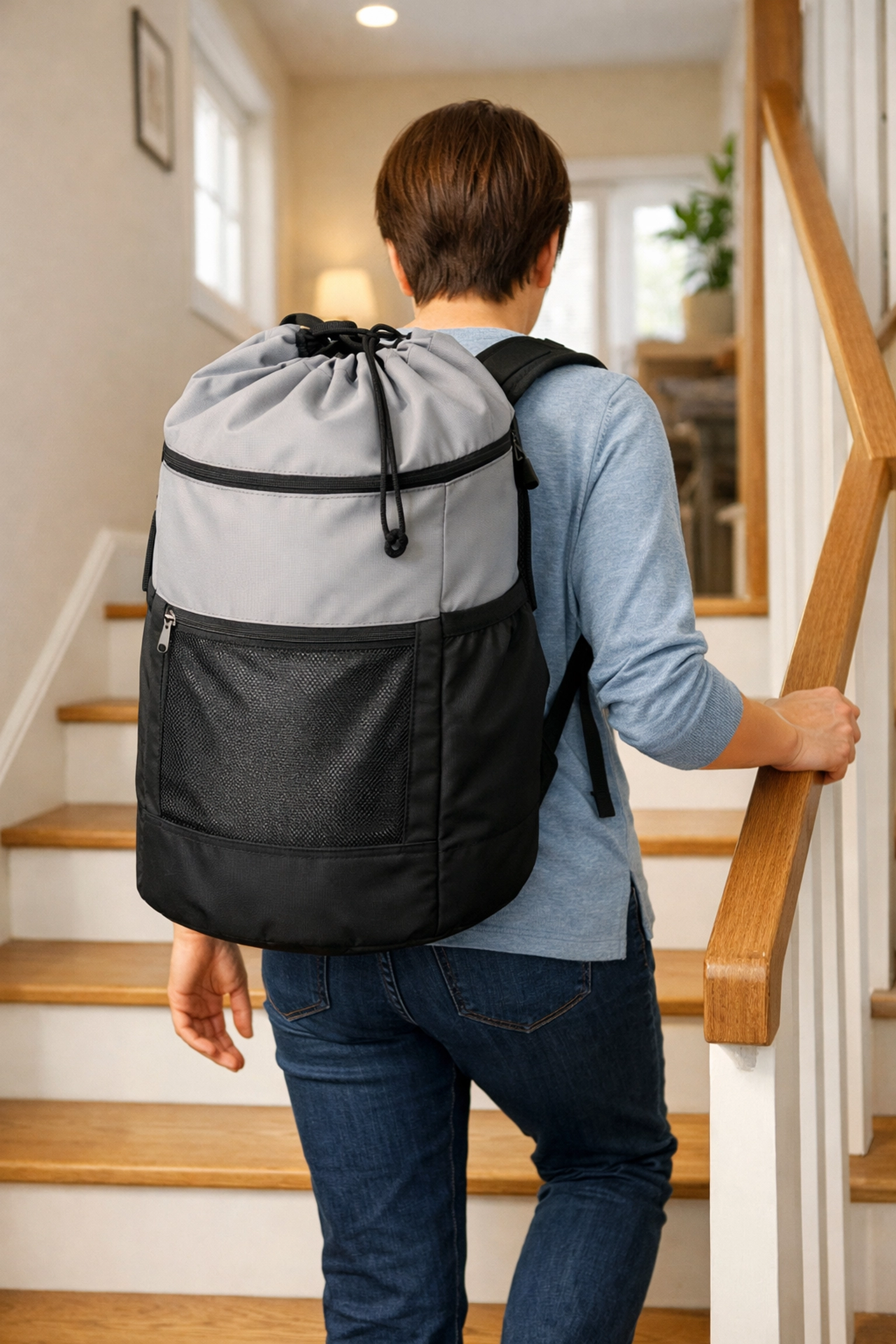
The rule of thumb is: keep at least one hand free for the railing. If you have a lot to move between floors, make multiple trips with smaller loads. For laundry, consider using a backpack-style laundry bag instead of a traditional basket; this keeps the weight centered on your body and leaves both hands free. Alternatively, if you have a straight staircase, some people find success using a small "stair basket" that sits on a step, but you must be careful to place it only on the landing or ensure it doesn't stay on the steps when you are moving. Generally, the more trips you take with light loads, the safer you will be.
Creating a Safer Environment
Stair safety is a combination of environmental fixes and behavioral changes. By identifying these seven mistakes, you can take a proactive approach to your home safety.
Start with the easy fixes: clear the clutter today. Check your lightbulbs tonight. Tomorrow, look into adding that second handrail or some high-contrast tape. These steps aren't just about preventing accidents; they are about giving you the confidence to move freely and safely through every level of your home.
Remember, the goal is to keep you moving comfortably for years to come. A little bit of mindfulness on the stairs today goes a long way toward maintaining your independence tomorrow.

