
If you’ve ever felt a little hitch in your breath while walking down a flight of stairs, you aren’t alone. My name is Brian Kerr, and here at Fall Guys Products, I spend a lot of time thinking about the spaces where we live. Most of us don’t think twice about our stairs until something happens: a slip, a trip, or a "close call."
Stairs are one of the most common areas for accidents in the home, but they don’t have to be a source of anxiety. Often, the risks come down to small habits or environmental factors that we’ve just grown used to. The good news is that most stair-related risks are incredibly easy to fix.
In this guide, we’re going to walk through seven common mistakes people make with their stairs and, more importantly, how you can fix them today to stay safe and confident in your home.
1. The "Just This Once" Rush
We’ve all done it. The phone rings downstairs, or you realize you left the oven on, and you find yourself hurrying down the steps. Rushing is perhaps the single biggest contributor to falls on stairs. When we move too quickly, our center of gravity shifts forward, and our eyes often fail to register the exact edge of the next tread.
The Mistake: Treating the stairs as a transition zone rather than a focused activity. Most workplace and home stairway incidents occur because the person was rushing or distracted by a phone or conversation.
The Fix: Practice "Stair Mindfulness." It sounds a bit fancy, but it really just means making the stairs the only thing you are doing at that moment.
- Stop at the top of the stairs for one second before you begin.
- Take one step at a time, ensuring your entire foot is planted on the tread before moving the next foot.
- If the phone rings, let it go to voicemail. Your safety is worth more than a quick hello.
2. Neglecting the Handrail (or Only Having One)
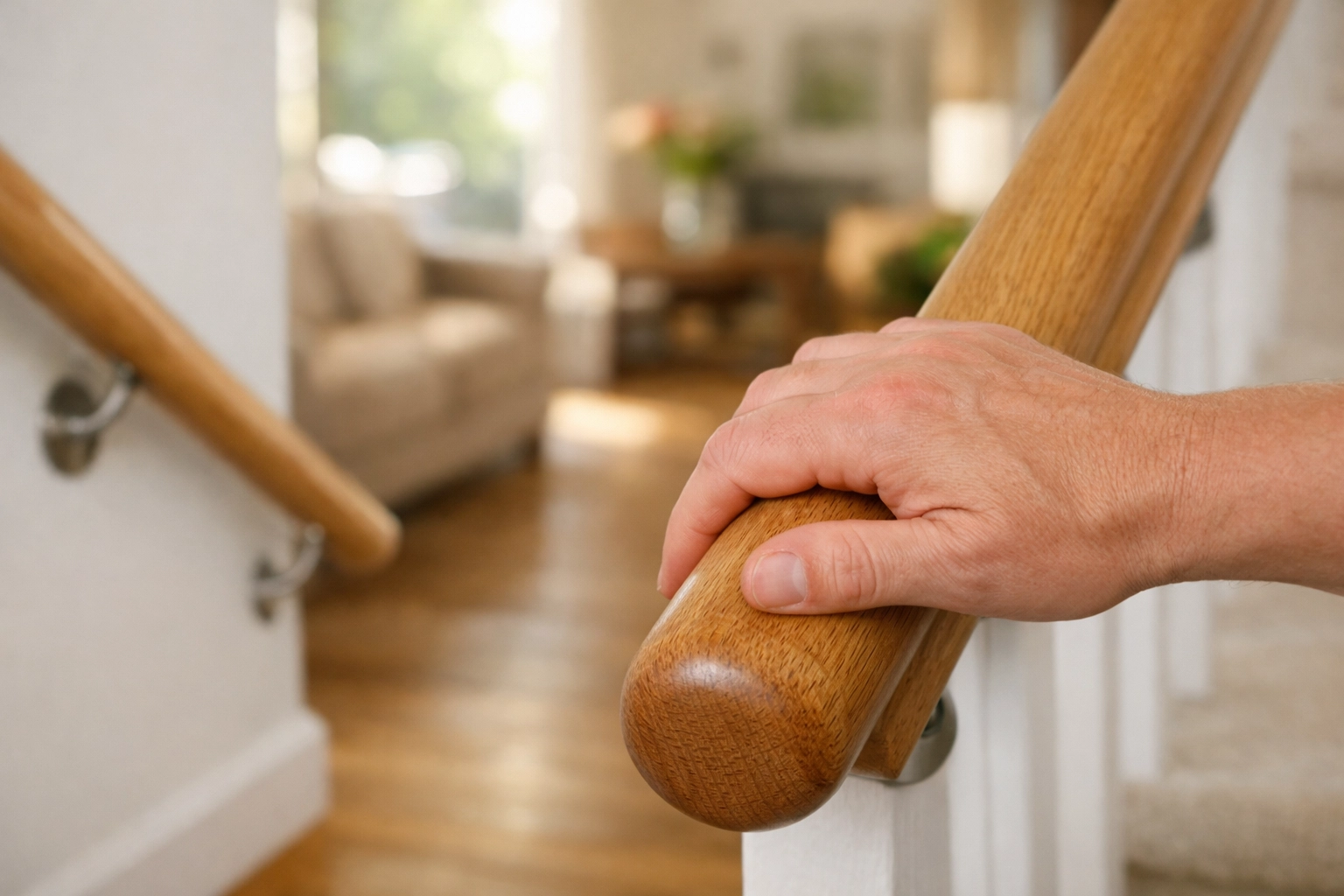
Many people view handrails as something they only need to grab if they feel a slip coming on. In reality, a handrail is a preventative tool, not just an emergency brake.
The Mistake: Using the stairs with your hands in your pockets, or worse, having a staircase that only has a rail on one side. If you lose your balance toward the wall side that lacks a rail, you have nothing to stabilize yourself.
The Fix: The "Three Points of Contact" rule. At any given time, you should have at least one hand on the rail and both feet on the steps, or two hands on the rails and one foot moving.
- Install a second rail: If your stairs only have a railing on one side, consider installing a second one. Having bilateral support (a rail for each hand) significantly increases stability and reduces the load on your knees.
- Check the grip: Ensure the rail is "circular" or "oval" enough that your hand can actually wrap around it. A decorative wide flat rail might look nice, but it’s much harder to grip in an emergency.
3. The "Laundry Basket" Blind Spot
This is a classic home safety trap. You have a pile of laundry, a stack of books, or a tray of food that needs to go to a different floor. You pick it up with both hands, hold it in front of your chest, and start your descent.
The Mistake: Carrying objects with both hands. This creates two major hazards: it blocks your view of your feet (the "blind spot") and it prevents you from using the handrail. Even if you can see over the basket, your center of gravity has shifted, making you more likely to tip forward.
The Fix: The "One Hand Free" rule. Never carry anything that requires both hands while using the stairs.
- Multiple trips: It might feel inefficient, but taking two trips with smaller loads is much safer.
- The "Slide" method: If you have carpeted stairs, some people find it safer to slide a laundry basket down the steps ahead of them (while holding the rail) rather than carrying it.
- Installation of a lift: For those who frequently need to move heavy items, a small "dumbwaiter" or even a basket on a pulley system can be a lifesaver, though a simpler fix is just asking for help or breaking down the loads.
4. Living in the Shadows
As we age, our eyes require significantly more light to see the same level of detail as they did in our younger years. What looks "bright enough" to a 30-year-old may look dim and hazy to someone over 65.
The Mistake: Using low-wattage bulbs or relying on a single light source that creates long shadows across the steps. Shadows can hide the "nose" (the edge) of the step, making it look like the floor is flat when it isn't.
The Fix: Create high-contrast, shadow-free lighting.
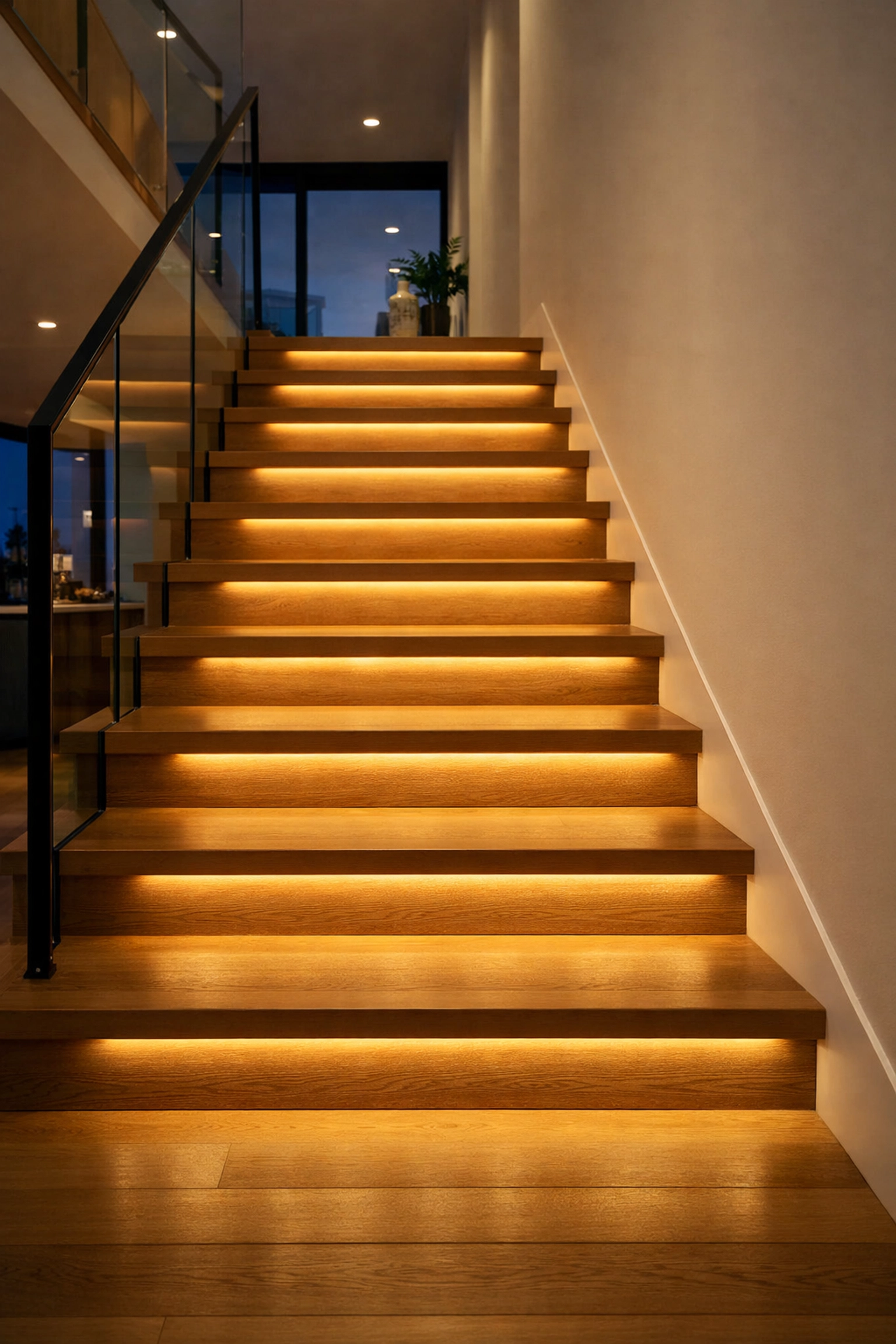
- Motion Sensors: Install motion-activated lights at the top and bottom of the stairs so you never have to fumble for a switch in the dark.
- LED Strip Lighting: This is one of my favorite fixes. Running a thin strip of LED lights under the lip of each step or along the baseboard illuminates the actual path you’re walking on.
- Dual Switches: Ensure there is a light switch at both the top and the bottom of the staircase. Never "brave" a dark staircase because the switch was at the other end.
5. The Danger of "The Sock Slide"
We all love a cozy pair of socks, but on wood or tile stairs, they are essentially tiny skis.
The Mistake: Walking on uncarpeted stairs in socks or smooth-bottomed slippers. Even carpeted stairs can be slippery if the carpet pile is worn down and "flattened" over time.
The Fix: Increase friction and traction.
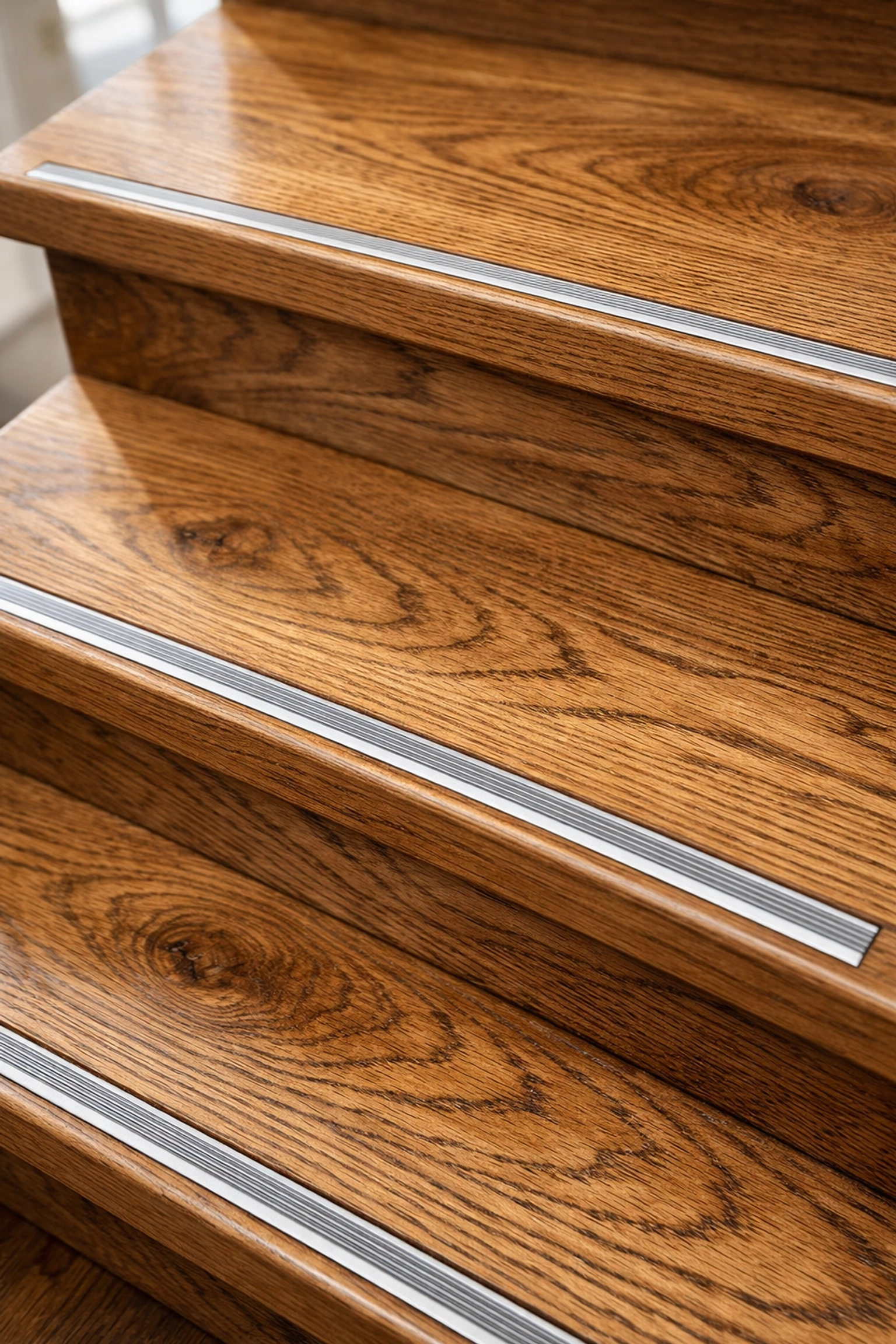
- Non-Slip Treads: If you have beautiful hardwood stairs, you don’t have to hide them with a full carpet runner. You can buy clear, adhesive anti-slip strips that provide grip without changing the look of the wood.
- Footwear Habits: Make it a rule to wear "indoor shoes" with rubber soles. If you prefer socks, ensure they have those rubberized "grippers" on the bottom.
- Carpet Maintenance: If your stairs are carpeted, check for "rounding" at the edge of the steps. When carpet wears out, the edge of the step becomes rounded and slippery. If you see this, it’s time to replace the runner or add a high-traction strip.
6. Treating the Bottom Step as a "Waiting Room"
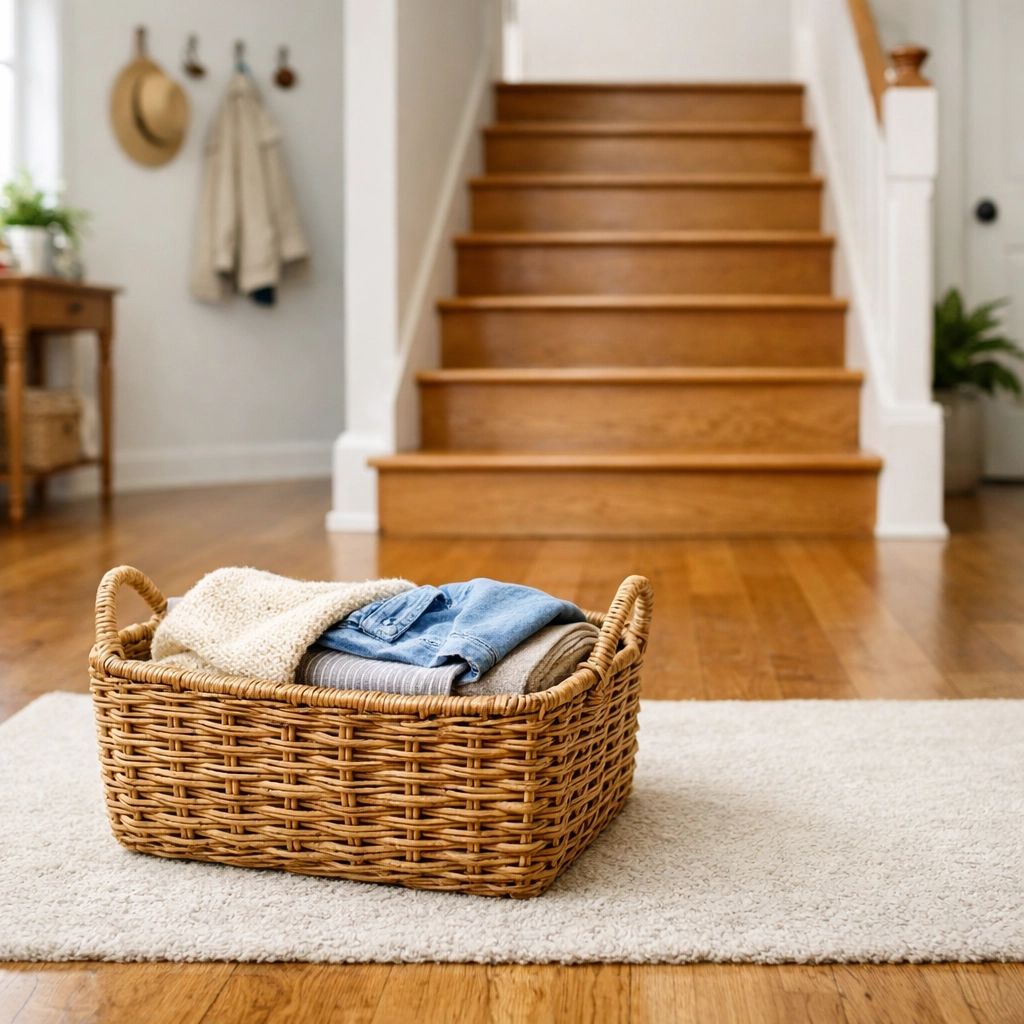
We’ve all seen it: a pile of mail, a pair of shoes, or a package sitting on the bottom step, waiting for the next person going up to take it with them.
The Mistake: Using stairs or landings for temporary storage. This narrows the walking path and creates a massive tripping hazard. If your foot catches on a shoe while you're transitioning off the stairs, your momentum will carry you right onto the floor.
The Fix: A "No-Fly Zone" policy. The stairs and the three-foot area at the top and bottom should be kept completely clear at all times.
- The Landing Basket: If you have items that need to go up, place a dedicated basket at least three feet away from the base of the stairs. When the basket is full, carry it up using the "One Hand Free" rule.
- Check for loose edges: While you’re clearing the clutter, check for loose metal "nosing" or bits of carpet that have come untacked. These are just as dangerous as a pair of shoes.
7. Ignoring the "Step Consistency"
Did you know that our brains "map" a staircase after the first two steps? Your brain calculates exactly how high it needs to lift your foot based on that first step. If one step in the middle is even half an inch higher or lower than the others, you are likely to stumble.
The Mistake: Ignoring uneven risers or loose boards. Over time, houses settle. A wooden step might warp, or a basement step might sag. We often "learn" to live with these quirks, but they are accidents waiting to happen.
The Fix: A seasonal stair audit.
- The Creak Test: Walk your stairs slowly and listen. If a board creaks or moves, it's loose. Secure it with wood screws (nails can pop back out) to ensure a solid footing.
- Visual Contrast: If your steps are all the same color, it can be hard to tell where one ends and the next begins. You can fix this by painting a thin line of a contrasting color on the edge of each step or using a different colored anti-slip tape. This "visual cue" helps your brain map the distance accurately.
A Note on Physical Readiness
While fixing the environment is half the battle, the other half is making sure your body is ready for the climb. Walking stairs is actually a great form of exercise, but it requires balance and leg strength.
If you find yourself feeling winded or "heavy-legged" on the stairs, it might be worth talking to a physical therapist. They can show you simple exercises: like calf raises or "sit-to-stands": that strengthen the specific muscles used for climbing.
Also, consider your vision. If you wear bifocals or trifocals, be extra careful. The bottom portion of your glasses is for reading, which can blur your view of the floor as you look down at the steps. Many people find it safer to have a dedicated pair of "single-distance" glasses specifically for moving around the house and navigating stairs.
Final Thoughts
Making your home safe shouldn't feel like a chore, and it certainly shouldn't feel like you’re losing your independence. By fixing these seven common mistakes, you’re actually increasing your independence. When you know your stairs are bright, clear, and sturdy, you can move through your home with the confidence you deserve.
Take a look at your stairs today. Is there a shoe on the bottom step? Is the light a little dim? Pick one thing to fix this afternoon. Your future self will thank you.
Stay safe out there,
Brian Kerr
Founder, Fall Guys Products

