
Stairs are often the most intimidating part of a home for anyone concerned about mobility or fall prevention. We tend to view them as a "one-and-done" safety project: once the house is built and a handrail is bolted to the wall, we assume the job is finished. However, the reality is that many staircases, even those that meet standard building codes, are not actually optimized for long-term safety, especially as our balance, vision, or strength begins to change.
If you or a loved one are feeling hesitant when approaching the stairs, or if you’ve had a "near-miss" recently, it is usually a sign that your current safety measures aren't doing the heavy lifting they should be. It isn't just about having a railing; it’s about the environment, the mechanics of how we move, and the subtle hazards we overlook every day.
Here are ten reasons why your current stair safety setup might be failing you, and the practical, evidence-based ways to fix them.
1. The "Single Rail" Trap
Most homes are built with a single handrail on one side of the staircase. While this might satisfy basic building requirements, it is often insufficient for true fall prevention.
When you only have one rail, you are forced to rely on one side of your body for stability. If that side is your "weaker" side, or if you are carrying something in your other hand, your center of gravity becomes lopsided. This creates an uneven gait and makes it much harder to recover if you lose your footing.
The Fix: Install a second handrail. Having "dual-sided" support allows you to maintain a symmetrical posture and provides a backup if one hand slips. It ensures that regardless of which direction you are traveling: up or down: you always have a firm grip for your dominant hand.
2. Inconsistent Riser Heights
Human brains are remarkably good at "automating" movement. When you start climbing a flight of stairs, your brain calculates the height of the first two steps and then puts your legs on autopilot for the rest.
If one step is even a quarter-inch taller or shorter than the others (often due to poor construction or settling over time), it disrupts that rhythm. This is a leading cause of "tripping on nothing."
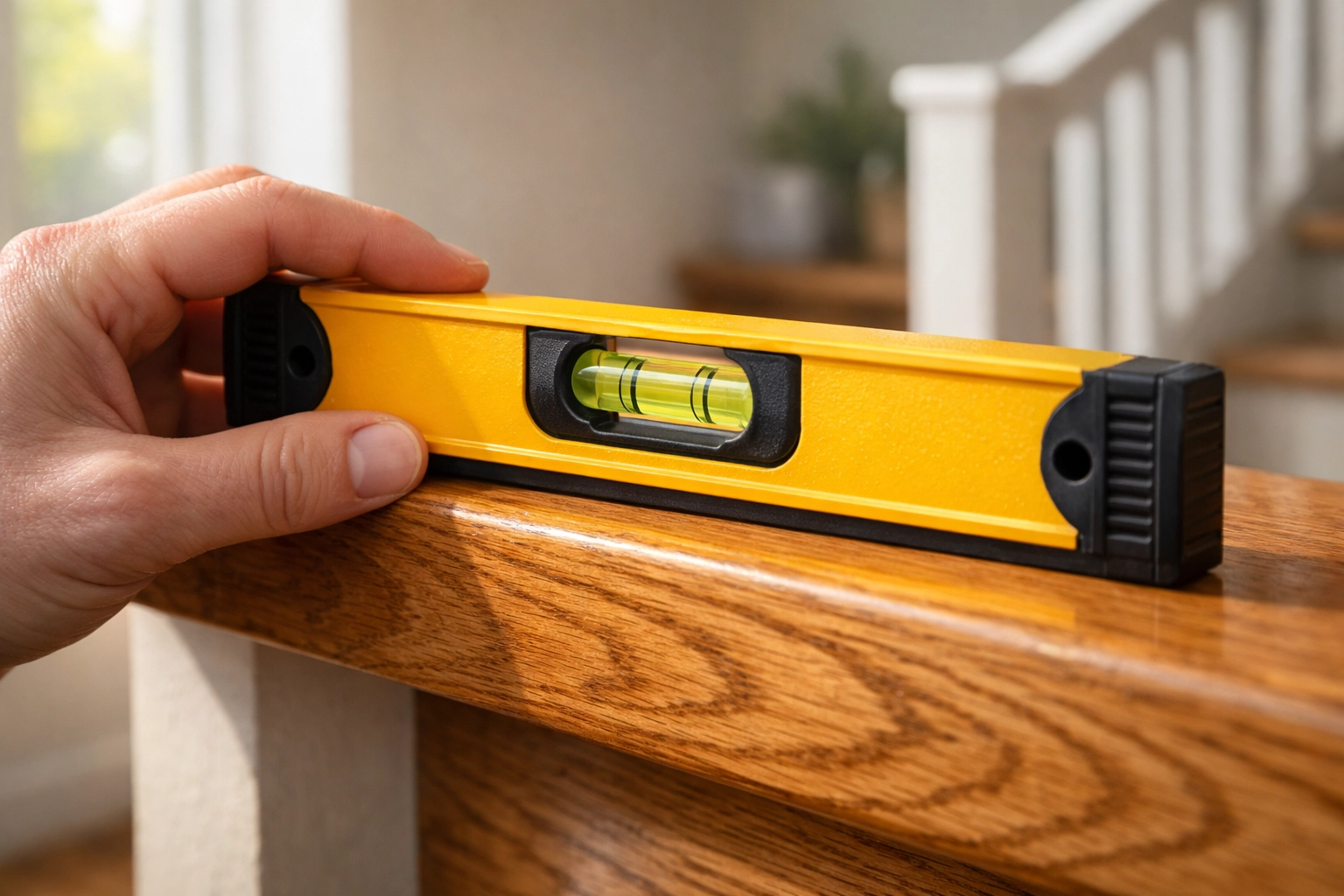
The Fix: Use a level and a tape measure to check every single step. If you find a significant discrepancy, you may need a carpenter to shim or adjust the treads. If a structural fix isn't possible, use high-contrast tape on the edge of the "irregular" step to alert the brain to the change in height.
3. The Lack of Visual Contrast
As we age, our depth perception and ability to distinguish between similar colors can decrease. If your stairs are made of dark wood and the floor at the bottom is also dark wood, the "nose" of each step can disappear into a sea of brown. This makes it incredibly difficult to judge exactly where to place your foot, especially when going downstairs.
The Fix: Create a "visual break" at the edge of every step. You can do this by installing non-slip treads in a contrasting color or applying a strip of durable, colored tape to the edge (the "nosing") of each tread. This provides a clear visual cue of where one step ends and the next begins.
4. Poor Lighting and Glare
Standard overhead lighting often creates two problems: shadows and glare. A single light at the top of the stairs can cast long shadows over the lower steps, hiding the very edges you need to see. Conversely, polished wood or tile stairs can reflect light in a way that creates a blinding glare, masking the contours of the steps.
The Fix: Aim for "even" illumination. Install motion-activated LED strips under the lip of each tread or along the baseboard. This lights the path directly where your feet land without creating harsh overhead shadows. Ensure that switches are located at both the top and the bottom of the stairs so you never have to navigate in the dark.
5. The "Landing Zone" Clutter
It is a common habit to leave items on the bottom or top steps: shoes, mail, or laundry baskets: intending to take them up on the next trip. This turns a functional transit area into an obstacle course. Even if you think you can "step around" it, clutter narrows your path and forces you to move away from the handrail, which is the safest place to be.
The Fix: Implement a "clear stairs" policy. If items need to go up or down, use a "stair basket" that sits on the floor next to the stairs, not on them. Better yet, make it a rule that nothing ever rests on the treads.
6. Worn or Slippery Surfaces
Polished hardwood, smooth tile, and even some types of low-pile carpet can be incredibly slick, especially if you are wearing socks or slippers. Over time, the finish on wood stairs can wear down, becoming smoother and more dangerous in high-traffic areas.
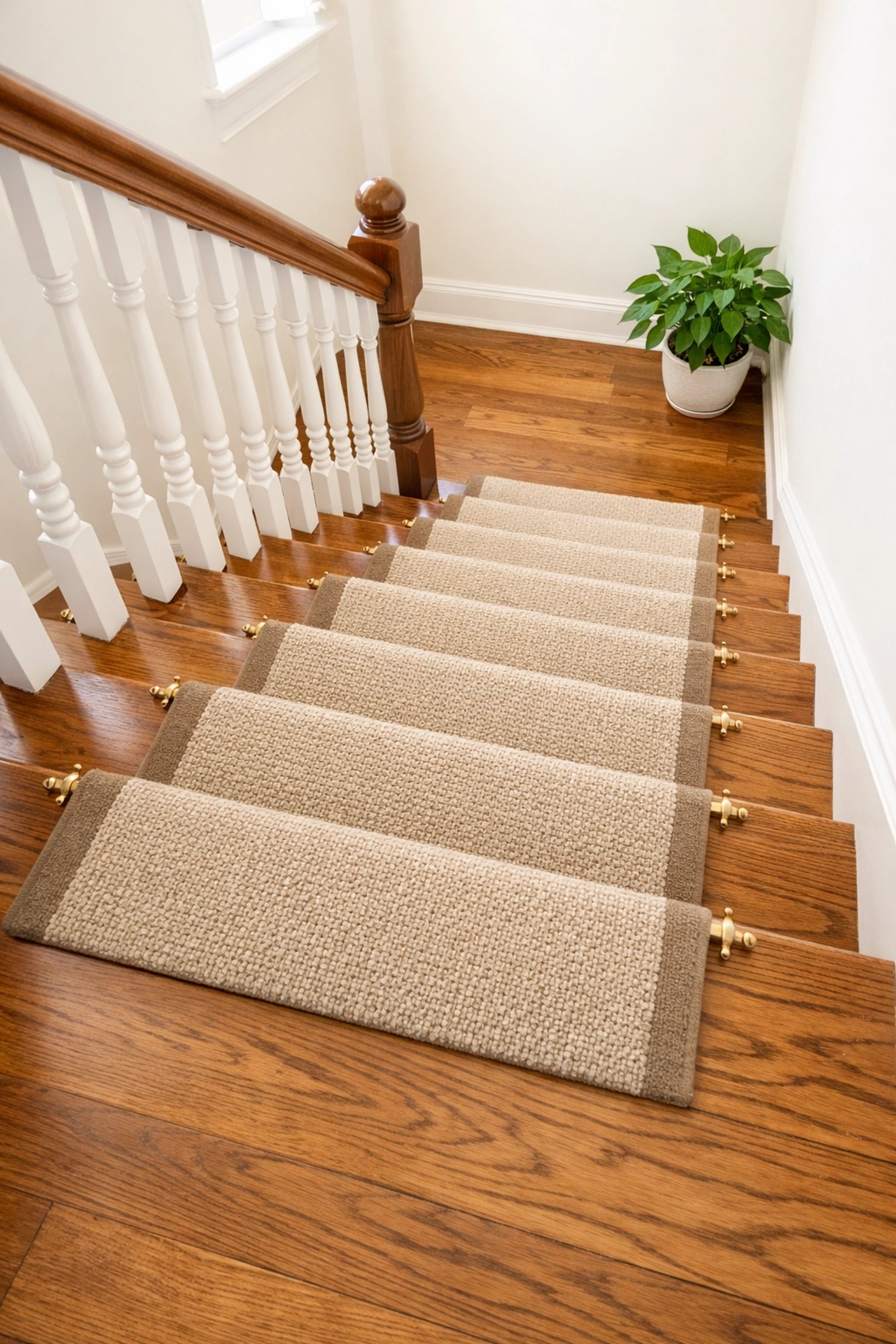
The Fix: Increase friction. For wooden stairs, consider transparent anti-slip adhesive strips or a high-quality carpet runner that is securely tacked down (not a loose rug). If you have carpet, ensure it isn't "balding" or loose, as loose fabric can bunch up underfoot and cause a trip.
7. Handrail Shape and Grip
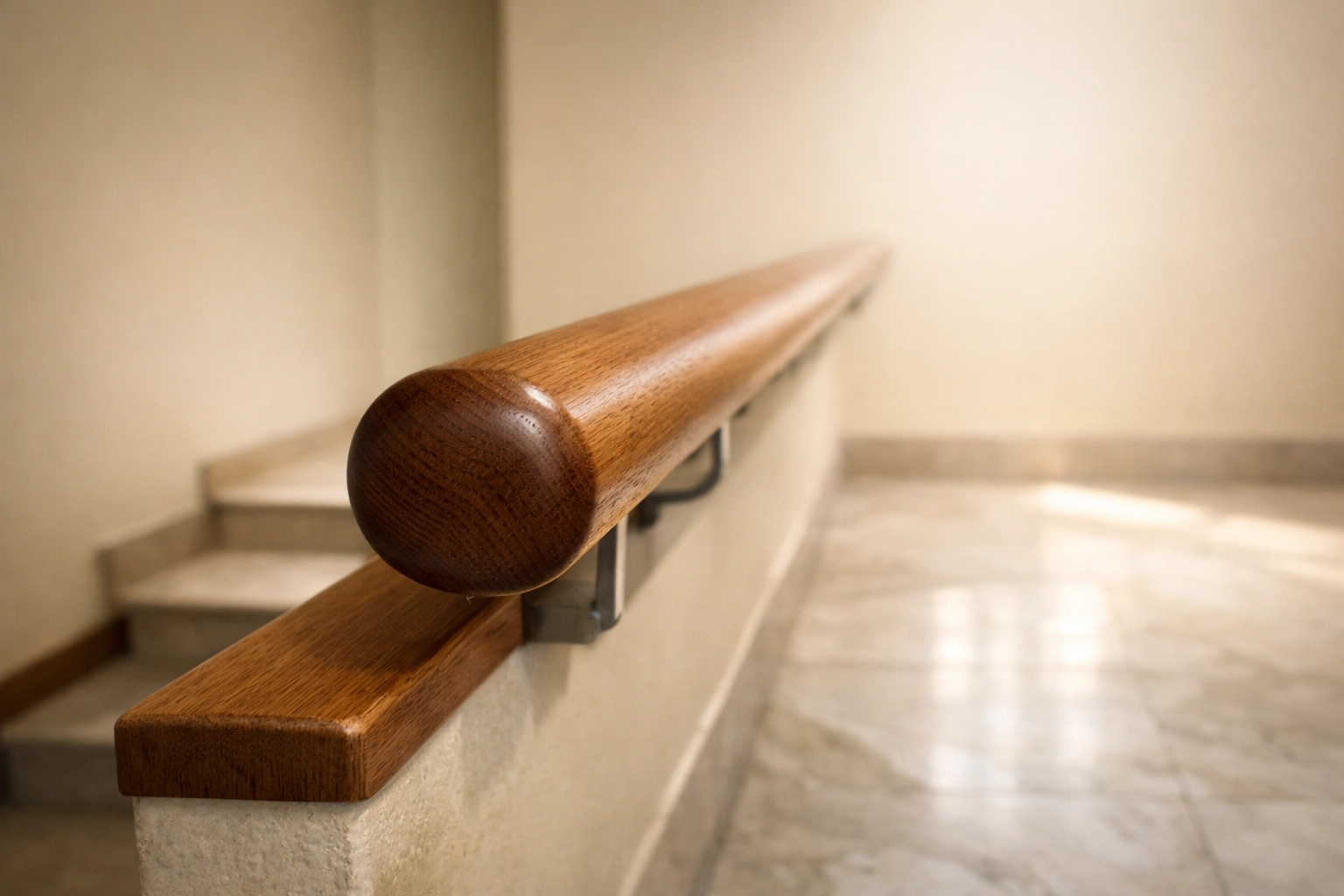
Not all handrails are created equal. Many decorative railings are too wide for a human hand to wrap around securely, or they are shaped in a way that makes it impossible to maintain a "power grip." If you can’t wrap your thumb and fingers all the way around the rail, you won’t be able to hold your body weight if you actually slip.
The Fix: The ideal handrail is "circular" or "mushromed" in cross-section, with a diameter between 1.25 and 2 inches. This allows for a full-circle grip. If your current rail is too chunky or square, consider replacing it with a functional, round rail that prioritizes ergonomics over aesthetics.
8. Ignoring the "First and Last" Rule
Statistically, most stair falls happen on the very first or the very last step. This is often because people "let go" of the railing too early or haven't fully grasped it before they start their ascent. If the handrail ends exactly where the stairs end, you have a moment of instability during the transition to the flat floor.
The Fix: Ensure your handrails extend at least 12 inches beyond the top and bottom steps. These "rail extensions" allow you to get a firm grip before you even lift your foot and keep that grip until both feet are safely on level ground.
9. Footwear Failures
We often think about the stairs themselves, but what we wear on our feet is just as important. Walking up or down stairs in socks is one of the most common ways people slip. Conversely, heavy boots or loose-fitting "backless" slippers can catch on the lip of a tread, causing a forward trip.
The Fix: Wear shoes with non-slip rubber soles and a closed heel, even inside the house. If you prefer to be "shoeless," look for specialized grip socks with silicone patterns on the bottom, though a firm-soled slipper is always the safer choice for stair navigation.
10. The "Rush" Factor
Safety systems fail when they are bypassed. Many falls occur because someone is rushing to answer the door, the phone, or simply because they are distracted. When we rush, we take shallower breaths, our center of gravity moves forward, and we are less likely to use the handrail properly.
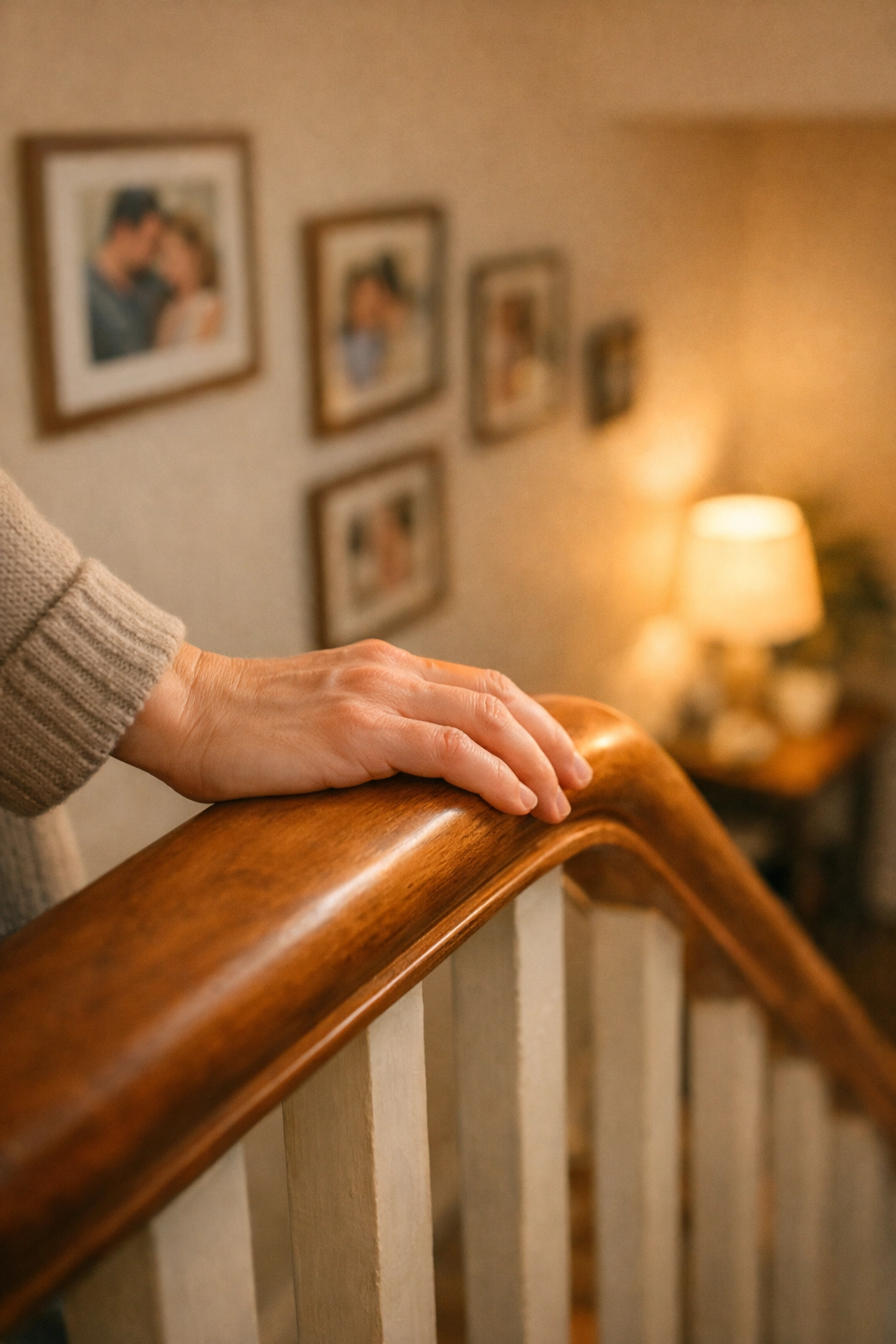
The Fix: Create a "pause" habit. Take one breath at the top or bottom of the stairs before you begin. Consciously place your hand on the rail. If the phone rings, let it go to voicemail. Nothing is more important than a safe transit.
The Role of Physical Assessment
While environmental fixes are vital, it is also important to recognize that stair safety is a partnership between your home and your body. If you find that stairs are becoming increasingly difficult, it may be time to consult with a physical therapist. They can help identify if the issue is a matter of leg strength, ankle flexibility, or perhaps a balance issue that can be addressed with specific exercises.
A home safety assessment can also be a game-changer. Professionals can look at your staircase with a fresh set of eyes, identifying the subtle hazards: like a slightly loose banister or a dim lightbulb: that you might have become "blind" to over years of living in the same space.
Final Thoughts
Stair safety isn't about avoiding the stairs entirely; for many of us, the stairs are a necessary part of our homes and our daily exercise. Instead, it’s about making the environment as "forgiving" as possible. By addressing these ten common failures, you can turn a high-risk area into a confident, safe part of your home.
Remember, safety isn't a one-time event: it’s a process of regular checks and small adjustments that ensure your home continues to support you, no matter how your needs might change over time. Keep the lighting bright, the path clear, and always, always use the handrail.

