
Stairs are often the most functional part of a home, connecting our living spaces and providing a necessary path between floors. However, as we age or face mobility challenges, those same stairs can start to feel like a daunting obstacle course. It isn't just about the physical effort of climbing; it's about the subtle hazards that we often overlook in our daily routines.
At Fall Guys Products, we believe that staying safe at home shouldn't feel like a chore. It’s about understanding the environment around you and making small, manageable adjustments that yield big results in peace of mind. Statistics show that nearly one million stair-related injuries occur annually in the United States. Many of these are entirely preventable by addressing common oversights in home maintenance and habits.
Here are seven critical mistakes people often make with stair safety and, more importantly, the practical ways you can fix them to ensure your home remains a sanctuary of independence.
1. Ignoring the "Geometry" of the Step
One of the most common issues with staircases, especially in older homes, is inconsistent geometry. This refers to the height of the riser (the vertical part) and the depth of the tread (the horizontal part where you place your foot).
The Mistake: When steps are uneven: even by just a fraction of an inch: your brain’s "muscle memory" gets interrupted. When you walk up a flight of stairs, your body subconsciously calibrates how high to lift your foot based on the first two steps. If the third step is slightly higher or lower, it creates a significant trip hazard. Furthermore, treads that are too narrow don't allow for full foot placement, which can cause your heel or toe to hang off the edge, leading to a loss of balance.
The Fix: While you might not be able to rebuild your entire staircase tomorrow, you can evaluate it. A safe standard for residential stairs is a riser height between 6 to 7 inches (15–18 cm) and a tread depth of at least 10 to 11 inches (25–30 cm). If your stairs are significantly off, consider adding high-visibility "stair nosing" to the edges to help your eyes distinguish where one step ends and the next begins. If a full renovation isn't in the cards, a physical therapist can help you develop a "stepping strategy" to navigate uneven heights safely.
2. Settling for Inadequate Lighting
We’ve all done it: we think we know our stairs so well we could navigate them in our sleep. This overconfidence often leads to the mistake of not turning on the light or relying on dim, outdated fixtures.
The Mistake: Poor lighting is one of the leading contributors to falls. Shadows can play tricks on your depth perception, making a step look deeper or shallower than it actually is. Dim lighting also masks small objects that might be sitting on the stairs or obscures the edge of the carpet.
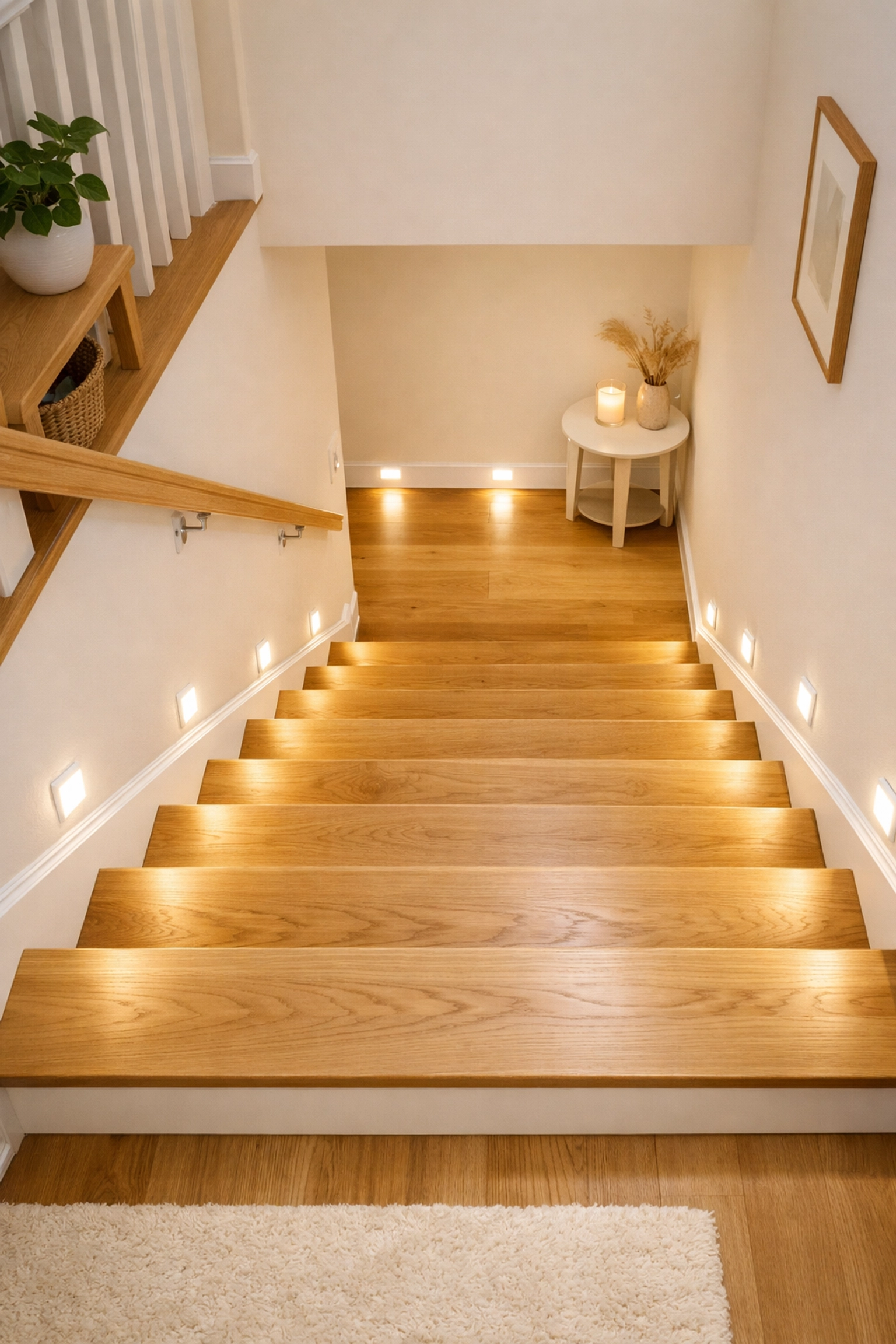
The Fix: Ensure your stairway is brightly lit from top to bottom.
- Dual Switches: Ensure there are light switches at both the top and bottom of the stairs.
- LED Motion Sensors: Consider installing battery-operated LED motion sensor lights along the baseboards. These turn on automatically as you approach, which is a lifesaver for those midnight trips to the kitchen or bathroom.
- High-Wattage Bulbs: Use the maximum wattage recommended for your fixtures, and opt for "cool white" bulbs which provide better contrast than "warm yellow" ones.
3. Having Only One Handrail (or None at All)
Many people view handrails as a "suggestion" or something to be used only when feeling tired. Even worse, many homes feature handrails on only one side of the staircase.
The Mistake: Relying on one rail assumes that your strength and balance are equal on both sides of your body. If you have a weaker side due to a previous injury or a condition like arthritis, you may find yourself struggling when descending or ascending depending on which side the rail is on. Additionally, rails that are loose or don't extend past the final step leave you vulnerable at the most dangerous transition points.
The Fix: Install sturdy handrails on both sides of the stairs. This allows you to use both arms for stability, significantly reducing the load on your legs.
- Height: Rails should be mounted at a height of about 34 to 38 inches.
- Extension: Ensure the handrail extends at least 12 inches (300 mm) beyond the top and bottom steps. This gives you a secure "landing" to hold onto before you start your first step and after you finish your last.
- Grip: Ensure the rail is easy to wrap your hand around. A "round" or "oval" rail is generally safer than a wide, flat decorative one.
4. Overlooking Slippery Surfaces
The material of your stairs plays a massive role in how much traction you have. Polished wood, smooth tile, and even some types of low-pile carpet can be deceptively slippery.
The Mistake: Many homeowners prioritize aesthetics over grip. A beautiful, high-gloss hardwood staircase looks great in photos but acts like a slide when you’re wearing socks or smooth-soled slippers. Even worse are loose area rugs or "runners" that aren't properly tacked down, which can slide right out from under your feet.
The Fix: Increase the friction.
- Non-Slip Strips: You can apply clear or colored abrasive "anti-slip" tape to the edge of each step.
- Carpet Tacks: If you have a carpet runner, ensure it is tightly secured with no bunching.
- Texture: For wooden stairs, there are anti-slip coatings that can be painted or sprayed on that add a gritty texture without ruining the look of the wood.
- The "No Socks" Rule: Encourage a household habit of never walking on stairs in just socks. Bare feet or shoes with rubber soles provide much better grip.
5. Using Stairs as a "Temporary" Storage Zone
We are all guilty of "the pile." It’s that stack of books, mail, or laundry sitting on the bottom three steps, waiting for someone to take them upstairs on their next trip.
The Mistake: This is a classic tripping hazard. Even if you think you’re stepping around the clutter, you are altering your natural gait and shifting your center of gravity. Furthermore, if you lose your balance, those items become secondary hazards that can cause further injury during a fall.
The Fix: Implement a "Zero-Tolerance" policy for items on the stairs.
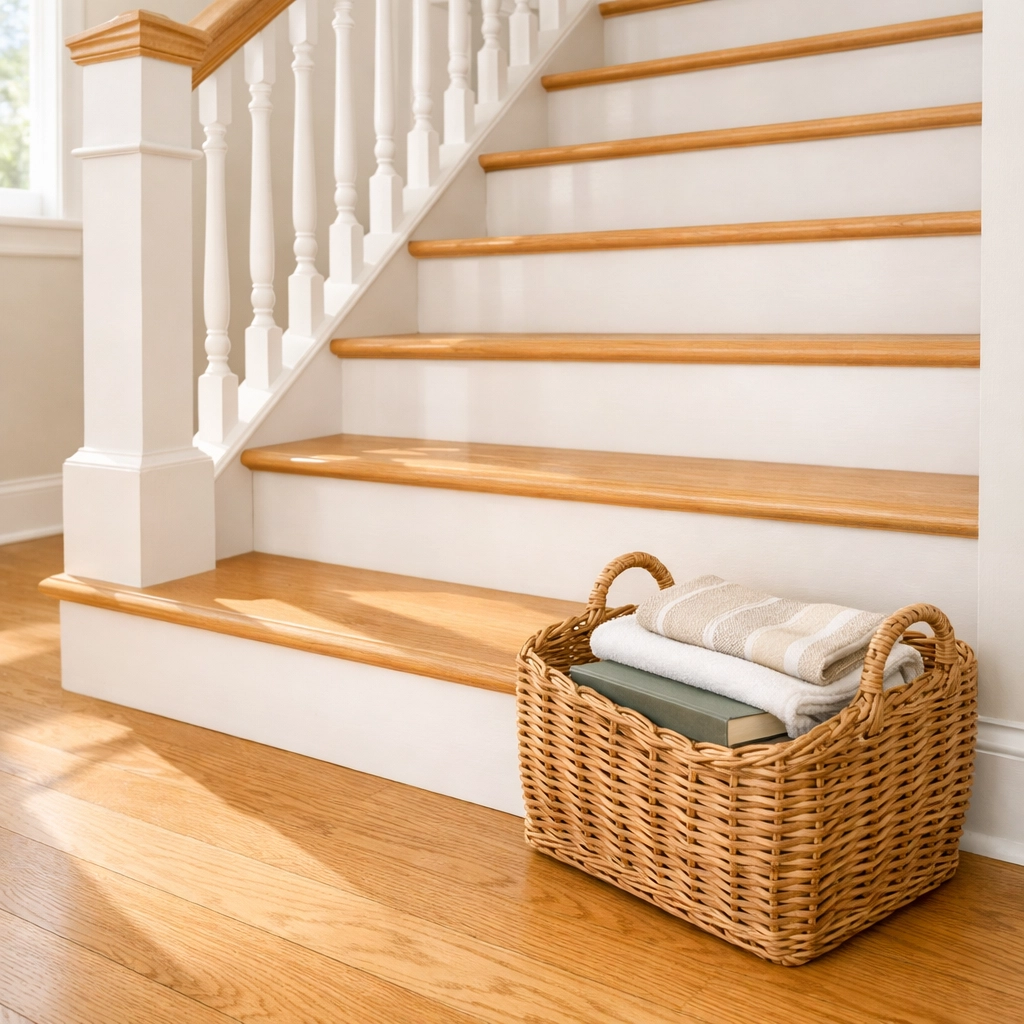
- The Basket Method: Instead of putting items on the steps, place a dedicated "upstairs basket" at the base of the stairs (but away from the walking path). When the basket is full, carry it up in one dedicated trip where your hands are as free as possible.
- Clear the Path: Check the landings as well. Often, shoes or umbrellas get kicked into the transition areas at the top or bottom of the stairs, creating a "trap" for someone coming around a corner.
6. Neglecting Structural Maintenance
Stairs endure a lot of weight and vibration over the years. Like any other part of the house, they require regular "check-ups."
The Mistake: Ignoring a squeaky board or a slightly loose banister. Small structural issues often escalate into major safety risks. A loose tread can shift when you put your full weight on it, causing a sudden loss of balance. A wobbly handrail won't support you if you actually need to lean on it during a stumble.
The Fix: Conduct a seasonal stair audit.
- The Shake Test: Grab your handrails and give them a firm shake. If there is any "give," tighten the brackets or add extra support.
- The Step Test: Walk slowly up and down, feeling for any movement in the treads. If a board is loose, secure it with screws (which hold better than nails over time).
- Check Outdoor Stairs: Outdoor steps are prone to rot (if wood) or cracking and shifting (if concrete) due to weather. Ensure these are treated, sealed, and level. Clear away any moss or algae, which becomes incredibly slick when wet.
7. Rushing and Behavioral Habits
Sometimes the mistake isn't with the house at all, but with how we move through it. Our internal "speedometer" often stays set to "fast" even when our bodies are asking us to slow down.
The Mistake: Rushing to answer the phone or the doorbell is a common cause of stair accidents. Additionally, people often carry heavy or bulky items that block their view of their feet. If you can’t see where you are stepping, your risk of a misstep increases exponentially.
The Fix: Practice "Mindful Climbing."
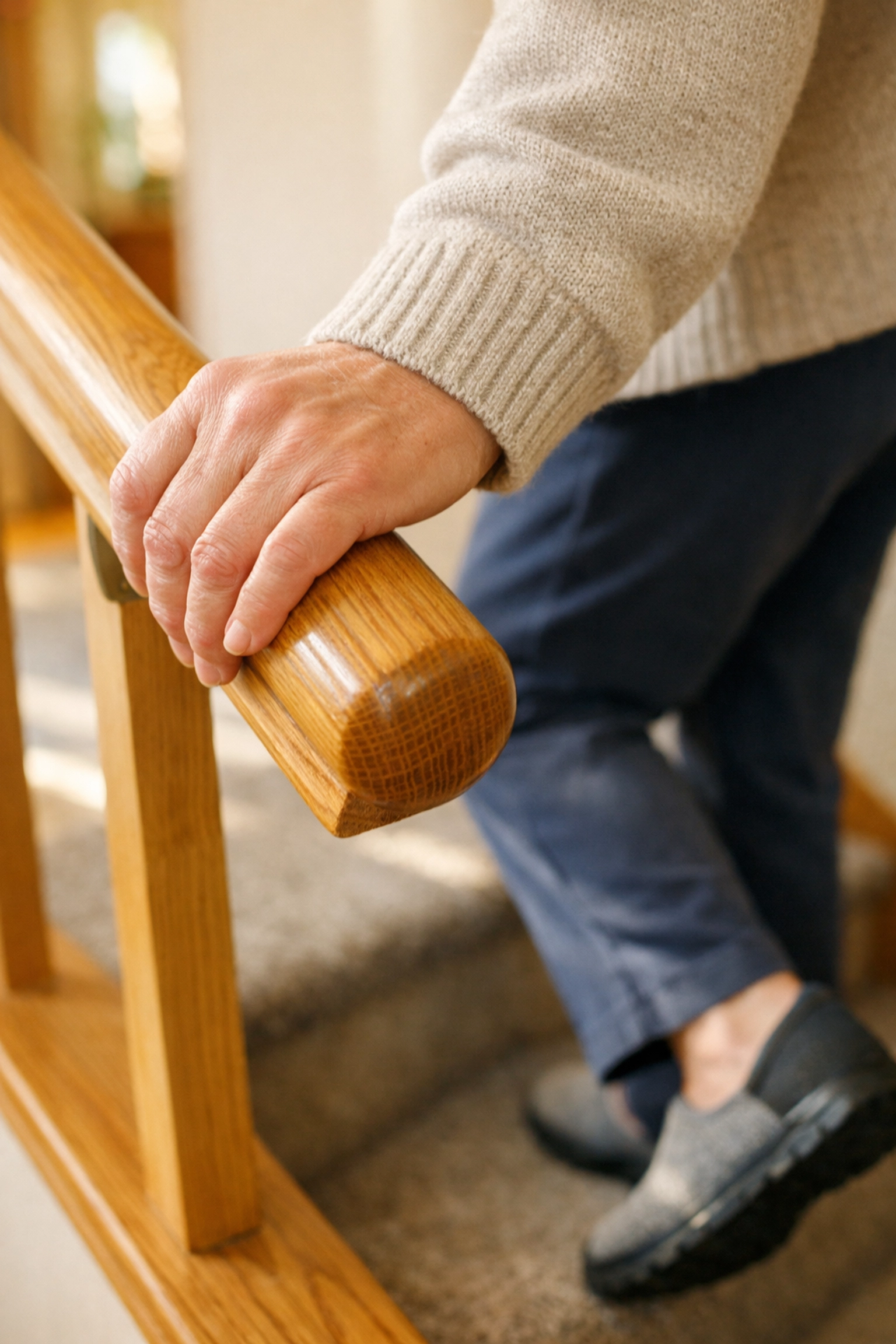
- One Hand for the Rail: Always keep at least one hand free to hold the handrail. If you have to carry something, carry it in one arm and use the other for support.
- The "Stop and Look" Rule: Before you take the first step, pause for one second. Look at the stairs, ensure your path is clear, and then proceed.
- Vision Check: If you wear bifocals or multifocal lenses, be extra careful. These lenses can distort your depth perception when you look down through the bottom of the glass. You might find it safer to have a dedicated pair of "single vision" glasses for moving around the house.
Creating a Culture of Safety
Addressing these seven mistakes isn't just about home improvement; it's about shifting your mindset. Many of us don't want to admit that we need to "fall-proof" our lives because it feels like a loss of independence. In reality, the opposite is true. By taking these steps, you are protecting your independence by ensuring you don't suffer an injury that could take you out of your home.
If you are a caregiver, approach these fixes as a collaborative project. Instead of saying, "You need to fix your stairs," try saying, "Let’s look at how we can make the stairs more comfortable to use." Sometimes, adding a simple motion-sensor light or an extra handrail can make the difference between feeling confident and feeling anxious every time you need to go to the second floor.
Safe stairs are accessible stairs. By focusing on geometry, lighting, support, traction, cleanliness, maintenance, and behavior, you create an environment where everyone: regardless of age or mobility: can move freely and safely.
Remember, fall prevention is a journey, not a destination. Regularly revisit these points, stay observant, and don't be afraid to make adjustments as your needs change. Your home is your sanctuary; let's keep it that way.

