
Stairs are often the most challenging part of a home to navigate as we age or recover from an injury. While they provide a necessary path between floors, they also represent one of the most common sites for falls in the household. Many of us treat the staircase as a routine part of our day: something we traverse without much thought: but that familiarity can lead to a sense of complacency.
Creating a safe environment isn’t about making major structural changes overnight; it is about identifying the small, often overlooked habits and environmental factors that increase risk. By understanding the common mistakes made with stair safety, you can take practical, reassuring steps to ensure your home remains a place of comfort and security.
Here are seven common mistakes people make with stair safety and, more importantly, how you can fix them.
1. Navigating the Stairs in a Hurry
We live in a world that prizes speed, and often, that mindset follows us into our homes. You might hear the phone ringing on another floor or remember you left the oven on, prompting a quick dash up or down the stairs. Rushing is perhaps the most frequent contributor to missteps. When we move too fast, our center of gravity shifts forward, and our eyes often fail to track exactly where our feet are landing.
The Fix: The "Pause and Plan" Method
Treat the staircase as a dedicated task rather than a transition. Before you take the first step, pause for a second. Ensure you have a firm grip on the handrail and that your body is balanced. Take each step deliberately, placing your entire foot on the tread rather than just the toes or the ball of the foot. If you find yourself frequently rushing to catch the phone, consider keeping a handset in multiple rooms or using a wearable device so that the "hurry" factor is removed entirely.
2. Using the Stairs as a Temporary Storage Zone
It is a common habit: placing a stack of books, a pair of shoes, or a basket of laundry on the bottom step to be taken up "later." While this seems like an efficient way to organize chores, it creates a significant trip hazard. Even if you are aware the items are there, a momentary lapse in focus: especially in low light: can lead to a stumble. Furthermore, these objects often narrow the walkable path of the staircase, forcing you to move in an unnatural pattern.
The Fix: The "Clear Path" Policy
Establish a strict rule that stairs and landings must remain completely clear at all times. If you need to move items between floors, use a dedicated "stair basket" that sits on a table near the stairs, rather than on the steps themselves. This way, you can carry the items in one safe trip when your hands are free and you feel steady, rather than navigating around obstacles.
3. Prioritizing Style Over Footwear Grip
What we wear on our feet indoors significantly impacts our stability on stairs. Many people prefer to walk in socks to keep the floors clean or wear loose-fitting slippers for comfort. However, socks: especially on wooden or polished stone stairs: provide almost zero traction. Conversely, heavy or oversized slippers can catch on the "nosing" (the edge) of a step, causing a trip.
The Fix: Supportive, Non-Slip Indoor Shoes
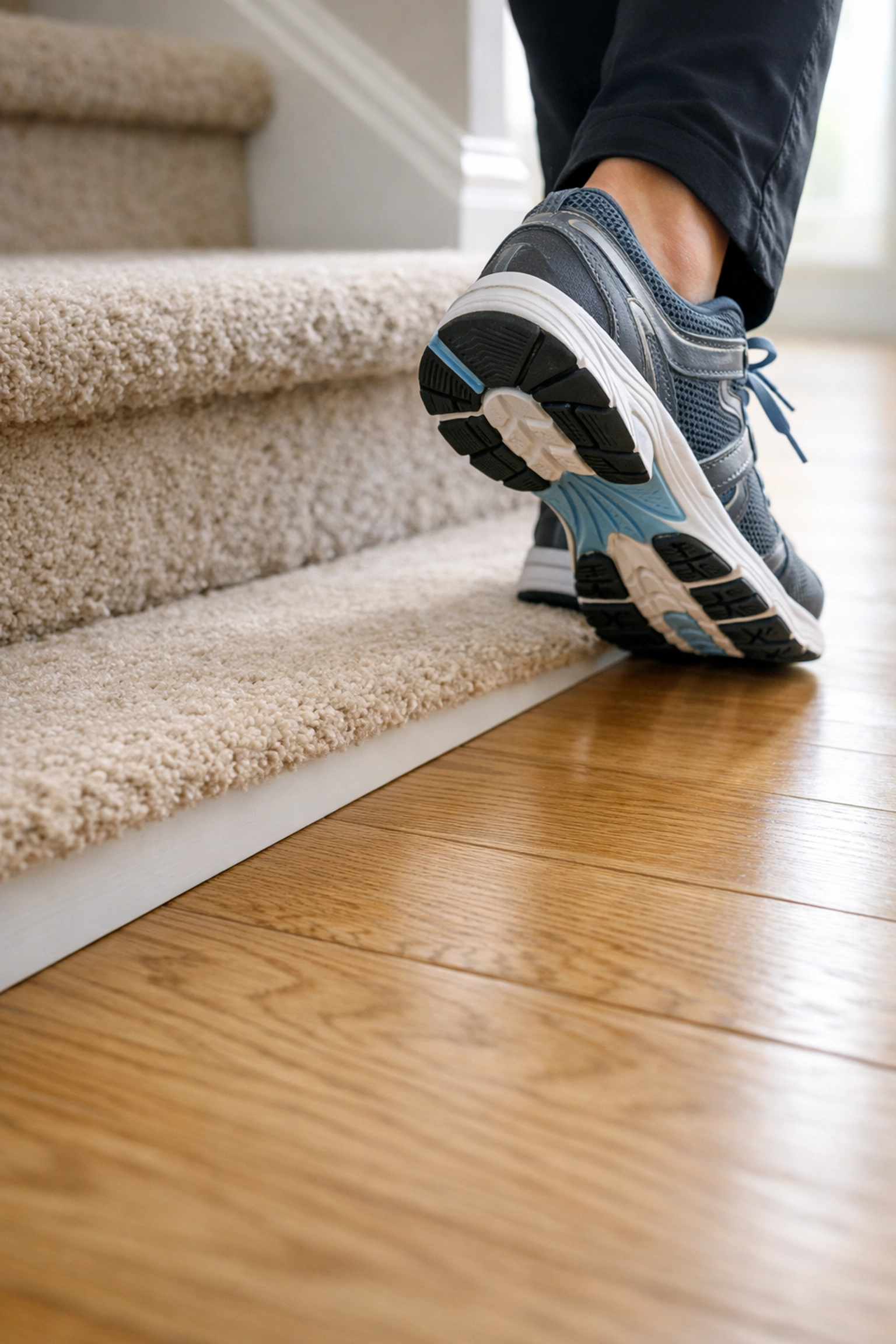
The safest way to navigate stairs is with a well-fitted shoe that has a non-slip rubber sole. If you prefer not to wear outdoor shoes inside, invest in a dedicated pair of "indoor-only" supportive sneakers or slippers with a firm back and a textured grip. Avoid walking in compression stockings or smooth-bottomed socks unless they have high-quality silicone grips on the bottom.
4. Overlooking Inconsistent Step Dimensions
In many older homes, or even in some DIY renovations, the height (riser) and depth (tread) of steps can vary slightly. The human brain is incredibly efficient at "mapping" a staircase after the first two steps. If the fourth or fifth step is even a half-inch taller or shallower than the others, it can disrupt your rhythm and cause a trip. This is often referred to as a "design defect" that the body only notices when it’s too late.
The Fix: A Professional Assessment and Visual Cues
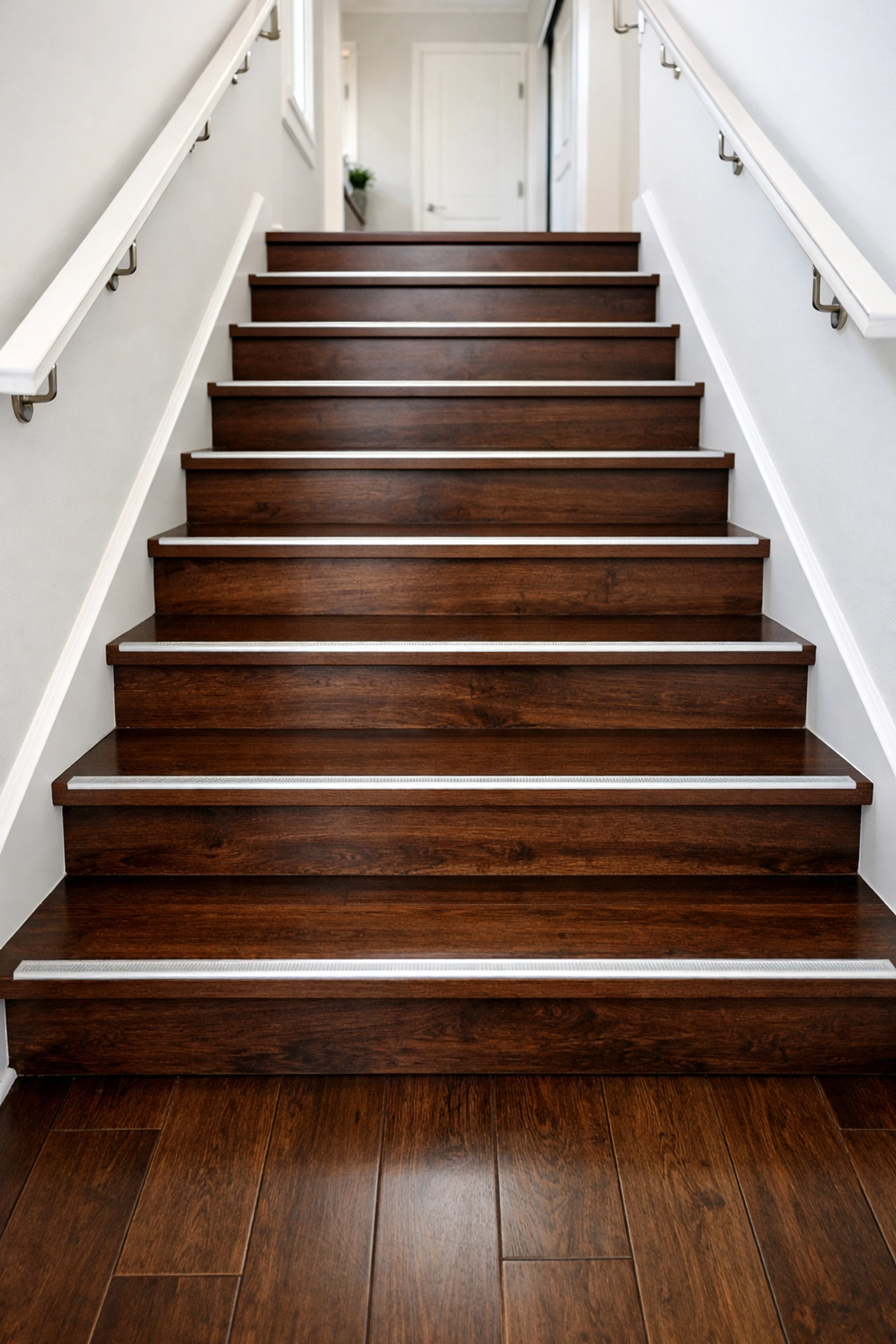
If you suspect your stairs are uneven, use a ruler to measure the height of each riser. If there are inconsistencies, it is important to be consciously aware of them. While rebuilding a staircase is a major undertaking, you can mitigate the risk by ensuring that the "problem" steps are clearly marked. Using high-contrast tape on the edge of each step can help your eyes identify where each tread begins and ends, allowing your brain to adjust for the physical inconsistency.
5. Relying on Inadequate or Decorative Handrails
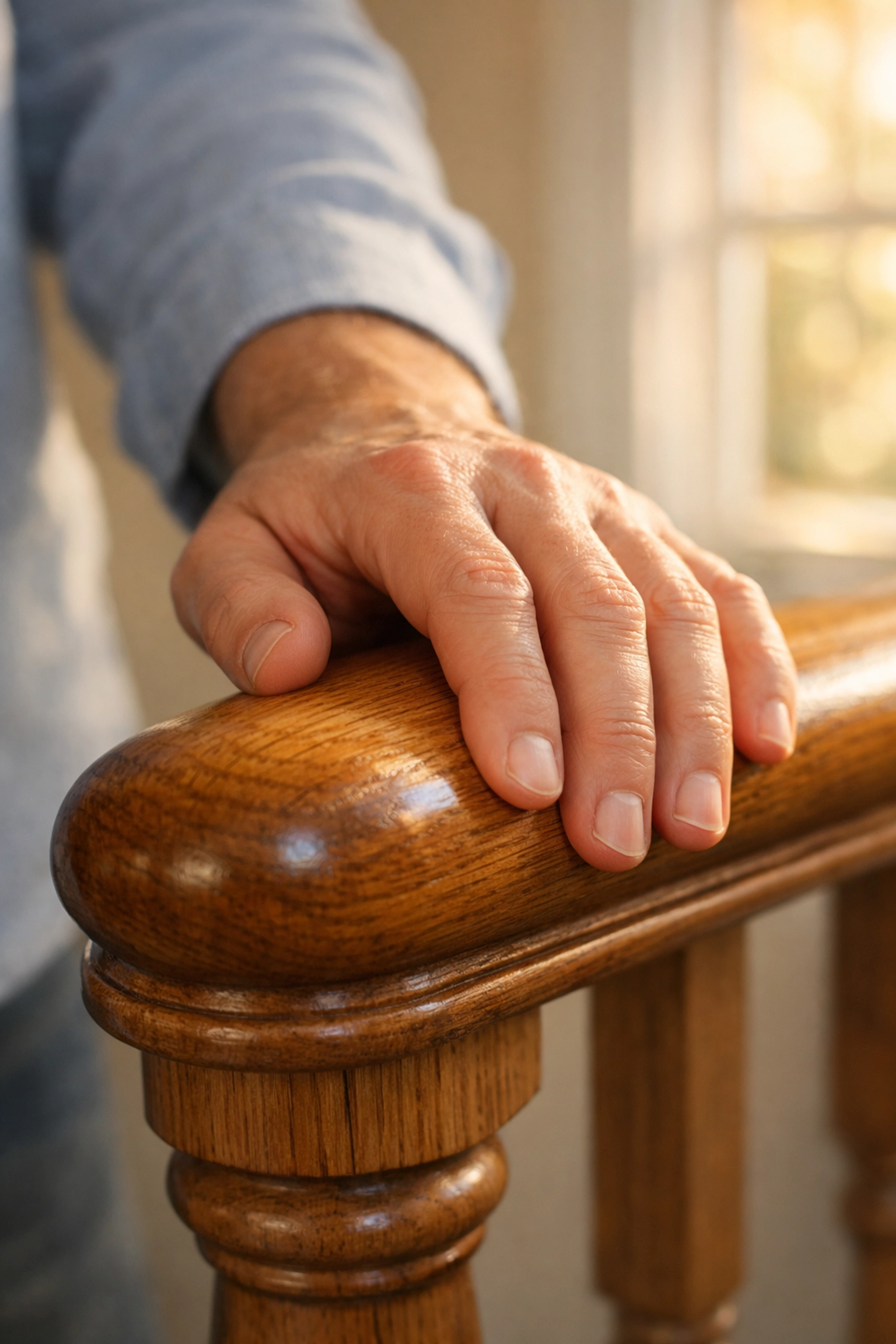
Not all handrails are created equal. Many homes feature decorative railings that are too wide to grasp firmly or are only located on one side of the staircase. Some railings stop a few inches before the actual end of the stairs, leaving the user unsupported during the most critical part of the transition: the first and last steps. A "power grip": where the thumb and fingers can wrap all the way around the rail: is essential for stopping a fall once it has started.
The Fix: Round, Continuous, Double Rails
Ideally, a staircase should have sturdy handrails on both sides. This allows you to use your dominant hand for support regardless of whether you are going up or down. The rails should be circular or oval in shape (between 1.25 and 2 inches in diameter) to allow for a secure grip. Ensure the railing extends at least 12 inches beyond the top and bottom steps so that you have a firm hold before you even begin to climb or descend.
6. Living with "Good Enough" Lighting
Poor lighting is a silent contributor to stair accidents. As we age, our eyes require significantly more light to see clearly and judge depth. Dimly lit stairwells can create shadows that mask the edge of a step, making the staircase look like a flat ramp. Furthermore, many people avoid turning on the light for a quick trip, relying on "muscle memory," which is a dangerous gamble.
The Fix: Multi-Point and Motion-Sensing Lights
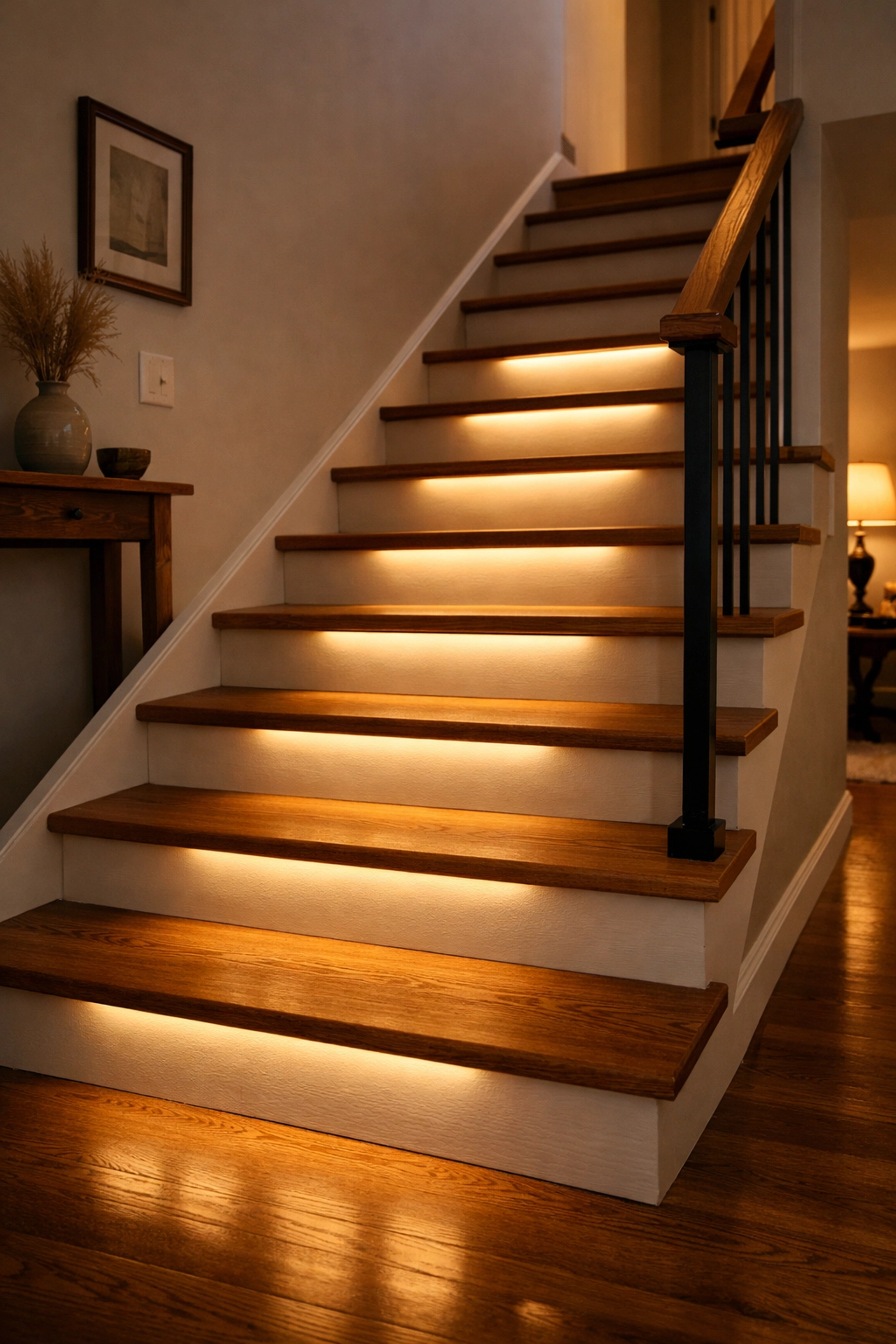
Ensure there are light switches at both the top and bottom of the stairs so you never have to navigate in the dark. If the current lighting is insufficient, consider installing motion-sensor LED strips under the lip of each step or along the baseboard. These provide immediate, bright illumination the moment you approach the stairs. Additionally, use "warm" white bulbs rather than "cool" blue-toned ones, as they tend to reduce glare and make depth perception easier.
7. Ignoring the "Bottom-of-Flight Illusion"
The "bottom-of-flight illusion" occurs when the flooring of the hallway or room at the bottom of the stairs blends visually with the last step. When the colors or patterns are too similar, it is easy to believe you have reached the floor when you actually have one more step to go. This "missing step" is a frequent cause of jolting impacts that can lead to ankle injuries or a loss of balance.
The Fix: Contrast and Texture Change
Create a visual "break" between the last step and the floor. This can be achieved by using a different color of anti-slip tape on the final step or by placing a thin, non-slip mat at the base of the stairs (provided the mat is secured and doesn't become a trip hazard itself). The goal is to signal to your brain that the descent is ending.
Building Confidence Beyond the Environment
While fixing environmental mistakes is crucial, safety is also a matter of physical readiness. Navigating stairs requires a combination of lower-body strength, core stability, and balance.
If you or a loved one feels hesitant on the stairs, it may be helpful to consult with a physical therapist. They can provide specific exercises to strengthen the quadriceps and ankles, and they can teach "energy conservation" techniques. For example, some people find it safer to use the "step-to" pattern (placing both feet on one step before moving to the next) rather than the "step-over-step" pattern. There is no shame in taking the stairs slowly; the goal is to arrive at your destination safely.
A Reassuring Approach to Home Safety
It is natural to feel a bit overwhelmed when thinking about home modifications. However, most of the fixes mentioned above: clearing clutter, improving lighting, and wearing better shoes: require very little financial investment. They are simple shifts in habit and environment that provide a high "return on safety."
A safe home is one where you feel empowered to move freely. By addressing these seven common mistakes, you aren't just preventing a fall; you are preserving your independence and peace of mind. Take a look at your stairs today with fresh eyes. Identify one small change you can make immediately: perhaps it’s clearing that basket of laundry or checking the bulb in the overhead light. Every small step toward safety is a giant leap toward a more secure and comfortable life at home.

