
Hi there, I’m Brian Kerr, the founder of Fall Guys Products. If there is one thing I’ve learned in my years working in the mobility and medical equipment field, it’s that fall prevention isn’t just about the gadgets you put in your home. While grab bars and rails are vital, the "internal" hardware: your bones and your sense of balance: is just as important.
As we age, our bodies change in ways that can make us feel a bit less steady on our feet. But here’s the good news: you have a lot of control over your bone density and your stability. Through the right nutrients and specific types of movement, you can build a "body armor" that protects you from fractures and helps you stay upright.
In this guide, we’re going to dive deep into the science of bone health, the specific foods that make a difference, and the exercises that can help you find your center again.
The Science of Bone Health: Why It Matters Now
Bones are not static, like the wooden frame of a house. They are living tissues that are constantly being broken down and rebuilt in a process called "remodeling." When we’re younger, our bodies build new bone faster than they break down the old stuff.
However, as we cross into our 50s and beyond, that process starts to tilt. We begin to lose bone mass faster than we can replace it. For many, this leads to osteopenia or osteoporosis, conditions where bones become porous and brittle. This is why a fall that might have just caused a bruise at age 20 can result in a hip fracture at age 70.
Building bone strength is a two-pronged approach: you need the raw materials (nutrition) to build the tissue, and you need the physical stimulus (exercise) to tell your body that the bone needs to stay strong.
The Five Pillars of Bone-Building Nutrition
To keep your skeleton strong, your body requires a specific "cocktail" of vitamins and minerals. It’s not just about one single supplement; it’s about how these nutrients work together.
1. Calcium: The Building Block
Calcium is the primary mineral found in your bones. Think of it as the bricks of your internal structure. About 99% of your body’s calcium is stored in your bones and teeth. If you don't get enough calcium from your diet, your body will actually "steal" it from your bones to use for other vital functions like heart rhythm and muscle contraction.
- Daily Goal: Most adults over 50 need about 1,200 mg of calcium per day.
2. Vitamin D: The Key
You could eat all the calcium in the world, but without Vitamin D, your body can’t absorb it. Vitamin D acts like a key that opens the door in your gut to let calcium into your bloodstream. It also plays a massive role in muscle function, which is directly tied to balance.
- The Challenge: It’s hard to get enough Vitamin D from food alone. While sunlight is a great source, many seniors spend more time indoors or have skin that is less efficient at converting sunlight into Vitamin D.
3. Vitamin K: The Glue
While Calcium is the brick and Vitamin D is the door, Vitamin K (specifically K2) is the glue. It helps direct calcium into the bones rather than letting it settle in your arteries or kidneys. It activates a protein called osteocalcin, which binds calcium to the bone matrix.
4. Magnesium: The Regulator
Magnesium is a bit of an unsung hero. It helps convert Vitamin D into its active form and contributes to the actual structural stiffness of the bone. Low magnesium levels are often linked to lower bone density.
5. Protein: The Framework
Bones are roughly 50% protein by volume. A high-protein diet helps the body absorb calcium and provides the collagen framework that gives bones their flexibility. Without enough protein, bones become brittle and more likely to snap under pressure.
A Bone-Healthy Grocery List
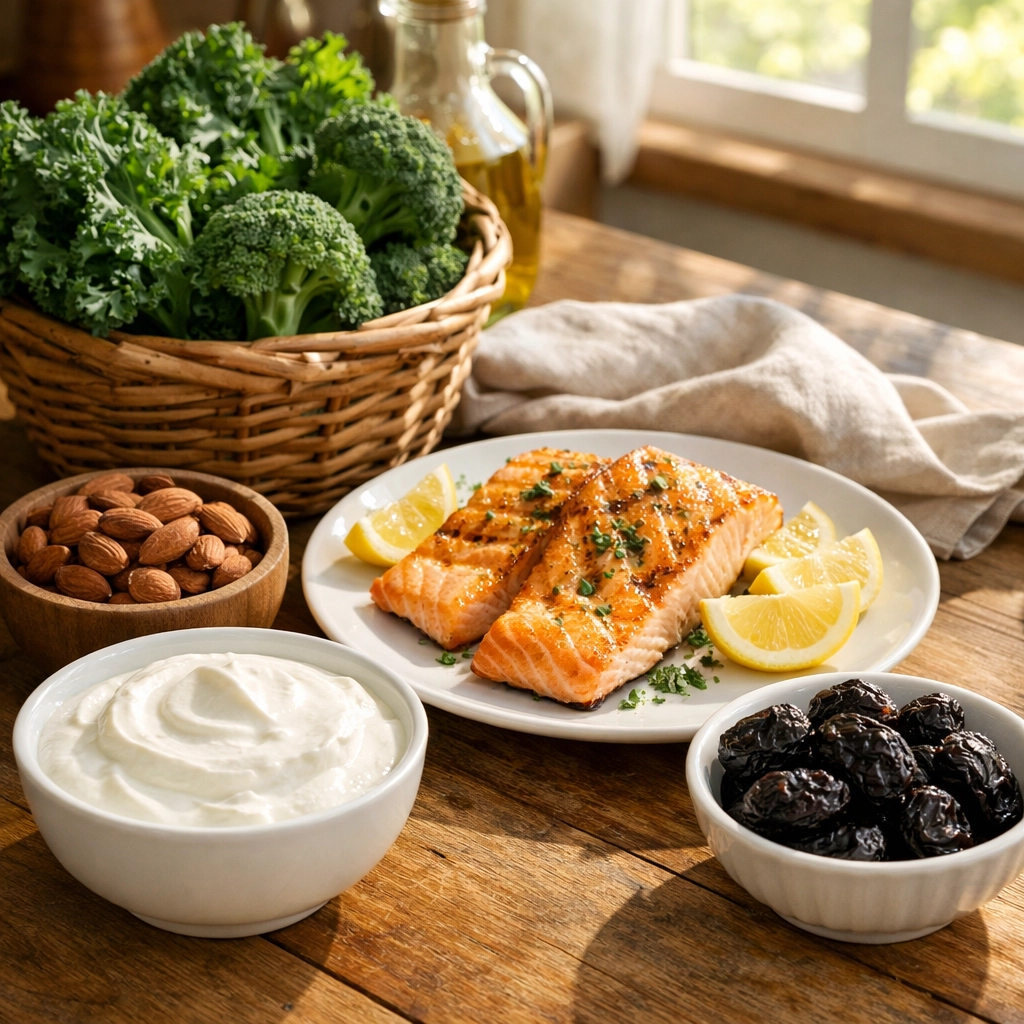
You don't need a "magic pill" to improve your bone health. Most of what you need can be found in the aisles of your local grocery store. Here are the heavy hitters:
- Dairy and Alternatives: Milk, yogurt, and cheese are classic sources of calcium. If you prefer plant-based options, look for fortified almond or soy milk.
- Leafy Greens: Kale, collard greens, and bok choy are packed with calcium and Vitamin K. Interestingly, while spinach is healthy, it contains oxalates that can interfere with calcium absorption, so it’s best to rotate your greens.
- Fatty Fish: Salmon, sardines (especially those with the bones), and mackerel are rare food sources of Vitamin D and Omega-3 fatty acids, which reduce bone-weakening inflammation.
- Prunes: Recent research has shown that eating 5-10 prunes a day can significantly reduce bone loss in postmenopausal women. They contain boron and antioxidants that protect bone tissue.
- Nuts and Seeds: Almonds are a great source of calcium, while pumpkin seeds and walnuts provide magnesium and healthy fats.
- Beans and Tofu: Navy beans and white beans are surprisingly high in calcium. Tofu (if processed with calcium sulfate) is a bone-building powerhouse.
Habits That "Steal" Bone Density
Just as important as what you put into your body is what you avoid. Some common dietary habits can actually leach minerals from your bones:
- Excessive Salt: High sodium intake causes your body to lose calcium through your urine. Try to use herbs and spices for flavor instead of the salt shaker.
- Too Much Caffeine: Heavy caffeine consumption (more than 3 cups of coffee a day) can slightly interfere with calcium absorption.
- Heavy Alcohol Consumption: Alcohol can interfere with the balance of calcium in the body and affect the production of hormones that protect bones. It also, quite obviously, increases the immediate risk of falling.
The Connection Between Strength and Balance
Having strong bones is half the battle. The other half is ensuring you don’t put those bones to the test by falling in the first place. This is where balance comes in.
Balance isn't just one thing; it's a complex coordination between your inner ear (vestibular system), your eyes (visual system), and your "proprioception": your brain's ability to know where your limbs are in space. As we age, these systems can get a little "noisy," and our reaction times slow down.
To combat this, we need to engage in specific types of movement.
Exercises for Bone Density (Weight-Bearing)
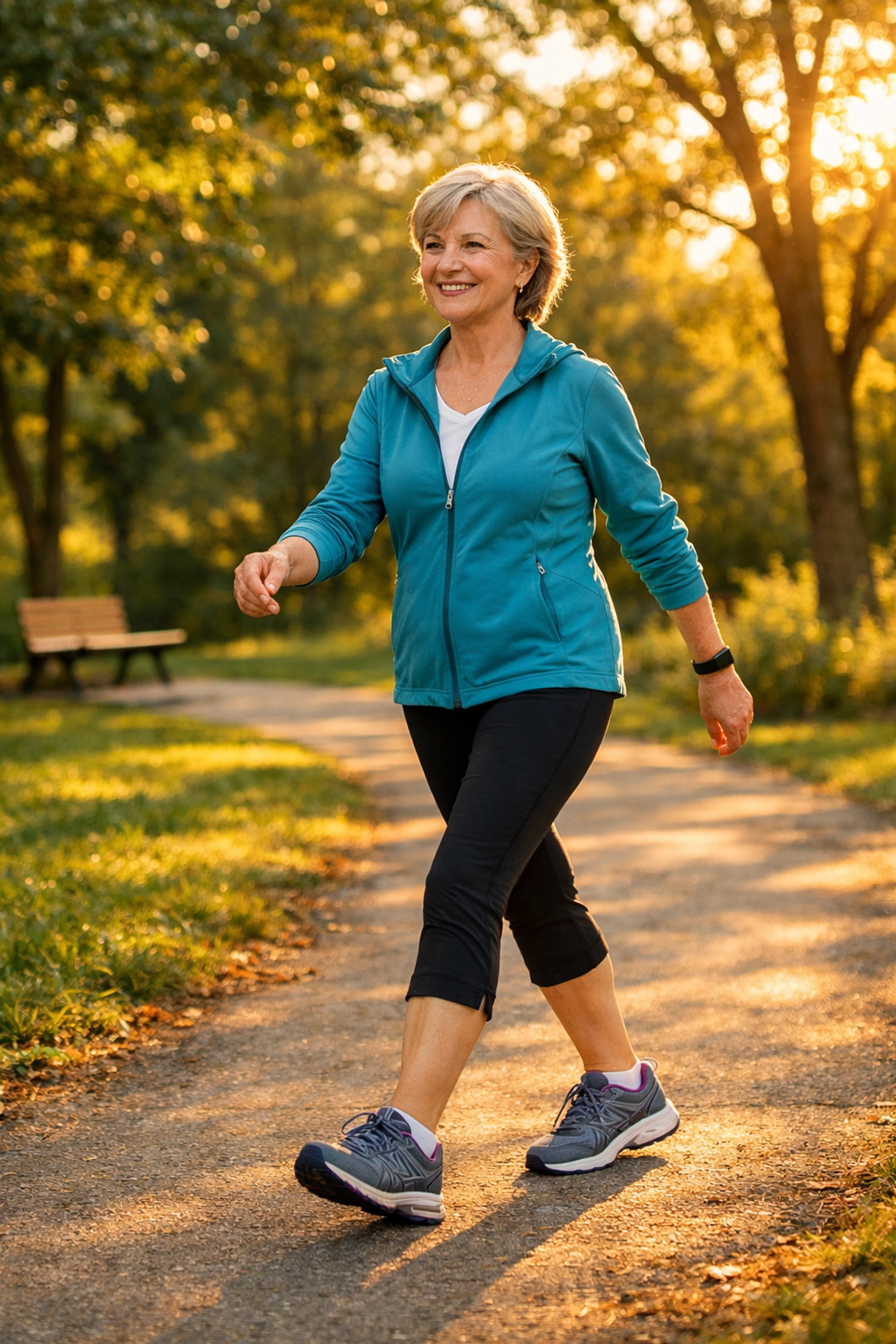
To tell your bones to stay strong, you have to put them under "stress." In the medical world, we call this weight-bearing exercise. When you pull or push on a bone, it signals cells called osteoblasts to build more bone tissue.
- Walking: It’s simple, free, and effective. Aim for a brisk pace. The impact of your feet hitting the ground is great for hip and spine density.
- Stair Climbing: This builds functional strength in the legs while providing the weight-bearing impact bones need.
- Resistance Training: Using light weights or resistance bands helps pull on the bone through muscle contraction. You don't need to be a bodybuilder; even light hand weights can make a difference.
- Dancing: Because dancing involves moving in different directions and shifting weight, it’s fantastic for both bones and coordination.
Exercises for Balance and Stability
Balance exercises don't have to be strenuous, but they do need to be consistent. These movements help retrain the brain and strengthen the "stabilizer" muscles in your ankles and core.
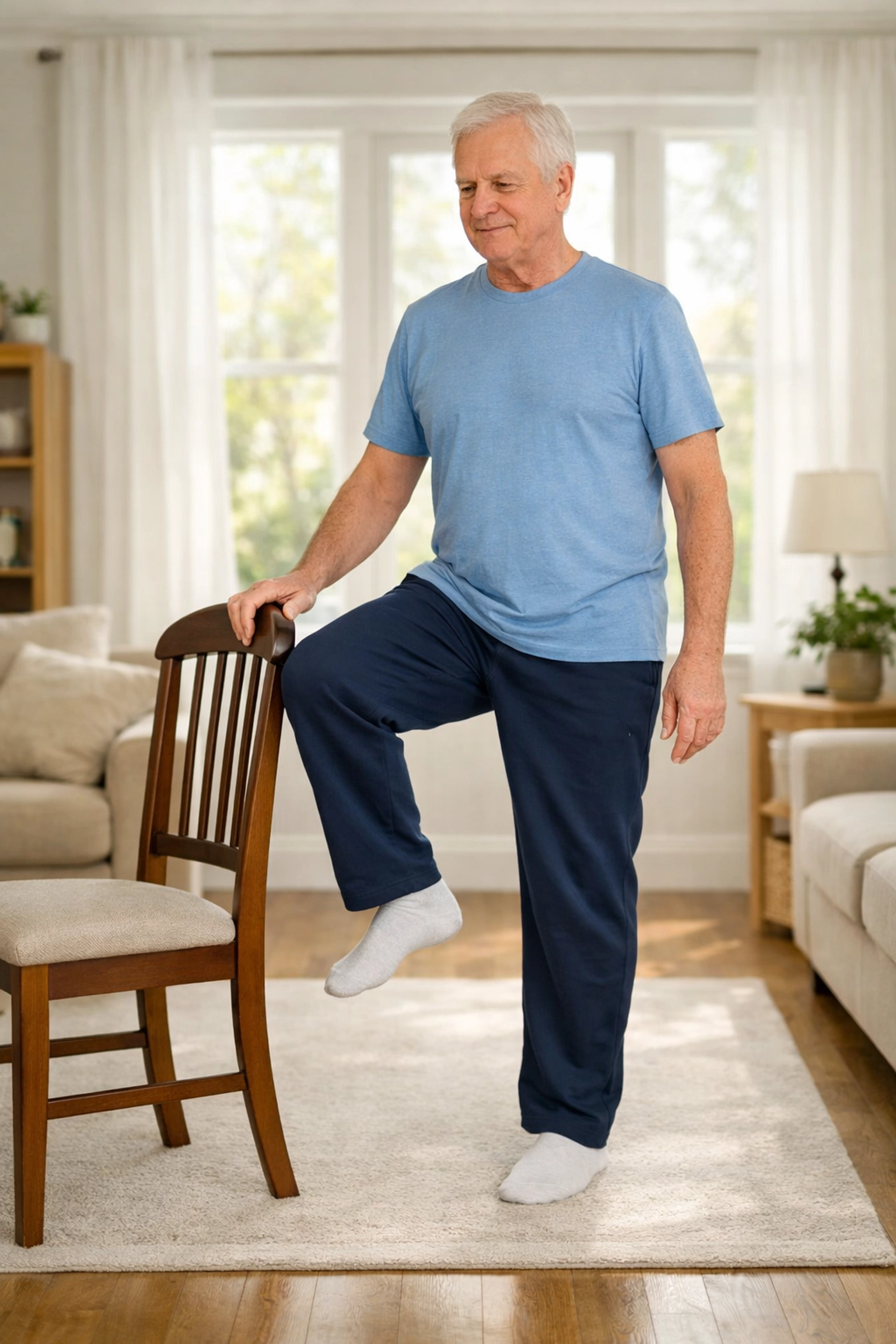
- The One-Limb Stand: Stand behind a sturdy chair for support. Lift one leg and try to hold your balance for 10-30 seconds. Switch legs. As you get better, try just using one finger on the chair, then no hands at all.
- Heel-to-Toe Walk: Imagine you are on a tightrope. Place the heel of one foot directly in front of the toes of the other foot as you walk across the room.
- Tai Chi: Often called "meditation in motion," Tai Chi involves slow, deliberate weight shifts. It is widely considered one of the best activities for reducing fall risk in seniors.
- Sit-to-Stand: Simply standing up from a chair without using your hands and then slowly sitting back down builds the quadriceps and glutes, which are your primary "fall-prevention" muscles.
Integrating Prevention into Your Daily Life
Building stronger bones and better balance is a long-term project. It’s about the small choices you make every day. Here is a quick checklist to keep you on track:
- Check Your Feet: Wear supportive shoes with non-slip soles, even inside the house. Floppy slippers or walking in socks are common culprits in household falls.
- Hydrate: Dehydration can lead to dizziness and low blood pressure, both of which cause falls. Drink water throughout the day, even if you don’t feel thirsty.
- Review Medications: Some medications for blood pressure or sleep can cause lightheadedness. Talk to your doctor if you feel "fuzzy" or dizzy after taking your meds.
- Lighting Matters: Even with the best balance, you can't avoid what you can't see. Ensure your pathways are well-lit, especially between the bedroom and the bathroom at night.
A Reassuring Word
I know that talking about "bone loss" and "fall risk" can feel a bit daunting. It’s easy to feel like our bodies are working against us as we get older. But I want to reassure you: the body is incredibly resilient.
Whether you are 65 or 85, you can still improve your bone density. You can still sharpen your balance. By focusing on a diet rich in the right nutrients and incorporating just a few minutes of balance work into your daily routine, you are taking proactive steps to stay independent and active.
Stay steady, eat well, and keep moving. You’ve got this.

