
Stairs are often the most daunting part of a home for seniors. What used to be a simple trip to the bedroom or a quick run to the basement can, over time, become a source of anxiety. As we age, changes in balance, joint strength, and vision make navigating steps more than just a physical workout, it becomes a safety concern.
Hi, I’m Brian. At Fall Guys Products, we spend a lot of time thinking about how to keep people safe and independent in their own homes. When it comes to stairs, there isn't a one-size-fits-all solution. The "best" mobility aid depends entirely on your specific home layout, your physical needs, and what makes you feel most secure.
In this guide, we’re going to break down the different options available, from simple handrail modifications to sophisticated mechanical lifts, so you can make an informed decision for yourself or a loved one.
Assessing the Staircase and the User
Before looking at specific products, you need to conduct a two-part assessment: the environment and the individual.
The Environment
The physical structure of your home dictates what is possible.
- Straight vs. Curved: Does your staircase go straight up, or does it have a turn, a landing, or a spiral? Straight stairs are the simplest and most cost-effective to modify. Curved stairs usually require custom-fitted solutions.
- Width: Most stair-based mobility aids require a minimum width (often around 28 to 30 inches). If the staircase is particularly narrow, some mechanical options might block the path for other family members.
- Obstructions: Look for doorways at the top or bottom of the stairs, radiators, or low-hanging ceilings that might interfere with equipment.
The Individual
The physical capabilities of the person using the stairs are the most important factor.
- Balance and Coordination: Can the user stand steadily, or do they experience dizziness?
- Lower Body Strength: Can they still bear weight and lift their legs, or do they need to be fully seated?
- Upper Body Dexterity: Can they operate a joystick, toggle a switch, or grip a handrail firmly?
- Cognitive Health: Is the user able to operate mechanical equipment safely and consistently?
Non-Mechanical Mobility Aids for Stairs
If a senior is still relatively mobile but just needs a bit more stability, non-mechanical aids are the first line of defense. These are generally more affordable and less intrusive.
Enhanced Handrails
Standard building codes usually require at least one handrail, but for seniors, one is rarely enough.
- Bilateral Handrails: Installing a second handrail so the user can grip with both hands significantly increases stability and reduces the risk of a sideways fall.
- Extended Rails: Ensure the handrail extends at least 12 inches beyond the top and bottom steps. This allows the user to stabilize themselves before they even begin the transition onto the stairs.
Step Alternators or Half-Steps
For those with limited "step-up" height (common with hip or knee issues), "half-steps" can be placed on existing stairs to reduce the vertical distance of each stride. While these can help, they must be securely fastened to avoid becoming a trip hazard themselves.
High-Visibility Treads and Lighting
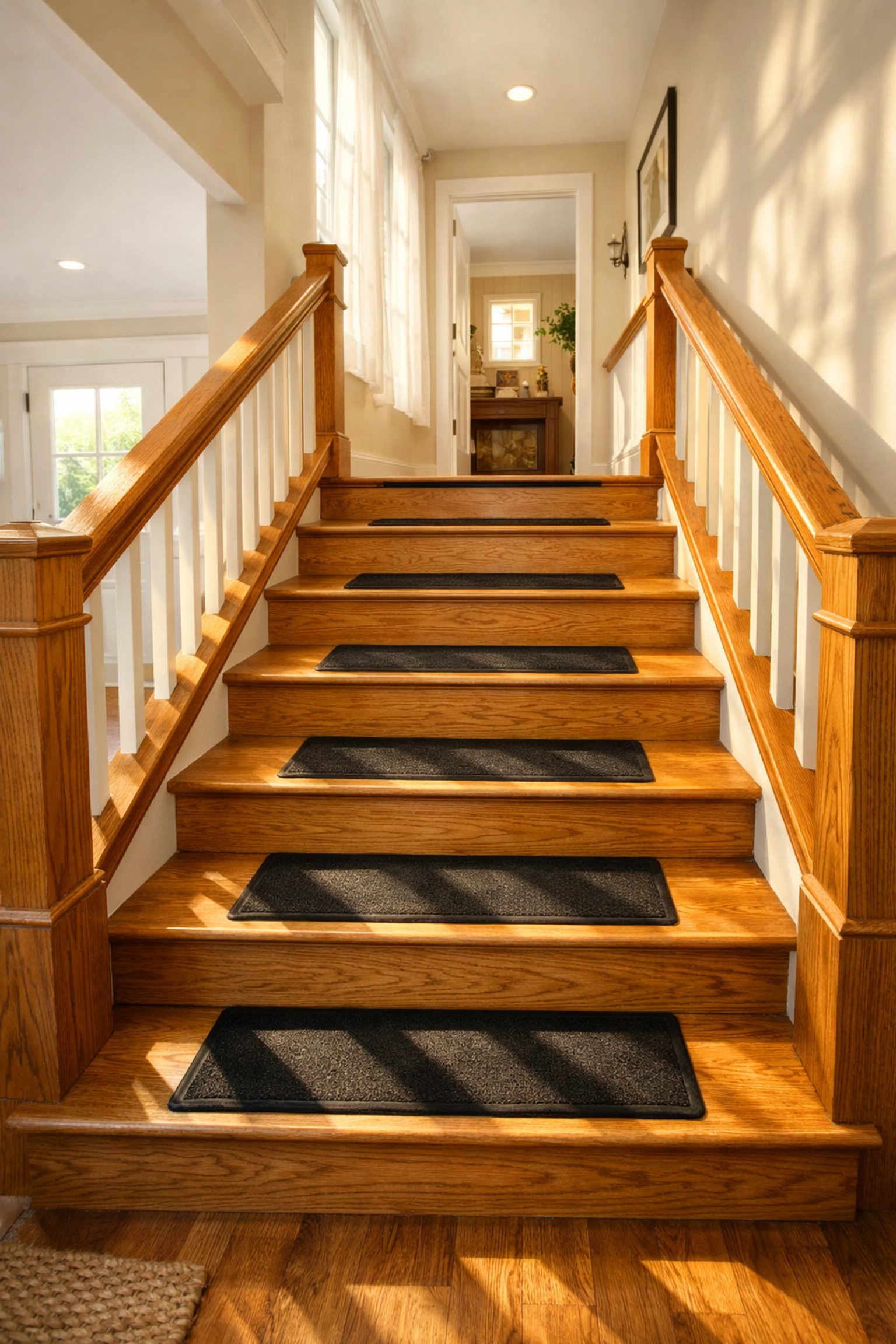
This isn't a "device" you hold, but it is a mobility aid for the eyes. Applying non-slip, high-contrast tape to the edge of each step helps those with declining vision distinguish where one step ends and the next begins. Pair this with motion-activated LED lighting for maximum safety.
Mechanical Stair Mobility Aids: The Stairlift
When walking the stairs is no longer safe or possible, most people look toward mechanical solutions. The most common is the stairlift.
Straight Stairlifts
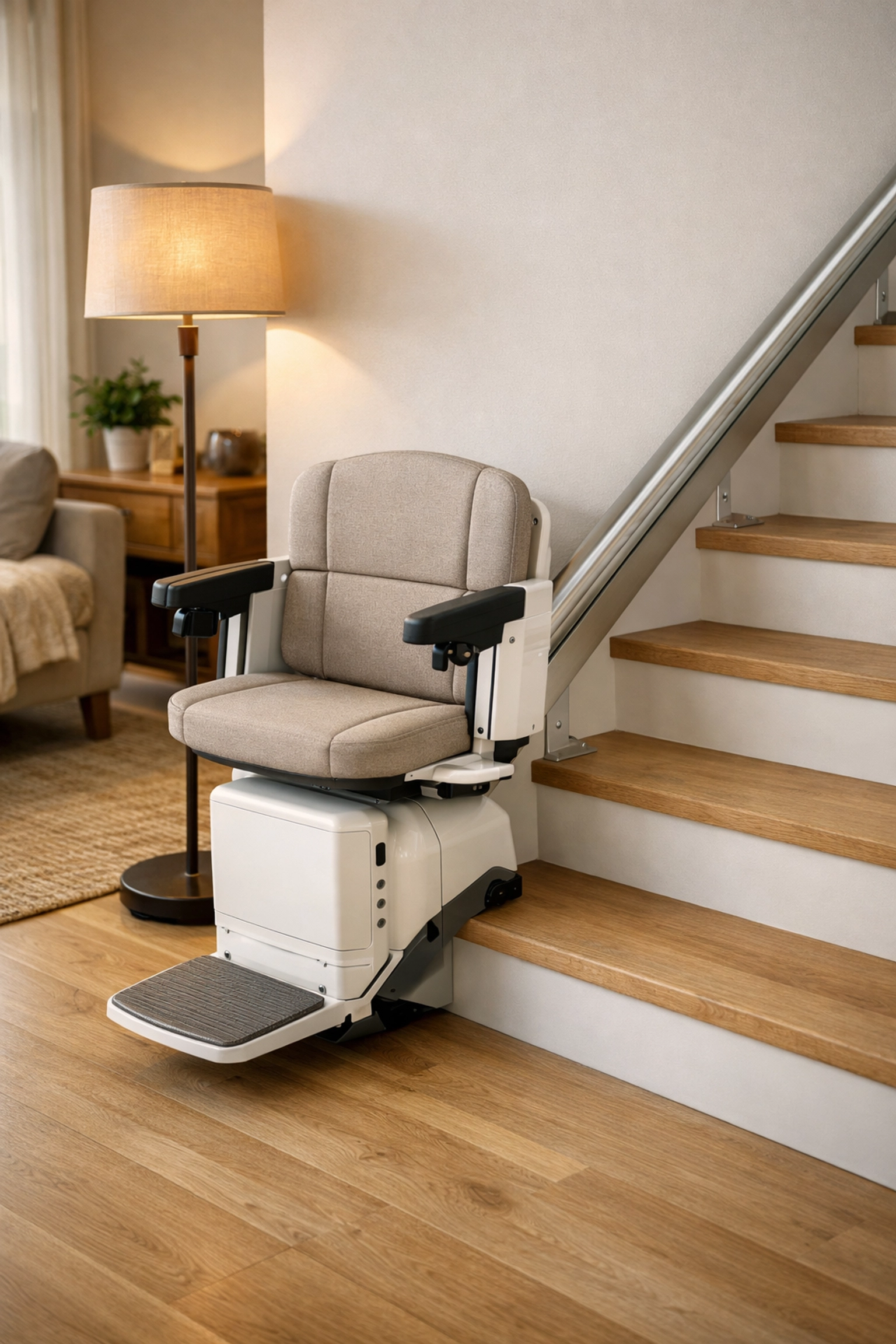
These are designed for a single flight of stairs with no turns or interruptions. They run on a rail that is bolted directly to the stair treads, not the wall.
- Pros: Quick installation (often 2-3 hours) and the most affordable mechanical option.
- Cons: Only works for straight paths.
Curved Stairlifts
If your stairs have a landing where you turn 90 or 180 degrees, you'll need a curved stairlift. These rails are custom-manufactured to follow the exact contour of your home.
- Pros: Allows the user to stay seated for the entire journey from one floor to the next.
- Cons: Significantly more expensive due to custom fabrication and longer installation times.
Key Features to Compare
When looking at different stairlift models, pay attention to these specifics:
- Swivel Seats: A manual or power swivel seat allows the chair to turn at the top of the stairs so the user can get off onto the flat landing rather than stepping off over the stairs.
- Safety Sensors: These automatically stop the lift if a pet, a toy, or an object is detected on the tracks.
- Folding Components: Many models allow the footrest, seat, and arms to fold up when not in use, keeping the stairs clear for others.
- Battery Backup: Ensure the unit has a battery that charges at the top or bottom so it still works during a power outage.
Platform Lifts: For Wheelchair Users
A standard stairlift requires the user to transfer from a wheelchair into the lift seat. For some, this transfer is too difficult or dangerous. In these cases, a platform lift is a better choice.
Inclined Platform Lifts (IPLs)
These are similar to stairlifts but feature a large flat platform instead of a chair. The wheelchair rolls onto the platform, is secured, and then travels up the rail along the stairs.
- Pros: Eliminates the need for transfers.
- Cons: They take up a lot of space. They are generally only suitable for very wide staircases.
Vertical Platform Lifts (VPLs)
Often called "porch lifts," these operate like a mini-elevator. They don't follow the stairs but rather move straight up and down between levels.
- Pros: Very sturdy and high weight capacity.
- Cons: Requires a specific architectural layout (like a hole in the floor or a deck) to be effective.
Comparison of Common Stair Mobility Aids
| Feature | Handrails | Stairlift (Straight) | Stairlift (Curved) | Platform Lift |
|---|---|---|---|---|
| User Effort | High (User must walk) | Low (User sits) | Low (User sits) | Minimal (User stays in chair) |
| Installation Time | Hours | 1-3 Hours | Days (after custom build) | 1-2 Days |
| Space Required | Minimal | Moderate | Moderate | High |
| Typical Weight Limit | N/A | 300 – 400 lbs | 300 – 350 lbs | 500 – 750 lbs |
| Best For | Balance support | Mobility but can sit | Multi-level homes | Wheelchair users |
Assisted Stair Climbers
There is a third category of mobility aids that is often overlooked: mobile stair climbers. These are battery-operated devices that an attendant (like a caregiver or spouse) uses to "climb" the stairs with a person seated in the device.
- How they work: The device uses a set of motorized wheels or tracks to move up the edges of the steps while the caregiver balances and guides the handles.
- The Benefit: No permanent installation is required. You can take them with you if you move or travel.
- The Risk: They require a physically capable operator. If the caregiver has their own mobility or strength issues, this is not a safe option.
Important Considerations Before You Buy
Choosing a mobility aid for stairs is a big decision. Here are a few "insider" tips on what to look for during your research.
Testing the Controls
If you have arthritis or limited hand strength, some "joystick" controls are easier than "toggle" switches. Always try to test a floor model before committing. You want a control that feels intuitive and doesn't require a lot of pressure to hold down.
The "Folding" Footrest
If you're looking at stairlifts, ask if the footrest is "linked" to the seat. If it isn't, you may have to bend down to the floor to fold it up manually. For many seniors, bending down that far is a fall risk in itself. A linked or powered footrest avoids this problem.
Warranty and Service
Mechanical lifts are like cars; they have motors and moving parts that need maintenance. Check the warranty on the motor and gearbox. More importantly, find out who does the servicing. If the lift breaks down, you want a local technician who can get there quickly, especially if the bedroom is on the second floor.
Professional Guidance
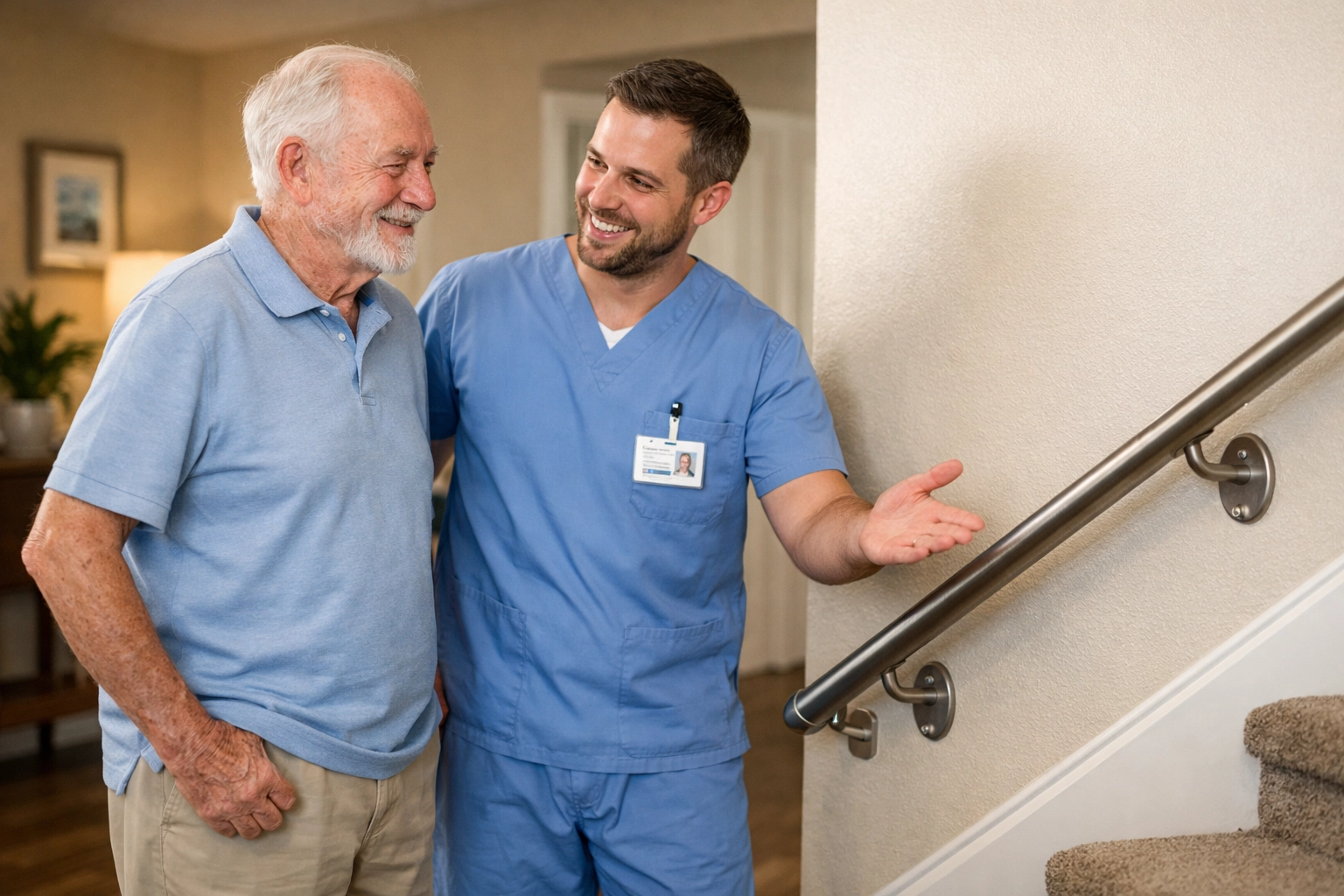
I always recommend speaking with a Physical Therapist (PT) or an Occupational Therapist (OT) before making a final choice. They can assess your gait and strength to tell you if a handrail is sufficient or if a lift is necessary for your long-term safety. They might see things a salesperson won't, like a specific way you lean that might make one type of chair safer than another.
Final Thoughts
The goal of any mobility aid is to keep you moving safely. Stairs shouldn't be a "no-go" zone in your own home. Whether it's adding a second handrail to give you that extra bit of confidence or installing a custom curved stairlift to take the strain off your knees, there is a solution out there.
Take your time, measure twice, and think about not just where your mobility is today, but where it might be a few years down the road. Staying proactive about stair safety is one of the best ways to ensure you can enjoy your home for as long as possible.
Stay safe out there!

