
When you or a loved one first brings home a walker, there is often a sense of relief. It feels like a safety net: a sturdy companion designed to keep you upright and moving. For many, a walker is the key to maintaining independence, allowing for trips to the grocery store, walks in the park, or simply moving safely from the bedroom to the kitchen.
However, there is a hidden irony in the world of mobility aids: if used incorrectly, a walker can actually become a tripping hazard itself. As a founder in the medical equipment space, I’ve seen time and again how a tool meant to prevent falls can inadvertently cause one because of a few small, easily fixed habits.
It isn't just about having the equipment; it’s about knowing how to "drive" it. From the height of the handles to the way you navigate a turn, the details matter. Let’s walk through the most common mistakes people make with their walkers and, more importantly, how to fix them so you can stay safe and steady.
1. The "Hunchback" Trap: Incorrect Height Adjustment
The most frequent mistake starts before you even take your first step. Many people use walkers that are adjusted to the wrong height.
If the walker is too low, you’re forced to hunch over. This forward-leaning posture does two dangerous things: it strains your back and neck, and it shifts your center of gravity forward, making you much more likely to stumble. On the flip side, if the walker is too high, your arms are bent too much, and you can’t effectively put weight through your hands to support your body. This leads to quick fatigue in the shoulders and a lack of stability when you need it most.
How to fix it:
To find the "Goldilocks" height: not too high, not too low: follow the wrist crease rule. Stand as straight as you can with your arms hanging naturally at your sides. The handgrips of the walker should align with the crease on the inside of your wrist. When you place your hands on the grips, your elbows should have a slight bend: roughly 15 to 20 degrees. This allows you to push down with enough force to support your weight without straining your joints.

2. Walking "Behind" the Walker Instead of "Inside" It
Think of your walker as a protective frame. For it to protect you, you need to be inside that frame.
A very common habit is pushing the walker out far in front of you and then "chasing" after it. This is often called "walking behind" the walker. When the device is too far ahead, it can’t support your weight if you trip. In fact, if you start to fall while the walker is two feet in front of you, reaching for it might actually pull it toward you, causing it to tip and making the fall worse.
How to fix it:
Keep your feet between the back legs of the walker. As you move, push the walker forward just a small distance: about a step’s length: and then step into it. Your body should always feel like it is centered within the four posts (or wheels) of the device. This ensures that if you lose your balance, your weight goes straight down into the sturdy frame of the aid.
3. The "Lock Before You Rock" Rule
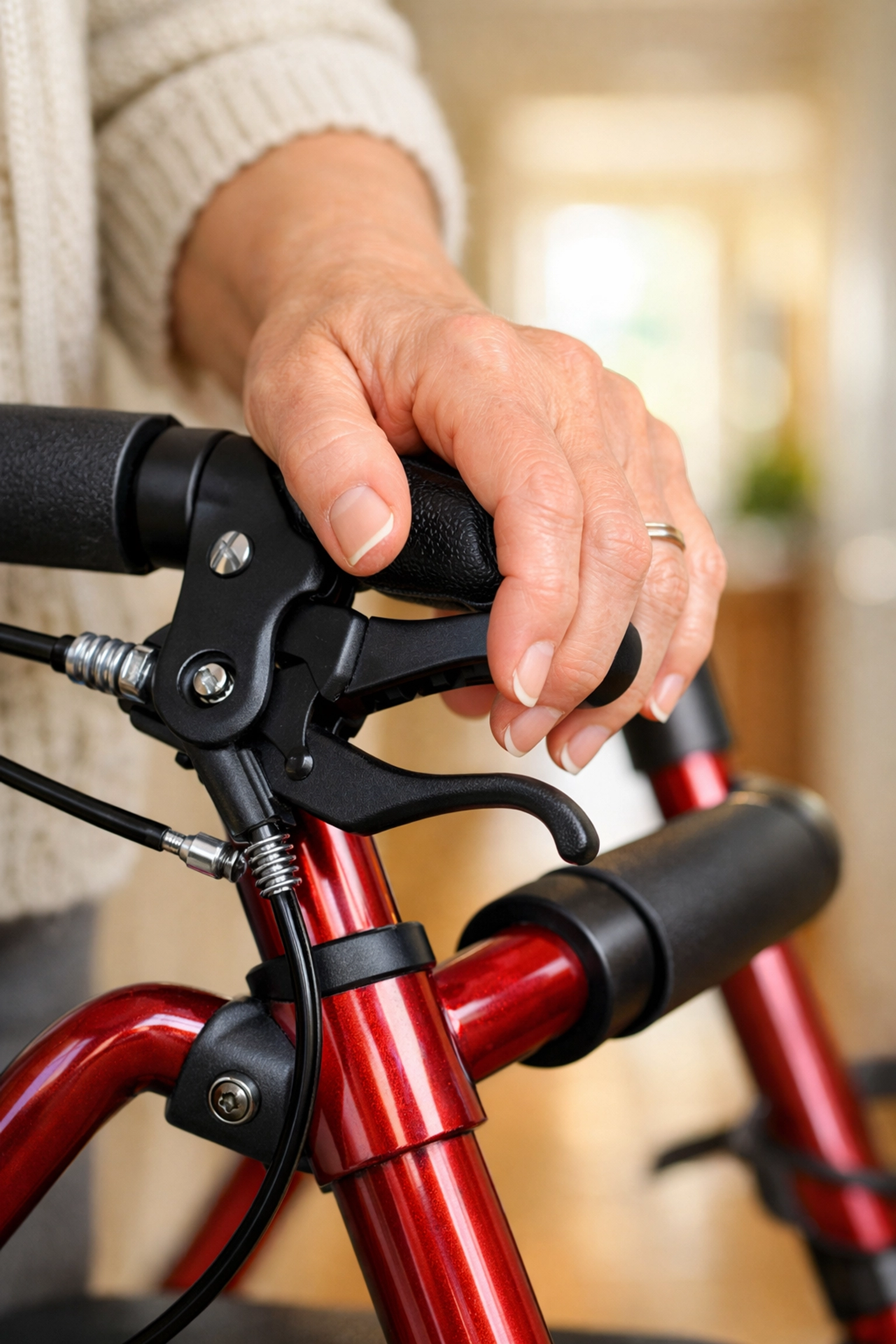
For those using a rollator (the kind of walker with four wheels and a seat), the brakes are your best friend: but only if you use them.
The most dangerous moments for rollator users often happen during transitions, specifically when sitting down or standing up. Many people forget to engage the parking brakes before they shift their weight. If the wheels aren't locked, the walker can roll away the moment you push against it or try to sit on the built-in bench. This results in a "missed chair" fall, which can be particularly painful.
How to fix it:
Develop a mantra: "Lock before you rock." Every single time you prepare to sit down on the walker's seat, or use it for balance while standing up from a different chair, click those brakes into the locked position. Once they are locked, give the walker a little nudge with your hand to make sure it isn't going anywhere before you move your body.
4. Using the Walker as a Pulling Post
This is a mistake we see in bedrooms and living rooms everywhere. When someone is sitting on a sofa or the edge of the bed, they reach out, grab the walker handles, and try to pull themselves up to a standing position.
Most walkers are designed to be lightweight so they are easy to maneuver. They are not designed to be anchors. When you pull horizontally on the handles, the walker is likely to tip over toward you. It provides zero leverage for getting up and can easily lead to a backward fall.
How to fix it:
Never pull on the walker to stand up. Instead, use the armrests of your chair or the surface of the bed to push yourself upward. Once you are steady on your feet and have found your balance, then reach forward and place your hands on the walker grips. The walker is there to help you stay up, not to get you up.
5. Pivoting Too Sharply
When we are in a hurry, we tend to pivot on one foot to turn around. While this might be okay for someone with perfect balance, doing this while using a walker is a recipe for a trip.
If you pivot your body while the walker stays stationary, or if you try to whip the walker around in a tight circle, your feet can easily get tangled in the legs of the device. Additionally, sharp turns can cause the walker to tip if the weight is distributed unevenly during the move.
How to fix it:
Think like a bus, not a sports car. Buses need a wide "turning radius." When you need to turn, take several small, deliberate steps in a gentle curve. Always keep your body facing the front of the walker. If you need to turn 180 degrees, do it in a series of tiny "shuffling" steps rather than one big twist.
6. Overloading with Bags and Purses
It’s tempting to hang a heavy purse, grocery bag, or a laptop bag over the handles of a walker. However, adding weight to the handles changes the center of gravity of the device. If the bag is heavy enough, it can make the walker "front-heavy" or "side-heavy," increasing the risk of it tipping over when you hit a small bump or a rug.
Furthermore, bags hanging from the handles often swing back and forth, hitting your legs or getting caught in the frame, which can easily cause a stumble.
How to fix it:
If you need to carry items, use accessories specifically designed for walkers, such as a basket or a pouch that attaches to the front or center of the frame. These keep the weight low and centered, which actually helps with stability rather than hindering it. If you must use a bag, ensure it is small and secured tightly to the frame so it cannot swing.
7. The "Short Distance" Trap
"I’m just going to the bathroom, I don’t need the walker for such a short trip."
We hear this all the time. Many falls happen at night or during short trips across a room because the user felt "steady enough" to skip the mobility aid. The reality is that your home is full of hazards: rugs, pets, slick floors, and dim lighting: that don't care how far you're walking. Consistency is the key to safety.
How to fix it:
If a doctor or physical therapist has recommended a walker, use it for every trip, no matter how short. Keep it within arm's reach of your bed or favorite chair so there is never an excuse to "wing it."
8. Ignoring the "Tires" and Tips
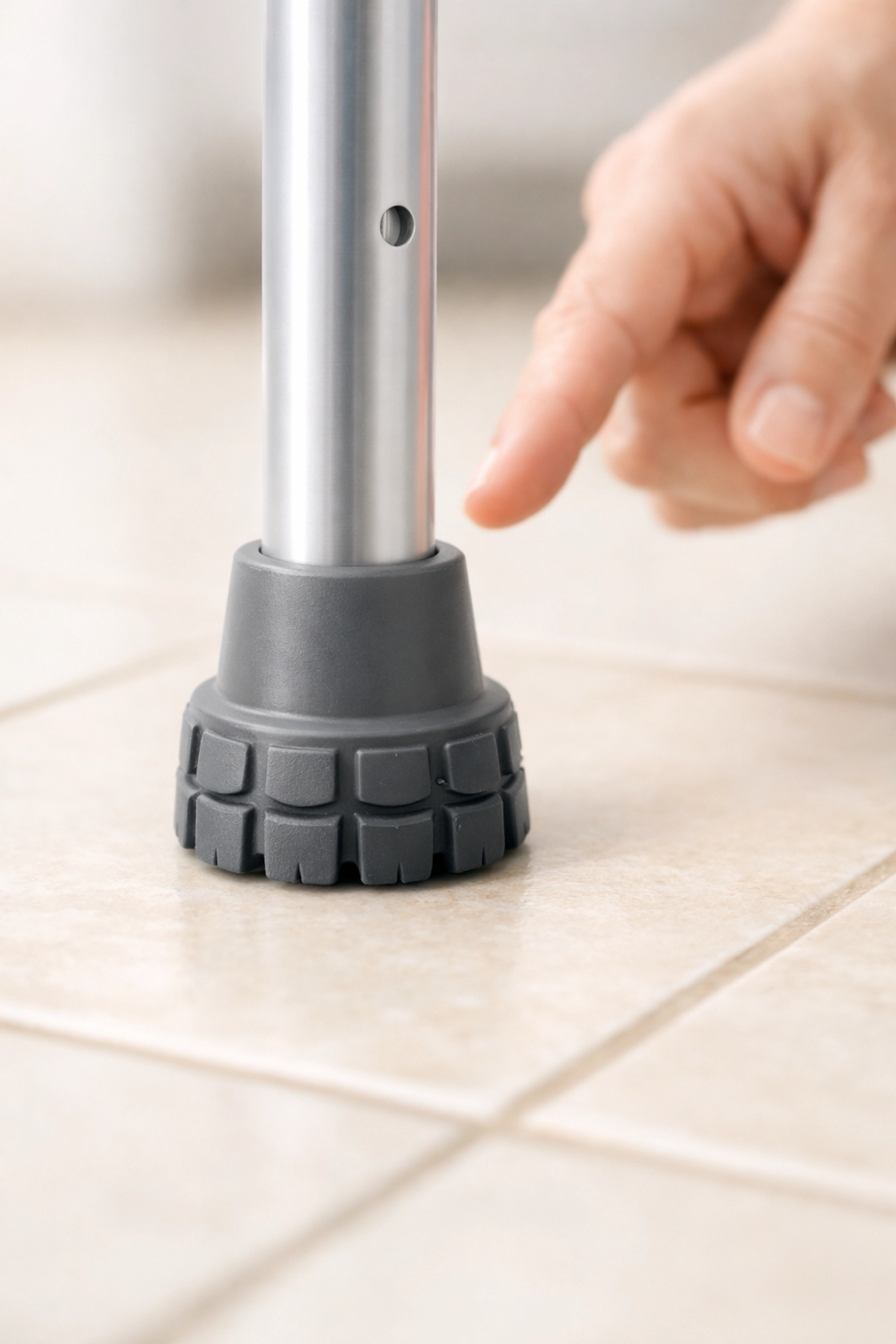
Just like a car, a walker needs regular maintenance. Over time, the rubber tips on the bottom of a standard walker can wear down, becoming smooth and slick. When this happens, they lose their "grip" on the floor, especially on tile or hardwood. For rollators, the brakes can loosen over time, meaning they might not hold as firmly as they once did.
How to fix it:
Once a month, do a quick "safety check." Look at the rubber tips: if you see the metal of the walker leg poking through, or if the tread is worn flat, replace them immediately. Check the wheels on your rollator for any wobbling or debris caught in the axles. If the brakes feel "mushy," have a family member or a professional tighten the cables.
9. Footwear Fails
You could have the most expensive, perfectly adjusted walker in the world, but if you’re wearing loose slippers or walking in socks, your fall risk remains high. A walker provides stability for your upper body, but your connection to the ground is still your feet. Slippery soles or shoes that don't stay firmly on your heel can cause you to slide even while holding onto the walker.
How to fix it:
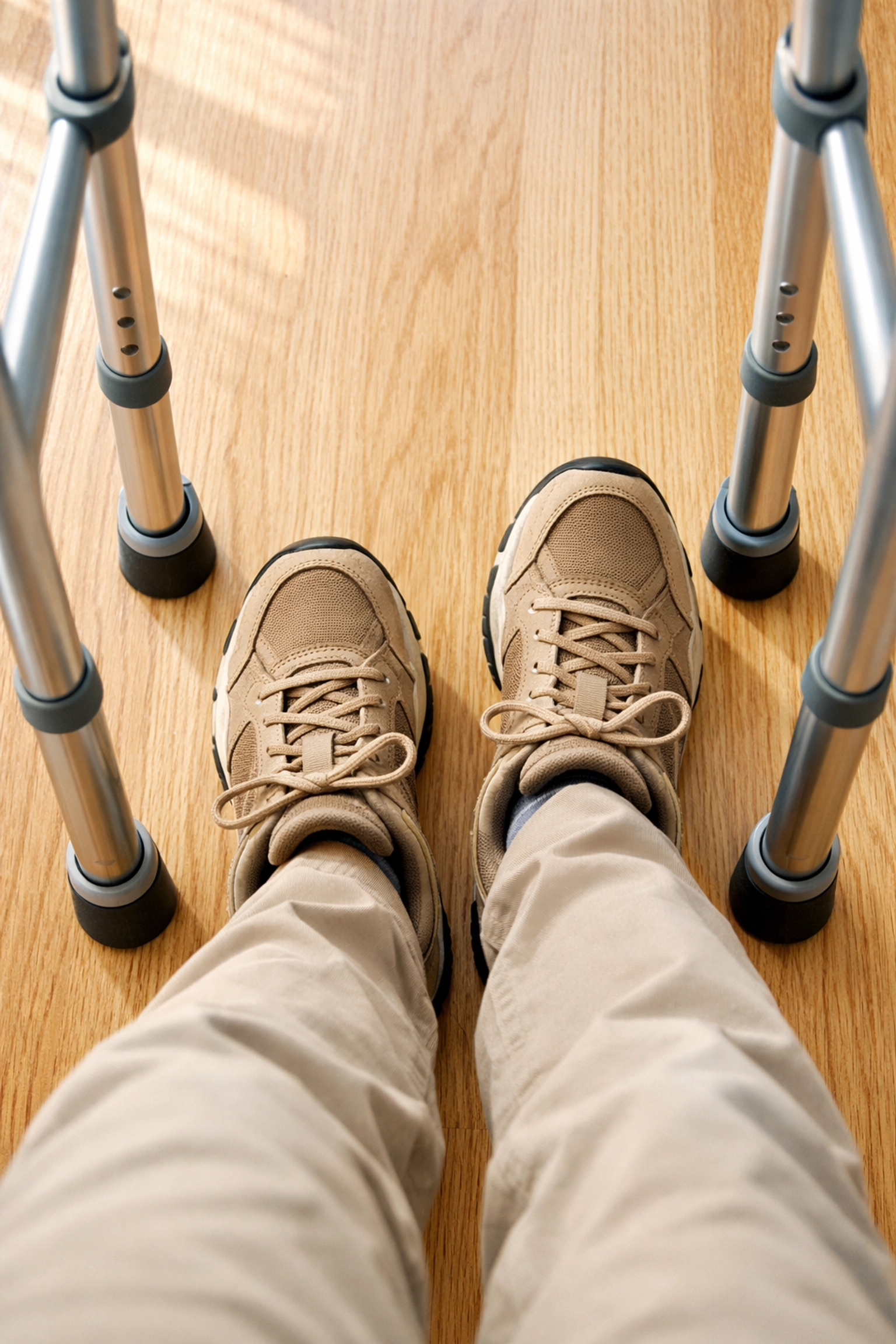
Always wear sturdy, closed-toe shoes with non-slip soles. Avoid "flip-flops" or backless slippers that can easily slide off. If you prefer to be shoeless indoors, look for specialized non-slip socks with rubber grips on the bottom, though supportive shoes are always the safest bet.
The Role of a Professional
While these tips can significantly improve your safety, nothing replaces the eyes of a professional. If you or a loved one are struggling with a walker, or if it feels "clunky" and uncomfortable, I highly recommend scheduling a session with a physical therapist (PT).
A PT can perform a professional mobility assessment. They will not only adjust the walker to your exact body proportions but also watch you walk and identify specific gait patterns that might be putting you at risk. They can teach you how to navigate specific obstacles in your home, like the transition from carpet to tile or how to get over a door threshold safely.
Final Thoughts
A walker is a tool for freedom. It’s a way to keep engaging with the world and moving through your day with confidence. By avoiding these common mistakes: checking your height, staying "inside" the frame, and always using your brakes: you turn that walker from a potential hazard into a reliable partner.
Take a moment today to look at how you or your loved one is using their mobility aid. A few small adjustments can make a world of difference in preventing a fall and maintaining the independence you’ve worked so hard to keep. Stay safe out there!

