
Stairs are a fundamental part of most homes, but they are also one of the most common sites for household accidents. As we age, or as we care for others who may have mobility challenges, the way we perceive and use stairs needs to shift. It’s not just about getting from point A to point B anymore; it’s about doing so with intention and a clear understanding of the risks involved.
The good news is that most stair-related falls are preventable. By identifying common habits and environmental hazards, we can create a much safer living space. My name is Brian Kerr, and at Fall Guys Products, we focus on helping people stay mobile and confident in their own homes. Today, I want to walk you through seven common mistakes people make with stair safety and, more importantly, how you can fix them right now.
1. Rushing Up and Down
We live in a fast-paced world, and often that "hurry-up" mindset follows us to the staircase. Whether the phone is ringing, someone is at the door, or you just realized you left your glasses upstairs, rushing is the primary culprit behind missteps. When we rush, our center of gravity shifts too far forward or backward, making it much harder to recover if we lose our footing.
The Fix: The "One Step at a Time" Rule
Treat the staircase as a zone for mindfulness. Before you take that first step, stop for a second. Take a deep breath. Ensure your foot is planted firmly on the landing. Make a conscious effort to place your entire foot on each tread, rather than just the ball of your foot. If the phone is ringing, let it go to voicemail. Your safety is worth more than a missed call.
2. Neglecting to Use Handrails
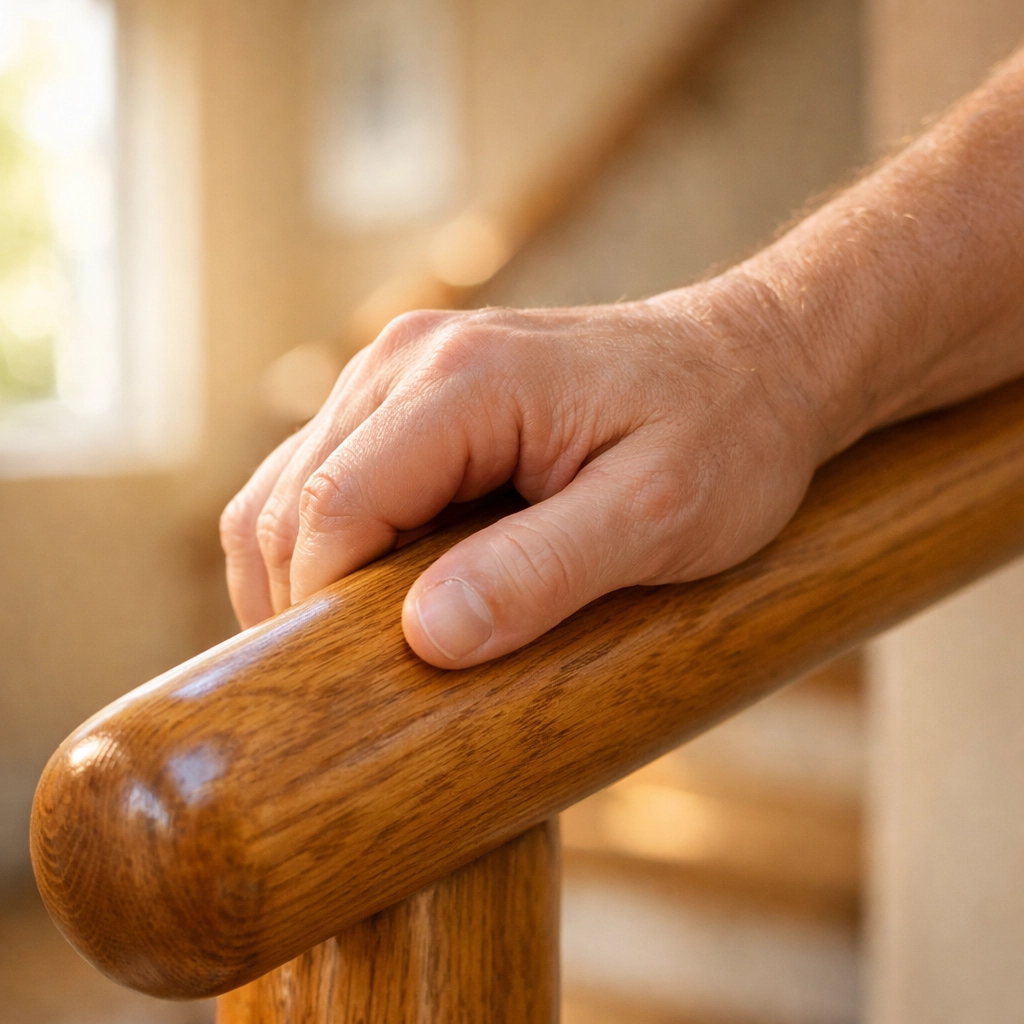
It’s common to see people walk up the middle of a staircase without touching the handrails, especially if they feel relatively fit. However, handrails aren't just for people who "need help" walking; they are a critical safety feature for everyone. A handrail acts as a secondary point of contact. If you do happen to slip, having your hand already on the rail can be the difference between a minor stumble and a serious fall.
The Fix: The Always-On Habit
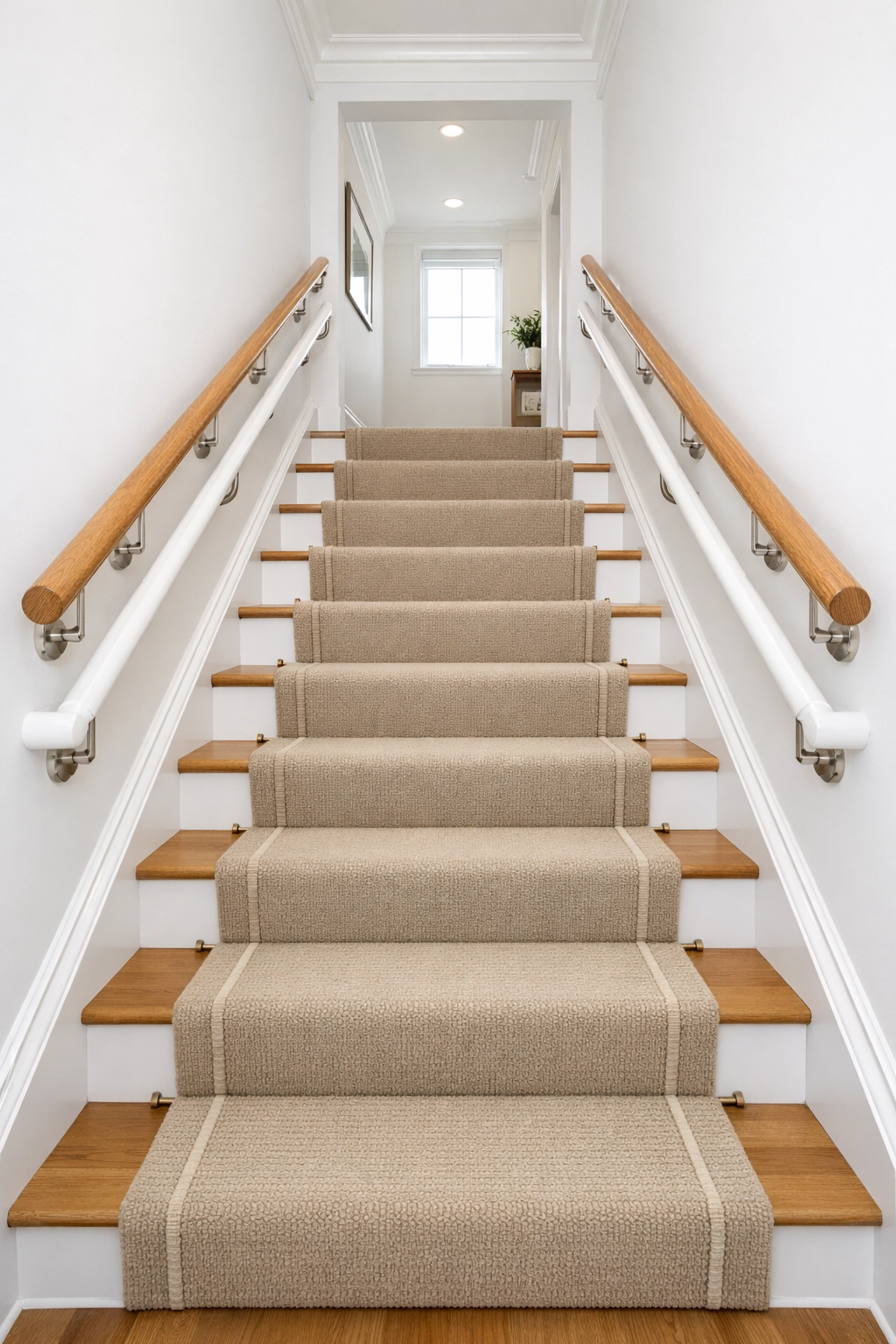
Make it a rule to always have at least one hand on the rail, regardless of how confident you feel. If your staircase only has a rail on one side, consider installing a second one on the opposite side. Having two points of contact: one for each hand: provides maximum stability and helps distribute your weight evenly as you ascend or descend.
3. Keeping Stairs Cluttered
Many of us have a habit of placing items on the bottom steps, intending to take them up "on the next trip." This might include a stack of books, a pair of shoes, or even laundry. While it seems like a convenient way to organize chores, it creates a significant tripping hazard. Even a small object can catch a toe or cause a heel to slide, leading to a loss of balance.
The Fix: Clear Passage Policy
Establish a "nothing on the stairs" rule for everyone in the house. If you need to move items between floors, use a basket kept on the floor away from the landing. Only carry what you can safely manage while keeping one hand free for the rail. If you have children or grandchildren visiting, do a "sweep" of the stairs several times a day to ensure no toys have been left behind.
4. Inadequate Lighting
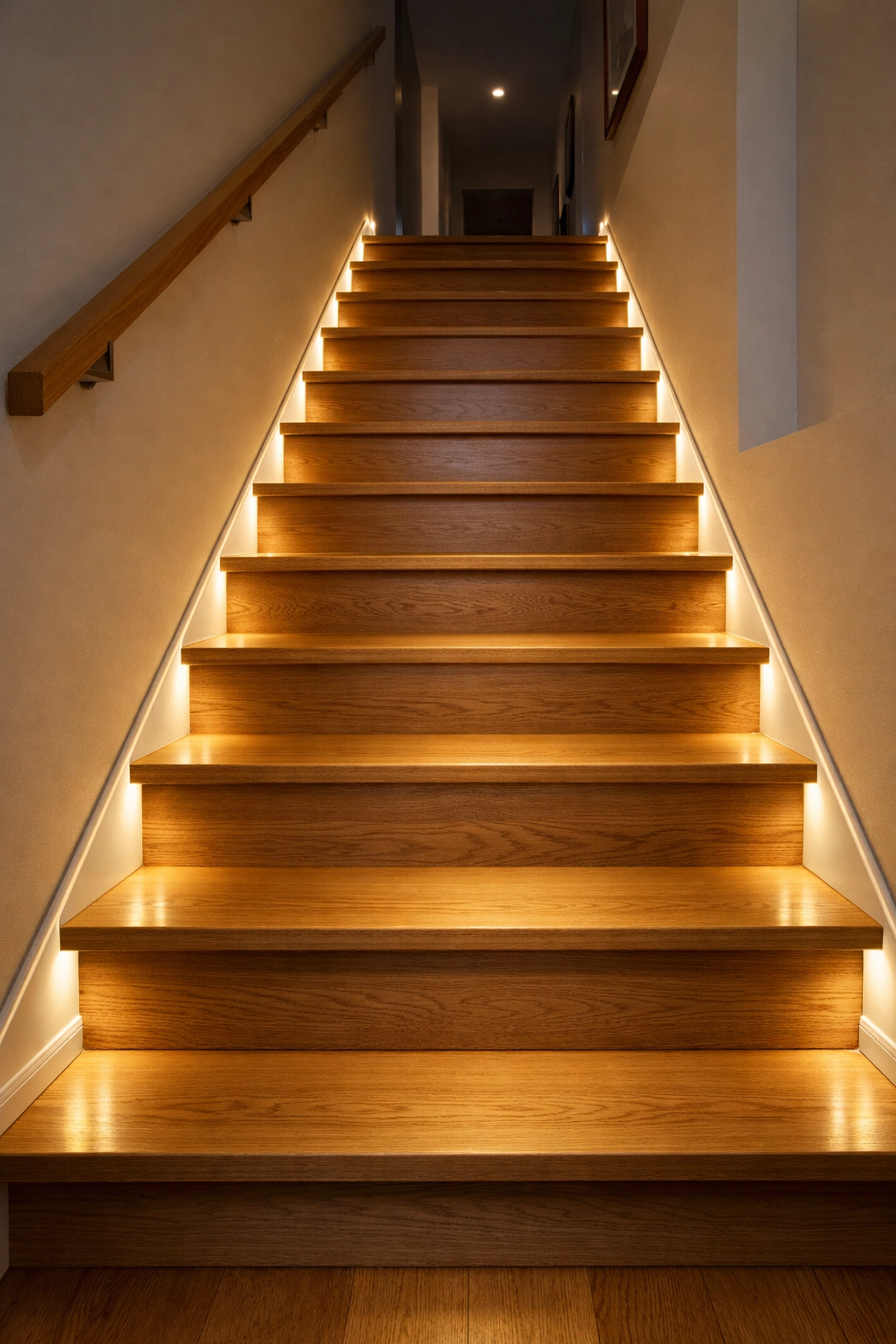
Stairs can be tricky even in the best conditions, but in low light, they become genuinely dangerous. Shadows can hide the edge of a step, making it difficult to judge depth perception. Many older homes have a single, dim bulb at the top of the stairs, leaving the middle and bottom sections in relative darkness.
The Fix: Layered Lighting Solutions
Ensure that the entire length of the staircase is brightly and evenly lit.
- Install high-lumen LED bulbs: These provide crisp, clear light without the "warm" shadows of traditional bulbs.
- Motion-sensor lights: Consider battery-operated motion-sensor lights along the baseboards. They turn on automatically as you approach, which is especially helpful for middle-of-the-night trips to the kitchen or bathroom.
- Contrast strips: If the stairs are a dark wood or a uniform carpet color, it can be hard to see where one step ends and the next begins. Applying a strip of high-contrast tape or a different colored "nosing" to the edge of each step can significantly improve depth perception.
5. Wearing Improper Footwear
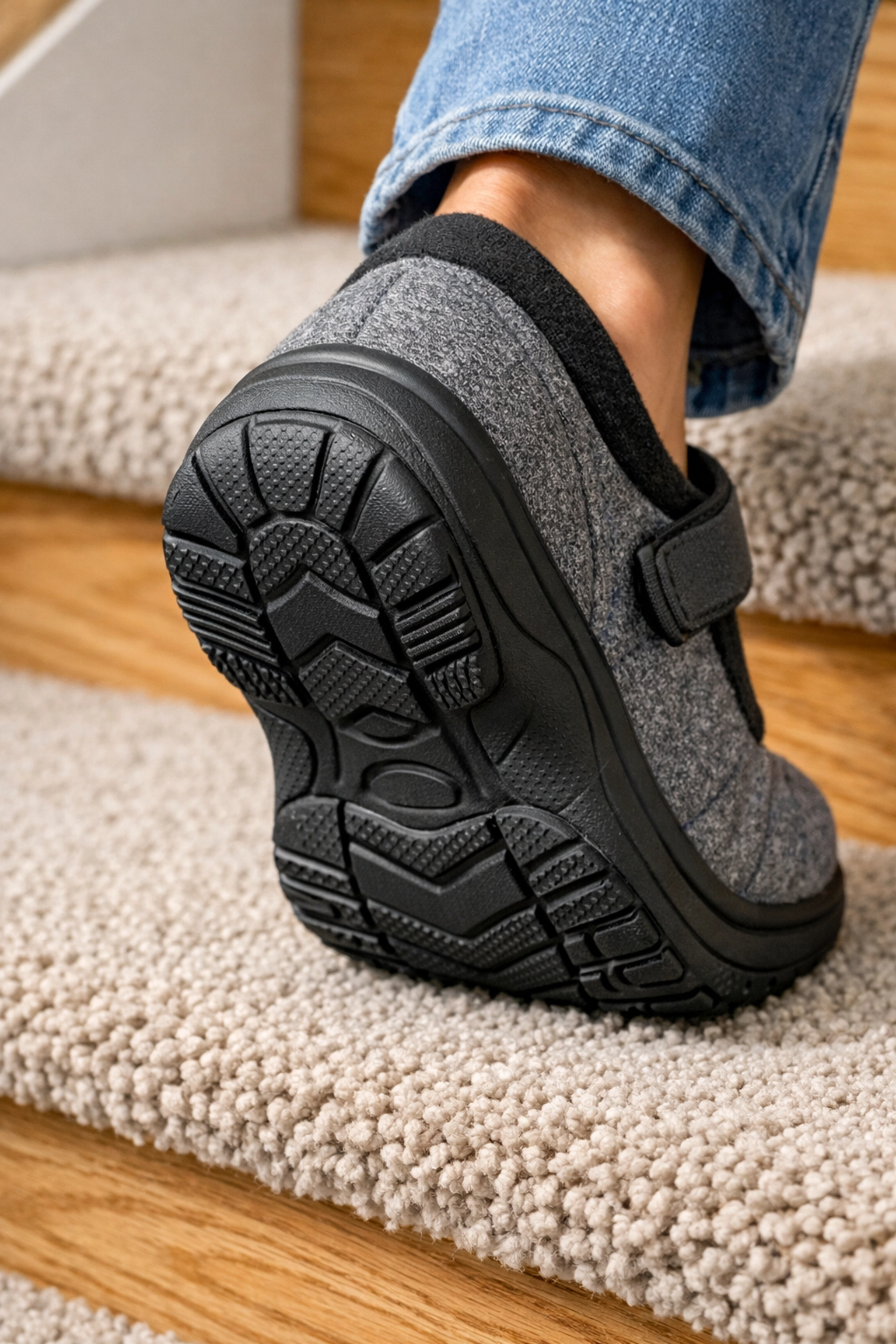
What you wear on your feet is just as important as how you walk. Walking on stairs in socks: especially on hardwood or polished stone: is incredibly risky because there is zero traction. Conversely, loose-fitting slippers can easily slide off or get caught on the edge of a tread.
The Fix: Friction and Fit
Always wear footwear with non-slip soles. If you prefer not to wear outdoor shoes inside, invest in a dedicated pair of "indoor shoes" with a sturdy rubber sole and a closed back. If you must go barefoot, ensure your feet are dry. Avoid "slipper socks" unless they have very high-quality grip pads on the bottom, as these can still shift around your foot and cause instability.
6. Navigating Stairs While Distracted
In the age of smartphones, many people find themselves checking texts or scrolling through news while moving through their homes. Doing this on the stairs is a recipe for disaster. Your brain needs to be fully focused on the mechanical task of climbing or descending. Carrying large or heavy items that block your view of your feet is another form of distraction that often leads to accidents.
The Fix: Eyes on the Path
Keep your eyes on the steps, not on your phone or your feet. Looking about two steps ahead is generally the best way to maintain balance. If you need to carry something, make sure it is small enough that you can see over it and that you still have one hand free to grip the handrail. If an item is too large to carry safely, ask for help or find another way to move it.
7. Deferred Maintenance and Inspections
Stairs undergo a lot of wear and tear. Over time, wooden steps can become creaky or loose, carpeting can fray or "bubble," and handrails can become wobbly. Many people ignore these small issues, thinking they aren't a big deal. However, a loose piece of carpet is a snagging hazard, and a wobbly handrail won't support your weight if you actually need to lean on it during a slip.
The Fix: The Seasonal Stair Check
Once every few months, perform a quick inspection of your staircase.
- Check the carpet: Is it tightly secured to each tread and riser? If it’s loose, have a professional re-stretch or tack it down.
- Test the handrail: Give it a firm shake. It should feel rock-solid. If it moves at all, tighten the brackets or add more support.
- Examine the treads: For wooden stairs, check for cracks or warped wood. For outdoor stairs, look for moss or algae growth, which can become incredibly slippery when wet.
The Anatomy of a Safe Step
Understanding the mechanics of how we use stairs can help us be safer. When you go up, you use your large muscle groups: the quads and glutes: to lift your body weight. When you go down, you are actually performing "eccentric" movements, where your muscles are lengthening under tension to control your descent.
Going down is actually more dangerous than going up because gravity is working with your momentum. This is why most stair accidents happen on the way down. By keeping your torso upright and avoiding leaning too far forward, you keep your center of gravity over your base of support.
Environmental Factors and Beyond
Beyond the seven mistakes listed above, consider the environment surrounding your stairs.
- Landings: Ensure there is a clear landing at both the top and bottom of the stairs. There should be no rugs that could slide or furniture that narrows the exit path.
- Vision: If you wear bifocals or trifocals, be extra careful. The lower portion of the lens is designed for reading and can blur your vision of the steps when you look down. Some people find it safer to have a dedicated pair of single-vision glasses specifically for moving around the house.
A Reassuring Approach to Home Safety
It’s easy to feel overwhelmed by a list of "mistakes," but the goal isn't to make you fearful of your own home. Instead, think of these fixes as small, manageable adjustments that empower you to stay independent.
Safety is often about habit. Once you get used to turning on the light, grabbing the rail, and clearing the clutter, these actions become second nature. You don't have to change everything in one day. Start by clearing the clutter today. Tomorrow, check your lightbulbs. Next week, tighten that handrail.

Final Thoughts
Stair safety is a cornerstone of fall prevention. By addressing these seven common mistakes, you are taking a proactive step toward a safer, more comfortable life. Your home should be a place where you feel secure, and with a few simple changes, you can ensure that every trip up and down the stairs is a safe one.
Remember, there is no shame in taking things slow. In fact, in the world of fall prevention, slow and steady truly does win the race. Keep your path clear, your lights bright, and your hand on the rail. You've got this.

