
Stairs are a fundamental part of many homes, yet they often represent one of the most significant challenges as we age or face mobility changes. It is easy to view a staircase as just a functional path between floors, something we have navigated thousands of times without a second thought. However, that familiarity can sometimes lead to a relaxed attitude toward safety.
At Fall Guys Products, we believe that understanding the mechanics of home safety is the first step toward maintaining independence. Stair safety isn't just about avoiding a trip; it’s about creating an environment where you feel confident and secure in every level of your home. By identifying common mistakes and implementing practical fixes, you can significantly reduce risks and navigate your home with peace of mind.
Here are seven common mistakes people make with stair safety and the steps you can take to correct them.
1. The "I Don’t Need the Rail" Mindset
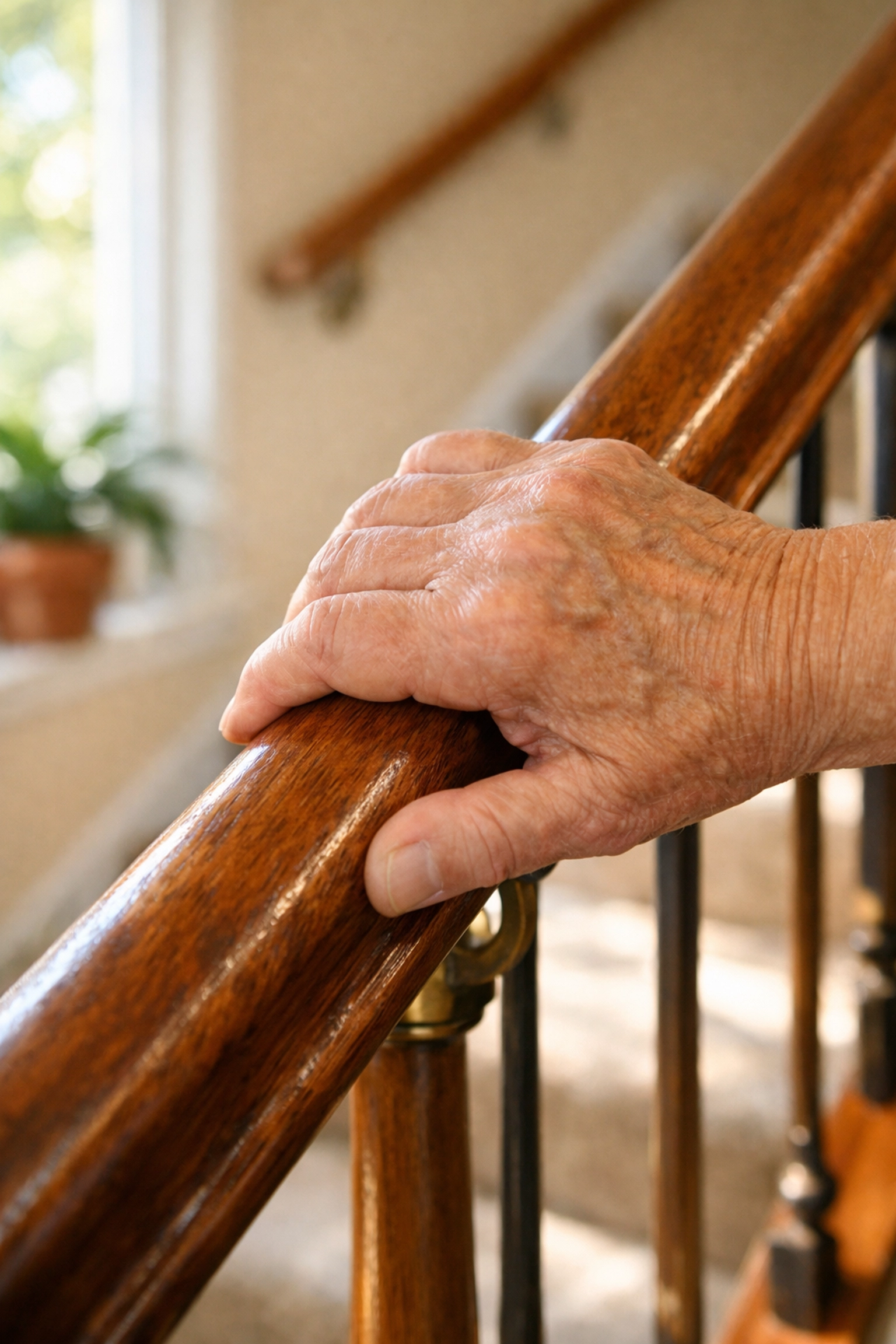
One of the most common behavioral mistakes is neglecting the handrail. Often, people feel they are steady enough to walk up or down the center of the stairs without support. Others may use the wall for balance instead of the railing.
The handrail is your primary line of defense. It provides a stable anchor point that allows your body to maintain three points of contact (two feet and one hand) at all times. Relying on the wall is unreliable because walls are smooth and offer nothing to grip if a slip occurs.
How to Fix It:
Make it a conscious habit to use the handrail every single time, even if you feel perfectly steady. If your staircase only has a rail on one side, consider installing a second railing on the opposite wall. Having "double coverage" ensures that no matter which hand is stronger or which direction you are moving, support is always within reach. Ensure the handrail is at a comfortable height: typically between 34 and 38 inches: and that it is narrow enough for your hand to wrap around it completely in a "power grip" rather than just resting your palm on top.
2. Navigating in the "Twilight Zone" (Poor Lighting)
As we age, our eyes require more light to see clearly, and our depth perception can become less sharp. Many staircases are lit by a single, dim overhead bulb or, worse, rely on "borrowed light" from an adjacent room. Shadows cast by poorly positioned lights can hide the edge of a step, making it difficult to judge exactly where to place your foot.
If you find yourself squinting or moving slower at night because you can’t quite see the treads, your lighting is likely insufficient.
How to Fix It:
The goal is uniform, glare-free illumination. Install light switches at both the top and bottom of the stairs so you are never forced to navigate in the dark to reach a switch. Consider adding motion-activated LED strip lighting under the lip of each tread or along the baseboard. This provides a clear "runway" effect that highlights the depth of every step. Additionally, using a high-contrast color: like a strip of white tape on the edge of dark wooden steps: can help differentiate where one step ends and the next begins.
3. Using Stairs as Temporary Storage
We have all been guilty of it: placing a book, a pair of shoes, or a basket of laundry on the bottom steps with the intention of "taking it up later." While this feels like a productivity hack, it creates a high-stakes obstacle course.
Even if you think you’ll remember the item is there, distractions happen. A ringing phone or a doorbell can cause you to move quickly or look away, leading to a trip over an object that shouldn’t have been there in the first place.
How to Fix It:
Establish a "zero-tolerance" policy for items on the stairs. If something needs to go up or down, it should either go all the way immediately or be placed in a dedicated "stair basket" located at least three feet away from the start of the staircase. This ensures the path remains entirely clear. If you find it difficult to carry items while using the stairs, consider using a small backpack to keep your hands free for the handrails.
4. Prioritizing Comfort Over Grip (Footwear)
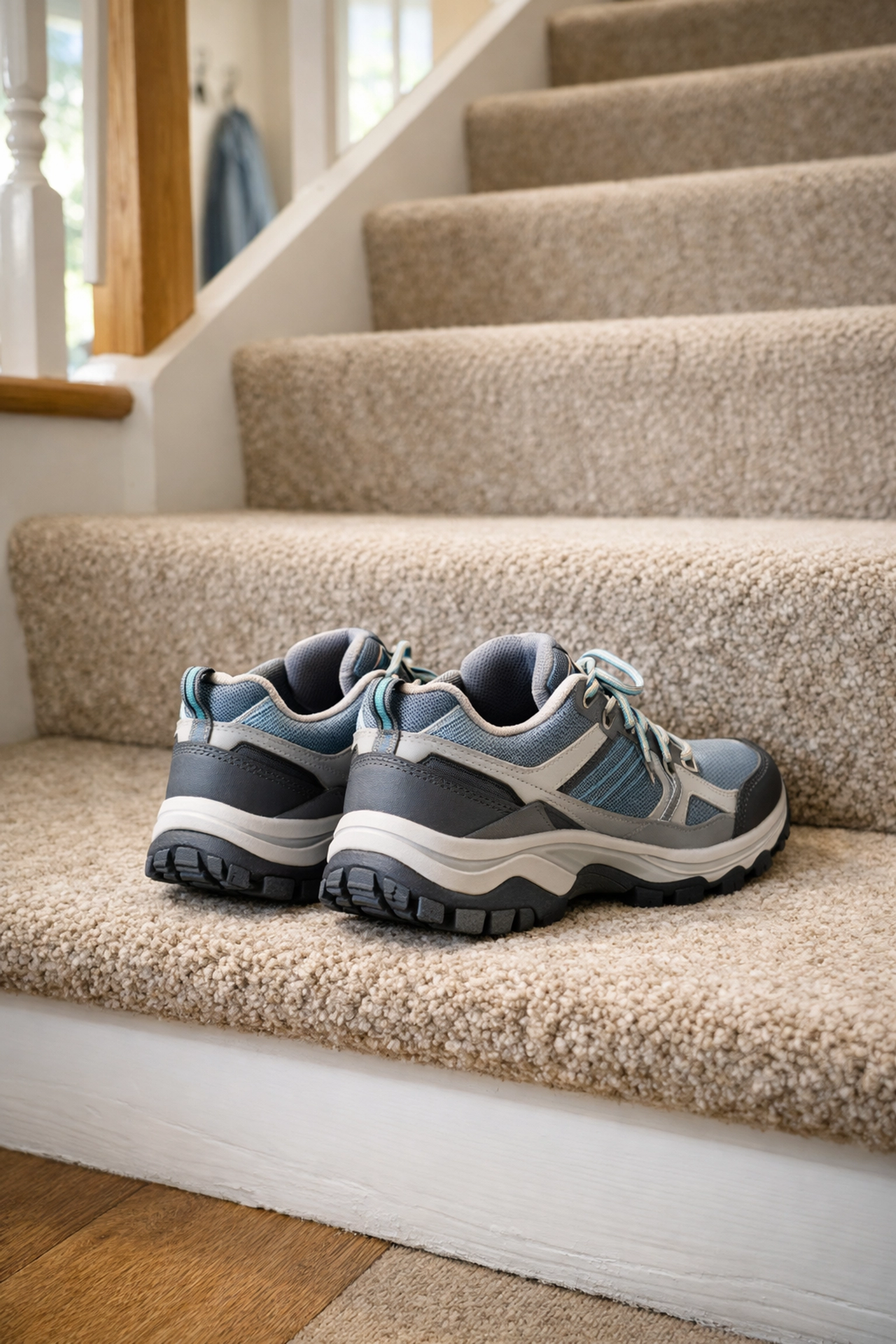
Walking around the house in socks or loose-fitting slippers is comfortable, but it is one of the most dangerous ways to navigate stairs, especially those with smooth surfaces like hardwood, tile, or polished stone. Socks offer almost zero traction, making a "glide" or slip highly likely. Similarly, slippers with open backs (mules) can easily slip off your foot mid-step, causing a stumble.
How to Fix It:
The safest way to navigate stairs is in well-fitting shoes with non-slip rubber soles. If you prefer to be shoeless indoors, look for "house shoes" that have a full back and a textured grip on the bottom. If you must wear socks, ensure they are specialized "grip socks" with silicone treads on the soles. However, a sturdy shoe with arch support will always be the gold standard for stability.
5. Overlooking Worn or Slippery Surfaces
The material of the stairs themselves plays a huge role in safety. Over time, carpet can become loose or frayed, creating a loop that can catch a heel. Hardwood stairs can become slick as the finish wears down or if they are polished with certain waxes. Even the "nose" or edge of the step can become rounded over years of use, providing less surface area for your foot to plant securely.
How to Fix It:
Regularly inspect the physical condition of your treads. If you have carpet, ensure it is stretched tight and securely tacked down. For wooden or tile stairs, consider applying transparent anti-slip adhesive strips. These provide a sandpaper-like texture that increases friction without ruining the aesthetic of the wood. If your stairs are outdoors, ensure they are treated with a non-slip coating and are kept clear of ice, moss, or wet leaves, which can make surfaces as slippery as a skating rink.
6. The "One-Trip" Heroism (Rushing and Overloading)
Many falls occur when we try to do too much at once. Attempting to carry a heavy laundry basket or multiple bags of groceries up the stairs often means you cannot see your feet and, more importantly, you cannot use the handrail. Rushing to answer a phone or get to the door adds a layer of "hurry" that leads to missteps.
When you rush, your center of gravity shifts forward, and you are more likely to catch your toe on the rise of the step.
How to Fix It:
Slow down and embrace the "one hand free" rule. Always keep at least one hand available to grip the railing. If you have a lot to move, break it into smaller loads, or use the "passing" method: place items on a landing, move yourself up, then reach back for the items. It may take longer, but the safety trade-off is worth the extra minute. Treat the stairs as a focused task: avoid looking at a smartphone or talking over your shoulder while ascending or descending.
7. Ignoring Structural Warning Signs
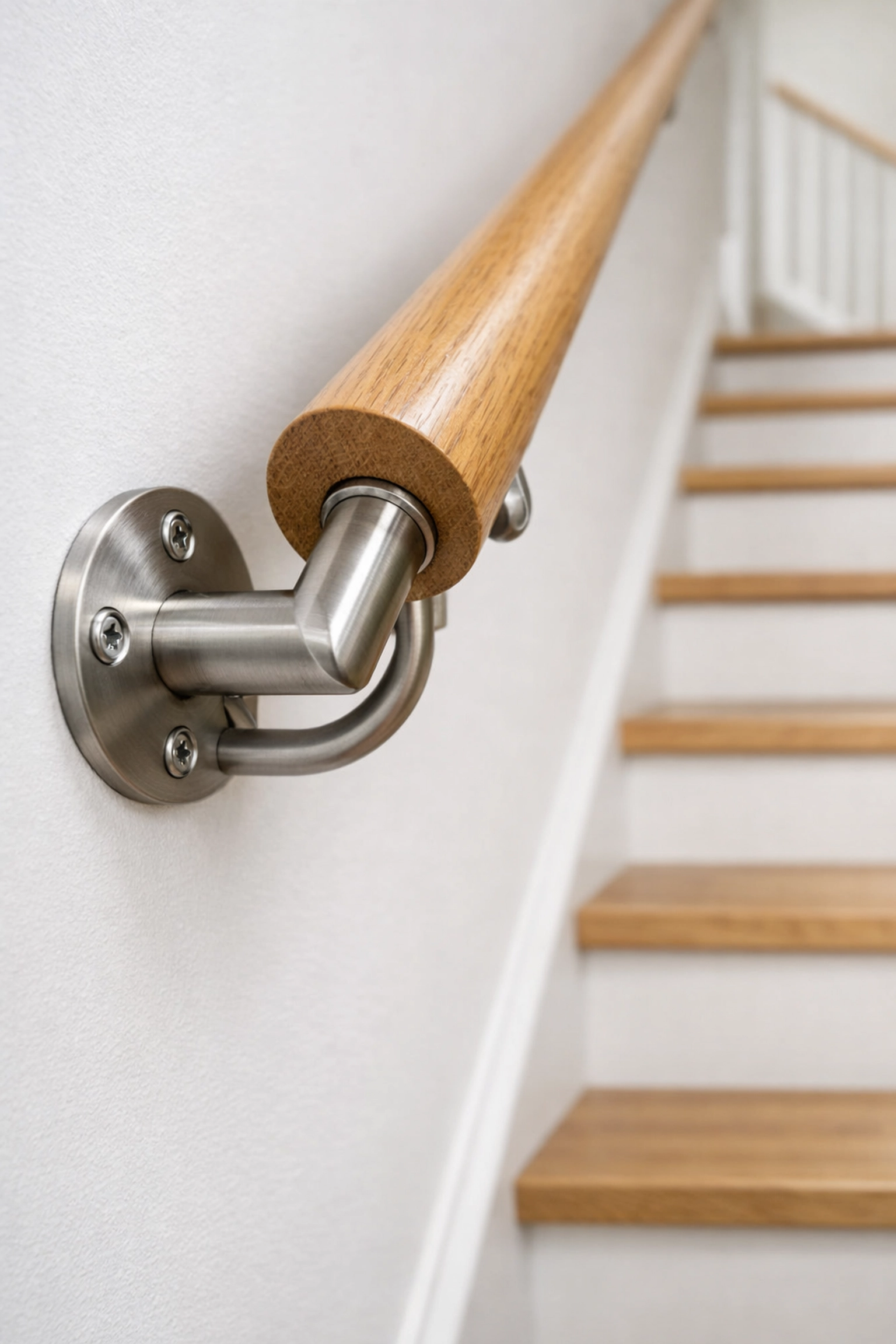
Maintenance is often reactive rather than proactive. We tend to notice a loose handrail or a creaky step but put off fixing it because "it’s been that way for a while." However, a handrail that wobbles even a fraction of an inch can fail exactly when you need it most: during a slip.
Stairs undergo a lot of stress. Over time, the screws holding the railing brackets can loosen, or the wood in the stringers (the sides of the stairs) can slightly warp.
How to Fix It:
Perform a "stress test" on your stairs every few months. Lean your weight into the handrail to ensure there is no "give." Check each tread for any movement or squeaking, which could indicate a loose board. If you find a loose bracket, don't just tighten the screw; consider replacing it with a longer screw that reaches into the wall stud for maximum security. If you aren't handy with tools, having a professional carpenter or a home safety specialist perform an audit can catch these small issues before they become hazards.
The Biomechanics of a Safer Step
Beyond fixing these seven mistakes, it helps to understand how we should be using our bodies on stairs. Physical therapists often recommend a "step-to" pattern for those who feel slightly fatigued or unsteady. This involves bringing both feet onto the same step before moving to the next one, rather than the "alternating" pattern (one foot per step).
When going up, try to lead with your "stronger" leg. When going down, lead with your "weaker" leg. A helpful mnemonic used in the therapy world is "Up with the good, down with the bad." This ensures that your strongest muscles are doing the heavy lifting when going up and provide the most control when lowering yourself down.
Creating a Culture of Safety at Home
Stair safety is a combination of environmental modification and behavioral change. While it might feel like a hassle to change your footwear or install extra lights, these are investments in your future mobility. A home should be a sanctuary, and by addressing these common mistakes, you ensure that every level of your home remains accessible and safe.
If you are a caregiver, approach these changes as a collaborative effort. Sometimes, suggesting a second handrail or better lighting can be framed as a "home improvement" project that benefits everyone, from grandchildren to guests.
Safety isn't about restriction; it's about empowerment. By taking these steps today, you are choosing a path of independence and confidence for the years to come.

