
Stairs are a fundamental part of many homes, yet they are often the most overlooked area when it comes to safety. We use them dozens of times a day without a second thought: until a slip or a near-miss happens. At Fall Guys Products, we spend a lot of time thinking about how to make homes more navigable and secure. I’m Brian Kerr, and I’ve seen firsthand how a few small adjustments to a staircase can change someone’s confidence in their own home.
When we talk about stair safety, it isn’t just about the physical steps themselves. It’s about lighting, the habits we form, and the small maintenance tasks that tend to fall by the wayside. If you or a loved one are starting to feel a little bit uneasy on the stairs, or if you just want to get ahead of the curve, it’s time to look at the seven most common mistakes people make with their staircases and, more importantly, how to fix them.
1. Relying on "Good Enough" Handrails
One of the most common issues in residential homes is the state of the handrails. Often, a staircase only has a railing on one side. While this might meet local building codes in some areas, it doesn't provide the level of stability required for someone with balance or strength concerns. Furthermore, handrails that were installed years ago can become "wobbly." If you can move the railing even a fraction of an inch by shaking it, it isn't secure enough to catch you in a fall.
How to fix it:
First, check the stability of your existing rail. If it’s loose, don’t just tighten the screws; ensure the brackets are mounted into the wall studs. If the wall is old or the studs are poorly placed, you may need a professional to reinforce the mounting area.
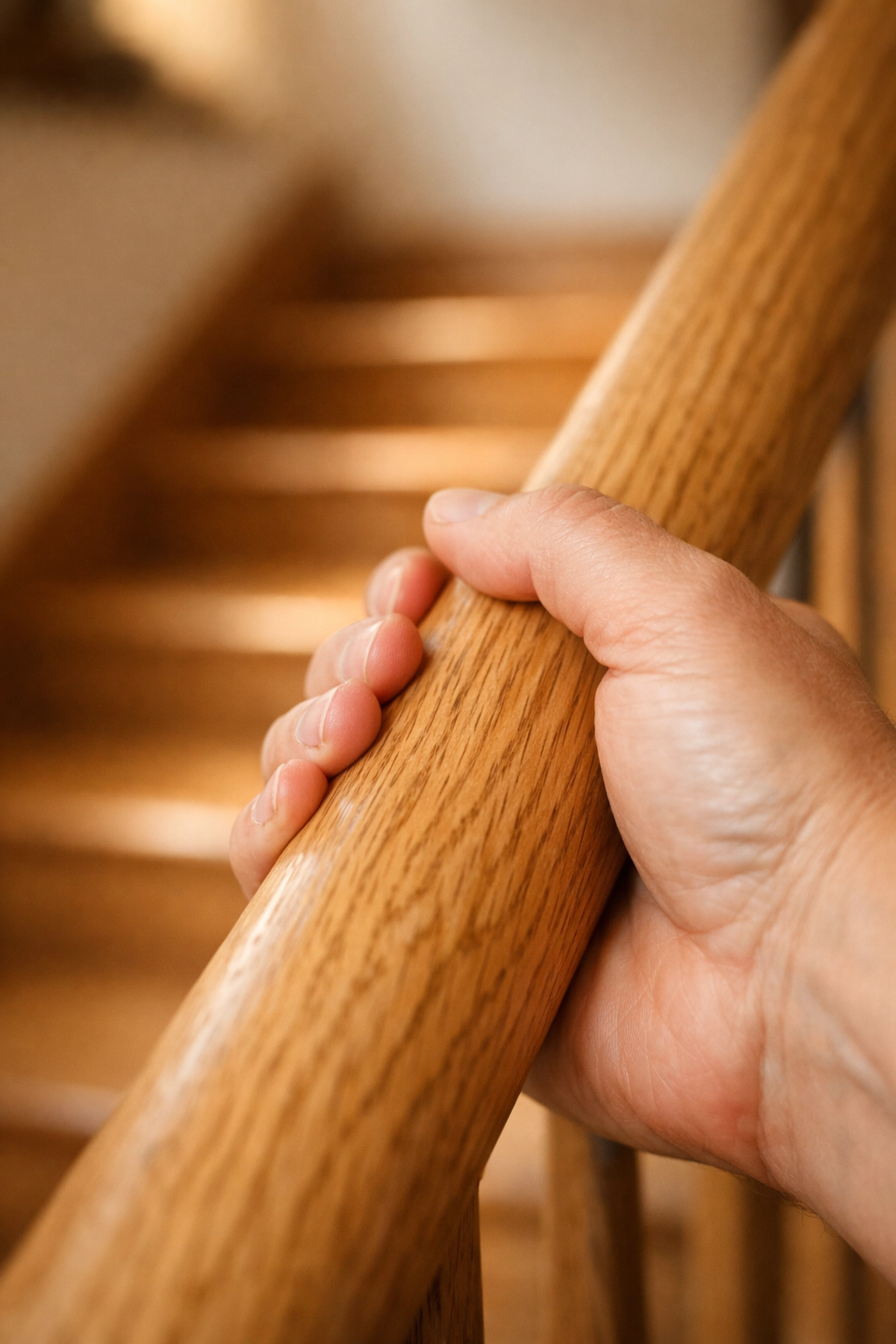
Second, consider adding a second handrail on the opposite side. Having "bilateral support": a rail for each hand: allows you to distribute your weight evenly and provides a much more stable base of support. Finally, ensure the rail is a "power grip" size. You should be able to wrap your fingers all the way around it. If the railing is a wide, flat decorative piece of wood that you can only pinch with your fingertips, it won't be easy to hold onto if you lose your balance.
2. Navigating the "Shadow Zone"
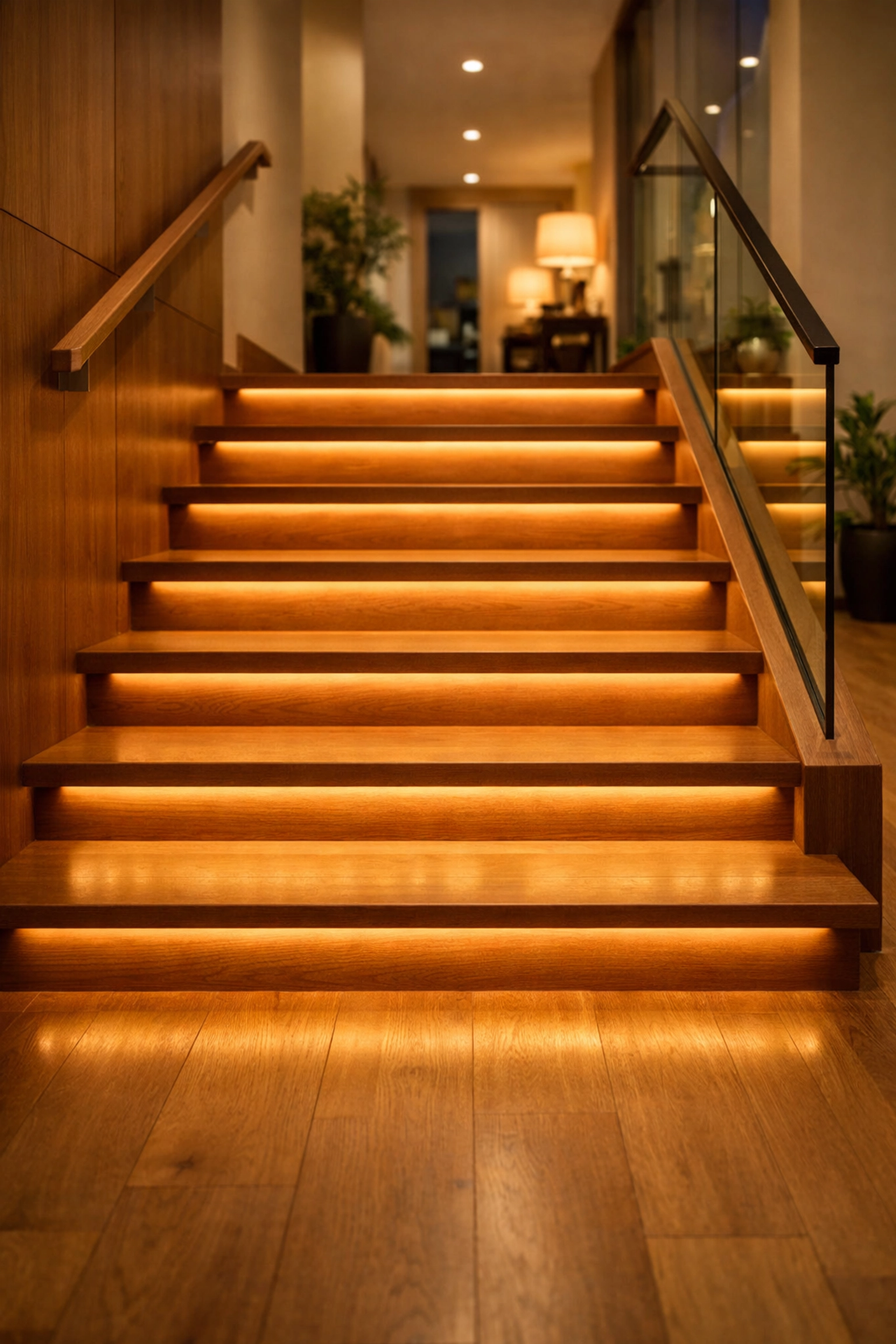
Lighting is the unsung hero of home safety. Many staircases have a single light at the top or the bottom, which creates shadows in the middle of the flight. These shadows mask the "nosing" (the edge) of the step, making it difficult for the brain to judge exactly where to place the foot. As we age, our depth perception and ability to see in low light can decrease, making this mistake particularly dangerous.
How to fix it:
The goal is "even illumination." You want to eliminate shadows entirely. One of the easiest fixes is to install motion-activated LED strips under the lip of each step or along the baseboard. This lights up the actual path of your feet without creating a glare that might blind you.
If you aren't ready for a wiring project, simple plug-in or battery-operated motion lights placed at the top, middle, and bottom of the stairs can make a world of difference. Always ensure there are light switches at both the top and the bottom of the stairs so you never have to navigate them in the dark to find a switch.
3. The Decorative Surface Trap
Polished hardwood, sleek tile, and high-gloss stone look beautiful in home design magazines, but they are incredibly slippery. Even stairs with short-pile carpet can be risky if the carpet has become worn or "mashed down" over time, creating a rounded edge on the step that is easy to slip off of.
How to fix it:
For hard surfaces, the fix is adding friction. Transparent anti-slip adhesive strips are a great option because they provide grip without hiding the beauty of the wood or stone. If you prefer a more tactile feel, rubber or carpet stair treads can be installed on each individual step.
If your stairs are already carpeted, check the "nosing." The carpet should be pulled tight over the edge of the step. If it feels loose or if the padding underneath has collapsed, it needs to be repaired. A firm, flat surface is always safer than a soft, rounded one.
4. The "Just For a Minute" Clutter
We’ve all done it: we place a book, a pair of shoes, or a basket of laundry on the bottom steps, intending to take them up on our next trip. This creates a massive tripping hazard. Even if you think you’ll remember it’s there, a moment of distraction or a midnight trip to the kitchen can lead to a stumble.
How to fix it:
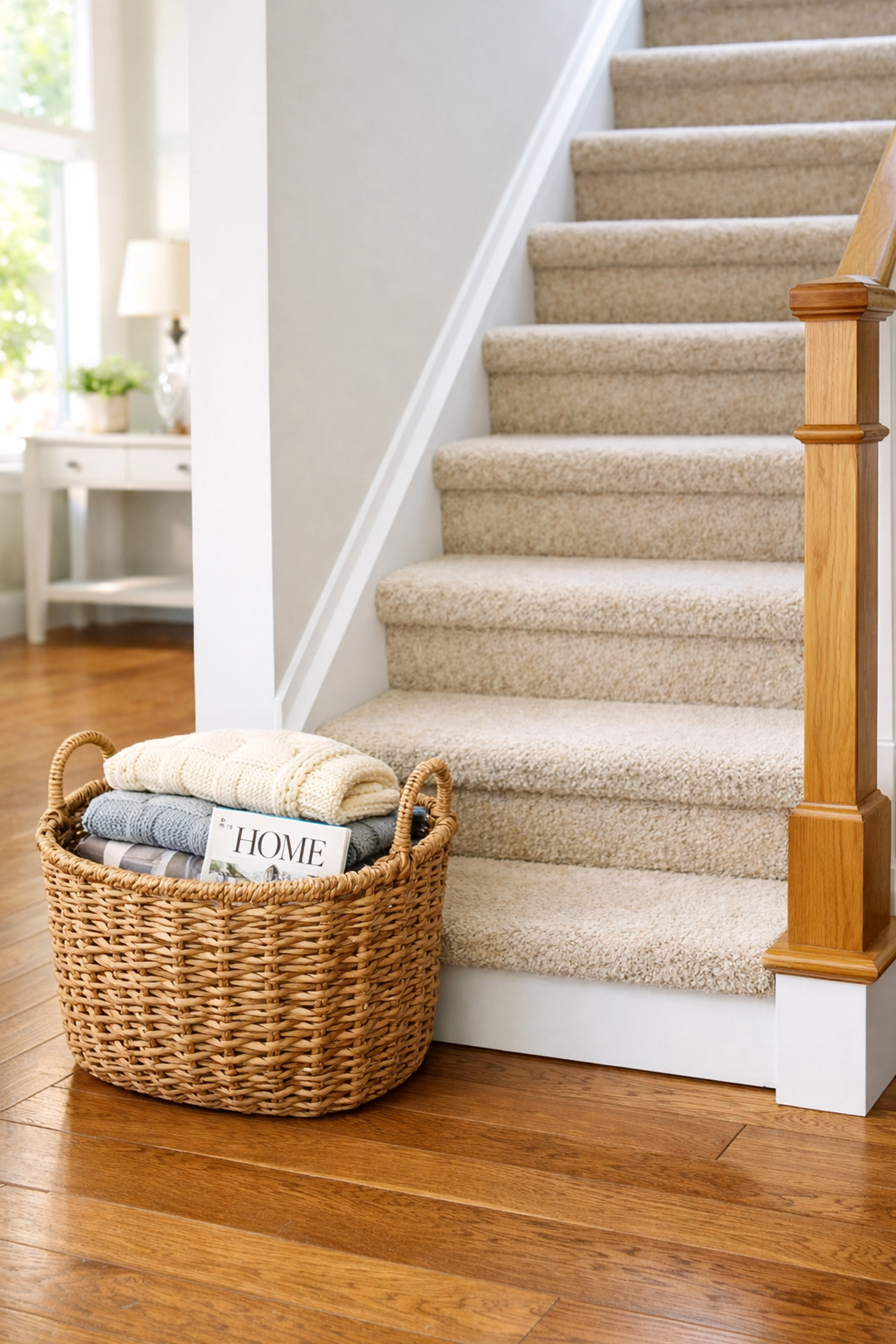
Adopt a "Zero Tolerance" policy for stairs. Nothing: absolutely nothing: should ever be placed on a step, even for a second. If you find yourself constantly moving things between floors, place a sturdy basket at the base or the top of the stairs, but off to the side and completely out of the walking path.
This keeps the items organized without turning the stairs into a storage unit. It’s also helpful to keep the landing areas at the top and bottom clear. If you have a rug at the base of the stairs, make sure it has a non-slip backing or is secured to the floor so it doesn't slide when you step off the last riser.
5. Walking in "The Slide Zone" (Improper Footwear)
The mistake here isn't just about what you wear, but what you don't wear. Walking up or down stairs in just socks is one of the most common causes of household falls. Socks on wood or tile provide almost zero traction. Conversely, wearing loose slippers or high heels can also throw off your center of gravity and make it easier to catch a toe on the riser.
How to fix it:
The safest way to navigate stairs is in a well-fitting shoe with a rubber sole. If you prefer not to wear shoes in the house, "grip socks" with silicone treads on the bottom are an alternative, though they are still less stable than a shoe.
For many people, keeping a pair of "indoor-only" supportive sneakers near the stairs can be a great habit. It ensures you have the support and grip you need without bringing outside dirt into your home.
6. Ignoring the "Warning Signs" of Wear and Tear
Stairs undergo a lot of stress. Over time, wood can warp, nails can pop up, and outdoor stairs can suffer from rot or concrete cracking. Many people ignore a "squeaky" step or a slight dip in a tread, viewing it as a character flaw of an old house. In reality, these are signs that the structural integrity of the step is changing.
How to fix it:
Perform a monthly "stair audit." Walk the stairs slowly and listen for creaks or groans. Feel for any movement in the treads. If you have wooden stairs, use screws (not nails) to secure loose boards, as screws are less likely to pull out over time.
For outdoor stairs, look for "spalling" (chipping) in concrete or signs of moisture damage in wood. Because outdoor stairs are exposed to the elements, they often require more aggressive anti-slip measures, like heavy-duty grit tape or textured paint.
7. Rushing and "Single-Tasking" Your Focus
Perhaps the biggest mistake is behavioral. We often use the stairs while carrying a heavy laundry basket, looking at a smartphone, or rushing to answer the door. When your vision is blocked by a basket or your attention is on a screen, you lose the ability to see where the step ends and the floor begins.
How to fix it:
The rule of thumb is "One Hand for the Rail, One Hand for the Task." If you can't carry something with one hand while keeping the other firmly on the handrail, the load is too big.
Break large loads into smaller ones, or consider using a "stair-climbing" cart if necessary. Better yet, if you have someone else in the house, pass items up to them. Most importantly, slow down. Treat the stairs as a transition that requires your full attention. Stop at the top, place your hand on the rail, and focus on each individual step until you reach the bottom.
Beyond the Basics: Understanding Vision and Depth Perception
It is worth noting that stair safety is often linked to how our eyes process information. As we age, the ability to distinguish between similar colors and textures decreases. This is called "contrast sensitivity." If your stairs and the hallway floor are the same color of oak, it can be very hard to tell where the last step ends and the flat floor begins.
A simple fix for this is to use a "contrast strip." You can apply a thin strip of colored tape or paint a small line along the edge of each step in a color that stands out from the rest of the wood. This provides a clear visual cue to your brain, telling it exactly where to place your foot. It’s a small change that can significantly reduce the "misstep" that often leads to a fall.
Creating a Safety Culture at Home
Fixing these seven mistakes isn't just about home improvement; it's about peace of mind. When you know your handrails are rock-solid, your lighting is bright, and your path is clear, you stop viewing the stairs as a "danger zone."
I always tell people that safety is a journey, not a destination. It involves regular checks and a willingness to adjust our habits as our needs change. By taking the time to address these common errors, you are making an investment in your independence and your ability to enjoy every inch of your home for years to come.
If you aren't sure where to start, begin with the lighting. It’s often the quickest fix and provides the most immediate "visual" reward. From there, move to the handrails and the surfaces. Each small step you take makes your staircase: and your home: a much safer place to be. Stay safe, stay confident, and remember that a little bit of prevention goes a long way.

