
Stairs are often the most functional part of a home, yet they are also the most demanding in terms of physical effort and coordination. For many of us, navigating a flight of stairs is a routine action we perform without a second thought. However, as we age or help care for loved ones, the margin for error on those steps becomes much smaller.
The goal of home safety isn’t to create a sense of fear, but to build a foundation of confidence. When we talk about stair safety, we aren't just talking about preventing a single event; we are talking about maintaining independence. A safe staircase allows you to move freely through your home without hesitation.
Unfortunately, many homes: even newer ones: contain subtle design flaws or lifestyle habits that significantly increase the risk of a fall. By identifying these seven common mistakes and implementing practical, low-stress fixes, you can transform your stairs from a potential hazard into a safe, reliable path.
1. Relying on "Mood Lighting" or Inadequate Illumination
One of the most frequent mistakes homeowners make is underestimating the power of light. We often think that if we can "see where we're going," the lighting is sufficient. But stair safety requires more than just general visibility; it requires clarity of depth and shadow.
When stairs are dimly lit, the edges of the treads (the flat part you step on) blend together. This lack of contrast makes it incredibly difficult for the brain to judge exactly where to place the foot. Furthermore, poor lighting can create "optical illusions" where shadows look like steps, or steps look like shadows.
The Fix: Strategic Illumination
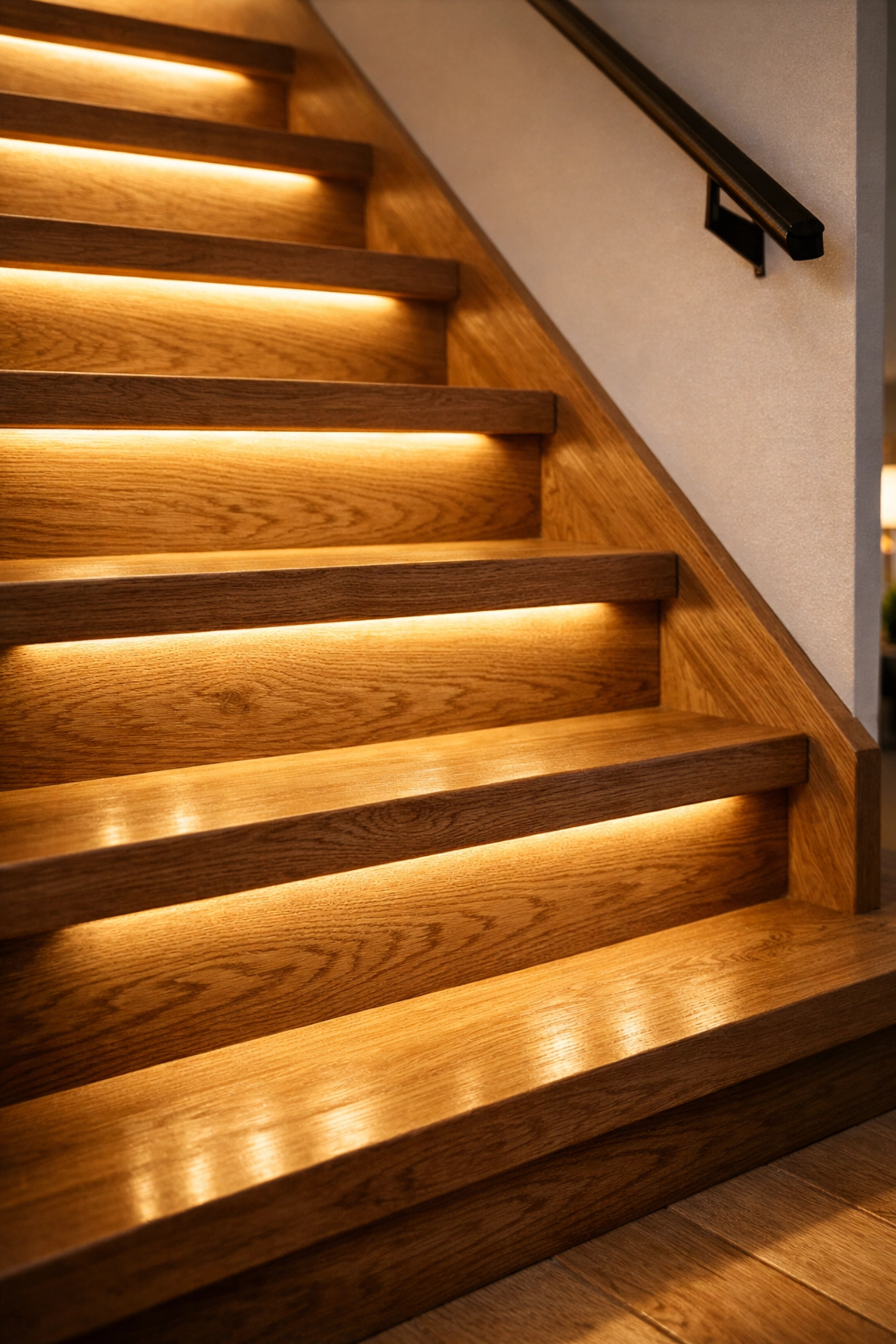
To fix this, you don't necessarily need to call an electrician for a major overhaul. Consider motion-activated LED strip lights that run along the baseboard or under the lip of each tread. These provide high-contrast lighting exactly where your feet land.
If you prefer a simpler route, ensure there are light switches at both the top and bottom of the stairs so you are never forced to navigate them in the dark to reach a switch. Using high-lumen, "daylight" spectrum bulbs can also help reduce the yellow haze that often makes vision more difficult for those with cataracts or other age-related vision changes.
2. The "Temporary" Storage Mistake (The Catch-All Step)
We’ve all done it. We have a pile of mail, a pair of shoes, or a book that belongs upstairs, so we set it on the bottom step to take up "on the next trip." This habit is one of the most dangerous behaviors in home safety.
Stairs are narrow by design. When you place an object on a step: even a small one: you are effectively reducing the "safe landing zone" for your foot. If you are carrying something else or if your vision is slightly obstructed, that shoe or book becomes a primary trip hazard. Even worse, if you lose your balance, your natural instinct is to reach for a handrail or shift your weight, and a cluttered step prevents you from finding a solid place to plant your foot.
The Fix: The "Clear Path" Policy
The fix here is behavioral. Establish a strict "nothing on the stairs" rule. If items need to go upstairs, place them in a dedicated basket near the stairs, but never on them. This ensures that the entire width of the staircase remains available for your feet and for any mobility aids you might be using.
3. Having Only One Handrail (or Loose Rails)
Standard building codes in many areas only require one handrail. However, as balance becomes more of a concern, having a single point of contact isn't always enough. If your "strong side" is opposite the rail, or if you experience a momentary dizzy spell, a single rail may not provide the leverage needed to stabilize your body.
Furthermore, many older handrails are "decorative" rather than functional. If a rail wobbles when you put weight on it, it isn't a safety device; it’s a false sense of security.
The Fix: Double Rails and Structural Reinforcement
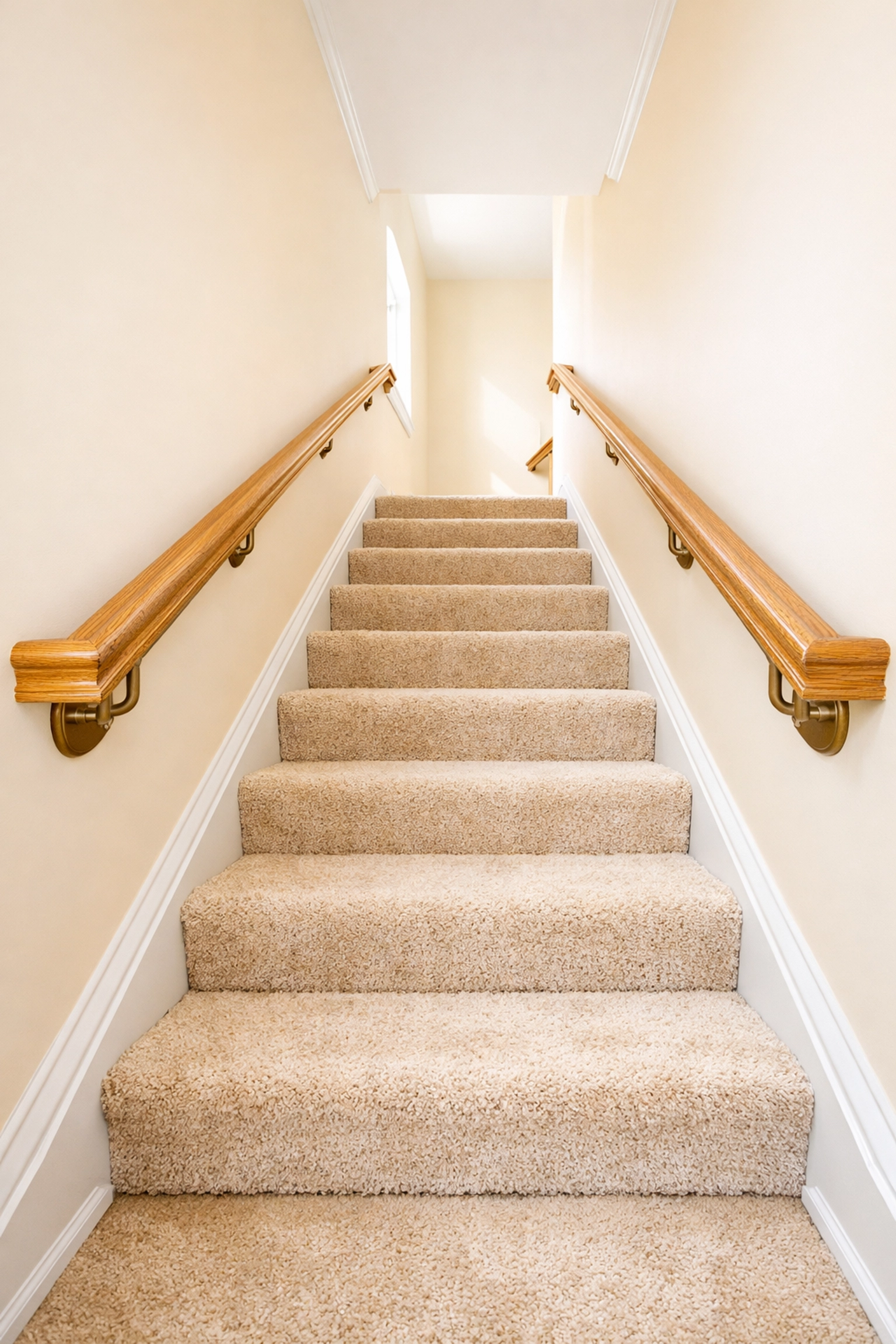
For maximum safety, every staircase should have a handrail on both sides. This allows you to use both hands for stability, which significantly reduces the load on your knees and hips.
Ensure that the rails extend beyond the top and bottom steps. Many falls occur when a person lets go of the rail before their feet are firmly on level ground. A rail that extends an extra 12 inches allows you to maintain a grip until you are fully transitioned to the floor. Regularly check the brackets of your rails; if they aren't screwed into a wall stud, they need to be moved and reinforced.
4. Polished Wood and "Socks-Only" Walking
Aesthetics often clash with safety. High-gloss wooden stairs are beautiful, but they can be as slippery as ice, especially when paired with standard socks. Even some types of carpet, if they have a low pile and are made of synthetic fibers, can be surprisingly slick.
Slippery surfaces are dangerous because they don't allow for "proprioception": the body's ability to sense its position and grip. When your foot slides even a fraction of an inch, your inner ear and brain have to work overtime to correct your balance, which often leads to an overcorrection and a fall.
The Fix: Increasing Traction
You don't have to cover your beautiful wood stairs with thick, ugly carpet. Transparent anti-slip adhesive strips are a great middle-ground. They provide a "gritty" texture that grips the bottom of a shoe or a foot without hiding the wood grain.
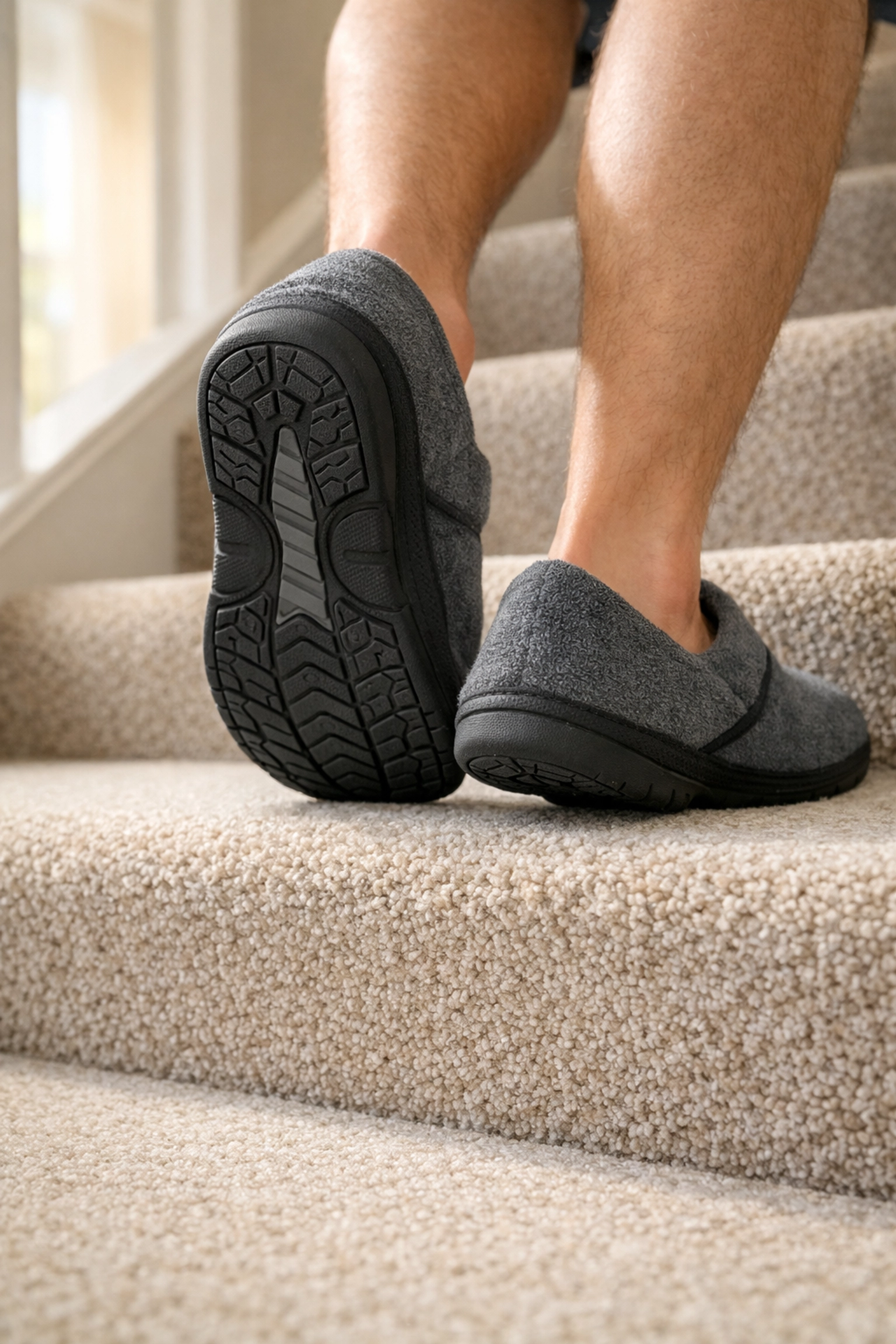
Another vital fix is footwear. Encourage the use of "indoor shoes" with rubber soles or high-grip socks with silicone treads on the bottom. Avoid walking on stairs in bare feet (which can be sweaty and slippery) or smooth-bottomed slippers.
5. Overlooking the "Nosing" and Visual Contrast
The "nosing" is the very edge of the step. If the stairs and the floor they lead to are the same color: for example, dark oak stairs leading to a dark oak floor: it becomes very difficult to see where the last step ends and the floor begins.
This is particularly dangerous at the top of the stairs. If you misjudge the edge by even an inch, your heel can catch or your foot can slip into empty space.
The Fix: High-Contrast Edging
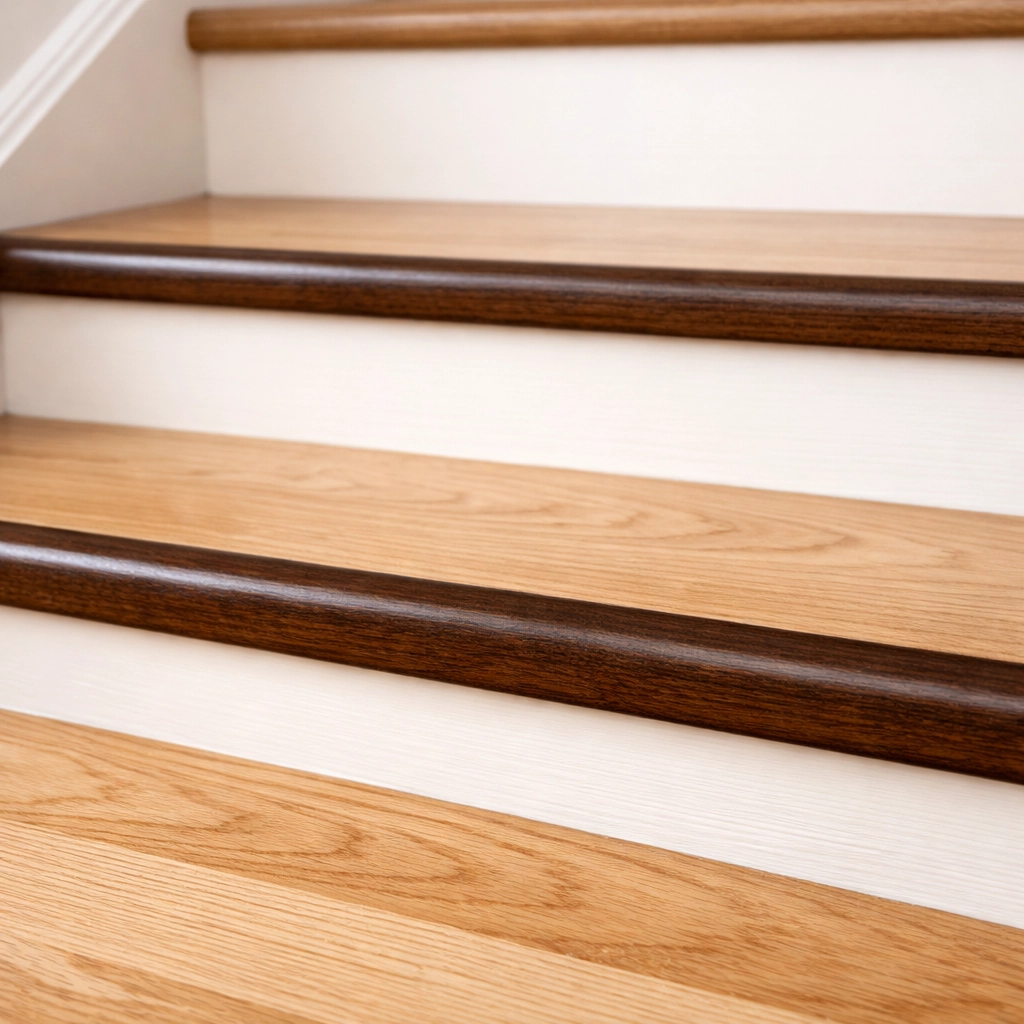
A simple and effective fix is to apply a strip of contrasting color to the edge of each step. This can be done with specialized stair-edging tape or even a thin line of paint. For example, if you have light wood stairs, a dark brown or black strip on the edge of each tread provides a clear visual "stop" sign for your brain. This visual cue tells your nervous system exactly when to prepare for the change in elevation.
6. Carrying Large Items That Obstruct Your View
Many stair-related falls happen because the person was carrying something: a laundry basket, a stack of boxes, or even a small pet. When you carry a large item in front of you, you lose sight of your feet.
Safe stair navigation relies on a feedback loop between your eyes and your feet. When that loop is broken by an obstruction, you are essentially "blind-stepping." If you miss the center of the tread or fail to lift your foot high enough for the next riser, you won't see it coming in time to adjust your grip on the handrail.
The Fix: The "One Hand Free" Rule
The golden rule of stairs is to always keep at least one hand firmly on the handrail. If an item is too large to carry with one hand, it shouldn't be carried up the stairs by one person.
Break laundry into smaller loads that fit in a bag you can slung over your shoulder, or use a "stair-climbing" cart if necessary. For those who frequently need to move items between floors, consider installing a small "dumbwaiter" or simply asking for assistance. Protecting your balance is always more important than finishing the chores in a single trip.
7. Ignoring the Consistency of Step Height (The "Trip" Factor)
In many older homes, the stairs aren't perfectly uniform. One riser (the vertical part of the step) might be 7 inches high, while the next is 7.5 inches. While a half-inch doesn't sound like much, the human brain creates a "rhythm" after the first two steps.
Once that rhythm is established, your legs move automatically. If a step is unexpectedly higher or lower, your foot will hit the riser or "step into air," causing an immediate loss of balance. This is often called a "non-uniformity" hazard, and it is a leading cause of trips.
The Fix: Maintenance and Awareness
While you can't easily rebuild a staircase, you can identify these problem steps. Use a ruler to measure the height of each riser. If you find one that is significantly different, mark it with a specific color of tape or ensure it is exceptionally well-lit.
Additionally, check for loose floorboards or frayed carpet. A small piece of carpet that has pulled away from the tack strip can catch the toe of a shoe and cause a forward fall. Tightening loose treads with screws (not nails, which can pull out over time) can also eliminate the "shifting" feeling that causes people to hesitate on the stairs.
A Final Word on Stair Safety
Navigating stairs is a complex physical task that involves strength, vision, and balance. By making these small adjustments: improving the light, clearing the clutter, and adding grip: you aren't just making your house "safer." You are making it a place where you or your loved ones can move with freedom and dignity.
Safety is a proactive choice. Take a walk through your home today and look at your stairs through fresh eyes. Check the rails, feel the surface of the treads, and turn on the lights. A few minutes of assessment today can prevent a life-changing event tomorrow. Remember, the goal is to keep you moving, one steady step at a time.

