
Hey there. I’m Brian Kerr, the founder of Fall Guys Products. Over the years, I’ve seen firsthand how a mobility aid can change someone’s life. It’s a tool for freedom, a way to keep going to the grocery store, visiting grandkids, or just moving safely from the bedroom to the kitchen.
But here’s the thing we don’t always like to talk about: a walker is only as safe as the person using it. In fact, if a walker isn’t set up correctly or used with the right technique, it can actually transition from a safety tool into a trip hazard. It sounds counterintuitive, right? How can the thing meant to keep you upright actually cause a fall?
The truth is, many of us get a walker: maybe from a neighbor, a pharmacy, or a hand-me-down from a relative: and we just start using it without any formal "training." We figure it’s pretty self-explanatory. But using a walker correctly involves a bit of physics and a lot of habit-breaking.
Let’s walk through the most common mistakes I see and how you can fix them today to stay steady on your feet.
1. The Height is All Wrong
This is arguably the most common mistake out there. If you look around a shopping mall or a park, you’ll see people using walkers at all sorts of heights. Some are hunched over like they’re searching for a lost coin on the ground, and others have their handles so high their shoulders are practically touching their ears.
The Too-Low Mistake: When the handles are too low, you have to lean forward to reach them. This shifts your center of gravity forward, away from your legs and toward the walker. Not only does this cause terrible back and neck pain, but it also makes you much more likely to tip forward if the walker hits a small bump or a rug.
The Too-High Mistake: When the handles are too high, your arms are bent too much. You lose the leverage you need to support your weight. If you stumble, you won't be able to push down effectively to steady yourself because your arms are already "bunched up."
The Fix: Stand up as straight as you comfortably can with your shoes on. Let your arms hang naturally at your sides. The handles of the walker should line up with the crease on the inside of your wrist. When you place your hands on the grips, your elbows should have a slight, comfortable bend: usually about 15 to 20 degrees. This allows you to put weight through your arms without straining your joints.

2. Chasing the Walker (The "Shopping Cart" Method)
Think about how you push a grocery cart. You usually push it way out in front of you and then walk toward it. That works fine for a cart full of cereal and milk, but it’s dangerous for a mobility aid.
When you push your walker far out in front of you, you are essentially walking behind your base of support. If you trip while the walker is two feet ahead of you, that walker isn’t going to do anything to stop your fall. In fact, you might find yourself falling into the walker, causing it to roll away even faster.
The Fix: You should always be walking inside the walker, not behind it. Your feet should generally stay between the back legs of the walker frame. Instead of one big push followed by several steps, think about moving the walker a short distance and then stepping into it. Keeping your body centered within the frame ensures that the support is exactly where you need it if you lose your balance.
3. The Dangerous Pivot
We all do it. We’re walking toward a chair, we realize we need to turn around, and we just plant one foot and "swing" our body around. In the physical therapy world, this is called pivoting, and it is a leading cause of falls for walker users.
When you pivot while holding a walker, your feet can easily get tangled in the legs of the device. Even worse, if you’re using a rollator (the kind with four wheels and a seat), pivoting can cause the device to tip sideways because your weight isn't distributed evenly.
The Fix: Treat every turn like you’re a large ship in a narrow harbor. Don’t pivot; make a "U-turn" with small, deliberate steps. Keep the walker in front of you and turn your whole body and the walker together in a slow arc. It takes a few extra seconds, but it keeps your feet clear of the frame and keeps your weight centered.
4. Forgetting the Brakes
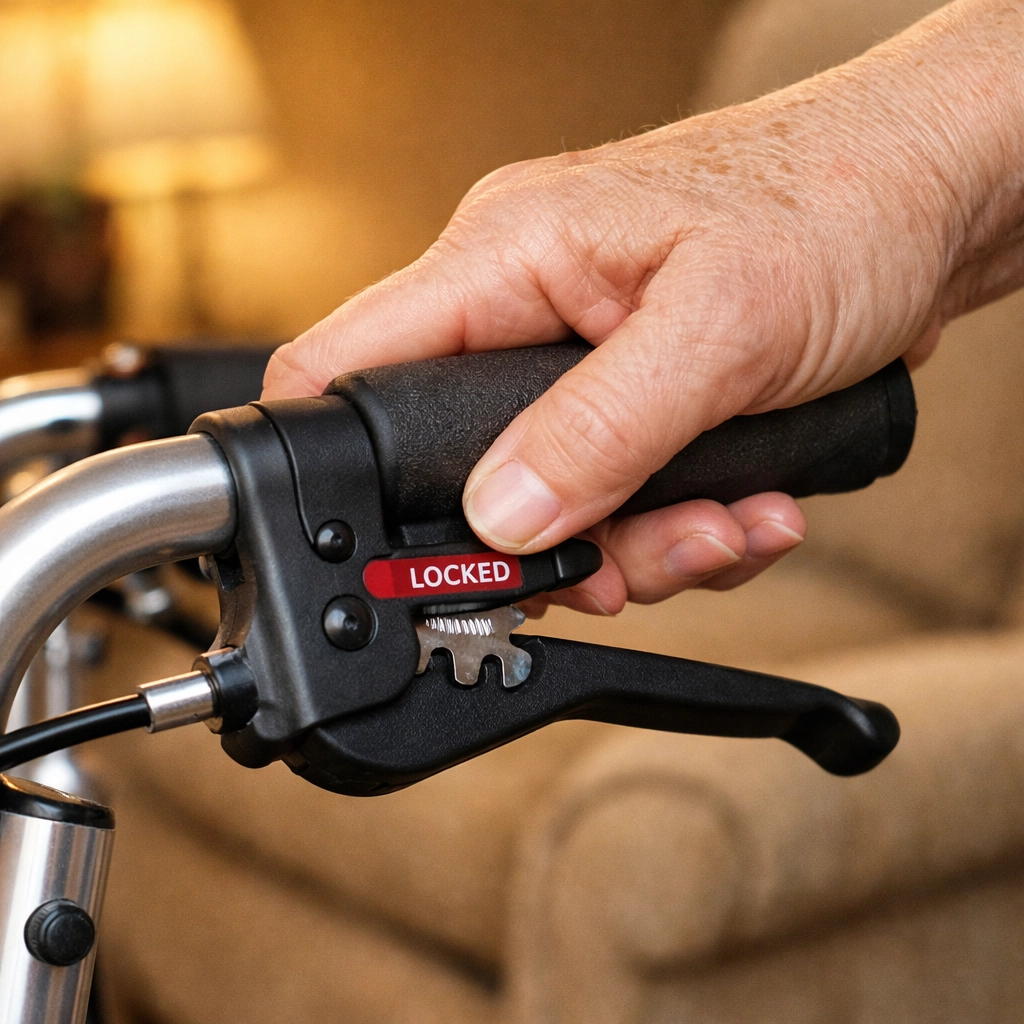
If you use a rollator, those wheels are your best friend when you’re moving, but they can be your worst enemy when you’re standing still. I’ve seen many people go to sit down on their walker’s seat or stand up from a kitchen chair while holding the walker, only to have the device roll away from them.
A walker that rolls when you aren't expecting it is essentially a banana peel with handles.
The Fix: Make it a habit to engage the brakes every single time you stop to sit or stand. Most rollators have "push-down" brakes. Before you transition your weight, click those brakes into the locked position. Once they are locked, give the walker a little nudge with your hands to make sure it’s not going anywhere. Only then should you proceed with sitting or standing.
5. Pulling Up Instead of Pushing Off
This is a big one. When people are sitting in a chair and want to stand up, their first instinct is often to grab the walker handles and pull themselves up.
Walkers are designed to be stable when you push down on them, but they are relatively lightweight and can easily tip over if you pull back on them. If you pull on the handles to stand up, there is a very high chance the walker will tip toward you, leaving you with no support and a heavy metal frame falling on top of you.
The Fix: Never use the walker to pull yourself into a standing position. Instead, place your hands on the armrests of the chair or the surface of the bed you are sitting on. Use your legs and your arms to push up from the chair. Once you are standing and have your balance, then reach forward and place your hands on the walker grips.
6. Ignoring the "Tires"
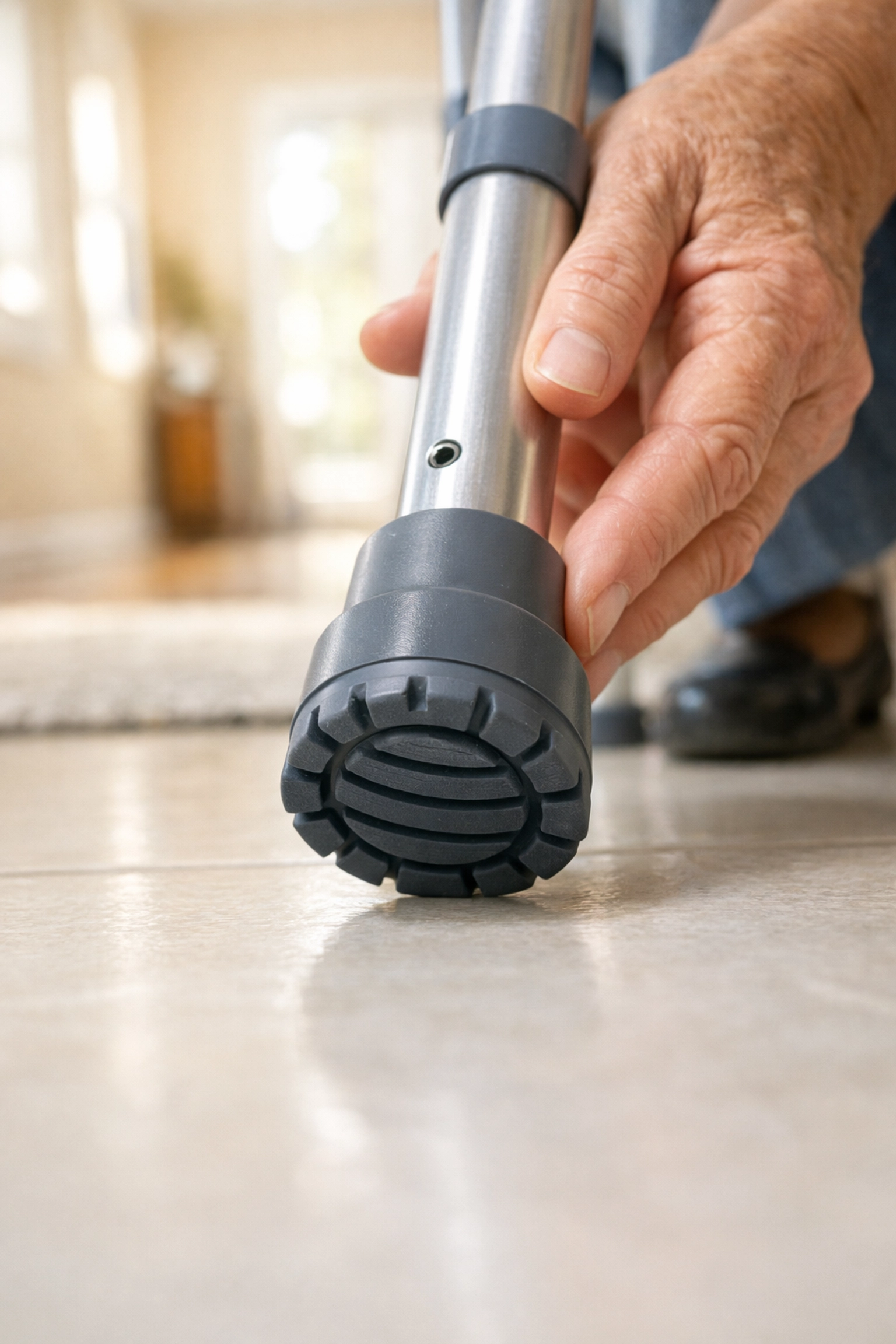
Just like a car, a walker needs regular maintenance. The rubber tips on the bottom of a standard walker (or the wheels on a rollator) provide the friction and grip that keep you safe. Over time, that rubber wears down, becomes smooth, or even cracks.
A worn-out rubber tip is slippery, especially on tile or hardwood floors. If the "tread" is gone, the walker can slide out from under you when you put weight on it.
The Fix: Check your walker once a week. Look at the rubber tips. Do they look thin? Is the metal starting to poke through the bottom? If so, replace them immediately. They are inexpensive and can be found at most pharmacies. If you have a rollator, check the wheels for hair, lint, or dirt that might be clogging the bearings and check that the brakes are still grabbing the wheels tightly.
7. The "Just This Once" Mindset
Many falls happen indoors during short trips: going from the couch to the TV to change the channel, or popping into the bathroom in the middle of the night. People often think, "It’s just five steps, I don't need to grab the walker."
The problem is that balance doesn't take breaks. A dizzy spell or a slip can happen in two steps just as easily as it can in twenty.
The Fix: If a doctor or physical therapist has recommended a walker for you, use it for every trip, no matter how short. Keep it within arm's reach of where you sit or sleep. Consistency is the key to safety.
8. Overloading the Frame
It’s tempting to hang a heavy purse, a grocery bag, or a coat over the crossbar or the handles of a walker. However, walkers are precision-balanced tools. Adding weight to the front or the sides changes how the walker handles and increases the risk of it tipping over.
A heavy bag hanging from one handle can pull the walker to the side, making it much harder to steer and much easier to trip over.
The Fix: If you need to carry items, use a basket or a pouch specifically designed for your walker model. These accessories are usually mounted low and in the center of the frame, which keeps the center of gravity stable. Even then, try to keep the load light. If you have a lot to carry, it might be worth asking for help or using a different method of transport.
9. Looking at Your Feet
When people feel unsteady, their natural instinct is to look down at their feet to see where they are stepping. While it's good to be aware of obstacles, staring at your feet actually makes you less stable.
When you look down, you round your shoulders and move your head forward. This shifts your balance and makes it harder for your inner ear (which controls balance) to do its job. It also means you aren't looking ahead to see the rug, the dog, or the threshold that you're about to walk into.
The Fix: Try to keep your head up and your eyes looking about 10 to 15 feet in front of you. This allows you to see upcoming hazards while maintaining a much more upright and stable posture. Your peripheral vision will take care of your feet; your primary focus should be the path ahead.

10. Wearing the Wrong Shoes
Your mobility aid and your footwear are a team. You can have the best, most perfectly adjusted walker in the world, but if you’re wearing loose slippers, high heels, or socks on a slick floor, the walker can't save you.
Slippery soles or shoes that don't stay firmly on your feet can cause you to slide, and the sudden jerk of trying to catch yourself can cause the walker to move in ways you don't intend.
The Fix: Always wear sturdy, closed-toe shoes with non-slip soles. Make sure they are fastened securely (Velcro or laces). Avoid walking in just socks or smooth-bottomed slippers, even when you are just moving around the house.
A Reassuring Note on Seeking Professional Help
I know this can seem like a lot of "rules" for something as simple as walking. But remember, the goal here isn't to make life more complicated: it's to make sure you stay independent and active for as long as possible.
If you’re ever unsure about your walker, I highly recommend talking to a Physical Therapist (PT). They are the absolute experts in movement. A PT can spend thirty minutes with you, adjust your walker to the perfect millimeter, and teach you the specific "rhythm" of walking that works best for your body.
Using a walker isn't a sign of weakness; it's a smart strategy for staying in the game. By avoiding these common mistakes, you’re making sure that your mobility aid is exactly what it’s supposed to be: a reliable partner in your daily life.
Stay safe out there, keep your head up, and keep moving. We're here to help you every step of the way.

