
Hi, I’m Brian Kerr, the founder of Fall Guys Products. Over the years, I’ve spent a lot of time looking at how we move through our homes. If there is one area that consistently presents a challenge as we age or deal with mobility changes, it’s the staircase.
Stairs are a fundamental part of many homes, yet we often treat them with a bit too much familiarity. We run up them to grab a forgotten pair of glasses, or we carry heavy laundry baskets down them without a second thought. But the reality is that nearly one million stair-related injuries occur every year in the United States alone. Most of these aren’t due to one major "accident," but rather a series of small, preventable mistakes in how the stairs are built, maintained, or used.
My goal today is to walk you through the most common stair safety mistakes we see. This isn't about making you feel anxious; it's about giving you the knowledge to look at your home with fresh eyes and make simple, reassuring changes that keep you or your loved ones safe.
The Anatomy of a Safe Staircase
Before we dive into the mistakes, it helps to understand what a "perfect" staircase looks like from a safety perspective. Ideally, stairs should have a consistent "rhythm." Your brain and body actually memorize the distance between steps after the first two or three. When that rhythm is interrupted by a step that is a different height or depth, that’s when trips happen.
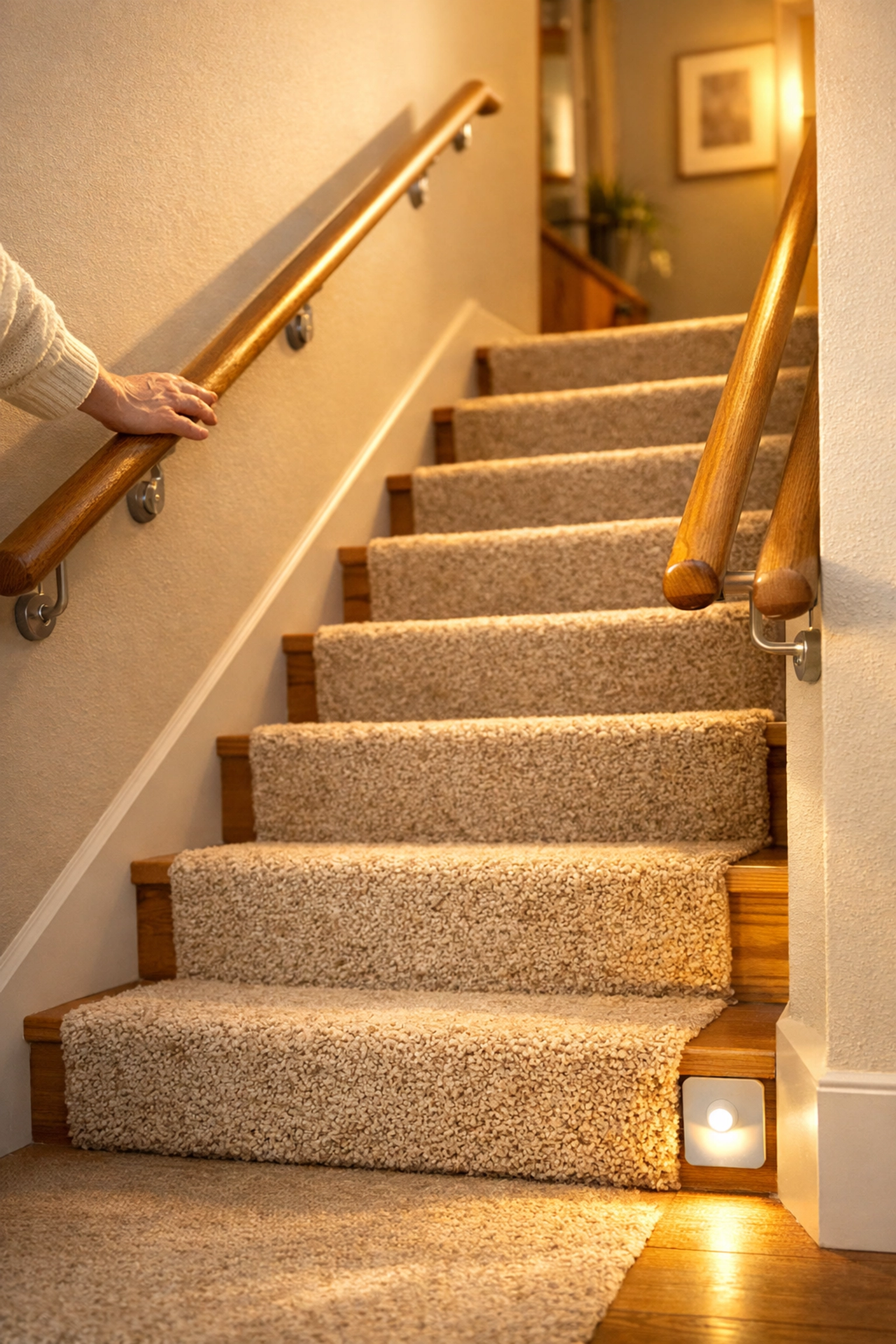
A safe staircase has sturdy, graspable rails on both sides, plenty of light, and surfaces that offer grip rather than a slide. When any of these elements are missing, the risk of a fall increases significantly.
Mistake #1: Ignoring Inconsistent Step Dimensions
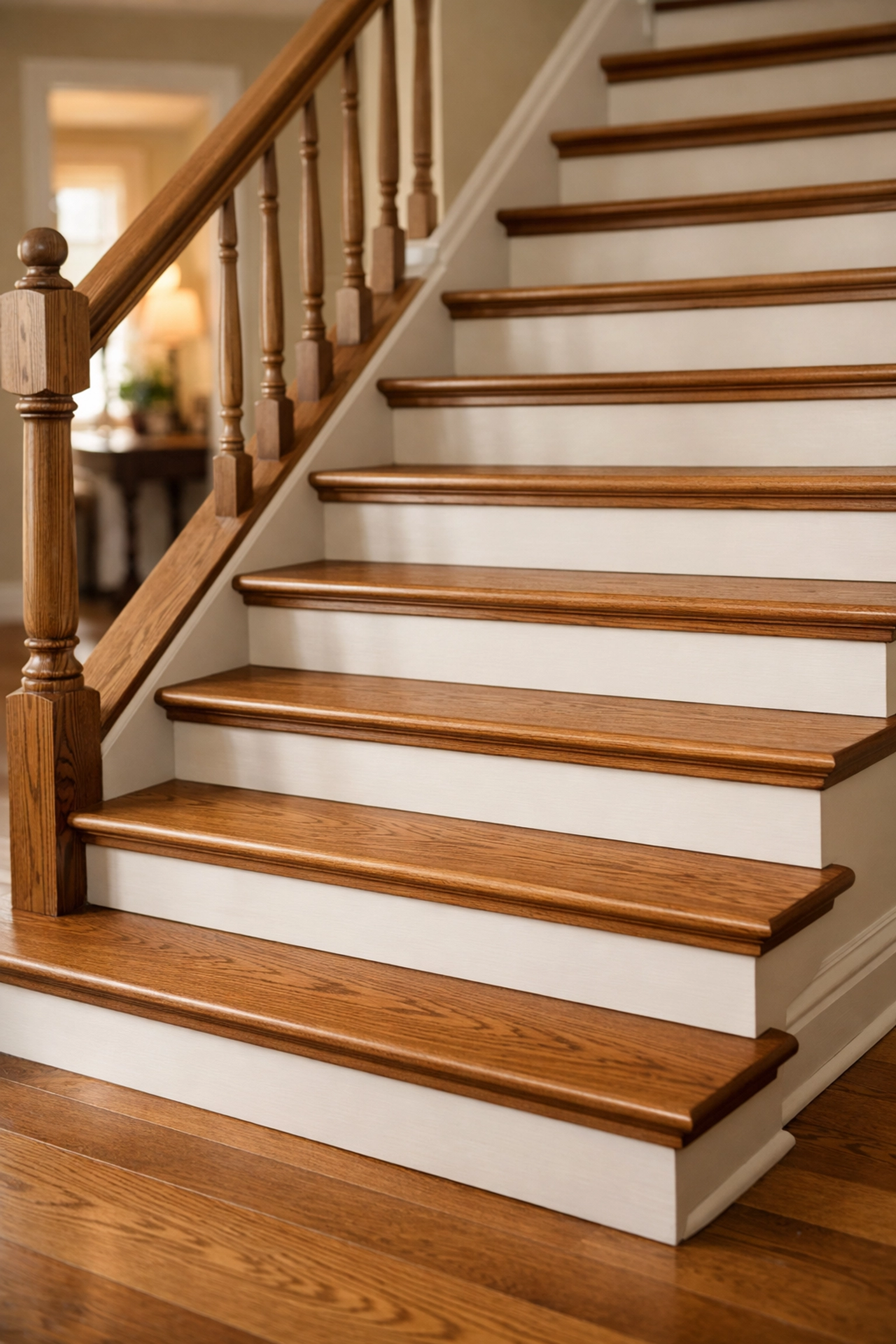
The most common architectural mistake is inconsistent "rise and run." The "rise" is the height of the step, and the "run" is the depth of the tread where you place your foot.
In older homes especially, you might find that the bottom step is slightly taller than the rest, or a middle step has settled over time. Even a difference of a quarter-inch can be enough to catch a toe or cause a heel to slip.
When your foot expects the ground to be at a certain level and it isn't there, your balance is momentarily compromised. For someone with slower reaction times, that split second is the difference between a stumble and a fall.
Mistake #2: The "Single Handrail" Myth
Many people believe that one handrail is enough. While building codes often only require one, safety experts recommend two.
Why two? Because as we age, we often have a "strong side" and a "weak side." If you only have a rail on the right, but your right side is currently recovering from a procedure or feeling stiff, you’re left without adequate support. Having a rail on both sides allows you to use your strongest grip and provides a way to "center" yourself between two points of stability. It also ensures that whether you are going up or down, you always have a handrail within reach of your dominant hand.
Mistake #3: Ending Handrails Too Soon
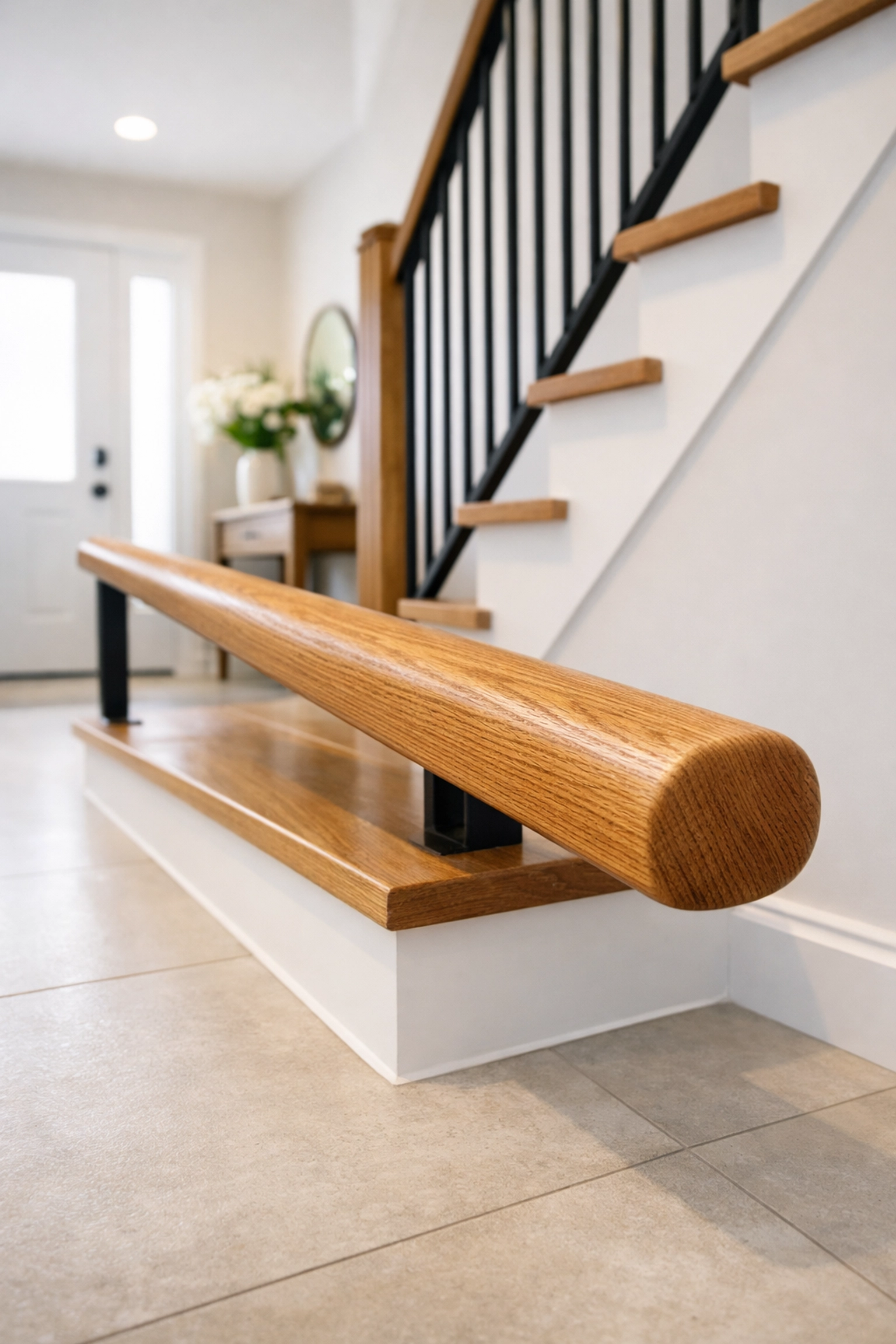
This is a subtle mistake that causes a lot of trouble at the top and bottom of the stairs. A handrail should ideally extend at least 12 inches beyond the top and bottom steps.
Many falls happen on the very last step because the user lets go of the handrail before their feet are firmly on the level floor. By extending the rail, you ensure that you have support until your transition to flat ground is complete. If your handrail stops exactly at the last riser, you’re forced to let go just when your center of gravity is shifting the most.
Mistake #4: Inadequate Lighting and "Shadow Zones"
If you have to squint to see where the edge of the step is, the lighting is insufficient. Many staircases have a single light fixture at the top or the bottom, which creates long shadows. These shadows can mask the edge of the tread, making it look deeper or shallower than it actually is.
Visibility is key for depth perception. As we age, our eyes need more light to distinguish between different surfaces.
- The Mistake: Using low-wattage bulbs to save energy or create "ambiance."
- The Fix: Bright, non-glare LED lighting. Motion-activated lights are even better because they ensure the stairs are illuminated the moment you approach them, even if you’ve forgotten to flip a switch.
Mistake #5: Slippery Surfaces and Worn "Nosing"
Polished wood and tile look beautiful, but they can be incredibly slippery, especially if you are wearing socks or smooth-soled slippers.
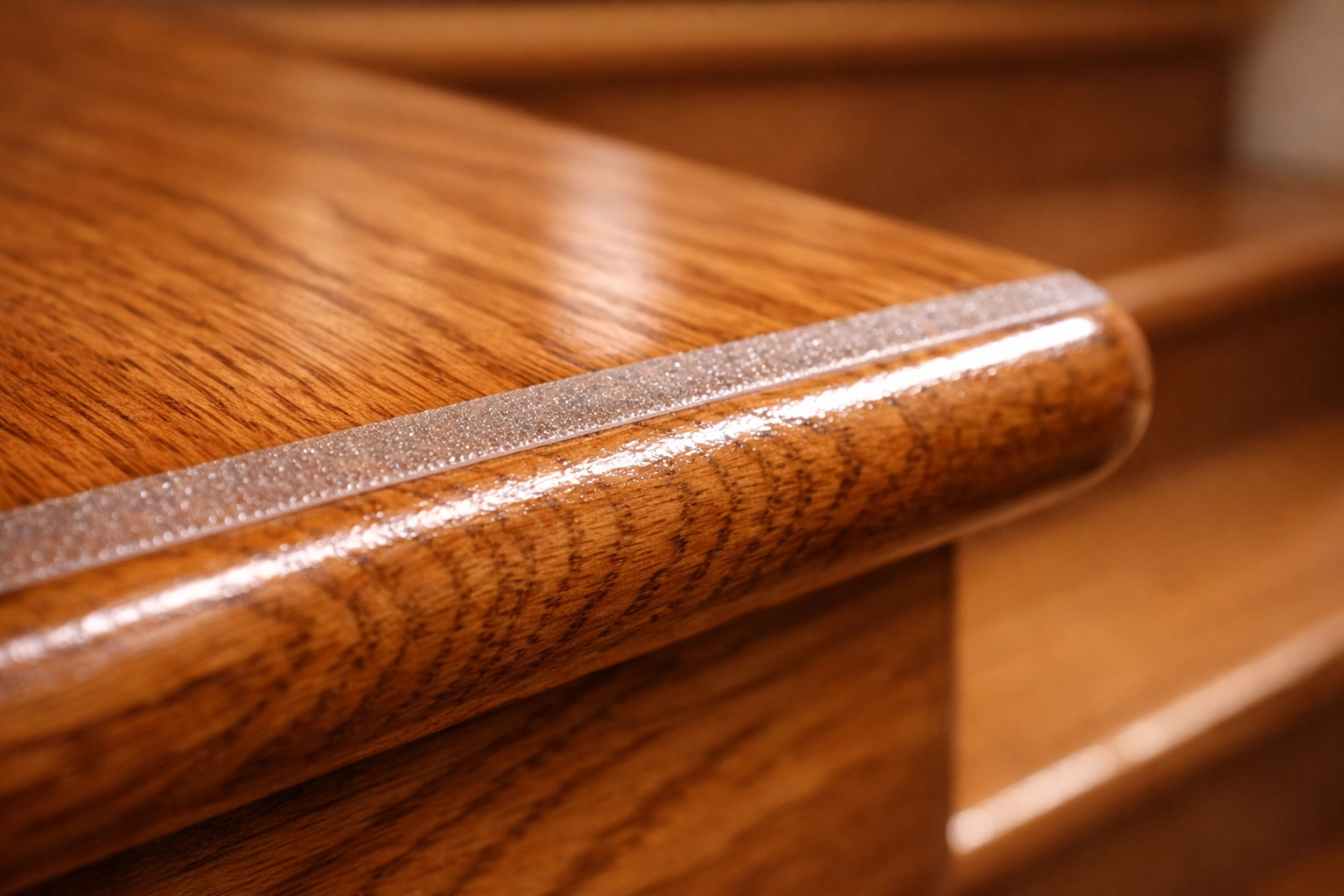
The "nosing" is the front edge of the step. Over time, the nosing on carpeted stairs can become rounded or "compressed," and on wooden stairs, it can become slick and worn. When the edge of the step loses its grip, your foot is more likely to slide forward as you descend.
If your stairs are uncarpeted, adding non-slip transparent strips or textured "treads" can provide the necessary friction without ruining the aesthetic of your home. If they are carpeted, ensuring the carpet is pulled tight and isn't "bunched" at the edges is vital.
Mistake #6: Using Stairs for "Temporary Storage"
We’ve all done it: we place a book, a pair of shoes, or a basket of laundry on the bottom three steps, intending to take them up "next time we go."
This is one of the most dangerous habits a household can have. These objects become tripping hazards, especially in low light. Even more importantly, they often force the person walking up the stairs to move away from the handrail to avoid the object. Navigating stairs is a complex task for the brain and body; adding an obstacle course into the mix is a recipe for a fall.
Mistake #7: Neglecting Visual Contrast
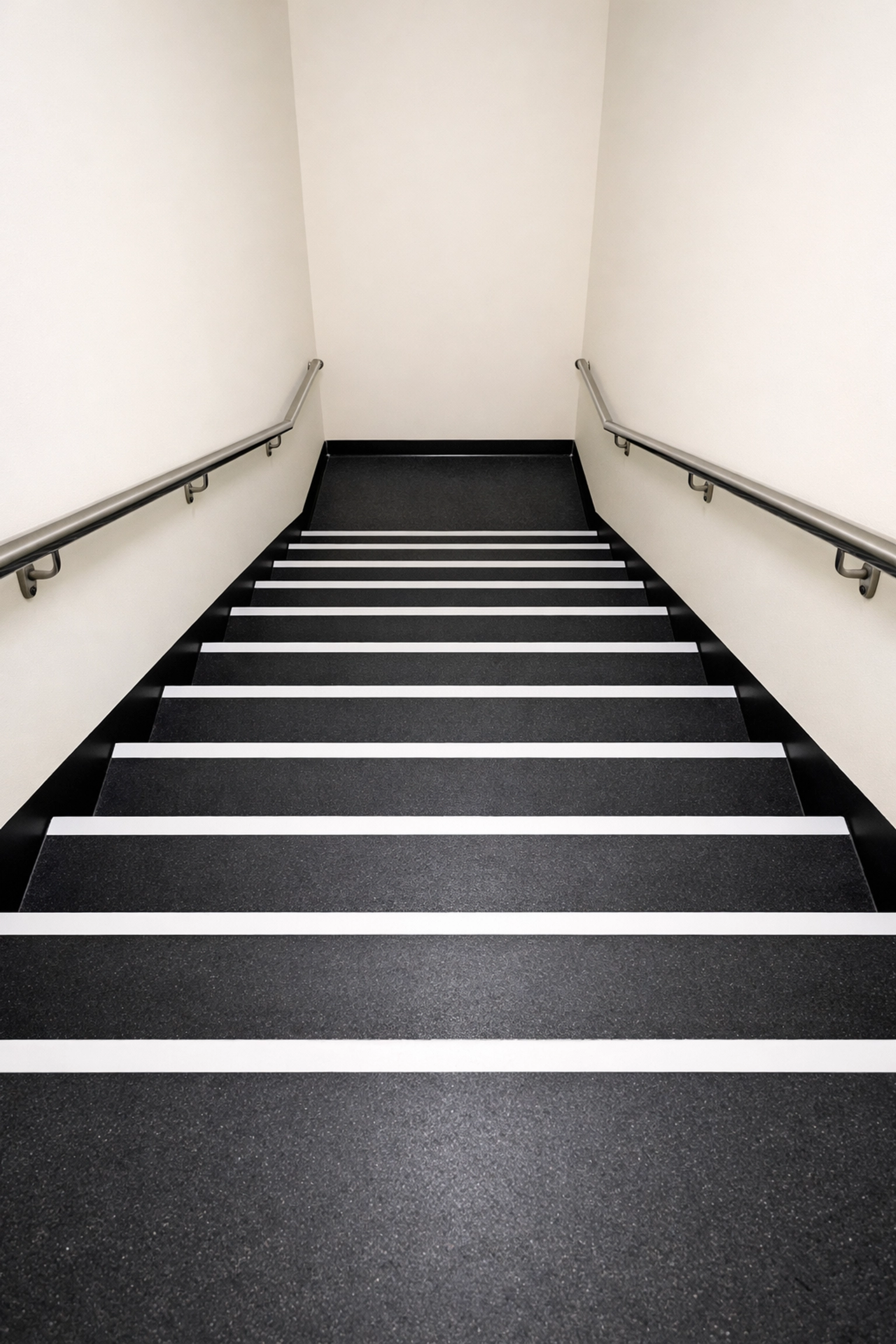
Sometimes, the stairs are in great physical shape, but they are all one solid color: like dark wood or beige carpet. When the tread (the flat part) and the riser (the vertical part) look the same, it becomes a "waterfall" of color. This makes it very hard to tell where one step ends and the next begins.
A simple safety upgrade is to create visual contrast. This can be done by using a different color of non-slip tape on the edge of the steps or even painting the risers a different color than the treads. This "visual cue" helps the brain quickly map out the distance and depth of each step.
Mistake #8: Rushing and Distractions
While we usually focus on the environment, our behavior on the stairs matters just as much.
- Rushing to the phone or door: We often move faster than our balance can keep up with when we hear a knock or a ring.
- Carrying items with both hands: If you are carrying a large box or a heavy tray, you can't use the handrails. Furthermore, the object often blocks your view of your own feet.
- Bifocals: For those who wear bifocals or progressive lenses, looking down through the bottom part of the lens can distort the distance of the steps. It’s often safer to tuck your chin and look through the top part of the lens when navigating stairs.
How to Conduct a Stair Safety Audit
I always recommend that families sit down and do a quick "audit" of their stairs once every few months. Here is a simple checklist you can use:
- Check the Grip: Are the handrails loose? Can you wrap your hand entirely around the rail (a "power grip"), or is it too wide or decorative to hold securely?
- Test the Light: Stand at the top of the stairs at night. Can you clearly see the edge of every single step all the way to the bottom?
- Feel for Movement: Walk up and down slowly. Do any boards creak or feel "spongy"? Is the carpet tight, or does it move under your foot?
- Clear the Path: Is there anything: even a small rug at the top or bottom: that could cause a slip?
- Look for Wear: Are the edges of the steps rounded or slick?
Reassuring Steps Forward
Addressing stair safety isn't about admitting "weakness"; it's about being smart and proactive. Think of it like wearing a seatbelt. You don't put a seatbelt on because you expect to crash every time you drive; you wear it because it’s a simple, effective way to stay safe just in case.
Making small adjustments: like adding a second handrail, upgrading your light bulbs, or clearing away the clutter: can significantly increase your confidence. When you feel confident on your stairs, you maintain your independence and your ability to enjoy every floor of your home.
Stairs shouldn't be a source of stress. By avoiding these common mistakes and taking a few practical steps, you can ensure that your home remains the safe, comfortable sanctuary it’s meant to be. If you’re ever unsure about the safety of your staircase, reaching out to a professional for a mobility assessment can provide peace of mind and a clear path forward.
Stay safe, stay mobile, and take it one step at a time.

