
When we think about home, we think about comfort, memories, and safety. However, as our physical needs change with age, the very architectural features that make a house a home: like a grand staircase or a welcoming front porch: can begin to feel like obstacles.
Statistically, entryways and stairs are some of the most high-risk areas for falls in the home. These are "transition zones" where we move from one environment to another, often carrying groceries, mail, or umbrellas. Dealing with changes in lighting, surface texture, and elevation all at once can challenge even the most active senior’s balance.
The good news is that making these areas safer doesn’t usually require a total home renovation. By implementing a few thoughtful modifications, you can significantly reduce the risk of trips and slips, allowing you or your loved one to move with confidence. Here are ten practical examples of entryway and stair safety modifications designed specifically for seniors.
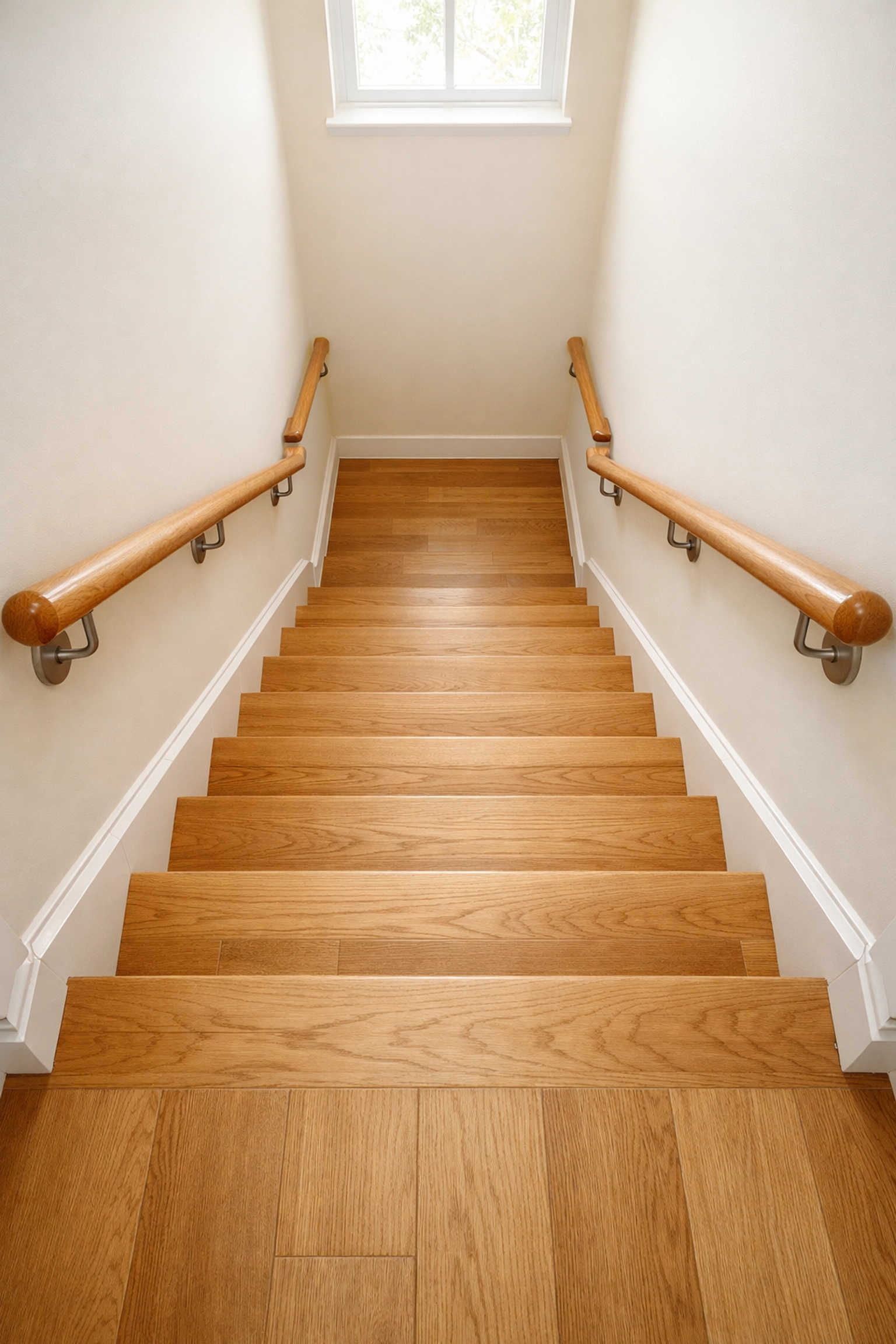
1. Dual Handrails on Every Staircase
Many homes are built with a handrail on only one side of the stairs. While this might meet basic building codes, it doesn't always provide enough stability for someone with balance concerns or one-sided weakness (common after a stroke or due to arthritis).
Installing a second handrail on the opposite wall ensures that a sturdy grip is always within reach, regardless of which hand is stronger or which direction you are traveling. Handrails should be "continuous," meaning they don't break or gap, and they should ideally extend about 12 inches beyond the top and bottom steps. This allows the user to stabilize themselves before they even take their first step.
2. Motion-Sensor Outdoor Lighting
Visual acuity often declines with age, and our eyes take longer to adjust to changes in light levels. Walking from a bright afternoon sun into a dim hallway, or approaching a dark porch at night, creates a window of "functional blindness" that is incredibly dangerous.
Motion-sensor lighting is an elegant solution. Instead of fumbling for a light switch while balancing on a step, high-intensity LED lights should automatically illuminate pathways, porch steps, and the front door lock. It’s also important to position these lights so they don't create long, confusing shadows, which can interfere with depth perception.
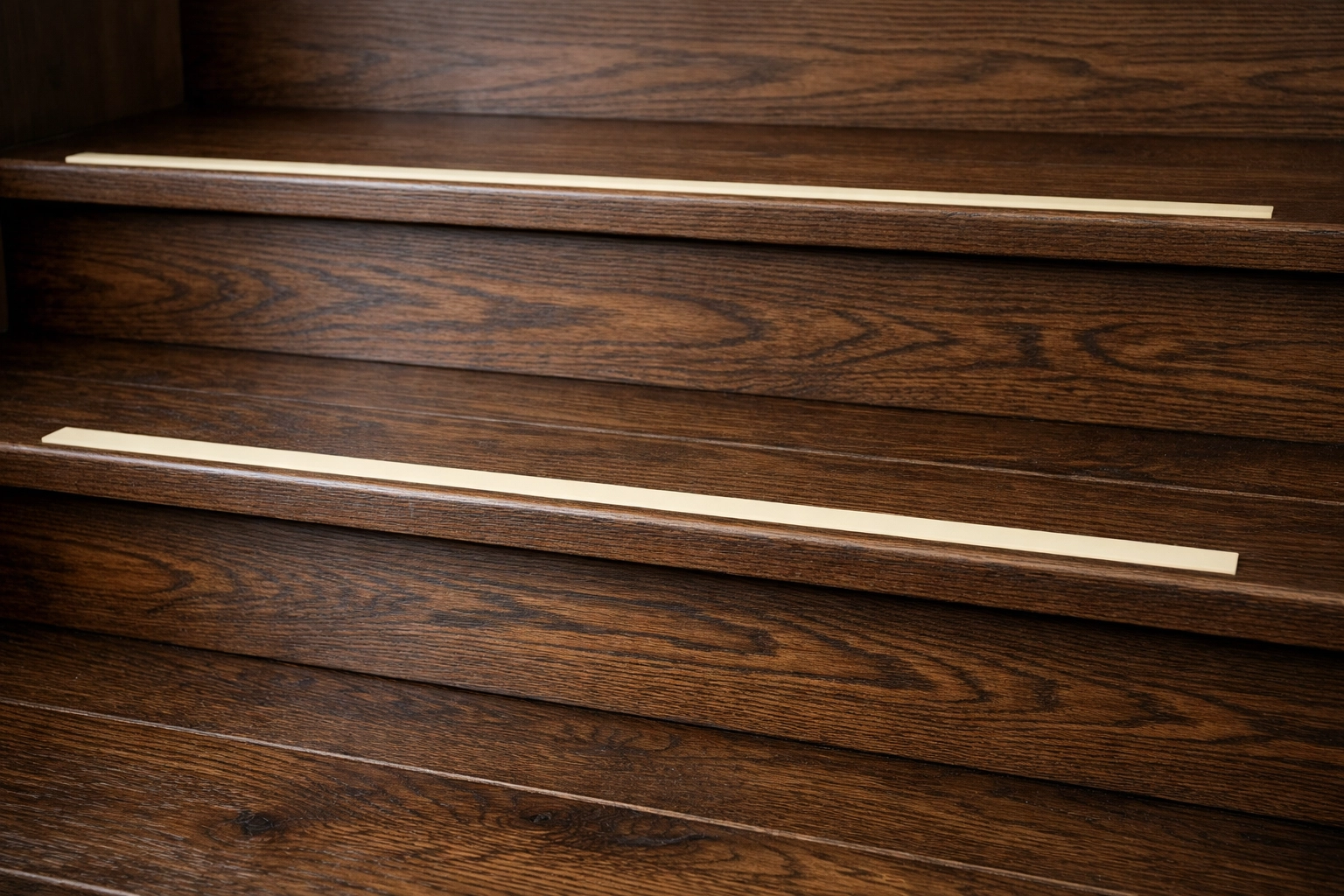
3. Visual Contrast on Step Edges
Depth perception is one of the first things to go as we age. When looking down a flight of stairs, the steps can sometimes blend together into one flat, beige or grey blur. This makes it very easy to misjudge where a step ends.
A simple and highly effective fix is adding a contrasting color to the edge (the "nosing") of each step. This can be done with a strip of brightly colored paint or specialized safety tape. For example, if you have dark wood stairs, a white or yellow strip on the edge clearly defines where the foot needs to land. This visual cue tells the brain exactly where the elevation change occurs.
4. Non-Slip Treads and Grit Tape
Smooth surfaces like polished wood, tile, or even painted concrete can become incredibly slick, especially if there is a bit of moisture from rain or snow. For outdoor steps, applying anti-slip treads or "grit tape" is essential.
These materials add a sandpaper-like texture to the surface, providing the friction necessary for shoes to grip the ground. For indoor wooden stairs, clear non-slip adhesive strips are available that provide safety without hiding the beauty of the wood. Unlike traditional rugs or "runners," which can sometimes come loose and cause a trip, these adhesive solutions stay firmly in place.
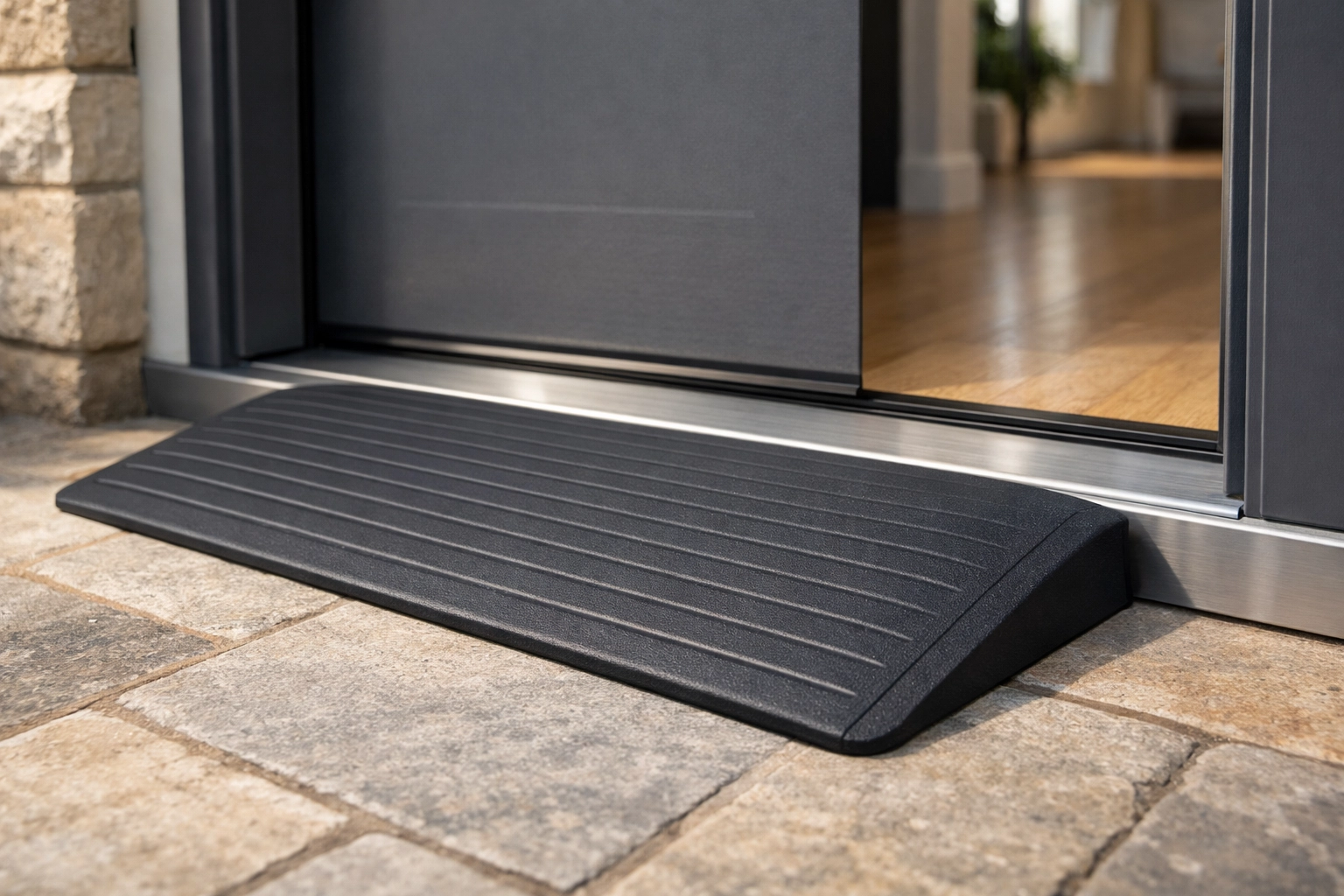
5. Threshold Ramps for Uneven Doorways
Even a small lip at the bottom of a doorway: sometimes as little as half an inch: can be enough to catch a toe or a walker wheel. These "trip hazards" are everywhere in older homes.
Threshold ramps provide a smooth, sloped transition over these bumps. They are available in rubber, metal, or wood and can be used on both the interior and exterior sides of a door. By turning a vertical "jump" into a gentle incline, you remove the need to lift the feet higher than usual, which is often where balance is lost.
6. Lever-Style Door Handles
It’s easy to overlook the door handle itself, but for someone with arthritis or reduced grip strength, a traditional round doorknob can be a significant barrier. If you are struggling to turn a knob while also trying to maintain your balance on a porch, the risk of a fall increases.
Replacing knobs with lever-style handles allows the door to be opened with a simple downward push. This can even be done using an elbow or a closed fist if your hands are full. It's a small change that makes the act of entering and exiting the home much more fluid and less physically taxing.
7. Strategic Grab Bars at Entry Points
We often think of grab bars as "bathroom-only" equipment, but they are incredibly useful at entryways. When you are standing on a porch trying to unlock the door or put down a heavy bag, having a vertical grab bar installed on the door frame provides a "third point of contact."
Having something solid to hold onto while you transition from standing still to moving through the doorway provides a massive boost in confidence. Ensure these bars are rated for weight-bearing and are bolted into the wall studs, not just the drywall or siding.
8. Removing Throw Rugs and Mats
While a "Welcome" mat looks nice, it is often one of the most dangerous items at an entryway. Standard mats often have edges that curl up, and they can slide across the floor if they don't have a high-quality rubber backing.
For seniors, the safest entryway has no loose rugs. If a mat is necessary to catch moisture, it should be a low-profile, heavy-duty mat with a non-slip backing that "grips" the floor. Better yet, consider a "recessed" mat that sits flush with the flooring, removing the edge entirely.
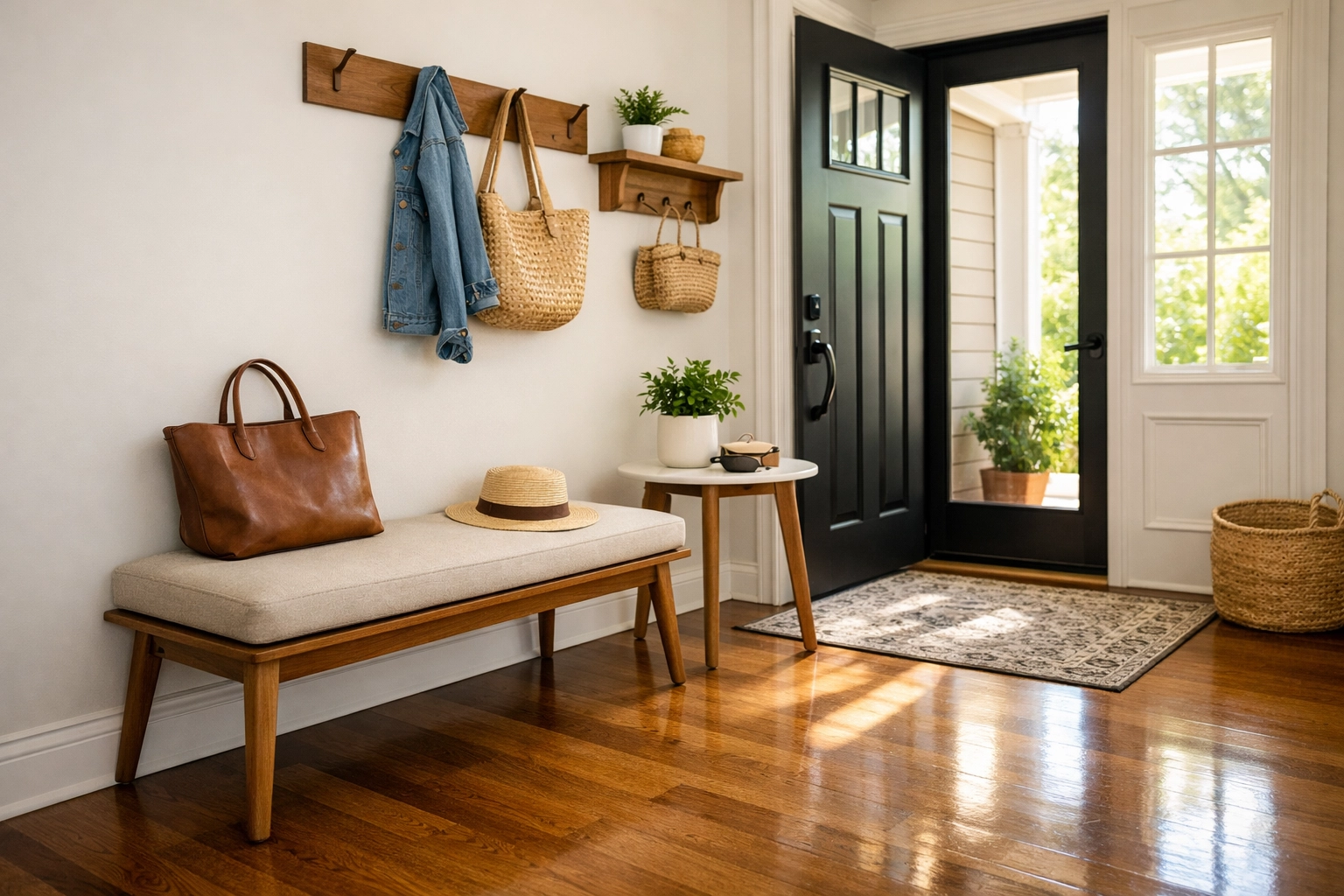
9. Creating a "Landing Zone"
Instability often happens when we try to do too many things at once. Entering the house usually involves managing keys, mail, groceries, and maybe a cane or walker.
A "landing zone": which consists of a sturdy bench or a small table right next to the door: allows a senior to set their items down immediately upon entering. This frees up their hands to focus entirely on their balance and the use of their mobility aids. A bench also provides a safe place to sit while putting on or taking off shoes, which is much safer than trying to balance on one foot.
10. Covered Entryways and Weather Protection
Weather is a major factor in entryway safety. Rain, ice, and even fallen leaves can turn a safe porch into a hazard. If possible, ensure the main entryway is covered by an awning or porch roof.
Keeping the area dry prevents the buildup of algae or ice. Additionally, keeping the area clear of debris is a must. Wet leaves are notoriously slippery. Regular maintenance: checking that the porch boards aren't rotting and that the stairs are clear of clutter: is just as important as the physical modifications themselves.
Why These Changes Matter
When we talk about "fall prevention," we aren't just talking about avoiding injury; we are talking about maintaining independence. Many seniors begin to limit their outings because they are afraid of the "obstacle course" required to get in and out of their own homes.
By taking the time to look at your entryway through a lens of safety, you can remove those psychological and physical barriers. A home that is easy to enter and exit is a home that encourages staying active and social.
A Note on Professional Assessment
While many of these examples: like changing a lightbulb or adding grit tape: can be handled as DIY projects, some modifications are more complex. Installing grab bars or building a permanent ramp requires an understanding of weight loads and structural integrity.
If you aren't sure where to start, a professional home safety assessment can be invaluable. Occupational therapists or specialists in aging-in-place can walk through the home and point out specific risks you might have overlooked. They can help prioritize which of these ten examples will have the biggest impact on your specific situation.
Safety doesn't have to be clinical or ugly. Most of these modifications can be integrated into the home's aesthetic quite naturally. The goal is to create an environment that supports you, allowing you to focus on living your life rather than worrying about where you step.

