
For many of us, the stairs are just a functional part of the house: a way to get from the living room to the bedroom. We use them dozens of times a day without a second thought. But as we age, or as we care for aging loved ones, those familiar steps can begin to represent a significant challenge.
Falls on stairs are one of the leading causes of home injuries, yet many of the risks are hidden in plain sight. Often, it isn't a single "oops" moment that causes a fall, but a combination of small environmental factors that have been overlooked for years. Whether you are looking to age in place or are modifying a home for a parent, identifying these common mistakes is the first step toward a safer, more confident home life.
Here are the seven most common mistakes people make with home stair safety and, more importantly, how you can fix them.
1. Ignoring the "Trip Factor" of Uneven Risers and Narrow Treads
When we walk up a flight of stairs, our brains actually "map" the first two or three steps. Once our feet find the rhythm of the height (the riser) and the depth (the tread), our bodies go into a sort of autopilot.
The mistake many homeowners make is living with "non-standard" stairs. In older homes especially, you might find that the bottom step is slightly taller than the rest, or that one tread is an inch narrower. This variation is a major trip hazard because it breaks the neurological rhythm of climbing. Even a difference of a quarter-inch can be enough to cause a stumble.
How to Fix It:
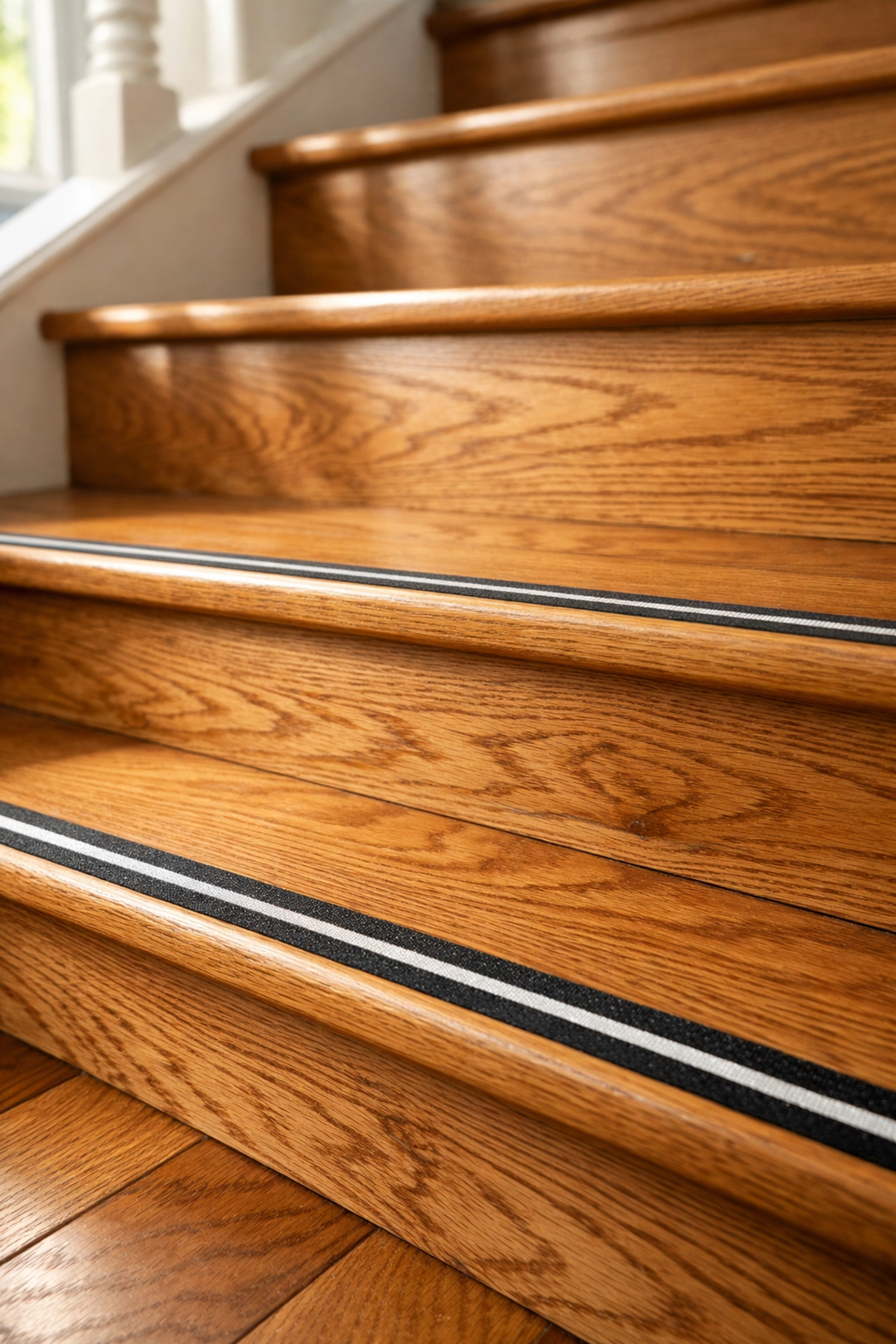
Ideally, a stair riser should be between 6 and 7 inches high, and the tread should be at least 10 to 11 inches deep to allow for full foot placement. If you are renovating, ensure your contractor adheres to modern building codes which allow for no more than a 3/8-inch variation between the highest and lowest riser. If a full renovation isn't possible, use visual cues. Applying a high-visibility adhesive strip to the edge of an uneven step can alert the brain to the change in height, forcing a more conscious movement.
2. Having Only One Handrail (or None at All)
Many staircases, particularly those enclosed by walls on both sides, often feature only one handrail. While this might meet minimum building codes in some areas, it’s a significant mistake for long-term safety.
Balance isn't always symmetrical. A person might have more strength on their right side than their left, or they might suffer from a condition like vertigo where they need to "brace" themselves from both sides to feel stable. Relying on a single rail means that on the way down, you might be forced to use your weaker side for support.
How to Fix It:
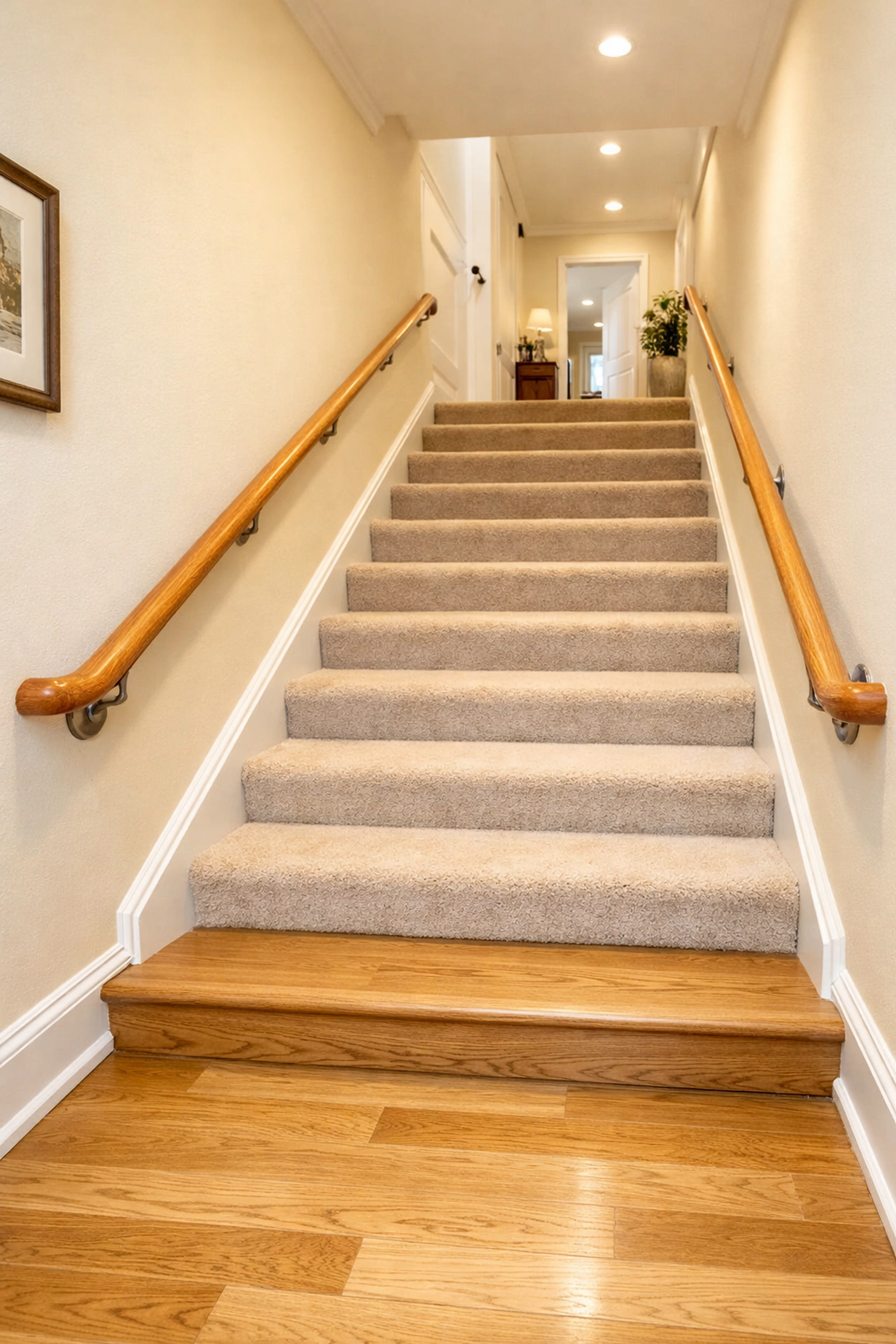
Install a second handrail so there is support on both the left and right sides. Ensure the rails are "continuous," meaning they don't break at a landing or a corner. A person should be able to keep their hand on the rail from the very top of the flight until their feet are firmly on the floor at the bottom. The rail should also extend about 12 inches past the top and bottom step to provide stability as you transition to a flat walking surface.
3. Relying on "Mood Lighting" or Inadequate Visibility
We all appreciate soft, warm lighting in our homes, but the staircase is the last place you want shadows. A common mistake is having a single overhead light at the top of the stairs that casts long shadows over the treads. If you can’t clearly see where the "nose" of the step ends and the next one begins, your depth perception is compromised.
Nighttime is particularly dangerous. Many falls happen when someone wakes up in the middle of the night and tries to navigate the stairs in a dim or dark environment, thinking they "know the way" by heart.
How to Fix It:
The goal is uniform lighting. Ideally, you want light sources that illuminate every single step without creating glare.
- Motion Sensors: Install battery-operated motion-sensor LED lights along the baseboards. These light up automatically as you approach, providing a clear path without needing to fumble for a switch.
- Dual Switches: Ensure there is a light switch at both the top and the bottom of the stairs.
- Contrast: If your stairs are a dark wood or dark carpet, it can be hard to see the edges. Applying a strip of contrasting color (like a white or light-colored anti-slip tape) to the edge of each step can drastically improve visibility.
4. Keeping the "Convenience Pile" on the Steps
We’ve all done it. You have a pair of shoes, a book, or a basket of laundry that needs to go upstairs, so you set it on the bottom two steps to take up "on the next trip." This "convenience pile" is one of the most frequent causes of avoidable falls.
Staircases should be treated as a high-traffic highway. Just as you wouldn't leave a box in the middle of a literal highway, you shouldn't leave anything on a step. Even if you think you’ll remember it’s there, a moment of distraction or a midnight trip to the kitchen can lead to a dangerous encounter with that pile of mail.
How to Fix It:
Enforce a "zero-tolerance" policy for clutter on the stairs. If something needs to go up or down, put it in a dedicated "stair basket" that sits on a table near the stairs, but never on the treads themselves. Encourage every member of the household to clear the stairs immediately.
5. Overlooking Slippery Surfaces and Poor Footwear
A beautiful, polished hardwood staircase is a staple of home design, but it is also incredibly slippery, especially when wearing socks or smooth-bottomed slippers. Many people mistake the "look" of the home for the "safety" of the home.
The transition from a carpeted hallway to a polished wooden step can be jarring. Without proper traction, the foot can easily slide forward off the nose of the step, leading to a fall onto the tailbone or a tumble down the flight.
How to Fix It:
Traction is your best friend.
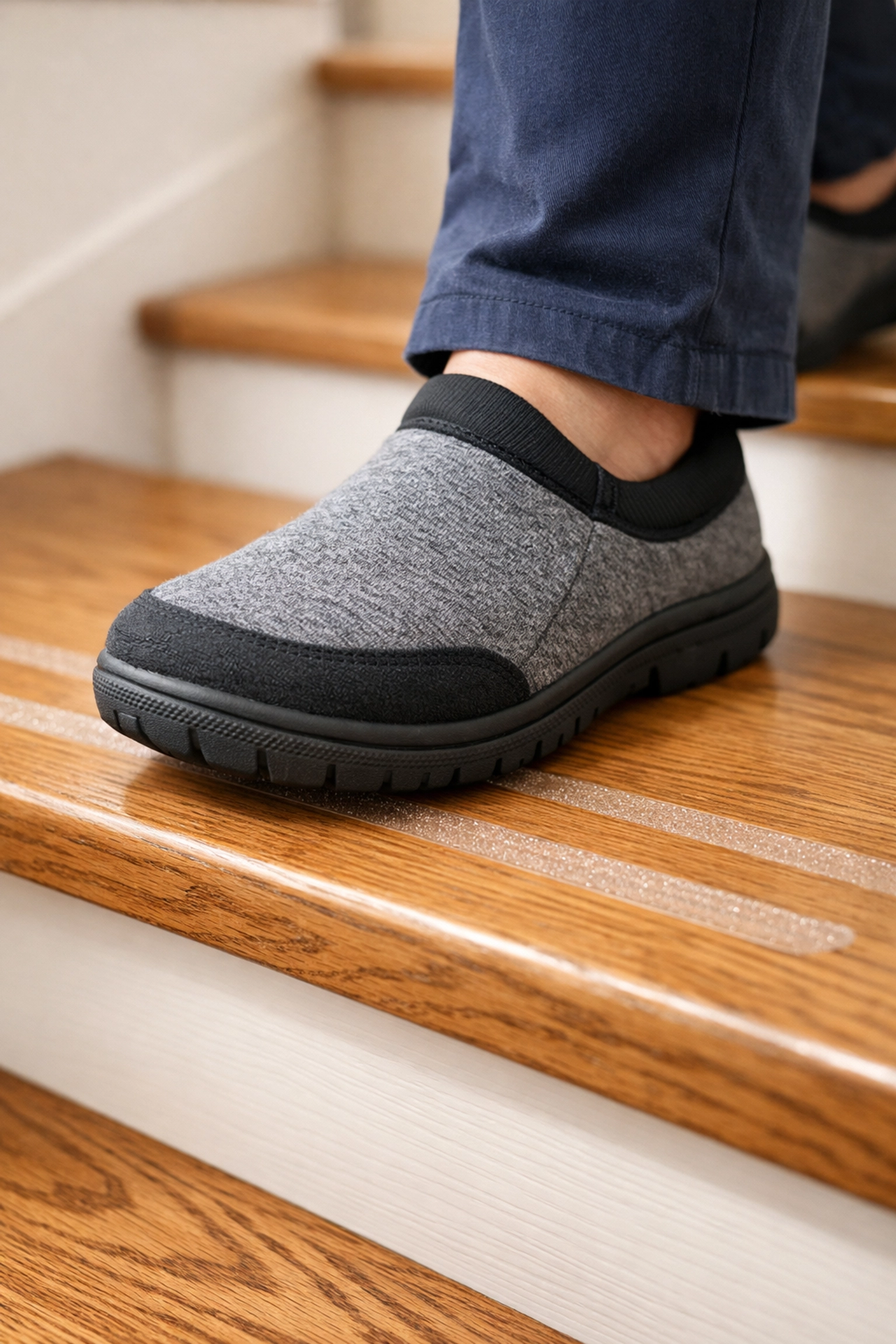
- Anti-Slip Strips: You can find clear, adhesive anti-slip strips that provide grip without ruining the aesthetic of the wood.
- Carpet Runners: If you prefer carpet, ensure it is a "low-pile" variety. Deep, plush carpet might feel nice, but it can actually hide the edge of the step and make your footing feel "mushy" and unstable. Ensure the runner is tightly tacked down; a loose carpet is more dangerous than no carpet at all.
- Footwear Habits: Encourage wearing shoes with rubber soles or "grip socks" inside the house. Avoid walking on stairs in stocking feet.
6. Ignoring the Importance of a "Landing Zone"
Sometimes the mistake isn't on the stairs themselves, but what happens right before or after them. We often see stairs that end abruptly near a doorway or in a cramped hallway. If there isn't enough room to safely "land" and regain your balance at the top or bottom, you are at risk.
Additionally, "winding" stairs: those that curve and have wedge-shaped treads: are notoriously difficult because the tread width changes depending on where you place your foot.
How to Fix It:
Ensure the area at the top and bottom of the stairs is clear of rugs that could slip or furniture that could obstruct your path. If you have winding stairs, the rule of thumb is to always walk on the "wide" side of the wedge. If the stairs feel too steep or the flight is too long, consider adding a sturdy chair or a small bench near the landing zones so you can catch your breath or rest before or after the climb.
7. Neglecting Physical and Visual Health
While most of these mistakes are environmental, a major mistake is failing to account for the "human factor." Our ability to navigate stairs safely is directly tied to our strength, balance, and vision.
For example, wearing multifocal (bifocal or trifocal) lenses can be a major hazard on stairs. These lenses can distort the bottom of your field of vision, making the steps appear closer or further away than they actually are. Similarly, a decline in lower-body strength can make the act of lifting the leg to the next riser exhausting and unstable.
How to Fix It:
- Vision Check: If you wear bifocals, talk to your optometrist about getting a dedicated pair of single-vision glasses specifically for moving around the house or navigating stairs.
- Physical Activity: Gentle exercises that focus on leg strength and core balance: like Tai Chi or basic physical therapy movements: can make a world of difference in how "heavy" or "light" you feel on the stairs.
- Take Your Time: The most simple fix? Never rush. Most falls happen when we are in a hurry to answer the phone or the door. It is always better to miss a call than to take a fall.
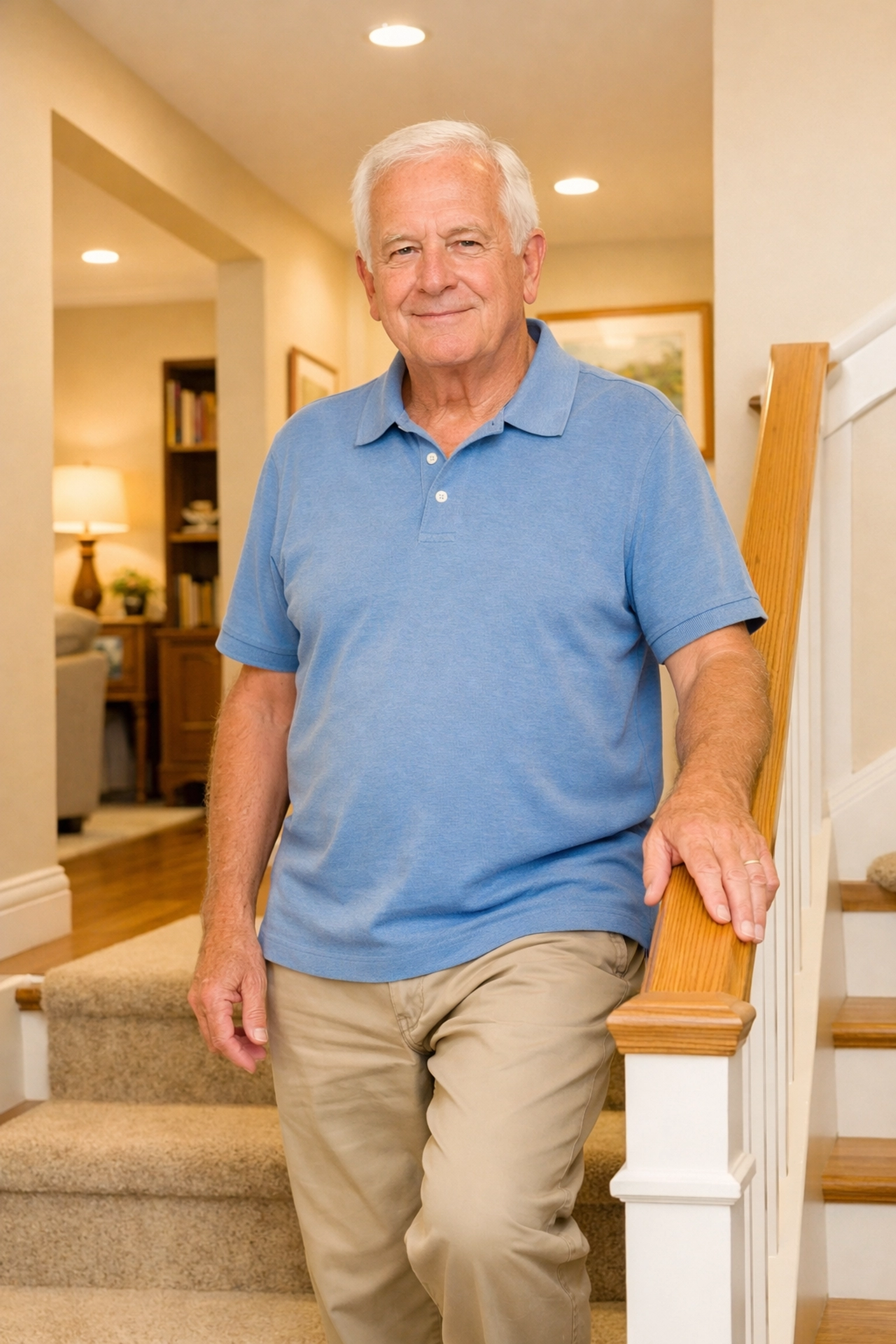
Creating a Culture of Safety
Addressing these seven mistakes doesn't necessarily require a massive construction budget. Often, it's about the small, intentional changes: adding a second rail, swapping out a lightbulb, or finally moving that basket of laundry off the third step.
At Fall Guys Products, we believe that your home should be your sanctuary, not a source of stress. By looking at your staircase through the lens of these common pitfalls, you can create an environment that supports independence and peace of mind for everyone in the family.
Safety isn't just about preventing a single event; it's about building a foundation where you feel confident moving through every level of your life. Take a walk through your home today and look at your stairs with fresh eyes: you might be surprised at how simple the fixes can be.
Summary Checklist for a Safe Stairway:
- Are there handrails on both sides?
- Is the lighting bright enough to see the "edge" of every step?
- Are the steps free of all clutter and decorative items?
- Is there non-slip traction on every tread?
- Are the handrails securely fastened and easy to grip?
- Do the handrails extend beyond the top and bottom steps?
- Is the area at the top and bottom of the flight clear of tripping hazards like loose rugs?

