
A walker is more than just a piece of medical equipment; for many, it is a ticket to independence. It’s the difference between staying in one room all day and being able to navigate the home, visit neighbors, or go for a stroll in the park. However, simply having a walker isn’t enough. Using it incorrectly can sometimes be more dangerous than not using one at all, as it can provide a false sense of security while actually increasing the risk of a fall.
At Fall Guys Products, we see mobility as a skill that needs to be practiced. Even if you’ve been using a walker for years, it is easy to fall into "bad habits" that compromise your safety. In this guide, we will break down the seven most common mistakes people make with their walkers and provide clear, actionable steps to correct them.
1. Setting the Height Incorrectly
The most frequent mistake people make happens before they even take their first step: the walker is at the wrong height.
If the walker is adjusted too low, you are forced to hunch over. This puts immense strain on your lower back, neck, and shoulders. More importantly, it shifts your center of gravity forward, making you more likely to tip over. Conversely, if the walker is too high, your arms are bent at an awkward angle, preventing you from putting enough weight through your hands to actually support your body if you stumble.
How to get the perfect fit:
To find the correct height, you should stand as straight as possible with your arms hanging naturally at your sides. Look at your wrists. The top of the walker’s handgrips should align perfectly with the crease on the inside of your wrist.
When you place your hands on the grips, your elbows should have a slight bend: roughly 15 to 20 degrees. This "sweet spot" allows your arm muscles to engage effectively without causing fatigue. If you aren't sure, have a friend or a physical therapist check your posture from the side while you are standing in the walker.

2. Walking "Behind" the Walker Instead of "In" It
Imagine your walker is a protective bubble. To stay safe, you need to be inside that bubble. A very common mistake is pushing the walker far out in front of you and then "chasing" after it.
When the walker is too far ahead, your body leans forward to reach it. This posture makes your balance unstable. If the walker wheels hit a rug or a small threshold and stop suddenly while you are leaning forward, your momentum will continue, potentially leading to a face-forward fall.
The Fix:
You should always walk inside the frame of the walker. Your feet should stay between the back legs of the device. Think of it as a three-step rhythm:
- Move the walker forward a short distance (about one step's length).
- Step into the center of the frame with one foot.
- Bring the other foot forward to meet it.
By staying close to the crossbar and keeping your torso upright, you ensure that the walker’s four points of contact are always there to catch you if you lose your footing.
3. Using the Walker to "Pull" Yourself Up
This is perhaps the most dangerous mistake on this list. When someone is sitting in a chair or on the edge of the bed, the natural instinct is to reach out, grab the walker handles, and pull themselves up to a standing position.
Standard walkers and rollators are lightweight by design. They are not bolted to the floor. When you pull on the handles from a seated position, you are applying horizontal force. The walker can easily tip backward toward you or slide away, offering zero support and likely causing a fall.
The Fix:
Never use the walker as a hoist. Instead, follow these steps:
- Scoot to the very edge of your chair or bed.
- Place your feet firmly on the floor, slightly apart.
- Place your hands on the armrests of the chair or the surface of the bed.
- Push down through your legs and arms to rise to a stand.
- Once you are fully upright and have found your balance, only then should you reach forward to grip the walker handles.

4. Turning Too Sharply (The Pivot Mistake)
In a hurry to get to the phone or the bathroom, many users try to "pivot" on one foot while holding the walker. This involves planting one foot and swinging the body and the walker in a fast circle.
Pivoting is a high-risk move. It often causes the walker legs to catch on a rug or the user’s own feet to get tangled. It also places significant torque on the hips and knees, which can lead to a loss of balance.
The Fix:
Think of yourself like a large bus: you need to make a "wide turn." Instead of pivoting, take several small, deliberate steps in a semi-circle. Move the walker slightly, then move your feet. Keep the walker in front of you at all times. It may take three or four extra seconds, but it ensures that your center of gravity stays centered over your base of support.
5. Forgetting to Lock the Brakes During Transitions
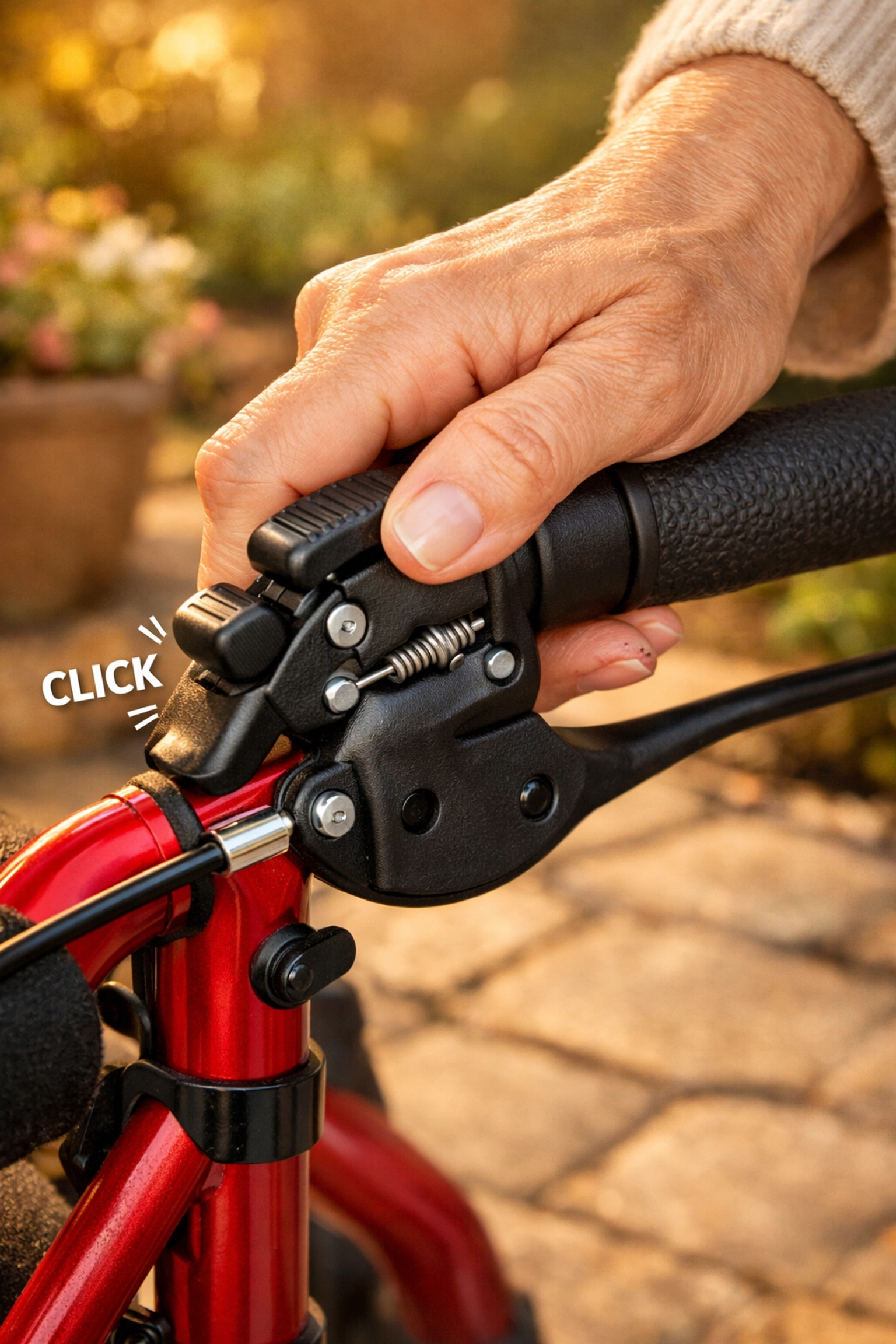
If you use a rollator (a walker with four wheels and a seat), the brakes are your best friend. However, many people forget to engage them when they are sitting down or standing up.
If the brakes aren't locked, the rollator becomes a "skate." As you go to sit, the seat might roll backward away from you. As you go to stand, the walker might roll forward as soon as you touch the handles.
The Fix:
Make it a habit to "click" the brakes into the locked position every single time you stop to sit. Before you lower yourself onto the seat, give the walker a little nudge to ensure it doesn't move. Likewise, when you are ready to stand up, keep those brakes locked until you are fully upright and ready to begin walking.
6. Overloading the Front with Weight
It is tempting to turn your walker into a shopping cart. Many people hang heavy purses, grocery bags, or thick coats over the front crossbar.
Adding weight to the front or side of a walker changes its physics. A heavy bag hanging off the front can make the walker tip forward if you hit a small bump. A heavy purse hanging on one handle can make the walker veer to the side or tip over when you turn.
The Fix:
If you need to carry items, use accessories specifically designed for the purpose. A basket or a pouch that attaches to the center of the walker helps distribute weight evenly and keeps the center of gravity low. Even with these accessories, keep the load light. If you have a lot of items to move, it is safer to ask for help or use a dedicated rolling cart that is designed for heavier loads.
7. Looking Down at Your Feet
It is a natural human tendency to look down when we are worried about tripping. We want to see where our feet are going. However, looking at your feet actually makes you more likely to fall.
When you look down, you are tucking your chin and rounding your shoulders. This posture shifts your weight forward. Furthermore, if you are looking at your feet, you aren't looking at what is six feet ahead of you: like a stray pet, a spilled liquid, or a rug that has bunched up.
The Fix:
Try to keep your head up and your eyes looking forward. You should be scanning the environment about 10 to 15 feet in front of you. Trust that your feet will follow your lead. This upright posture keeps your spine aligned and allows you to anticipate hazards long before you reach them.

Bonus: Maintenance and Environment
Beyond how you move your body, the condition of the walker and your home environment play huge roles in safety.
Check the Tips and Wheels
If you use a standard walker (without wheels), check the rubber tips on the bottom regularly. Over time, these tips wear down, much like the tread on a tire. When they become smooth or lopsided, they lose their grip on the floor, which can lead to the walker sliding out from under you on smooth surfaces like tile or hardwood.
If you have a wheeled walker, check for "hairballs" or carpet fibers stuck in the axles. These can cause the wheels to lock up or drag, making the walker difficult to maneuver.
Navigate Rugs with Caution
Area rugs and "throw rugs" are the primary enemies of walker users. The edge of a rug can easily catch the front leg or wheel of a walker. If possible, remove all area rugs from the home. If you must keep them, ensure they are secured with heavy-duty double-sided tape or specialized non-slip backing so the edges stay flat.
Floor Surfaces
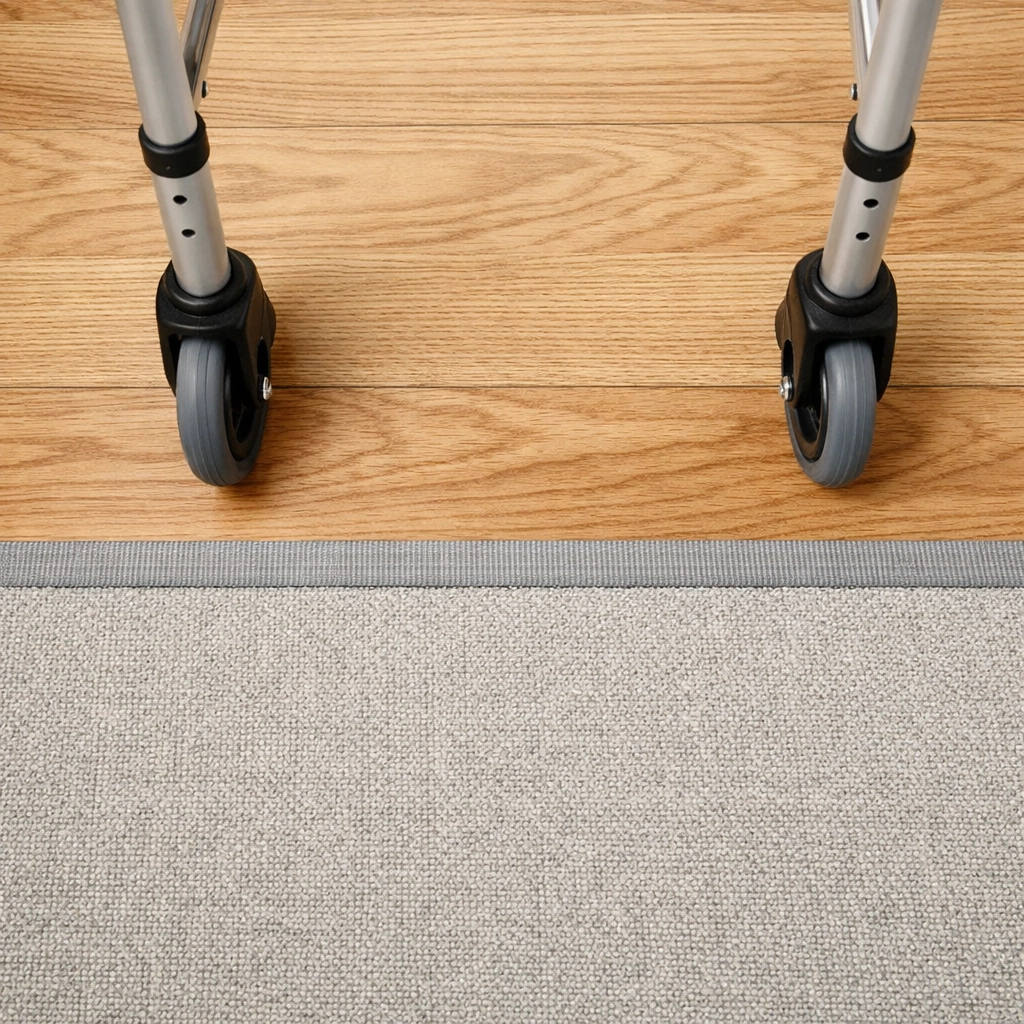
Be mindful of the transition between different types of flooring. Moving from a carpeted living room to a tiled kitchen requires a slight adjustment in how much force you use to move the walker. Always slow down during these transitions.
The Importance of Patience
Learning to use a walker correctly is like learning any other physical skill: it takes time and conscious effort. In the beginning, you might have to constantly remind yourself to "walk inside the box" or "look up." That’s okay.
The goal of using a walker is to maintain your freedom while minimizing risk. By avoiding these seven common mistakes, you aren't just using a tool; you are mastering a technique that keeps you safe, upright, and moving through the world with confidence.
If you feel like your walker isn't providing the support you need even after correcting these mistakes, it may be time for a professional mobility assessment. Every body is different, and sometimes a different type of mobility aid; or a few simple adjustments from a physical therapist; can make all the difference in your daily comfort and safety.
Stay safe, take small steps, and remember: your independence is worth the extra care.

