
Stairs are often the most daunting part of a home for those of us concerned about mobility and fall prevention. They represent a significant physical challenge and, if not managed correctly, a significant risk. However, many people view stair safety as a binary: either you can use them or you can’t.
In reality, stair safety is a spectrum of small habits, environmental adjustments, and regular maintenance. At Fall Guys Products, we spend a lot of time thinking about how to make every corner of the home a little safer. When it comes to stairs, we often see the same few oversights repeated. Most of these aren’t intentional; they are simply things we overlook because we’ve walked those same steps thousands of times.
Hi, I’m Brian Kerr, and I want to walk you through the seven most common mistakes people make with their staircases: and, more importantly, how you can fix them to stay confident and secure in your own home.
1. The "One-Sided" Handrail Habit
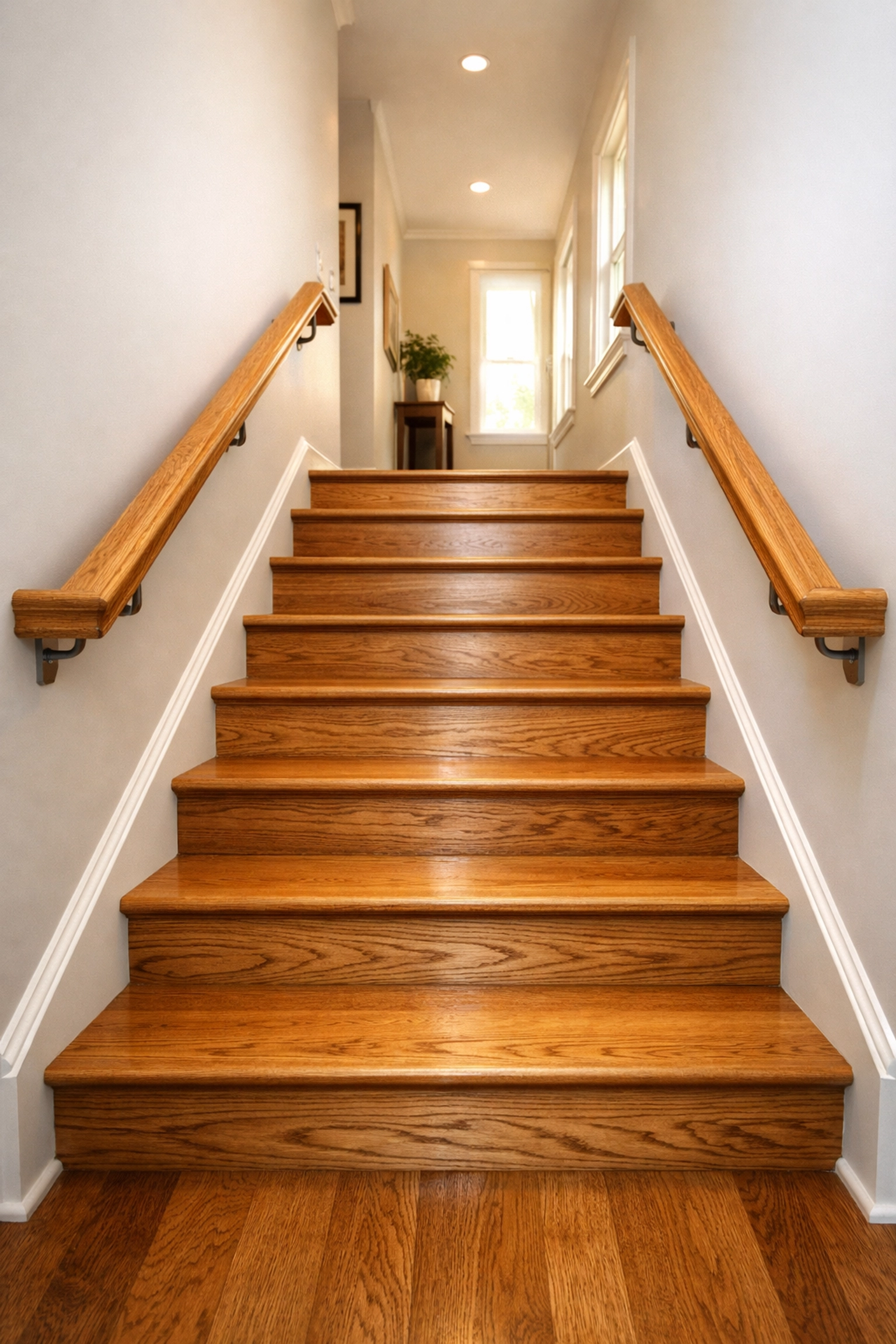
Many homes are built with a handrail on only one side of the staircase, usually because of building codes or aesthetic choices. The mistake here is assuming that one rail is enough. As we age, or if we are recovering from an injury, our balance isn't always symmetrical. We might have a "strong side" and a "weak side." If the handrail is only on your weak side while you’re descending, you aren't getting the support you truly need.
The Fix: Install Double Handrails
If your staircase is wide enough, having a handrail on both sides is a game-changer. It allows you to use both arms for stability, effectively "centering" your body weight. If you have a weakness on one side due to a stroke or hip surgery, you will always have a rail to grab regardless of whether you are going up or down.
Additionally, ensure the handrails extend beyond the top and bottom steps. Many falls happen because the handrail ends before the person has actually reached level ground. Having an extra 12 inches of rail at the start and finish gives you a "lead-in" and "lead-out" that keeps you steady during the transition.
2. Neglecting the "Grip Factor" of Footwear
It is incredibly common to run up or down the stairs in just socks, or perhaps in a pair of loose-fitting slippers. While comfortable, this is one of the most dangerous ways to navigate steps. Socks on wood or tile offer almost zero traction. Slippers, especially those without backs, can easily slide off or catch on the edge of a tread, leading to a trip.
The Fix: The "Shoes On" Rule
The best way to navigate stairs is with a sturdy pair of shoes that have rubberized, non-slip soles. If you prefer not to wear shoes in the house, look for high-quality "grip socks" that have thick silicone patterns on the bottom, though even these are second-best to a structured shoe.
When choosing house shoes for stair safety, look for:
- A firm heel cup to prevent your foot from sliding out.
- Low heels (high heels shift your center of gravity too far forward).
- A thin but slip-resistant sole that allows you to "feel" the edge of the step through the shoe.
3. Relying on "Mood Lighting"
We often overlook lighting because our brains are very good at "filling in the blanks" of places we know well. You might feel like you can walk your stairs in the dark because you’ve done it for twenty years. But as we age, our depth perception changes, and our eyes require more light to distinguish between the edge of a step and the shadow cast by the step above it.
Dimly lit stairs are a recipe for a "missed step," which is a leading cause of stair-related tumbles.
The Fix: High-Contrast and Motion Lighting
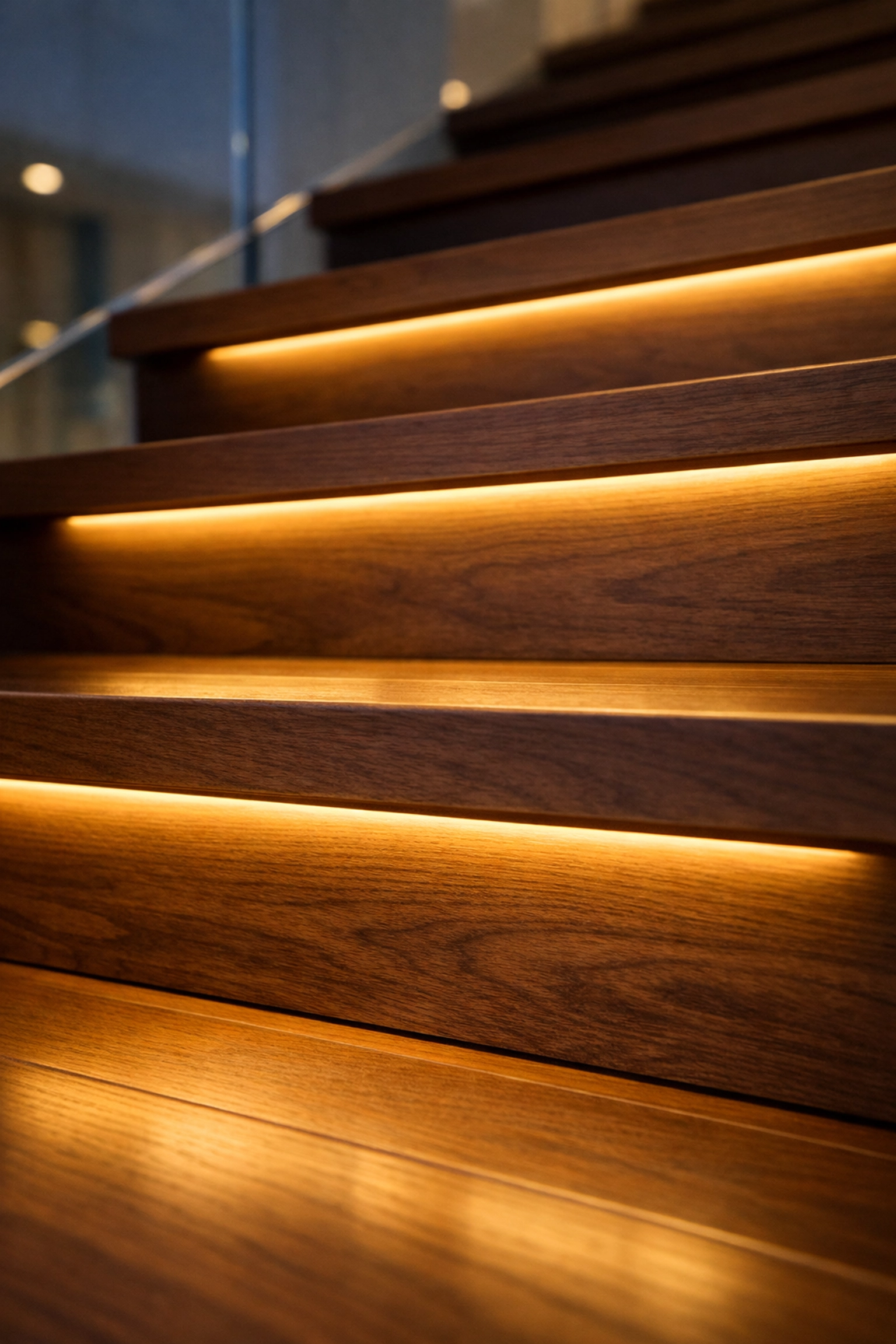
First, ensure there are light switches at both the top and the bottom of the stairs. If you find yourself forgetting to flip the switch, consider motion-activated LED strips. These can be installed under the lip of each tread or along the baseboard. They provide a clear, bright path the moment you approach the stairs.
Another pro-tip is contrast. If your stairs are dark wood, it can be hard to see where one ends and the next begins. Placing a strip of high-contrast tape (like white tape on dark wood) on the edge of each step can help your eyes instantly recognize the "drop-off" point.
4. Treating the Stairs as a Temporary Storage Unit
We’ve all done it. You have a pile of mail, a pair of shoes, or a book that needs to go upstairs, so you set it on the bottom step to take up "next time." This creates a significant tripping hazard. Even if you think you’ll remember it’s there, a moment of distraction: a phone ringing or a pet running by: is all it takes to forget about that obstacle.
The Fix: The "Clear Path" Policy
Establish a strict rule: nothing ever sits on the stairs. Not even for a minute. If you need to move items between floors, use a "stair basket" with a handle that sits on the floor near the stairs, not on the steps themselves. When the basket is full, carry it up in one trip while keeping at least one hand firmly on the rail. Better yet, ask a family member or caregiver to handle the heavy lifting of items between floors.
5. Overlooking Step "Rhythm" and Dimensions
Standard stairs usually have a "rise" (height) of about 7 inches and a "run" (depth) of about 11 inches. However, older homes often have irregular steps. If one step is even half an inch taller than the others, your body’s internal "rhythm" is broken. Your foot expects the floor to be at a certain depth; when it isn't, you stumble.
Worn-out carpeting or loose wooden treads can also change the effective height and stability of a step.
The Fix: Regular Structural Audits
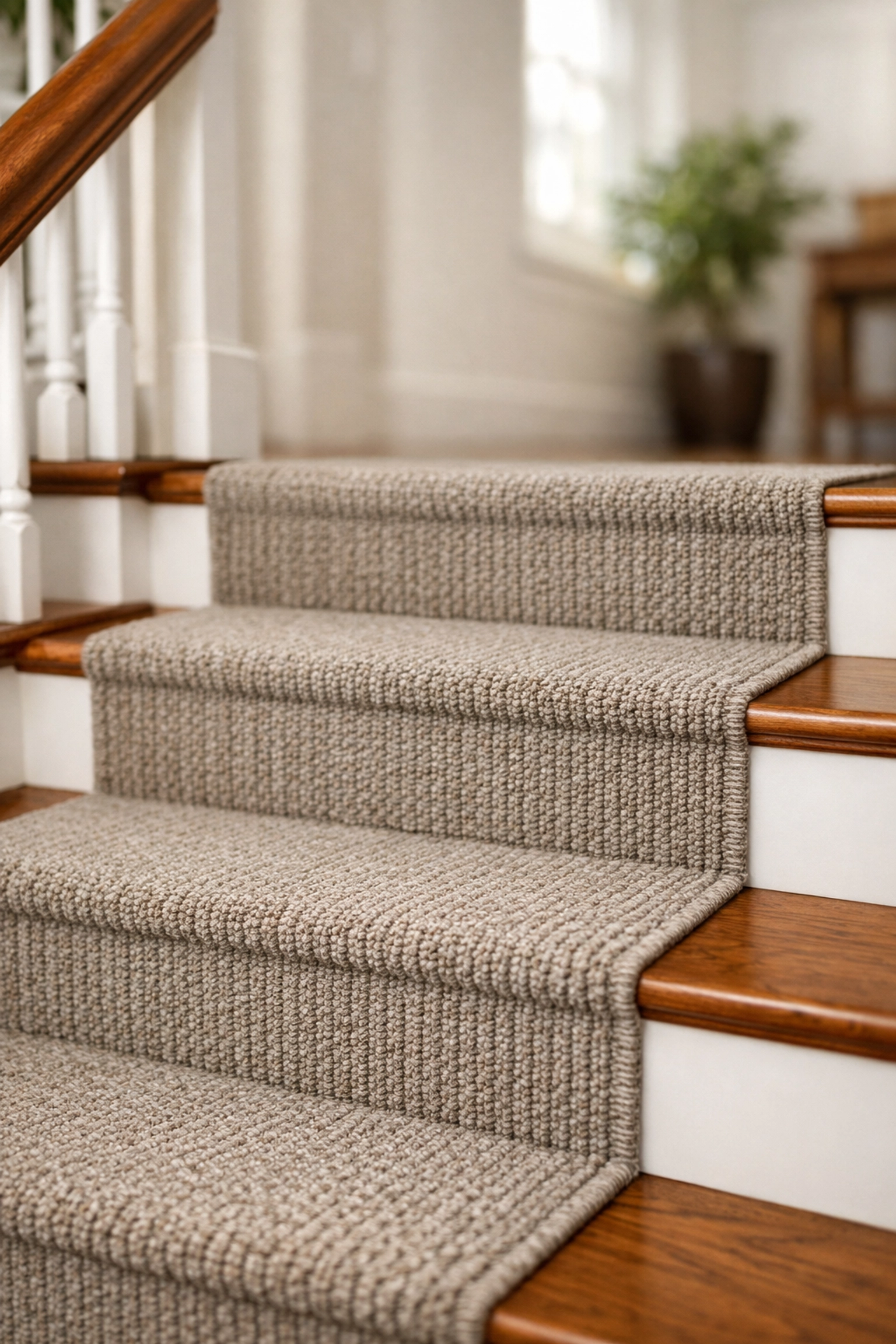
Once a season, do a "sound and feel" check. Walk the stairs slowly and listen for squeaks or wobbles. Look for carpet that has become loose or "bunched" at the edges. If you have wooden stairs, check for rounded edges. Over decades, the front edge of a wooden step can wear down and become rounded, which makes it much easier for your foot to slip off the front.
If you find irregularities, it’s worth having a carpenter or a home safety specialist come out to secure the treads. Sometimes, simply adding a non-slip transition strip to the edge of each step can fix the "rounded edge" problem and provide extra grip.
6. The "Descent Distraction"
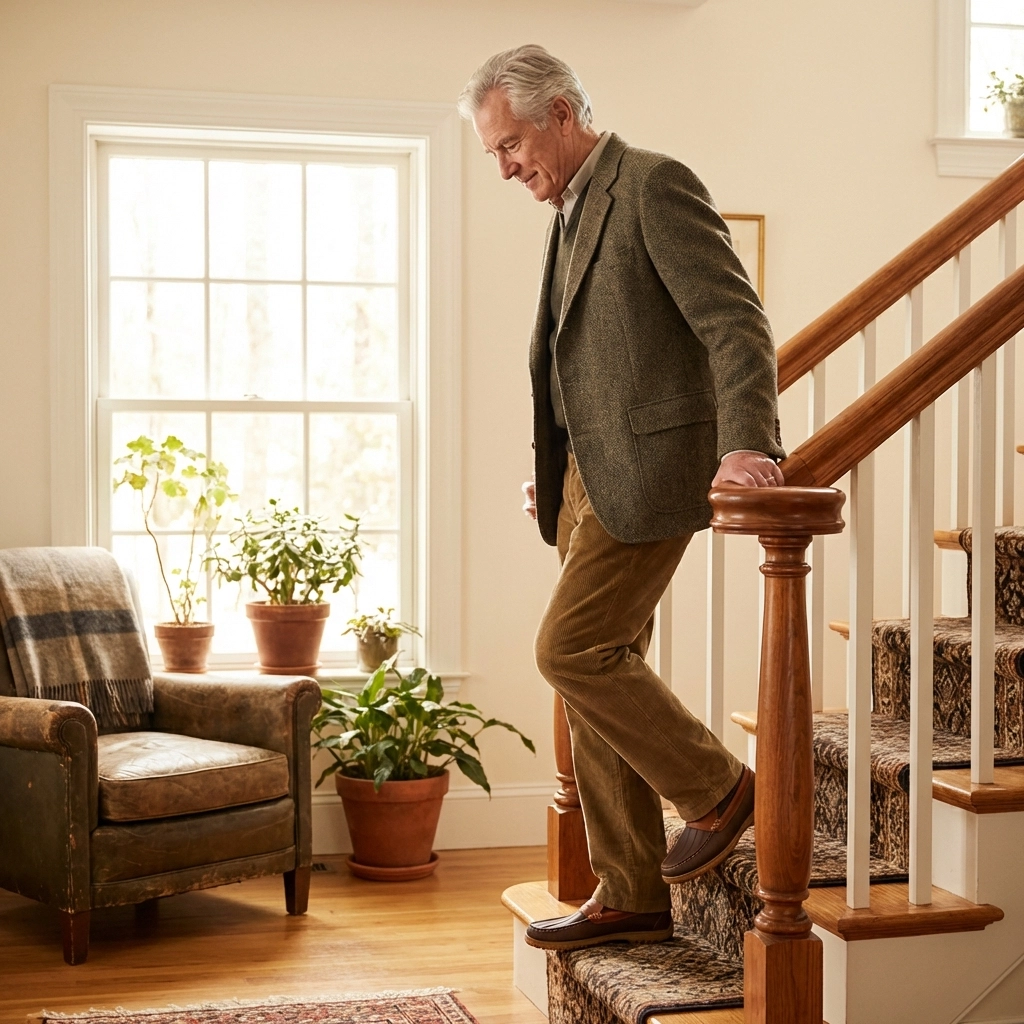
Most people are very careful when going up the stairs because it requires more physical exertion. However, statistics show that more falls happen while going down. When we descend, gravity is working with us, which can lead to us moving faster than we should. Furthermore, many people fall because they are looking ahead at the room they are entering rather than at the steps directly beneath them.
The Fix: The "One Step at a Time" Technique
It sounds simple, but the most effective way to stay safe is to be mindful.
- Don't carry large items: If you are carrying a laundry basket that blocks your view of your feet, you are at high risk. Keep your line of sight clear.
- The "Sideways" Approach: If you have balance issues or knee pain, turning slightly to the side and holding the rail with both hands while stepping down can offer more stability.
- Pause at the Top: Before you start your descent, take one breath, place your hand on the rail, and focus on the first three steps.
7. Ignoring Changes in Your Own Physical Health
Sometimes the "mistake" isn't with the stairs at all: it's with our own denial of how we are feeling. Vision changes (like new bifocals), medication side effects (dizziness), or a recent illness can all make a staircase that was "safe" yesterday dangerous today.
Bifocals, in particular, are a hidden danger on stairs. The bottom portion of the lens is for reading, which blurs your vision when you look down at your feet. This can distort your perception of where the step actually is.
The Fix: Adapt to Your Body
If you’ve recently started wearing bifocals or trifocals, be extra cautious. You may need to tilt your head down further than usual to look through the top (distance) part of the lens to see the steps clearly.
Furthermore, if you feel dizzy or "off" due to a new medication, don't tackle the stairs alone. Wait for a family member to assist you, or take a seat until the feeling passes. Being proactive about your health means recognizing when you need a little extra support.
Creating a Culture of Safety
At Fall Guys Products, we believe that the home should be a place of comfort, not a place of worry. Making your stairs safer isn't about admitting defeat; it’s about taking control of your environment so you can maintain your independence for as long as possible.
Start by fixing one thing today. Maybe it’s clearing off those items on the bottom step. Tomorrow, check the light bulbs in your stairwell. Small, incremental changes lead to a much safer living space.
Stair safety is a combination of a well-maintained environment and safe habits. By addressing these seven common mistakes, you’re not just preventing a fall; you’re giving yourself and your loved ones peace of mind. Remember, the goal isn't just to get from point A to point B: it's to do it with confidence every single time.

