
Stairs are often the most daunting part of a home for anyone dealing with mobility issues or simply looking to age in place safely. We use them dozens of times a day, usually without thinking twice. But for many, a staircase isn't just a way to get from the kitchen to the bedroom; it’s a potential hazard that requires focus, strength, and balance.
At Fall Guys Products, we believe that your home should be your sanctuary, not a source of stress. Most people assume that if their stairs were built according to code twenty years ago, they are perfectly safe today. Unfortunately, safety standards evolve, and our physical needs change as we get older. A "minor" oversight in stair design or maintenance can lead to a significant fall.
In this guide, we’re going to walk through seven common mistakes homeowners make with their stairs and, more importantly, how you can fix them to create a safer environment for yourself and your loved ones.
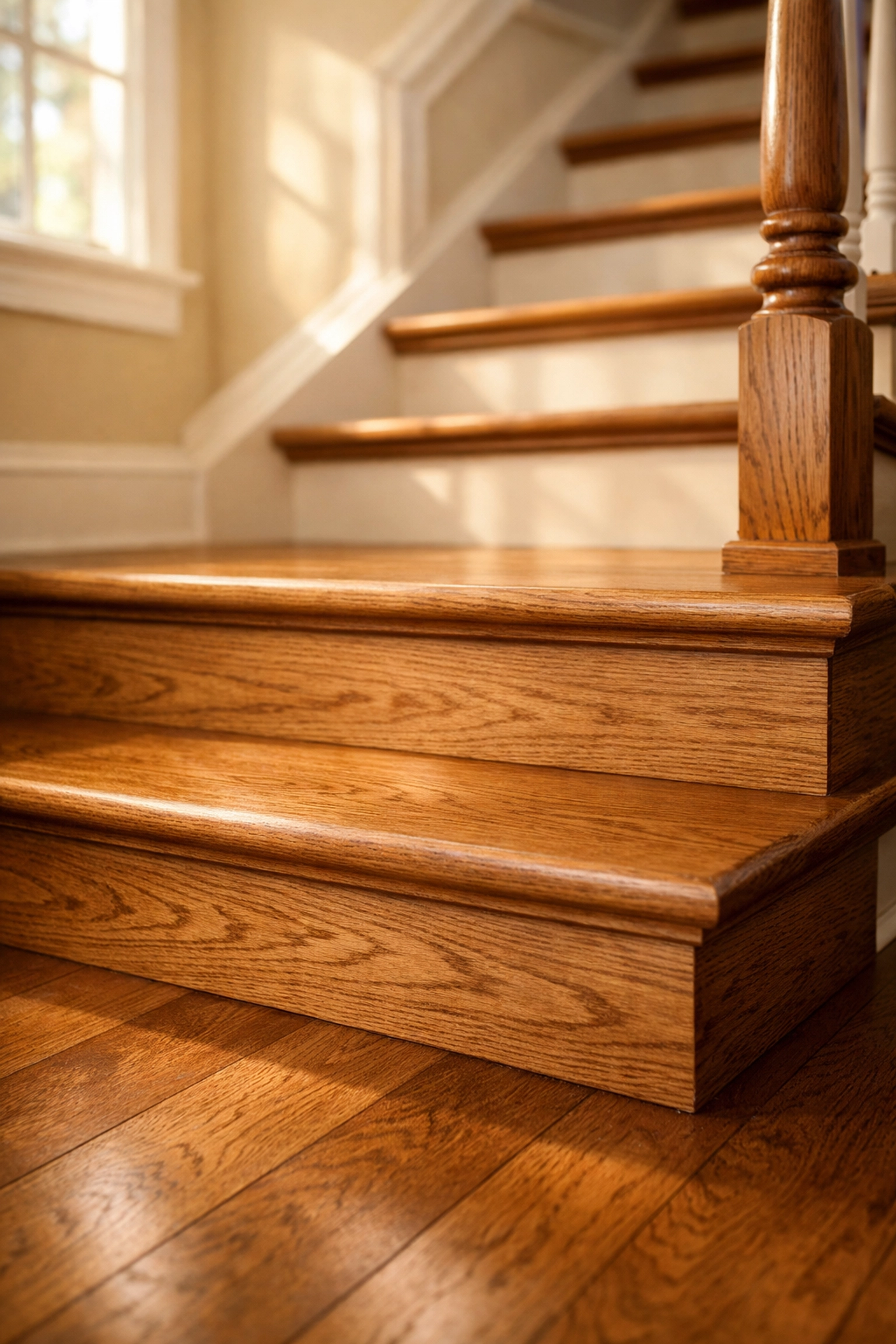
1. Inconsistent Tread and Riser Dimensions
The most common mistake isn't that the stairs are "wrong," but that they are inconsistent. Your brain is a master at pattern recognition. When you start climbing a flight of stairs, your body subconsciously measures the height of the first two steps and then "sets" your gait for the rest of the climb.
If a riser (the vertical part of the step) is even half an inch taller than the one before it, your foot may catch the edge, leading to a trip. Similarly, if a tread (the horizontal part you step on) is too narrow, your heel may hang off the edge, causing instability.
How to Fix It:
Standard safety guidelines suggest that treads should be between 10 and 11 inches deep to allow for full foot placement. Risers should ideally be between 6 and 7 inches high. The most critical fix here is consistency. Building standards allow for no more than a 3/8-inch difference between the highest and lowest riser in a flight.
If your stairs are drastically uneven, it may require a carpenter to shim or rebuild the treads. For a simpler fix, you can use high-visibility "stair nosing" or contrast tape on the edge of each step. This helps the eye identify exactly where the edge is, allowing the brain to adjust for minor inconsistencies.
2. Neglecting the Staircase Slope
Sometimes, in an effort to save space during construction, staircases are built with a very steep pitch. While this might be fine for a young, fit individual, a steep slope significantly increases the physical demand on the knees and hips. It also makes the descent much more dangerous, as the center of gravity is pushed further forward.
How to Fix It:
The optimal slope for a home staircase is approximately 37 degrees. If you find your stairs are exceptionally steep (approaching 45 degrees or more), you are dealing with a structural risk.
While you can’t easily change the slope of an existing staircase without a major renovation, you can mitigate the risk by ensuring the other safety features: like handrails and lighting: are absolutely perfect. If the slope makes the stairs unusable, it may be time to consider moving primary living quarters to the first floor or investigating professional modifications like a stairlift.
3. Inadequate or Improperly Installed Handrails
A handrail is not just a piece of decorative trim; it is a life-saving tool. Many homes have handrails that are too low, too thin to grip properly, or: most commonly: they only run along one side of the stairs. Some handrails even stop a step or two before the stairs actually end, leaving the user vulnerable during the most dangerous part of the transition.
How to Fix It:
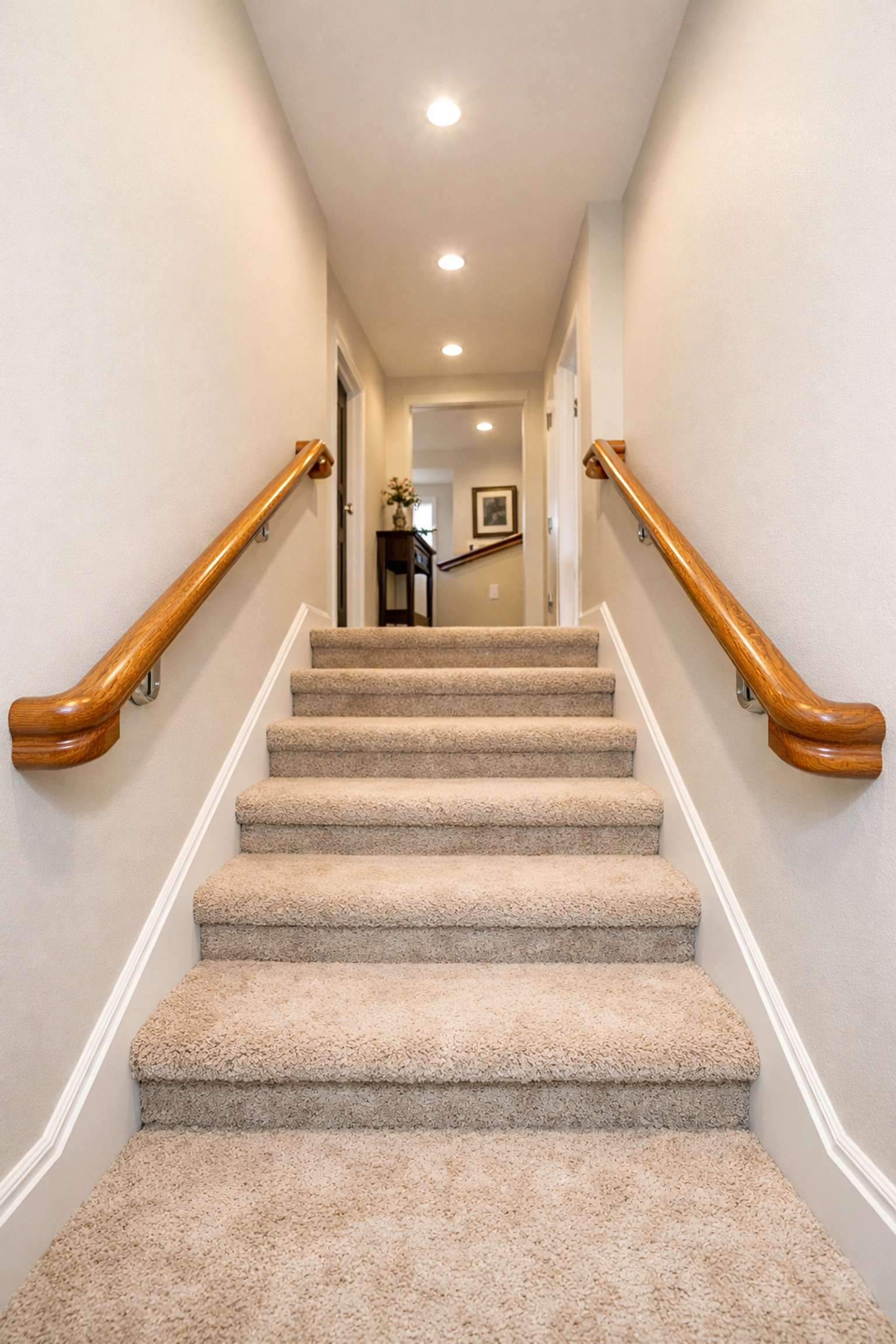
First, ensure you have handrails on both sides of the staircase. This allows you to use your strongest side for support whether you are going up or down.
Second, check the height. Handrails should be mounted between 34 and 38 inches above the "nosing" (the front edge) of the stair treads. They should also be "continuous," meaning your hand shouldn't have to leave the rail from the bottom to the very top.
Finally, check the "return." A safe handrail should turn back into the wall at the ends. This prevents the rail from catching on loose clothing (like a bathrobe sleeve), which is a surprisingly common cause of stair falls.
4. Poor Lighting and Deep Shadows
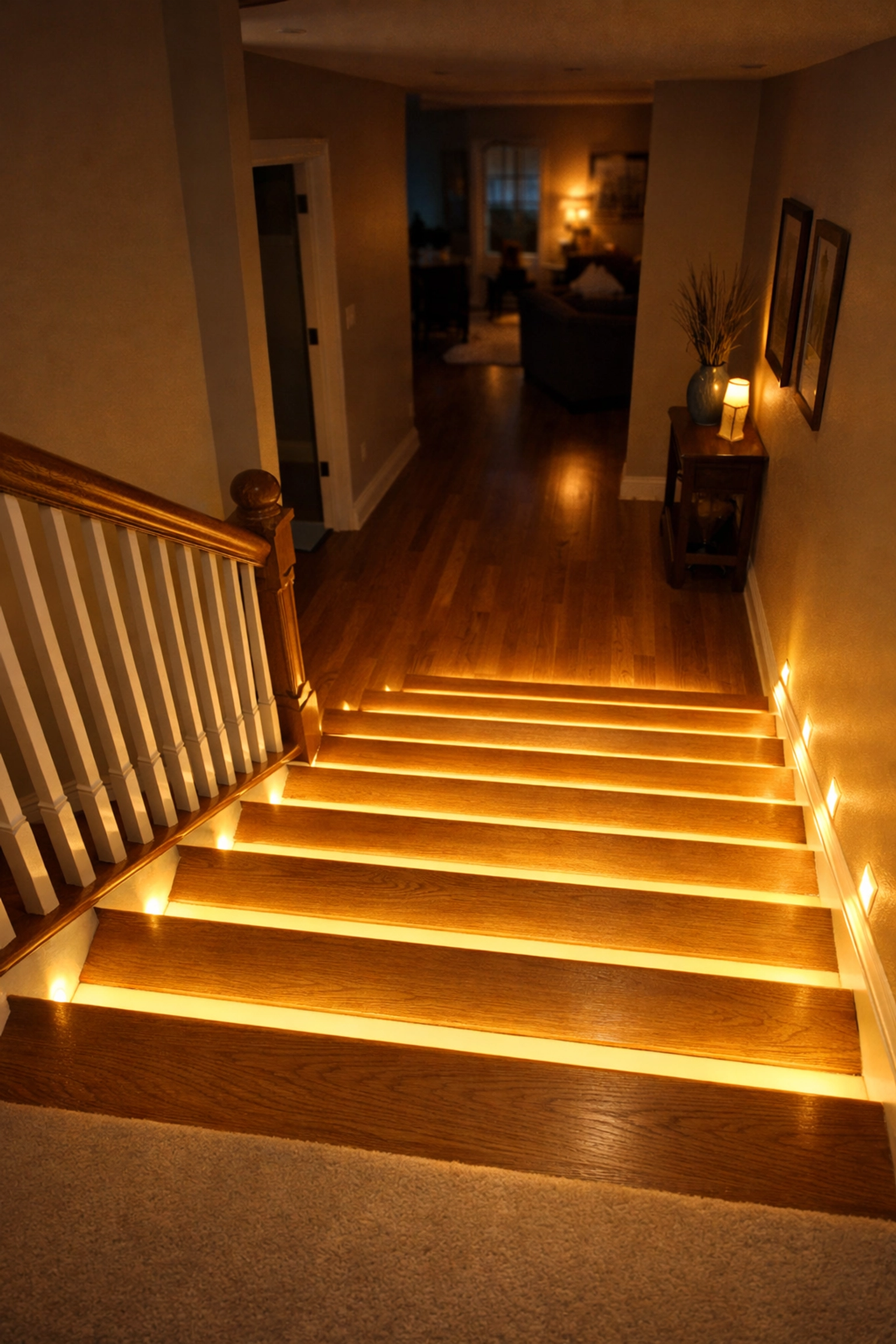
Vision plays a massive role in balance. As we age, we often need more light to see clearly, and our eyes take longer to adjust to changes in brightness. Many staircases are lit by a single overhead bulb at the top or bottom, which creates long, deceptive shadows on the steps. If you can’t tell where the floor ends and the first step begins, you are at risk.
How to Fix It:
Lighting should be even and bright, but without glare.
- Motion-Sensing Lights: Install battery-operated, motion-sensing LED lights along the baseboards. These light up the path as you approach, ensuring you never have to navigate stairs in the dark to reach a light switch.
- Contrasting Colors: If your stairs are all one color (like dark wood or beige carpet), it’s hard to see the edges. Applying a strip of contrasting tape or a different colored tread cover on the edge of each step can provide the visual cue your brain needs to navigate safely.
- Switch Placement: Ensure there are light switches at both the top and the bottom of the stairs.
5. Insufficient Headroom
This mistake is frequently seen in older homes or basement stairs. Low ceilings can cause a person to instinctively duck or lean forward while descending. This shift in posture moves your center of gravity and makes a slip much more likely. It also poses a direct injury risk if you were to bump your head, potentially causing a loss of consciousness or balance mid-stair.
How to Fix It:
Standard building codes require at least 6 feet 8 inches of "headroom clearance" measured vertically from the edge of the stair tread to the ceiling.
If your home has low clearance that cannot be structurally altered, use visual warnings. Painting the low-hanging beam a bright, contrasting color or adding a padded "soft edge" can prevent head injuries. However, the best "fix" for low headroom is often habit-based: always use the handrail to maintain a stable, upright posture, even if you feel the need to lean.
6. Slippery or Worn Tread Surfaces
Polished hardwood stairs are beautiful, but they can be as slippery as ice, especially if you are wearing socks or smooth-soled slippers. Conversely, old carpeting can become loose or "bunched," creating a hidden trip hazard. Over time, the "nosing" or front edge of wooden steps can also become rounded and smooth, offering very little traction for your foot.
How to Fix It:
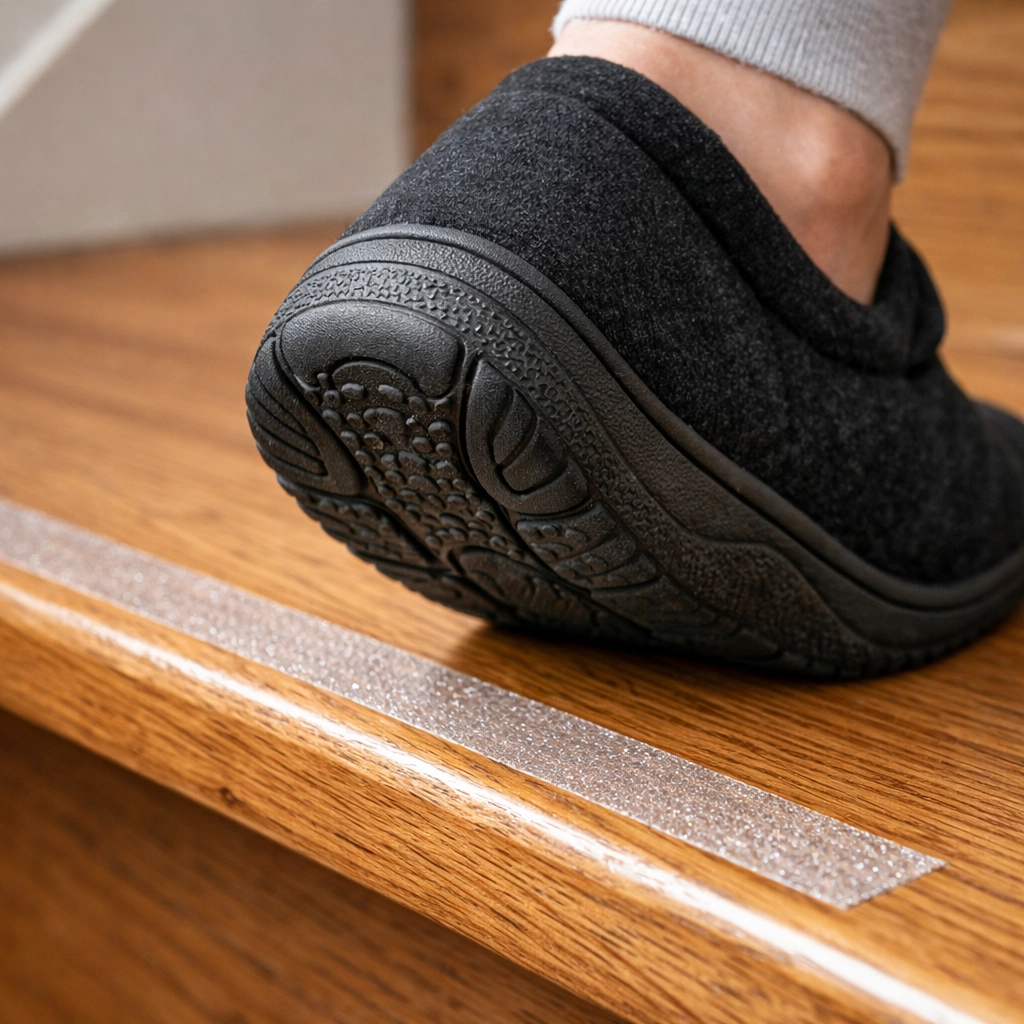
- For Wood/Tile: Apply transparent anti-slip adhesive strips. They provide a "sandpaper" grit that grips the bottom of shoes or feet without hiding the beauty of the wood.
- For Carpet: Ensure the carpet is tightly tacked down. If it is "waterfalling" over the edge of the steps (meaning it’s loose), have a professional re-stretch and secure it.
- Footwear Habits: Encourage a "no socks on stairs" rule. Bare feet or shoes with rubber soles provide the best traction. If you prefer indoor footwear, choose a sturdy slipper with a non-skid sole and a back (no "flip-flop" style slippers).
7. Ignoring Building Codes and Structural Maintenance
We often think of building codes as "red tape," but they are actually developed based on decades of safety data. A common mistake is allowing "small" structural issues to persist. A wobbly baluster (the vertical rods under the handrail), a loose newel post (the big post at the end of the rail), or a creaking tread are all warning signs that the staircase is losing its structural integrity.
How to Fix It:
Perform a monthly "Staircase Audit."
- The Shake Test: Grab the handrail and give it a firm shake. It should feel like it's part of the house. If it moves at all, the brackets need to be tightened or replaced.
- The Gap Test: If you have small children or pets, check the spacing between balusters. Codes generally state that a 4-inch sphere should not be able to pass through the gaps. This prevents heads or limbs from getting stuck.
- Clear the Clutter: This isn't structural, but it's the most important "code" to live by. Never leave items on the stairs "to take up later." This is a leading cause of trips.
The Psychology of Stair Safety
Beyond the physical fixes, we have to address how we use stairs. Many falls happen because we are in a hurry, carrying something that obscures our view, or simply distracted.
The Three Points of Contact Rule
When climbing or descending, try to maintain "three points of contact" at all times: this might mean two feet and one hand on the rail, or two hands and one foot as you move.
The Last Step Trap
Data shows that a significant number of stair falls occur on the very last step. We often "relax" our focus as we reach the bottom, assuming we are on flat ground when there is still one more drop. By using contrasting tape on the final step or ensuring the handrail extends past the last riser, you can help your body recognize exactly when the floor has been reached.
Summary: A Proactive Approach
Home stair safety isn't about one big change; it's about a series of small, intentional adjustments. By checking your dimensions, securing your rails, and brightening up the space, you significantly lower the risk of an accident.
If you or a loved one are finding the stairs increasingly difficult, don't wait for a fall to take action. Start with the lighting and the handrails today: they are the simplest fixes with the highest impact. Your home should be a place where you feel confident and secure, and a safe staircase is a foundational part of that peace of mind.

