
Stairs are one of those things we use every single day without a second thought. For most of our lives, navigating a flight of steps is a matter of muscle memory. We talk on the phone, carry laundry, or balance a cup of coffee while moving from one floor to another. However, as we age or our mobility needs change, those same stairs can start to feel like a mountain.
The truth is, staircases are statistically one of the most hazardous areas in any home. But here’s the good news: many of the risks associated with stairs aren't built into the house itself: they come from small, often overlooked mistakes in how we maintain and use them.
I’m Brian Kerr, and at Fall Guys Products, we spend a lot of time thinking about how to make the home a safer, more reassuring place. Today, I want to walk you through seven common mistakes people make with their stairs and, more importantly, how you can fix them to stay safe and confident in your own home.
1. Ignoring Inconsistent Step Heights and Depths
Our brains are remarkably good at mapping out patterns. When you start climbing a flight of stairs, your brain measures the height of the first two steps and then assumes every other step will be exactly the same. This is called "proprioception": your body’s ability to sense its position in space.
The mistake happens when a staircase has "non-uniform" risers (the vertical part) or treads (the horizontal part). Even a difference of a quarter-inch between steps can be enough to catch a toe or cause a heel to slip. This often happens in older homes where the house has settled, or during DIY renovations where the bottom or top step wasn't measured quite right to meet the floor.
How to Fix It
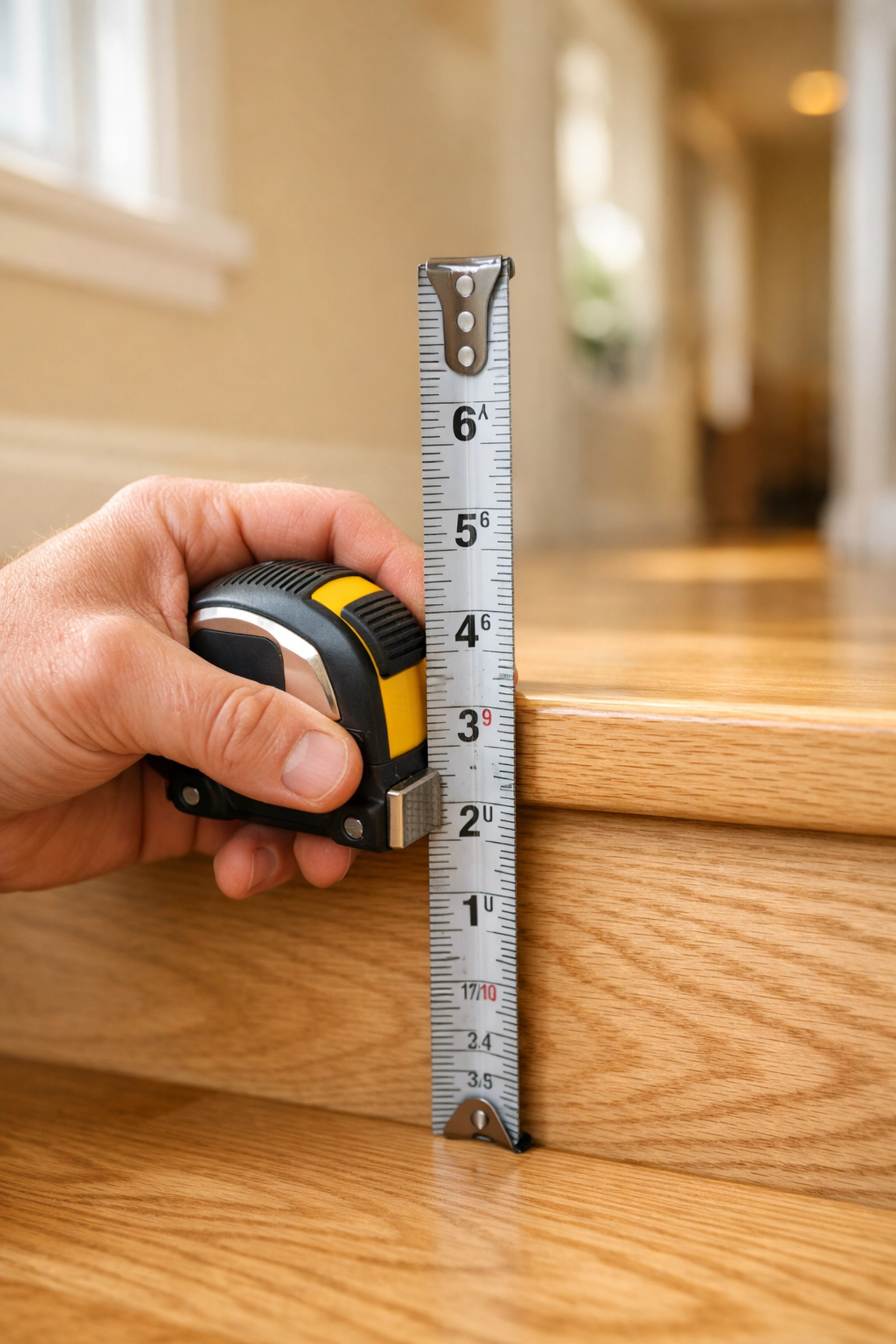
Start by measuring your stairs. Use a tape measure to check the height of every riser and the depth of every tread. If you find a variance of more than 3/8 of an inch between any two steps, you have a potential trip hazard.
While a full staircase rebuild is expensive, you can mitigate this risk by making the inconsistencies visible. Use high-contrast anti-slip tape on the edge of each step. This alerts your brain that it needs to pay closer attention to where it’s placing its feet, rather than relying solely on muscle memory.
2. Relying on "Mood Lighting"
We all love a cozy, dimly lit home, but the staircase is the last place you want "atmosphere." One of the biggest mistakes people make is having inadequate lighting or lighting that creates deep shadows.
When you can’t see the edge of the step clearly (the "nosing"), your depth perception is compromised. This is especially true for those who wear bifocals or progressive lenses, which can distort your vision when looking down. Shadows can also play tricks on the eyes, making a flat landing look like another step, or vice versa.
How to Fix It
The goal is "even, glare-free illumination."
- Increase the Wattage: Ensure your bulbs are bright enough to illuminate the entire flight.
- Dual Switches: Make sure there is a light switch at both the top and the bottom of the stairs. If there isn't, you can install battery-operated, motion-sensing LED lights along the baseboards.
- Reduce Glare: Use frosted bulbs or shades that diffuse light. You want to see the steps, not be blinded by a bare bulb.
- Nightlights: Plug-in motion-sensor lights are a game-changer for those middle-of-the-night trips to the kitchen or bathroom.
3. Treating Handrails as Decorations
In many homes, handrails are treated more like architectural accents than safety devices. A common mistake is having a handrail that is "un-graspable." If a rail is too wide, too ornate, or tucked too close to the wall, you can’t get a firm "power grip" around it.
Another mistake is only having a handrail on one side. While building codes often only require one, having support on both sides provides significantly more stability, especially for those who may have weakness on one side of their body due to an injury or a condition like a stroke.
How to Fix It
Your handrail should be "round and sound."
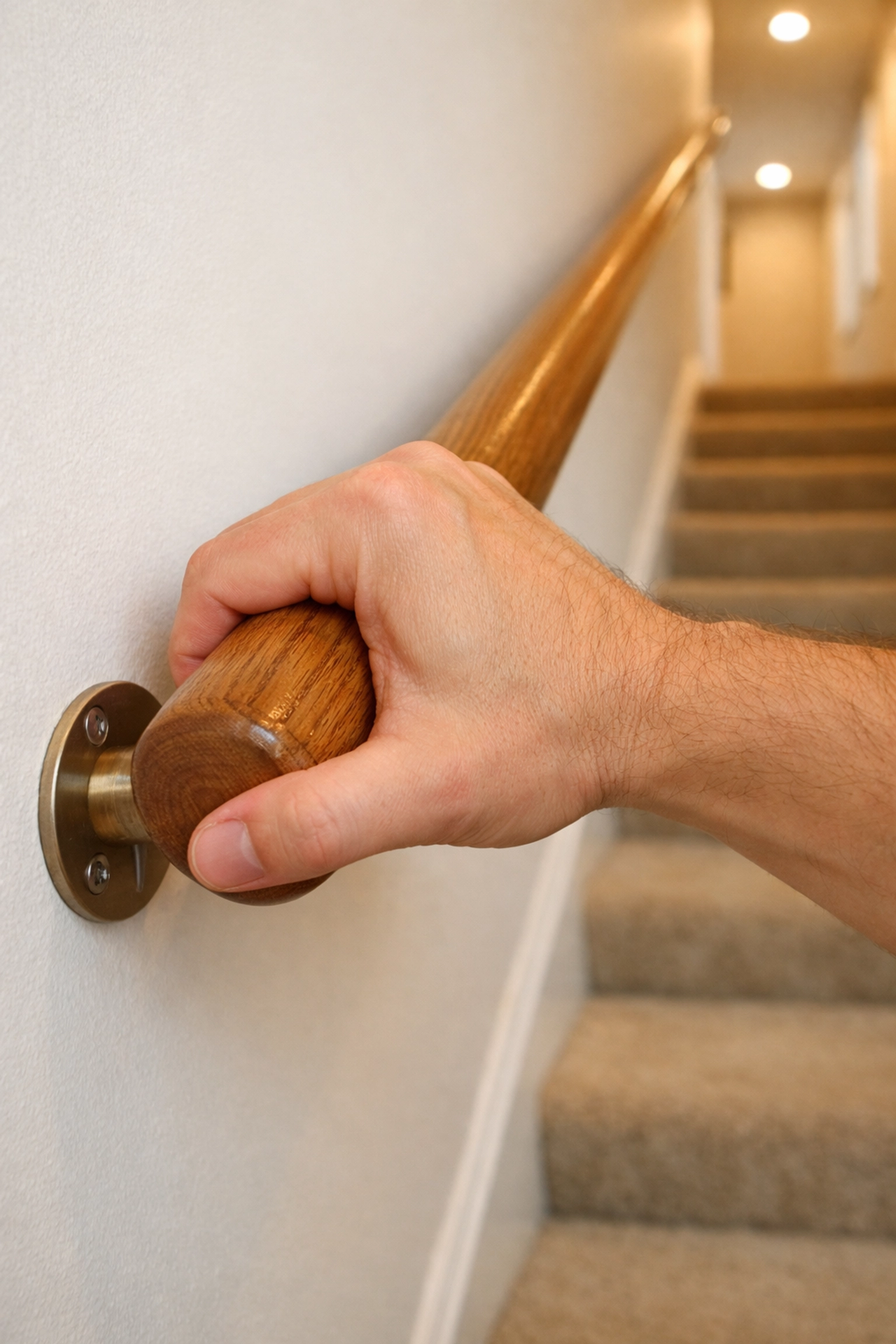
- The Grip Test: You should be able to wrap your fingers and thumb completely around the rail. If it’s a wide decorative board, consider replacing it with a standard 1.5-inch to 2-inch circular railing.
- Check the Sturdiness: Give your railing a good shake. If it wiggles, the brackets need to be tightened or moved into a wall stud. A railing that gives way when you lean on it is worse than having no railing at all.
- Add a Second Rail: If your staircase only has one, consider installing a second one on the opposite wall. This allows you to use both hands for stability, which is much safer.
4. Overlooking Slippery Surfaces
Aesthetic choices often clash with safety. Polished hardwood stairs look beautiful, but they can be as slippery as an ice rink, especially if you’re wearing socks or smooth-soled slippers. Even carpet can be a problem if it’s a high-pile shag that hides the edge of the step or if it has become worn and slick over time.
How to Fix It
You don’t have to rip out your beautiful wood stairs to make them safe.
- Anti-Slip Treads: You can buy clear, adhesive anti-slip strips that provide grip without hiding the wood grain.
- Carpet Runners: If you prefer carpet, ensure it is a low-pile, "tight" weave. Use a "waterfall" installation method where the carpet is tightly tacked to the riser and tread, ensuring there are no loose pockets of fabric.
- No Socks Policy: Encourage everyone in the house to wear shoes with rubber soles or "grippy" socks. Walking on wood stairs in standard polyester socks is one of the most common ways people slip.
5. Falling for the "Bottom Step Illusion"
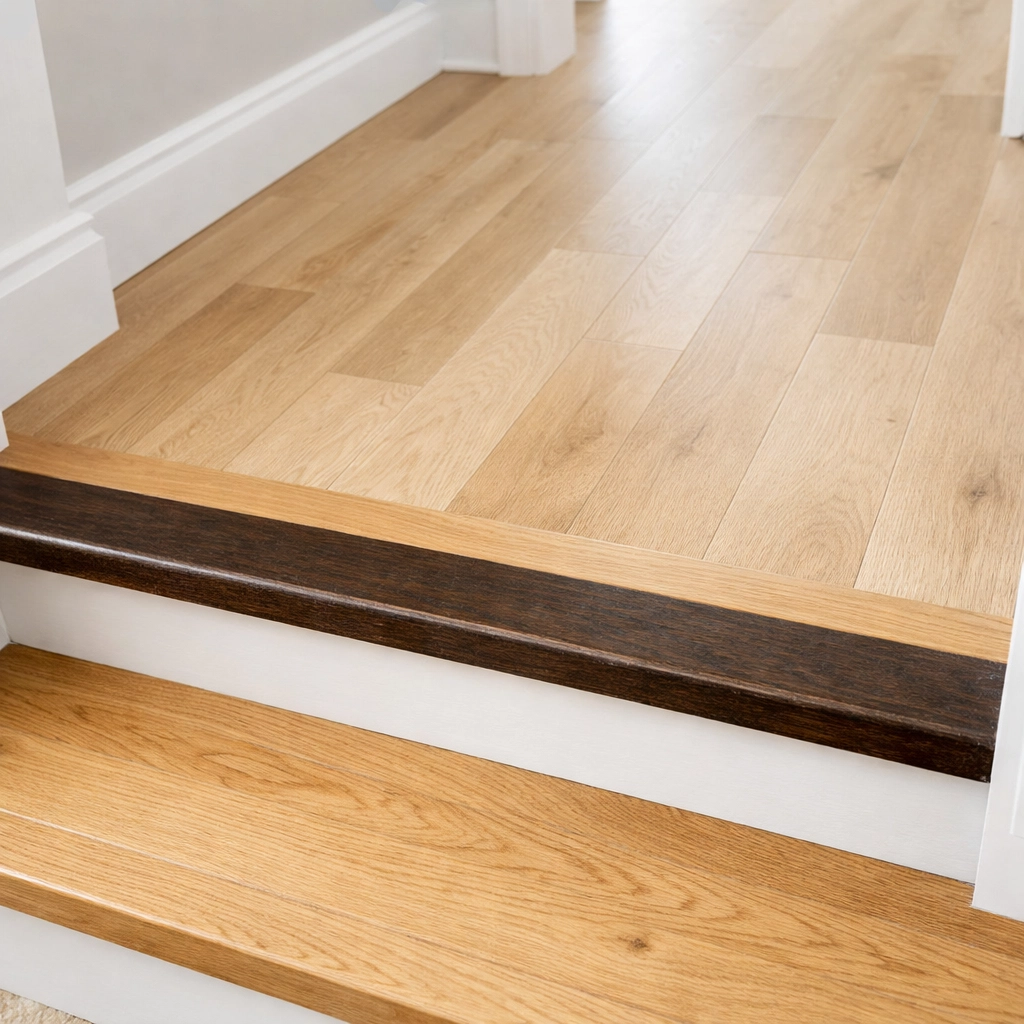
The bottom of the stairs is actually where the majority of accidents happen. Why? Because of the "bottom step illusion." This happens when the flooring on the bottom step looks exactly like the flooring on the landing. As you descend, your eyes merge the two surfaces together, and you think you’ve reached the floor when you actually have one more step to go.
This leads to the "overstep," where you drop down further than expected, jarring your spine or causing a fall.
How to Fix It
Visual contrast is your best friend here.
- Highlight the Edge: Place a strip of contrasting color (like a dark wood stain on light wood, or a bright piece of tape) on the very edge of the last step.
- Change the Texture: Sometimes, placing a thin, non-slip mat on the landing right at the base of the stairs provides a tactile cue to your feet that you have officially reached level ground.
6. Using Stairs as a Temporary Storage Unit
We’ve all done it. You have a pile of mail, a pair of shoes, or a book that needs to go upstairs, so you set it on the bottom two steps to take up "next time you go."
This is a recipe for disaster. Stairs are narrow transit zones. Even a small object like a stray shoe or a magazine can cause a trip or a slip. Furthermore, when we carry things up or down the stairs, our vision of our feet is often blocked. If you’re carrying a laundry basket, you might not see that book you left on the third step until it’s too late.
How to Fix It
The rule is simple: Nothing ever stays on the stairs.
- The "Stair Basket" Hack: If you tend to accumulate items that need to go up or down, place a dedicated basket at the top and bottom of the stairs: away from the walking path. Place items in the basket, and only carry the basket when your hands are free and you are focused on the climb.
- Clear the Path: Make it a nightly habit to ensure the staircase is 100% clear of clutter.
7. Neglecting Routine Maintenance
Staircases take a lot of abuse. Every time you walk up or down, you are putting hundreds of pounds of pressure on the structure. Over time, wood can warp, nails can pop, and carpet can become loose.
A "squeak" in a stair isn't just an annoyance; it’s a sign that the tread is moving. If a tread moves, your balance is compromised. Similarly, if you have outdoor stairs, the elements can cause concrete to crack or wood to rot, creating an uneven and unstable surface.
How to Fix It
Conduct a "Stair Audit" every six months.
- Check for Movement: Walk slowly up and down, feeling for any "give" in the steps. Secure loose treads with wood screws (nails tend to pull back out over time).
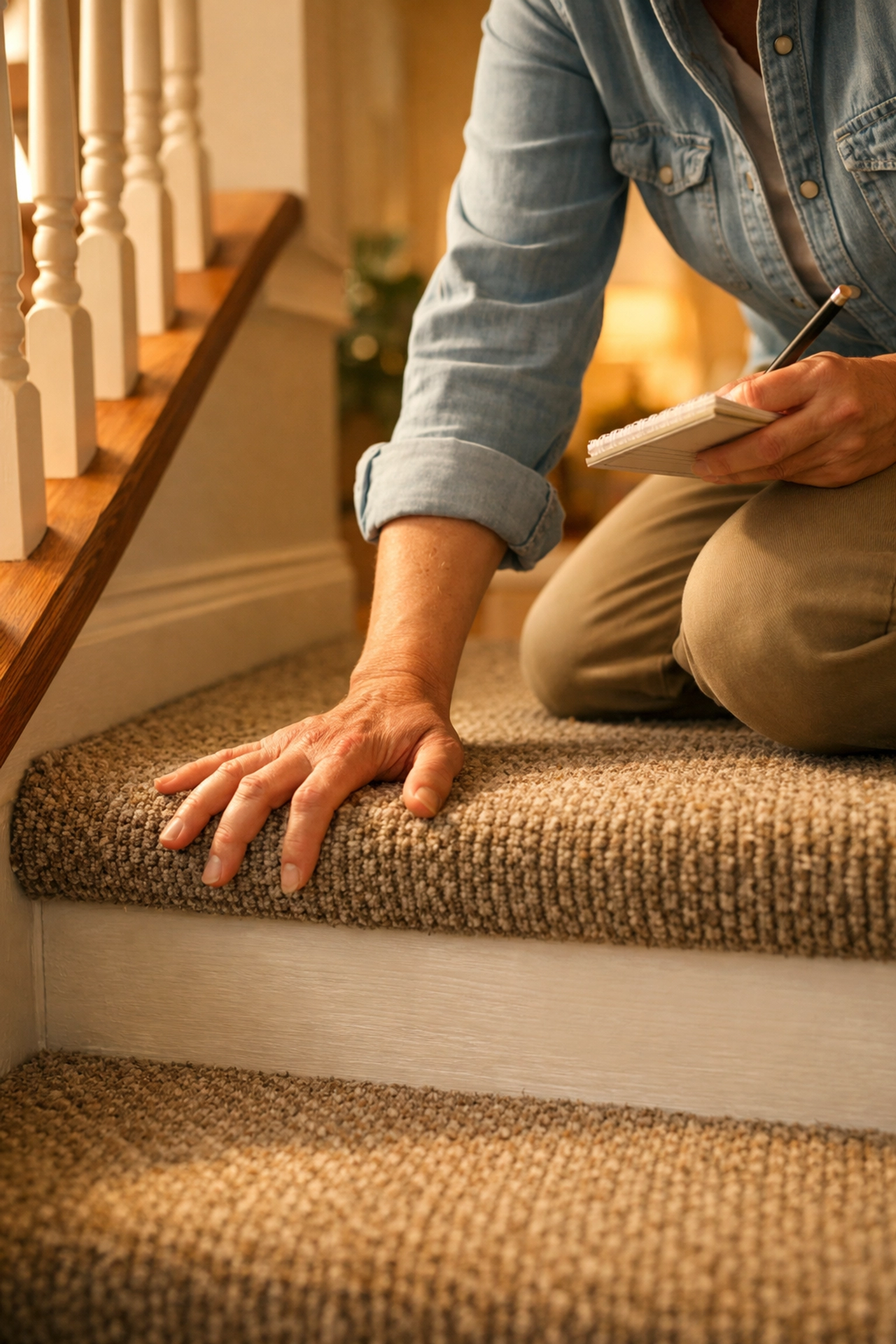
- Inspect the Carpet: Look for "bubbles" or loose edges in the carpet. If you find any, use a staple gun or carpet tacks to pull it tight.
- Outdoor Care: For exterior steps, ensure they are clear of moss or algae, which become incredibly slippery when wet. Use a pressure washer or a specialized cleaner to keep the surface textured.
A Note on Personal Habits
Fixing the physical environment is half the battle, but our behavior matters too. One of the biggest "mistakes" isn't about the stairs at all: it's about rushing.
We live in a fast-paced world, and we often try to multitask. When you're on the stairs, that should be your only task. Hold the handrail, even if you feel like you don't need to. It’s like a seatbelt; you don't use it because you expect to crash, you use it just in case.
If you find yourself getting short of breath or feeling dizzy on the stairs, don't ignore it. This might be a sign that you need to consult with a physical therapist. They can help you with exercises to strengthen your "stair-climbing muscles": specifically your quads, glutes, and calves: and work on your balance.
Making your home safe is a journey, not a destination. By fixing these seven common mistakes, you’re not just preventing a fall; you’re ensuring that you can continue to enjoy every level of your home with confidence and peace of mind. Stay safe out there!

