
Stairs are often the most daunting part of a home for anyone concerned about mobility. We tend to view them as a "one-and-done" safety project: you install a handrail, you turn on a light, and you assume the job is finished. However, stair safety is a dynamic challenge that requires more than just the basics.
Many families find that even after making "safety upgrades," a slip or a near-miss still occurs. This usually happens because the strategy addresses the obvious symptoms but ignores the subtle environmental and behavioral factors that contribute to falls. At Fall Guys Products, we believe that understanding the "why" behind stair hazards is the first step toward creating a truly secure home environment.
Here are ten common reasons why your current stair safety strategy might be falling short, along with practical, educational steps to fix them.
1. The "Good Enough" Lighting Trap
Most stairwells have a single overhead light. While this might seem sufficient, it often creates a "good enough" scenario that is actually quite dangerous. As we age, our eyes require significantly more light to distinguish depth and texture. A single bulb can create harsh shadows, making it difficult to tell where one step ends and the next begins.
The Fix:
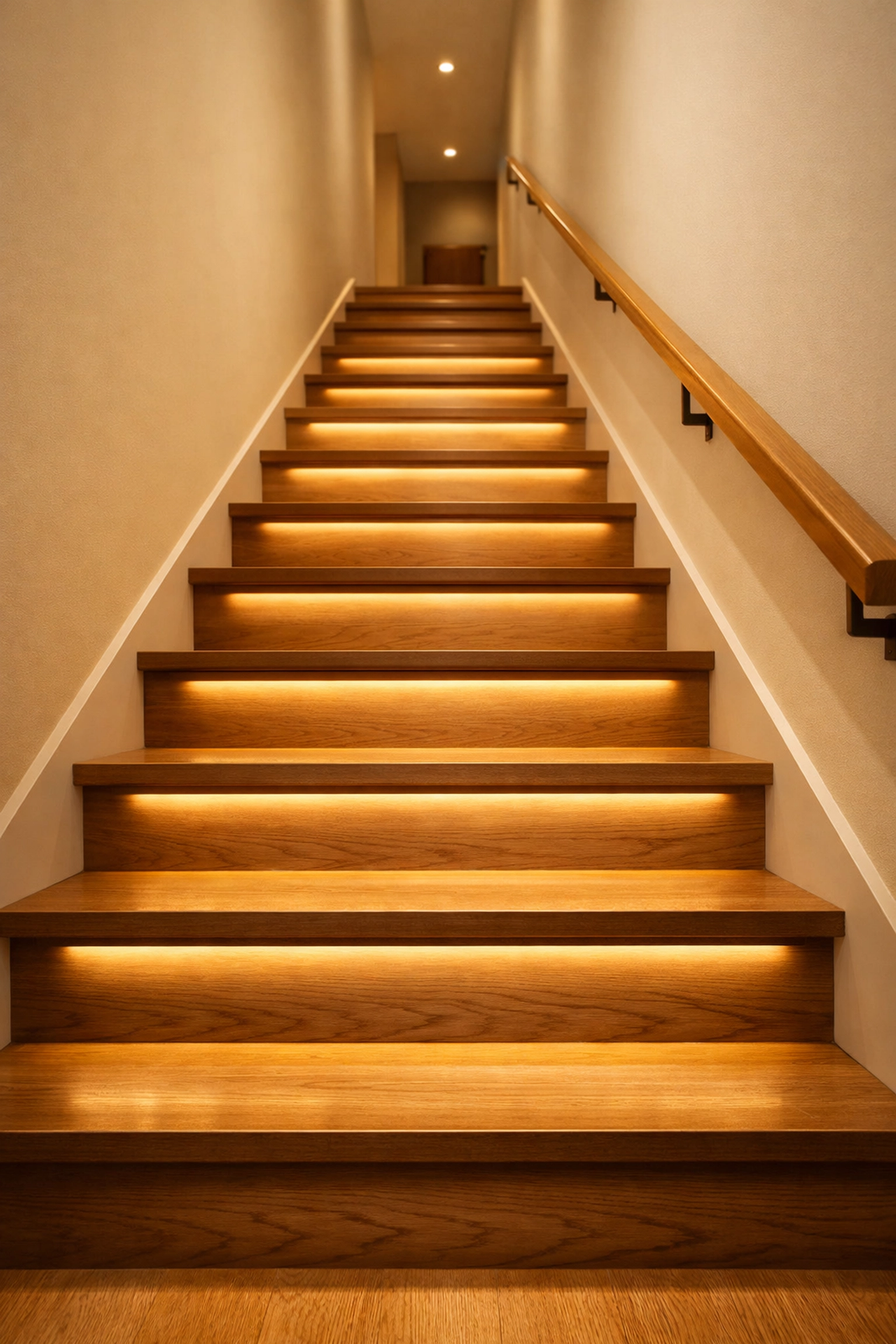
Lighting should be uniform from the top landing to the bottom. Consider installing motion-activated LED strips under the lip of each tread or along the baseboards. This ensures that the path is illuminated the moment someone approaches the stairs, without them having to fledge for a switch in the dark. Aim for "warm" light that reduces glare, as high-intensity "cool" blue light can sometimes be disorienting for sensitive eyes.
2. Ignoring "The Last Step" Phenomenon
A significant number of falls occur at the very top or very bottom of the staircase. This is often because the transition from a horizontal floor to a vertical incline (or vice-versa) isn't visually distinct. If the carpet on your hallway matches the carpet on your stairs, the brain can struggle to register that the elevation is about to change, leading to a "phantom step" or an over-extension of the leg.
The Fix:
Create visual contrast. You can use high-contrast tape or a different colored tread on the first and last steps. This serves as a visual "cue" to the brain that the terrain is changing. If you have wooden stairs, a simple strip of non-slip paint in a contrasting color on the edge (nosing) of each step can make a world of difference in depth perception.
3. The One-Handrail Limitation
If your staircase only has a handrail on one side, your safety strategy is only 50% effective. Relying on a single rail requires the user to have consistent strength and coordination on one specific side of their body. If that side becomes weak, or if they are carrying something, they lose their primary point of stability.
The Fix:
Install bilateral handrails, one on each side of the stairs. This allows the user to use both hands for stability, which significantly reduces the load on the lower joints and provides a backup if one arm loses its grip. Ensure the rails extend about 12 inches beyond the top and bottom steps so that the user has support before they even begin their ascent or descent.
4. Overlooking Micro-Maintenance
A staircase is a structural element that shifts over time. A slightly loose floorboard, a tiny tear in a carpet runner, or a handrail that "wiggles" just a fraction of an inch might seem minor, but these are the primary culprits in tripping accidents. We often become "blind" to the small defects in our own homes because we navigate them every day.
The Fix:
Perform a "barefoot and quiet" inspection once a month. Walk the stairs slowly and listen for squeaks or shifts. Feel for any carpet that has become bunched or loose. If you have a wooden staircase, check for protruding nail heads or splinters. Any movement in a handrail should be addressed immediately with sturdier mounting brackets or by anchoring them directly into the wall studs.
5. The "I’ll Take It Up Later" Habit
We’ve all done it: we place a book, a pair of shoes, or a basket of laundry on the bottom step, intending to carry it up on the next trip. This turns the staircase into a storage unit. Even if you think you’ll remember the item is there, distraction is a powerful factor. A ringing phone or a knock at the door can cause someone to rush, forgetting the obstacle in their path.
The Fix:
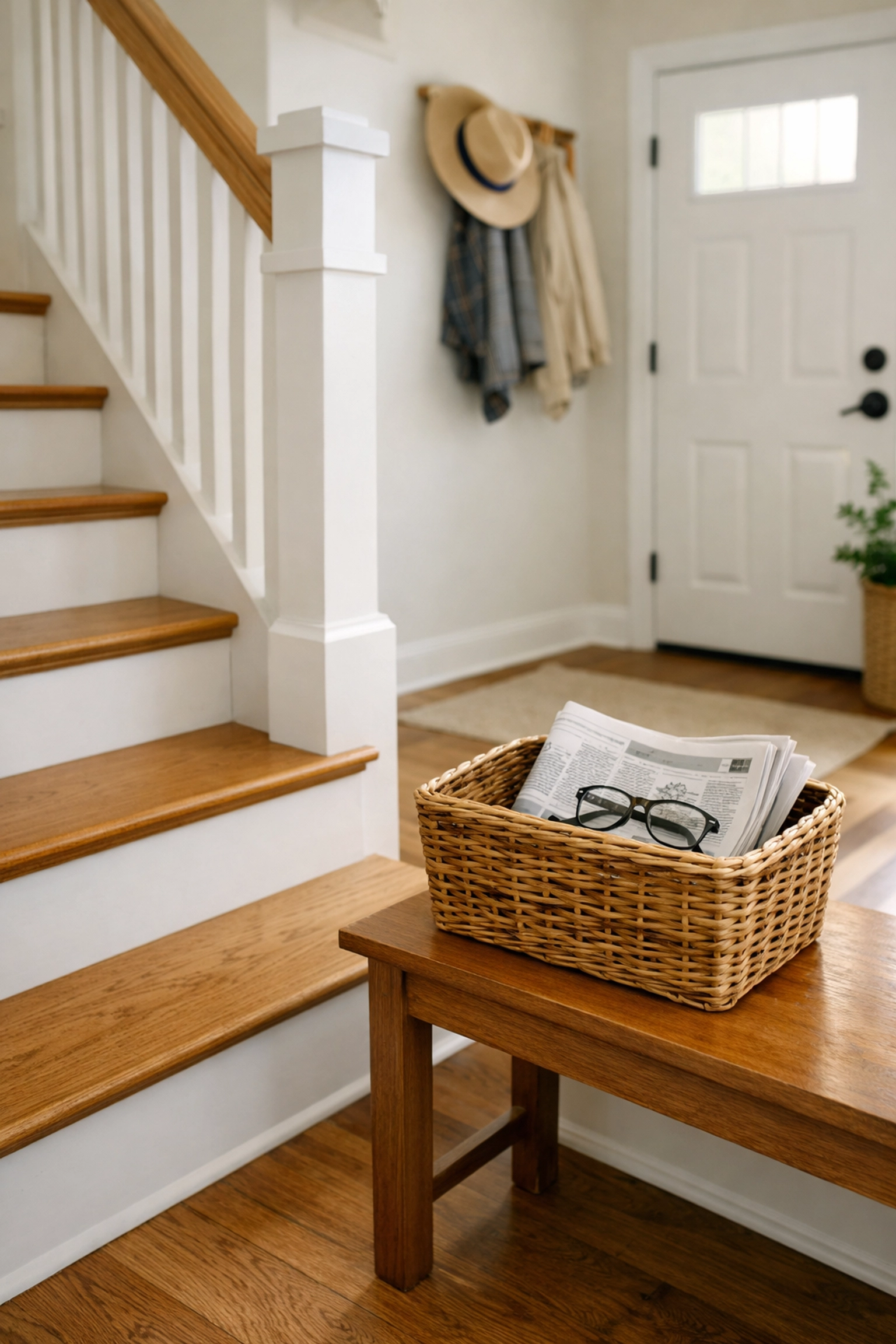
Establish a strict "No Items on the Stairs" rule. If items need to go up or down, place them in a dedicated "stair basket" that sits at least three feet away from the landing. Better yet, use a small table near the stairs to hold items. This keeps the walking path 100% clear at all times.
6. Improper Footwear Choices
You can have the safest stairs in the world, but if you are wearing loose-fitting slippers or "socks only" on polished wood, the risk remains high. Many falls are attributed to a lack of friction between the foot and the stair surface. Socks, in particular, turn wooden or tiled stairs into a slide.
The Fix:
Encourage the use of "indoor shoes" with non-slip rubber soles and firm heel support. If slippers must be worn, they should be the "full-back" variety rather than "slides," which can easily slip off the foot during a climb. If the home is a "shoes-off" household, consider high-grip yoga socks or, better yet, installing a low-pile carpet runner on the stairs to provide natural traction.
7. The Depth Perception Challenge
Vision changes can make a flight of stairs look like a flat, blurred ramp. This is especially true for individuals who wear bifocals or trifocals. The bottom portion of the lens, intended for reading, can distort the view of the feet and the steps when looking downward, making the stairs appear closer or farther away than they actually are.
The Fix:
Consult with an eye doctor about "stair-specific" glasses. Some people benefit from having a pair of single-vision glasses specifically for moving around the house. Additionally, adding "nosing" strips that are a different color than the rest of the tread helps the brain identify the edge of each step, even if the vision is slightly blurred.
8. Rushing and Fatigue
Human behavior is the hardest variable to control. We often fall when we are tired, in a hurry, or distracted. Rushing to catch a phone call or trying to carry a heavy load that blocks the view of our feet are common scenarios that lead to accidents.
The Fix:
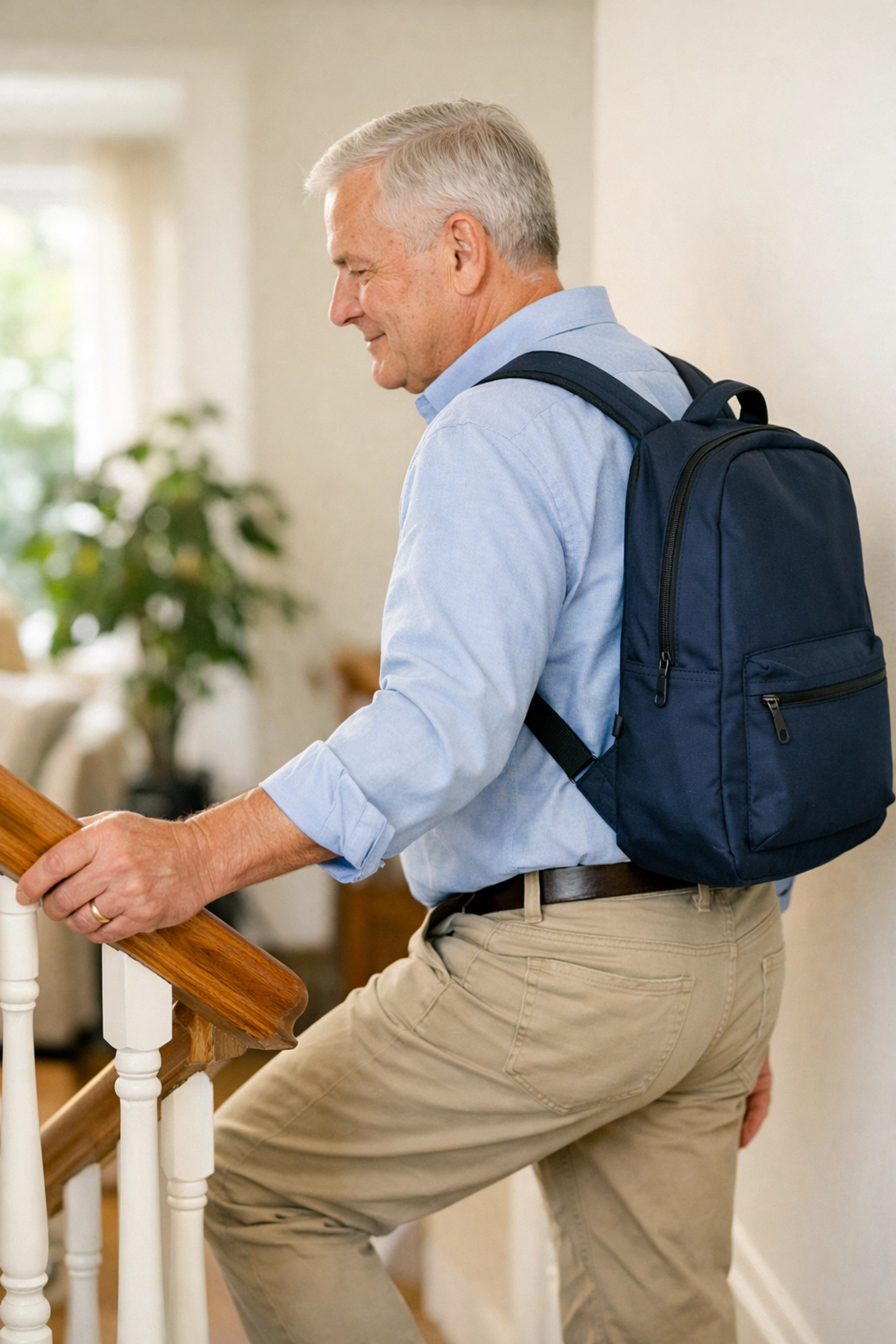
Practice the "Three-Point Contact" rule. At any given time, you should have either two feet and one hand, or two hands and one foot, in contact with the stairs and rails. Avoid carrying items with both hands. If you need to move items, use a backpack to keep your hands free, or ask for assistance. If you find yourself feeling winded, stop and rest at the landing; there is no prize for finishing the climb quickly.
9. Inconsistent Riser Heights
In older homes, stairs weren't always built to the rigorous codes we have today. Sometimes, one step is slightly taller or shorter than the others. The human brain quickly maps the "rhythm" of a staircase after the first two steps. If the third or fourth step is off by even half an inch, it breaks that rhythm, often causing a trip or a stumble.
The Fix:
If you suspect your stairs are uneven, use a tape measure to check the "riser" (the vertical part) of every single step. If there is a significant discrepancy, it may be worth consulting a carpenter to shim or level the treads. In the meantime, placing a highly visible warning strip on the "odd" step can help alert the user to the change in rhythm.
10. The "Set It and Forget It" Mentality
The most dangerous safety strategy is the one that never evolves. A person’s physical needs change over time. A staircase that felt safe five years ago might be a struggle today due to changes in balance, strength, or vision. If your safety measures haven't been updated to match your current physical reality, they aren't actually protecting you.
The Fix:
Conduct a "Mobility Audit" every six months. Ask yourself: Is it getting harder to reach the top? Am I pulling myself up with the rail rather than just using it for balance? Do I feel dizzy at the top? If the answer is yes, it might be time to consider more robust interventions, such as a stairlift or reorganizing the home to allow for "single-floor living."
Moving Forward with Confidence
Stair safety isn't about fear; it’s about empowerment. By addressing these ten often-overlooked areas, you aren't just preventing a fall: you are preserving the ability to move freely and confidently throughout your entire home.
Small, incremental changes often yield the biggest results. Start with the lighting, clear the clutter, and check your handrails today. These simple acts of maintenance and mindfulness form the foundation of a home that supports you at every stage of life. Stay safe, stay observant, and remember that a well-maintained home is your best partner in health.

