
When you first bring home a walker, it feels like a newfound sense of freedom. It’s a tool designed to keep you steady, give you confidence, and help you stay active. However, many of us: even those who have used walkers for years: unintentionally fall into habits that actually decrease our safety rather than improve it.
Think of a walker like a bicycle or a car; it requires a bit of technique and regular maintenance to work its best. Using it incorrectly can lead to muscle strain, fatigue, or worse, a fall. At Fall Guys Products, we want to make sure you’re moving through the world with as much security as possible.
In this guide, we’re going to walk through the seven most common mistakes people make with their walkers and, more importantly, exactly how to fix them.
1. The "Hula Hoop" Mistake: Walking Inside the Walker
One of the most frequent errors is stepping directly inside the frame of the walker so that it surrounds you like a hula hoop. While it might feel like you’re being "cradled" by the device, this position actually shifts your center of gravity in a dangerous way.
When you walk too far inside the device, you’re more likely to lean backward. If the walker were to slip forward, you’d have nothing to catch your weight, and you could fall toward your heels.
How to Fix It:
You want to stay "behind" the walker, not inside it. Imagine you are pushing a shopping cart at the grocery store. You don’t walk between the wheels of the cart; you walk behind it.
Position the walker a comfortable step ahead of you. As you move, step forward into the space between the back two legs of the walker. Your toes should generally stay in line with the rear legs rather than reaching the front bar. This keeps your weight centered and allows the walker to support you if you stumble.
2. The Pivot Trap: Turning Incorrectly
Turning is where a significant number of falls occur. The "Pivot Trap" happens when a person keeps their feet stationary while trying to turn the walker around a corner, or when they push the walker out to the side and then try to "catch up" to it with their body.
When your feet are outside the alignment of the walker during a turn, you become unbalanced. Your legs can get tangled in the walker’s legs, or you may find yourself overextending your reach.
How to Fix It:
The rule of thumb for turning is: The walker moves first, then you follow.
If you need to turn right, move the walker slightly to the right while keeping it in front of you. Then, take small, deliberate steps to follow the walker. Always keep your body centered between the handles. Never try to make a sharp, 90-degree pivot in one motion. It’s better to take five small steps to complete a turn than one large, awkward one.

3. The "Goldilocks" Height: Handles That Aren't Just Right
A walker that is set at the wrong height is more than just uncomfortable: it’s a safety hazard. If the handles are too high, your arms will be constantly flexed, causing shoulder and neck pain, and you won't be able to push down effectively for support. If the handles are too low, you’ll be forced to hunch over, which ruins your posture and makes you more likely to trip because you’re looking at the ground instead of what’s ahead.
How to Fix It:
Adjusting your walker to the proper height is a quick fix that makes a world of difference. Here is how to measure it correctly:
- Stand up as straight as you comfortably can.
- Let your arms hang naturally at your sides.
- The "crease" or "joint" of your wrist should line up with the top of the walker’s handle.
When you grip the handles, your elbows should have a slight bend: about 15 to 30 degrees. This allows you to use your arm muscles effectively to support your weight without straining your joints.

4. Forgetting the Anchor: Not Using the Brakes
If you use a rollator (a walker with four wheels and a seat), the brakes are your best friend. A common mistake is forgetting to engage those brakes when transitioning from sitting to standing or vice versa.
If you go to sit down on a chair and lean your weight on the walker handles for balance, but the brakes aren't locked, the walker can roll away from you. This often leads to a "near miss" or a fall because your support system literally moved out from under you.
How to Fix It:
Make "Brakes On" your default setting whenever you aren't actively walking.
- When standing up: Position the walker in front of you, lock the brakes, and then use the armrests of your chair to push yourself up. Only once you are steady should you unlock the brakes.
- When sitting down: Back up until you feel the chair against the back of your legs. Lock the brakes on the walker. Reach back for the armrests of the chair and lower yourself slowly.
5. The Long Reach: Keeping the Walker Too Far Away
We often see people "park" their walker across the room or a few feet away from their bed or sofa. Then, they try to stand up and walk those first few steps without support to reach the device. Or, while walking, they push the walker far out in front of them and then "chase" it.
Both of these scenarios are risky. The first few steps after standing are often the most unstable because of "orthostatic hypotension" (that dizzy feeling you get when standing up too fast).
How to Fix It:
Keep your walker within arm’s reach at all times. If you are sitting on the couch, the walker should be right in front of you or right beside you. When walking, keep the device close enough that you don't have to stretch your arms out. You should always feel that the walker is a stable extension of your own body, not a separate object you are trying to catch.

6. Using the Seat as a Scooter
The seat on a rollator is a fantastic feature for taking rest breaks during a long walk. However, it is not a wheelchair. A dangerous mistake is sitting on the seat and using your feet to scoot yourself across the floor.
Walkers are designed to be stable when weight is pushed down onto the handles or when you are sitting still. They are not designed to be stable while being propelled from a seated position. Scooting can cause the walker to tip backward or the wheels to catch on a rug, sending you to the floor.
How to Fix It:
The seat is for stationary resting only. If you need to move from one room to another, you must be standing and walking behind the device. If you find that you are too tired to walk and need to be moved while seated, you may need to speak with a professional about a transport chair or a wheelchair, which are designed for that specific purpose.
7. Ignoring Maintenance and Terrain
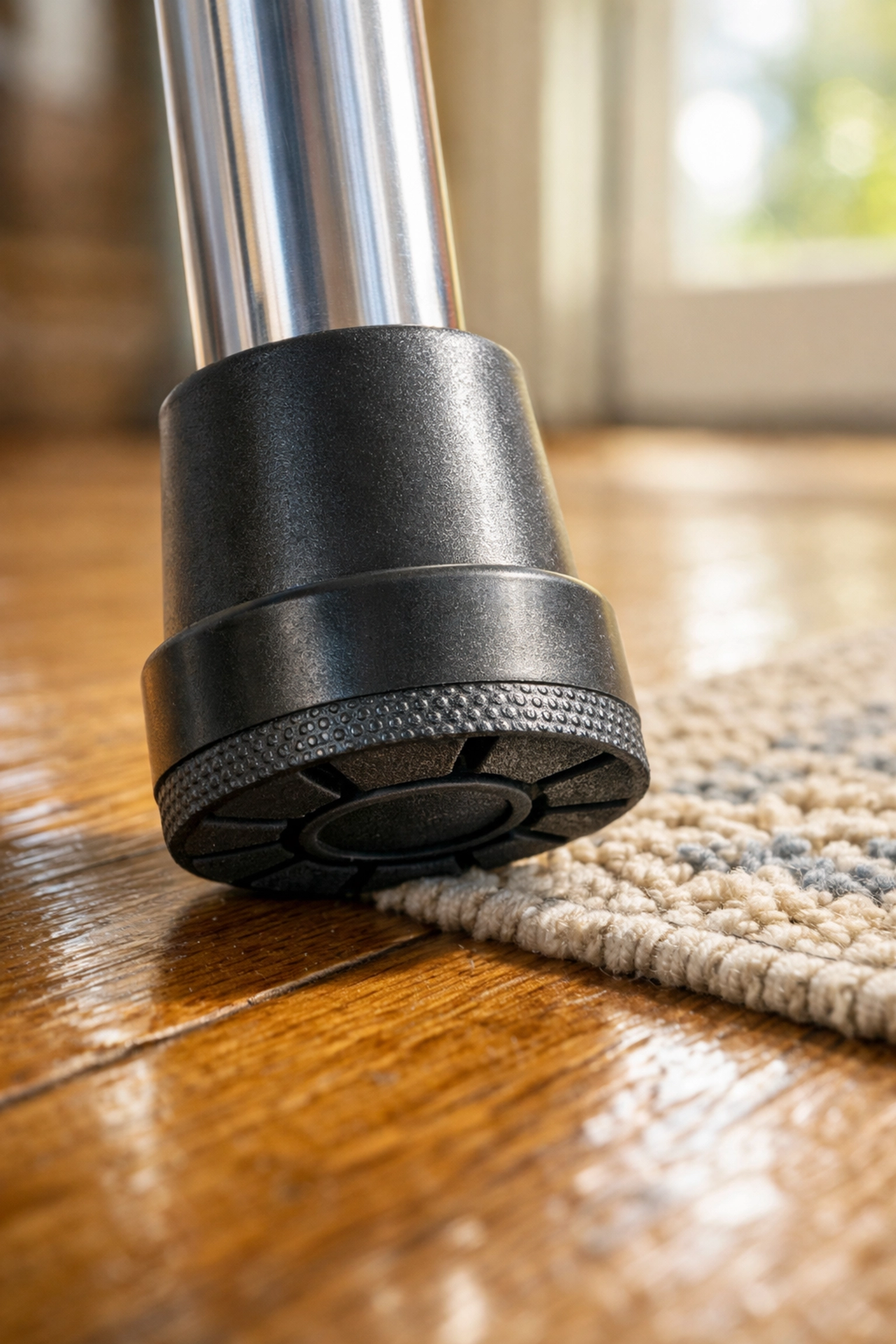
We tend to think of walkers as "set it and forget it" tools, but they experience wear and tear just like anything else. Using a walker with worn-out rubber tips, loose screws, or frayed brake cables is like driving a car with bald tires and no brakes.
Additionally, many people forget to adjust their technique when moving from a hardwood floor to a thick carpet or a grassy backyard.
How to Fix It:
Perform a "Safety Check" once a month:
- Check the tips: If your walker has rubber feet, make sure the tread isn't worn smooth. If they look thin, replace them immediately.
- Check the wheels: Ensure they aren't wobbly and that no hair or carpet fibers are tangled in the axles.
- Check the brakes: Squeeze them to ensure they grip the wheels tightly.
- Terrain Awareness: When moving onto a carpeted surface, you may need to lift the walker slightly higher (if it’s a standard walker) or push a bit more firmly (if it’s a rollator). Always look ahead for transitions like door thresholds or rugs that might catch the wheels.
A Note on Posture and Eyesight
Beyond these seven mechanical mistakes, there is a "hidden" mistake: looking at your feet. It’s a natural instinct to look down to see where you are stepping, but looking down actually shifts your balance forward and prevents you from seeing obstacles like pets, cords, or spills before it’s too late.
Try to keep your chin up and look about 10 to 15 feet in front of you. This helps maintain a neutral spine and gives your brain more time to process the environment around you.
Moving Forward with Confidence
Using a walker is a sign of wisdom: it means you value your independence and your safety enough to use the tools available to you. By avoiding these common pitfalls, you aren't just using a walker; you’re using it as a master.
Remember to check your height, stay "behind" the frame, lock those brakes, and treat the seat as a resting spot, not a vehicle. With these small adjustments, you’ll find that walking becomes less of a chore and more of a secure, comfortable way to stay engaged with the world around you.
Stay steady and keep moving!

