
If you or a loved one has recently started using a walker or a rollator, you probably felt a sense of relief. These tools are designed to provide independence, balance, and a steady hand when the world feels a little less stable than it used to. However, there is a common misconception that using a walker is entirely intuitive. Most people simply unfold it, grab the handles, and start moving.
In my time working with mobility aids, I’ve seen that many of the most common falls actually happen while a person is using their mobility device, not because the device failed, but because it wasn’t being used quite right. Using a walker incorrectly can lead to back pain, shoulder fatigue, and, most importantly, an increased risk of tripping.
Let’s take a deep breath and look at how we can turn that walker into the reliable safety tool it was meant to be. We are going to go over the most common mistakes and the simple fixes that can keep you moving confidently.
The Hidden Risks of an Improperly Adjusted Walker
One of the most frequent errors happens before you even take your first step. It’s all about the height. If your walker isn't adjusted to your specific body proportions, it can’t do its job properly.
When a walker is too low, you’ll find yourself hunching over. This shifts your center of gravity forward, away from your base of support. Not only does this put an incredible amount of strain on your lower back and neck, but it also makes you more likely to tip forward if the walker hits a small obstacle like a rug or a door threshold.
Conversely, if the walker is too high, your arms will be bent at an awkward angle. This forces your shoulders up toward your ears, leading to rapid fatigue. When your arms are too high, you also can't effectively push down into the grips to support your weight if your legs become weak or if you lose your balance.
Finding Your Perfect Height
To get the height just right, follow these simple steps. It’s usually best to have a friend or family member help you with this so you can stand naturally.
- Wear your regular shoes: Always adjust your walker while wearing the shoes you plan to wear most often.
- Stand tall: Stand inside the walker frame with your arms hanging naturally at your sides.
- Check the wrist crease: Look at where the handgrips are in relation to your arms. The top of the walker handles should align perfectly with the crease on the inside of your wrist.
- Check the elbow bend: When you place your hands on the grips, your elbows should have a slight, comfortable bend, about 15 degrees.

The "Walker Chase": Why Your Positioning Matters
The most common walking mistake is what physical therapists often call "chasing the walker." This happens when you push the walker far out in front of you and then "walk up to it" in a series of disjointed movements.
When the walker is far ahead of your body, it isn't supporting you. If you were to trip or feel faint while the walker is two feet in front of you, you would likely fall before your hands could even apply pressure to the frame. Furthermore, pushing the walker too far out forces you to lean forward, which again creates that dangerous forward-leaning posture.
Stepping Into the Frame
The goal is to stay inside the walker, not behind it. Your feet should ideally stay between the back legs of the walker.
As you move, push the walker forward just a small distance, about a comfortable step’s length. Then, step into the center of the frame. Your torso should stay relatively upright, with the support of the handles directly under your center of mass. This way, if you stumble, the walker is already in the perfect position to catch your weight.
The Rollator Factor: Managing the Wheels
Rollators (walkers with four wheels and a seat) are fantastic for people who have the balance to manage them but need a place to rest frequently. However, because they have wheels, they are inherently less stable than a standard "pick-up" walker with rubber tips or even a two-wheeled walker.
The biggest mistake with rollators is forgetting that they are essentially on "skates." If you lean too much weight on a rollator that isn't locked, it can roll right out from under you.
The Golden Rule: Lock Before You Rock
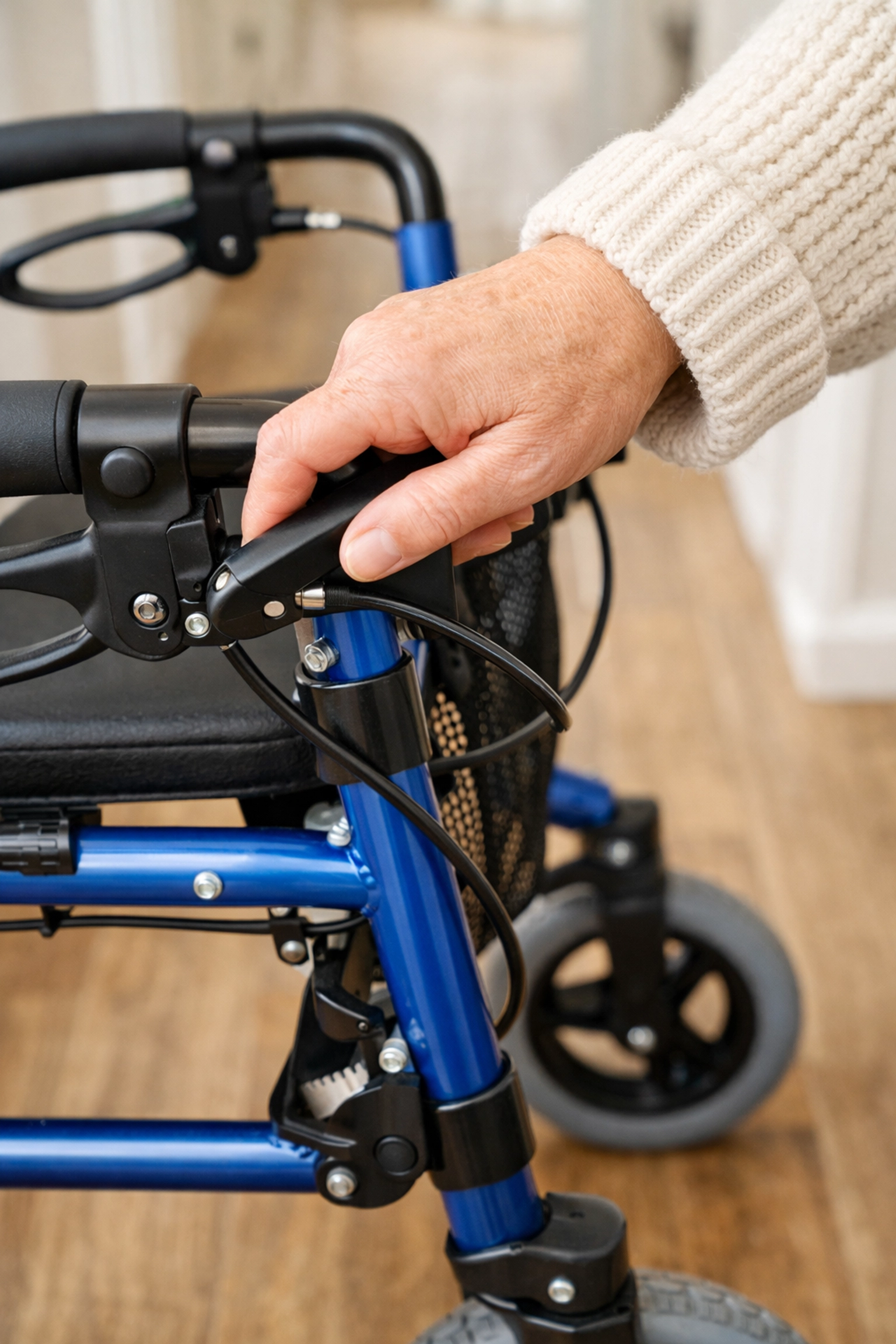
Whether you are preparing to sit down on the rollator’s built-in seat or you are using the rollator to help you stand up from a dining chair, you must engage the brakes. Most rollators have "push-down" brakes. You should hear a distinct click when they lock into place.
Before you shift your weight, give the rollator a little nudge to make sure it isn’t going anywhere. We call this "Lock before you Rock." This simple habit prevents the device from rolling forward or backward as you transition your weight, which is a prime time for falls to occur.
Getting In and Out of Your Chair Safely
This is where I see the most "near-misses." When someone is ready to stand up, their first instinct is often to reach out, grab the walker handles, and pull themselves up.
Please, don’t do this.
Walkers are lightweight by design. If you pull on the handles from a seated position, you are applying horizontal force to a device that is meant for vertical support. This can cause the walker to tip over toward you, potentially landing on top of you as you fall backward.
The Correct Way to Stand
- Scoot forward: Sit near the edge of the chair so your feet are firmly on the floor.
- Use the chair, not the walker: Place your hands on the armrests of the chair or the seat of the chair.
- Push up: Use your legs and your arms to push yourself straight up into a standing position.
- Reach for the walker: Once you are steady on your feet, reach forward and place your hands on the walker grips one at a time.
When sitting back down, the process is reversed. Back up until you feel the chair against the back of your legs. Reach back for the armrests of the chair before you start to sit. This ensures you aren't relying on the walker to balance you as you descend.
Common Environmental and Accessory Mistakes
Sometimes the mistake isn't how you hold the walker, but how you "dress" it or where you take it.
The Danger of the Overloaded Walker
It’s tempting to hang purses, grocery bags, or heavy coats over the front crossbar of a walker. However, this dramatically changes the balance of the device. A heavy bag hanging off the front can make the walker tip forward when you hit a bump. If you hang a heavy bag off one side, it can cause the walker to veer or tip sideways.
If you need to carry items, use a basket or a pouch specifically designed for your walker model. These accessories are usually mounted in the center and low down to keep the center of gravity stable.
Footwear: The Unsung Hero of Mobility
You can have the most expensive, perfectly adjusted walker in the world, but if you are wearing loose slippers or high-heeled shoes, you are still at risk.
When using a mobility aid, your feet are your foundation. You need shoes with non-slip soles that are securely attached to your feet (no flip-flops or backless slippers). This ensures that when you step into the walker frame, your feet stay exactly where you intend them to be.

Maintaining Your Mobility Aid
A walker is a piece of medical equipment, and like any equipment, it requires a bit of "TLC." Over time, the parts that contact the floor will wear down.
- Rubber Tips: Check the rubber caps on the bottom of standard walkers. If the tread is worn smooth or if you can see the metal of the walker leg poking through, they need to be replaced immediately. Worn tips are like bald tires; they won't grip the floor, especially on smooth tile or wood.
- Tennis Balls: Many people use tennis balls on the back legs of walkers to help them glide. While helpful, remember that tennis balls wear out quickly and can collect hair and debris, making them slippery or uneven. Check them weekly.
- Brake Cables: On rollators, the brake cables can stretch over time. If you pull the brake lever and the wheels still turn, the tension needs to be adjusted.
- Hand Grips: If your grips are loose or sliding around, they can cause your hand to slip at a critical moment. Ensure they are tight and clean.
Navigating Transitions and Turns
Turning around is another moment where people often get tripped up, literally. A common mistake is "pivoting" or twisting your body while your feet stay in one place. This can lead to a loss of balance or cause your feet to tangle with the walker’s legs.
Instead, think of yourself as a "clock." To turn around, take small, incremental steps in a wide arc. Move the walker a little, then move your feet a little. Keep the walker in front of you throughout the entire turn.
When it comes to thresholds or the transition from carpet to hardwood, don't try to "wheel" over them at full speed. Slow down, ensure the front of the walker is clear of the obstacle, and step over carefully.

When to Call in a Professional
While these tips cover the basics, everyone’s body and mobility needs are different. If you find that you are still stumbling, if the walker feels "too heavy," or if you aren't sure which type of walker is right for you, it is time to talk to a Physical Therapist (PT).
A PT can perform a mobility assessment and give you personalized "driver's ed" for your walker. They can help you determine if you need a standard walker, a two-wheeled walker, or a rollator based on your gait, strength, and balance.
Using a mobility aid shouldn't feel like a chore or a hazard. With the right height, the right positioning, and a little bit of regular maintenance, your walker becomes an extension of your own body: a tool that lets you focus on where you’re going, rather than worrying about the floor beneath you.
Stay safe, take it slow, and remember that there's no shame in using a tool that keeps you active and independent. After all, that’s exactly what these aids are for.

