
Stairs are a fundamental part of most homes, often serving as the primary artery between our private sanctuaries: the bedroom: and the living areas where we spend our days. However, as we age or deal with mobility changes, these architectural features can start to feel a bit like a mountain climb.
At Fall Guys Products, we believe that your home should always feel like a safe haven, not a series of obstacles. The good news is that stair safety isn't about one giant renovation; it’s about a combination of small, smart adjustments to your environment and your habits. This guide is designed to walk you through the "101" of stair safety, turning those daunting steps back into a manageable part of your daily routine.
Understanding the Risk Without the Fear
Before we dive into the "how-to," let’s talk about the "why." Statistics often show that stairways are common sites for household accidents, but it’s important not to let those numbers create anxiety. Fear actually increases the risk of falling because it makes us tense, alters our gait, and causes us to rush through the "scary" part of the house.
Most stairway falls aren't caused by a single catastrophic failure. Instead, they happen due to a "perfect storm" of minor factors: a slightly dim bulb, a loose slipper, a distracted mind, or a handrail that’s just a bit too thick to grab firmly. By addressing these factors one by one, we can dismantle the risk.
Shedding Light on the Situation
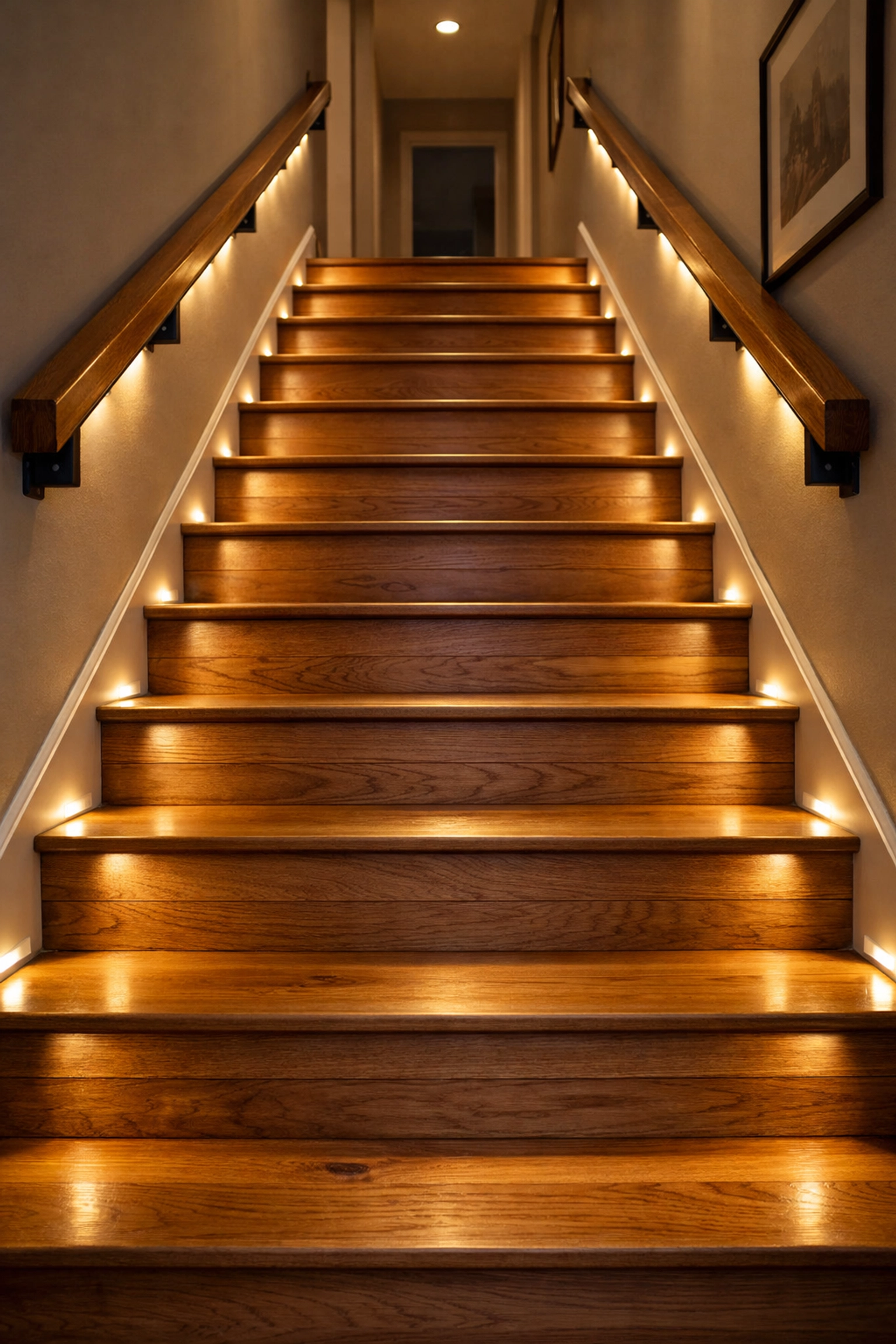
Visibility is the first line of defense in fall prevention. If you can’t clearly see the edge of the step (the "nosing"), your brain has to guess where to place your foot.
The Importance of Brightness
Standard 40-watt bulbs often aren't enough for stairwells. You want bright, clear illumination. LED bulbs are excellent for this because they offer high "lumens" (brightness) while staying cool and lasting for years. Aim for a "cool white" or "daylight" spectrum rather than a "warm yellow," as the cooler light provides better contrast, making the edges of the steps stand out more clearly.
Switch Placement
One of the most dangerous things anyone can do is "climb in the dark" because the light switch is only at the bottom or only at the top. If your home isn't wired for a three-way switch (a switch at both ends of the stairs), don't worry. There are plenty of battery-operated, motion-sensing LED lights that you can stick to the wall or the underside of the handrail. These provide instant light the moment you approach the stairs, ensuring you never have to navigate in shadows.
Mastering Traction and Surface Safety
The surface you walk on is just as important as the light you see by. Research suggests that slipping: rather than tripping: is the leading cause of stairway accidents.
Dealing with Smooth Surfaces
Polished wood, tile, and laminate look beautiful, but they can be incredibly slick, especially if you’re wearing socks or smooth-soled slippers. To combat this, you can apply:
- Abrasive Clear Strips: These are almost invisible but provide a sandpaper-like grip on the edge of the step.
- Rubber Treads: These offer the highest level of traction and provide a clear visual marker for where the step ends.
- Non-Slip Coatings: There are specialized transparent paints and sprays that add "grit" to the surface without changing the look of the wood.
The Carpet Question
Many people believe carpet is safer because it’s "soft," but it can be a double-edged sword. A thick, plush carpet can actually hide the edge of the step, making your foot placement unstable. If you have carpet on your stairs, ensure it is a low-pile, industrial-style weave and that it is stretched tight. Loose or "bubbling" carpet is a significant trip hazard.
Footwear Habits
The best safety equipment you own is on your feet. Walking on stairs in bare feet or stocking feet is a recipe for a slip. Even "anti-slip" socks can bunch up and cause a trip. Ideally, you should wear a sturdy shoe with a rubber sole and a closed heel. If you prefer to be barefoot at home, consider keeping a pair of "house shoes" specifically for moving between floors.
The Anatomy of a Perfect Handrail
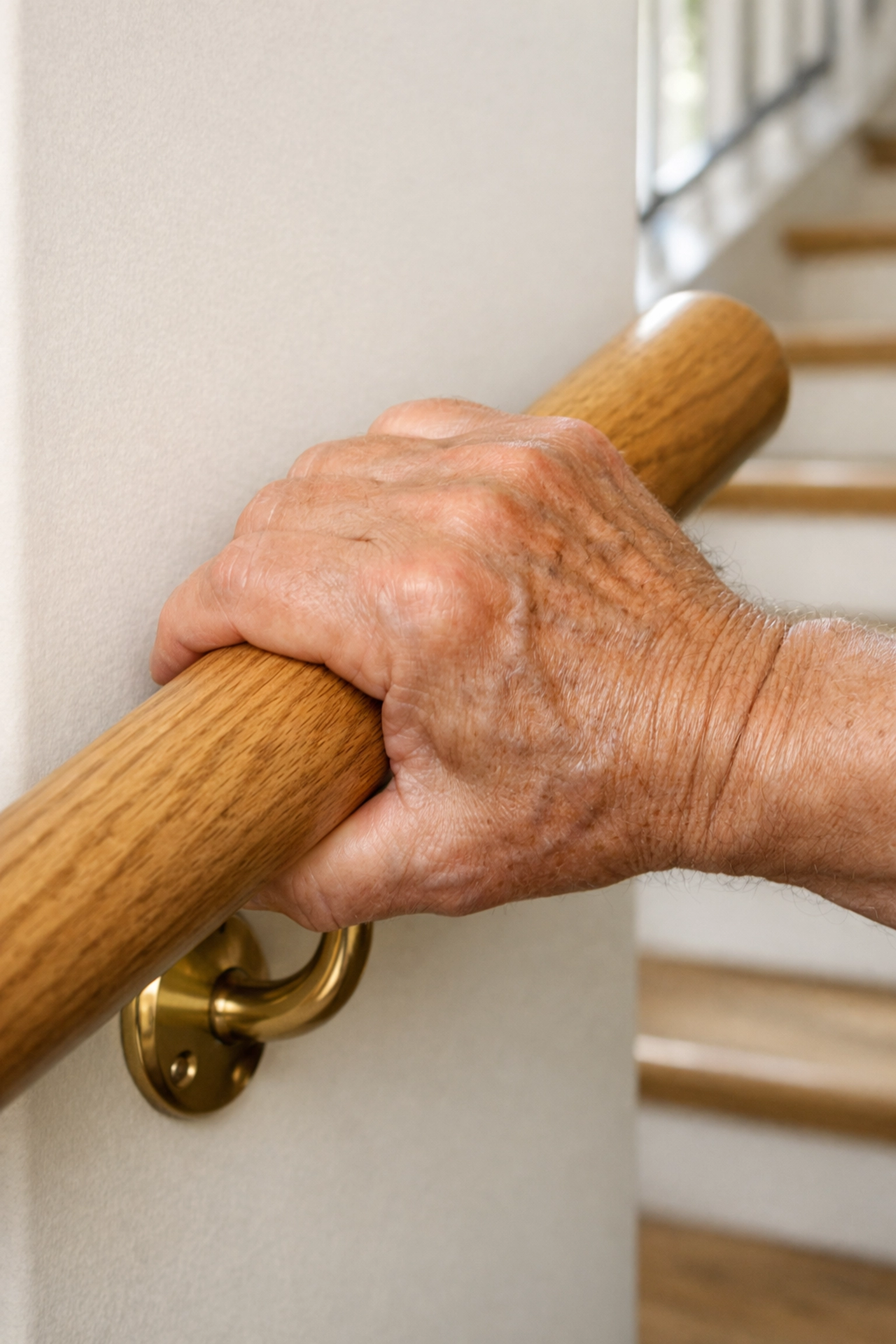
A handrail shouldn't just be a decorative piece of wood; it’s a functional safety tool. If you lose your balance, that rail needs to support your entire body weight instantly.
Two Rails are Better Than One
Most building codes only require one handrail, but for maximum safety, you should have rails on both sides of the staircase. This allows you to use both arms for stability or to always have a rail within reach, regardless of which hand is stronger or which direction you are moving.
The "Power Grip"
Take a look at your current handrail. Can you wrap your hand all the way around it so your thumb and fingers meet? This is called a "circumferential grip" or a "power grip." Many modern homes have wide, flat, or rectangular rails that you can only "pinch" or rest your palm on. If you can't wrap your hand around it, you won't be able to hold on if you actually start to fall.
Proper Height and Extension
Handrails should generally be mounted between 34 and 38 inches above the nose of the step. Perhaps more importantly, the rail should extend about 12 inches beyond the top and bottom steps. Many falls happen at the very transition: where you think you’re off the stairs but haven't quite reached the flat ground yet. An extended rail gives you that extra bit of "tether" until you are safely on level land.
Spotting Hidden Structural Hazards
Sometimes, the way the stairs were built is the problem. While you might not want to rebuild your whole staircase, knowing where the flaws are can help you navigate them safely.
Uniformity is Key
Our brains are incredible at pattern recognition. After the first two steps, your brain "automates" the movement. If one step is even a quarter-inch taller or shorter than the others, your foot will catch or "air-step," leading to a stumble. If you have an uneven step, it needs to be clearly marked with high-contrast tape so your brain knows to pay extra attention to that specific spot.
The "Bottom-of-Flight" Illusion
This occurs when the color of the stairs matches the color of the floor at the bottom. In dim light, the last step can "disappear," leading you to think you’ve reached the floor when you actually have one more drop to go. Using a high-contrast strip of tape or a different colored rug (securely fastened!) at the landing can break this illusion.
Behavioral Changes: Reworking Your Routine
Technology and hardware are great, but our habits play a huge role in stair safety.
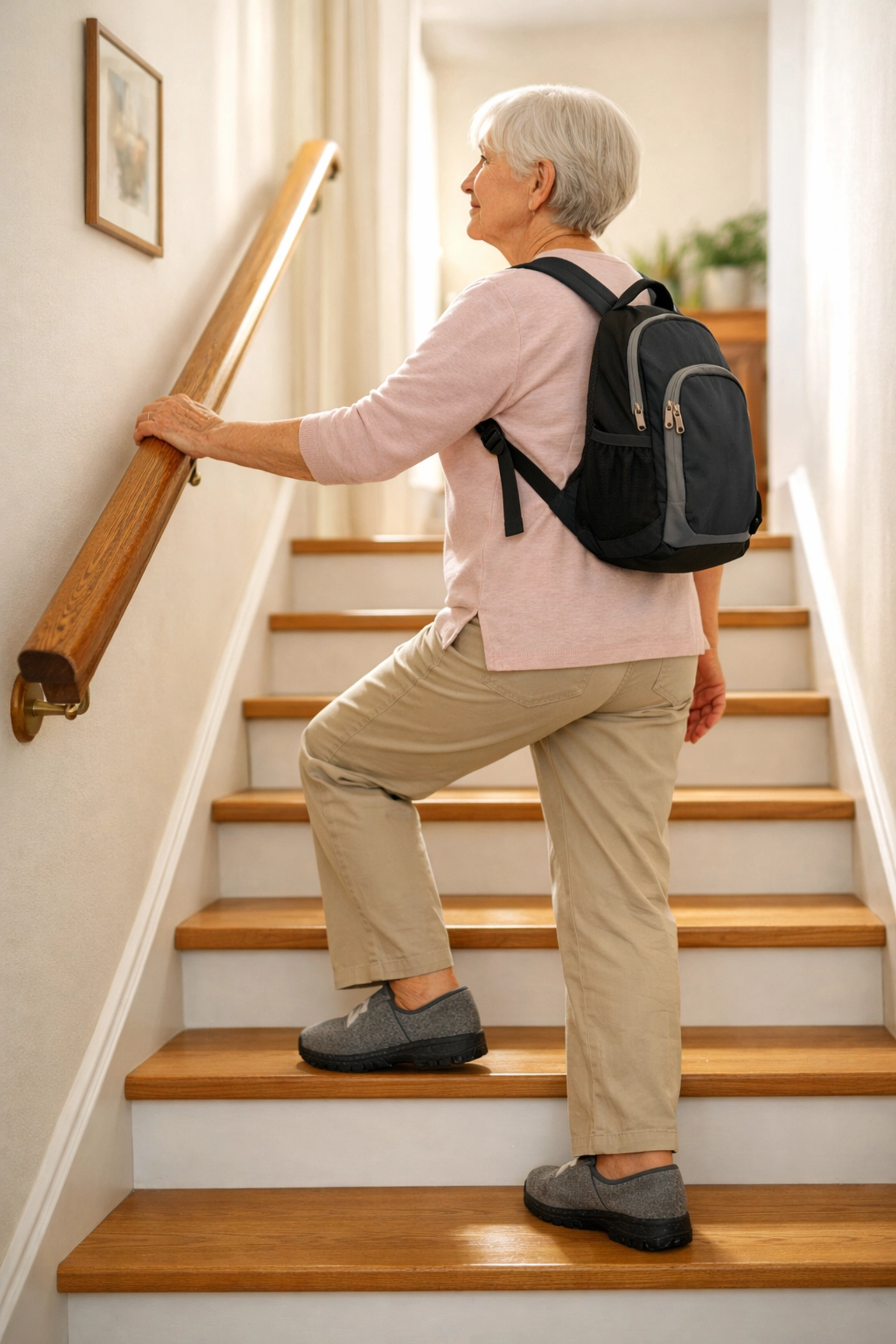
The "One Hand Free" Rule
Never carry items with both hands while on the stairs. You should always have at least one hand firmly on the rail. If you need to move items between floors, consider:
- The "Landing Method": Place items on the landing, move yourself up or down, and then retrieve them.
- A Backpack: Wear a small backpack to carry your phone, books, or water bottle so your hands remain free.
- A "Stair Basket": If you must carry things, use a small basket that fits on the step so you can move it one step at a time while holding the rail.
Take Your Time
This sounds simple, but rushing is a major cause of falls. Whether the phone is ringing or someone is at the door, remind yourself that your safety is worth more than a missed call. Take the stairs one at a time, ensuring both feet are planted firmly on the step before moving to the next one.
Physical Readiness: Strengthening Your "Stair Muscles"
Your body’s ability to handle stairs depends on three things: leg strength, balance, and "proprioception" (your body’s awareness of where it is in space).
Simple Strength Exercises
You don't need a gym to stay "stair-ready." Simple exercises like sitting and standing from a sturdy chair (sit-to-stands) build the quadriceps and glutes needed for climbing. Calf raises help with the "push-off" phase of taking a step. Always consult with a physical therapist before starting a new exercise routine, as they can tailor movements specifically to your needs.
Vision and Inner Ear Health
Stair navigation is a sensory experience. If your vision is blurry or your inner ear (which controls balance) is compromised, stairs become much harder. Regular eye exams and ear checkups are vital components of a fall prevention plan. If you wear bifocals or trifocals, be extra careful on stairs; the "reading" portion of the lens can distort your view of the steps, making them look closer or further away than they actually are.
Making the Big Decisions: When Stairs Are Too Much
Part of mastering stair safety is recognizing when the stairs are no longer the best option. This isn't a sign of failure; it’s a sign of proactive health management.
Main-Level Living
If possible, consider rearranging your home so that your primary needs: bedroom, bathroom, laundry: are all on the main floor. This reduces the number of "mandatory" trips you have to make.
Mechanical Aids
If you love your upstairs and moving isn't an option, there are mechanical solutions like stairlifts. These can provide a safe, seated way to transition between floors. While they are a bigger investment, the peace of mind they provide for both the user and their family is often immeasurable.
A Holistic Approach to Peace of Mind
Stair safety isn't a "set it and forget it" task. It’s a holistic approach that combines environmental fixes, behavioral shifts, and physical maintenance.
Start today by walking over to your stairs. Is the light bright enough? Does the handrail feel sturdy? Are you wearing the right shoes? By asking these questions, you’re already well on your way to mastering fall prevention. At Fall Guys Products, our goal is to empower you with the knowledge to stay active and independent in the home you love. Stay safe, take your time, and remember( every small change makes a big difference.)

