
Stairs are often the most daunting part of a home as we get older. We use them every day, usually without thinking twice, but they are also the site of more household accidents than almost any other area. The good news? Most of these risks aren't inherent to the stairs themselves; they come from small, often overlooked mistakes in how the stairs are designed, maintained, or used.
I’m Brian Kerr, and here at Fall Guys Products, we spend a lot of time thinking about how to make homes feel like a sanctuary rather than a series of obstacles. Improving stair safety isn't about making your home look like a hospital; it’s about making small, smart adjustments that give you peace of mind and keep you moving confidently.
Let’s walk through the seven most common mistakes people make with their stairs and, more importantly, how you can fix them.
1. The Trap of Inconsistent Step Dimensions
The human brain is a master of patterns. When you start climbing a flight of stairs, your brain "measures" the first two steps. It then assumes every other step in the flight will be exactly the same height and depth. This is called proprioception: your body’s ability to sense its position in space.
The Mistake: Many older homes have stairs with "irregular risers." This means one step might be 7 inches high, while the next is 7.5 inches. Even a difference of a quarter-inch is enough to cause a "stumble-trip" because your foot doesn't clear the edge of the step where your brain expects it to. This often happens at the very top of the stairs, where the landing might be slightly higher or lower than the rest of the steps.
The Fix: While you might not be able to rebuild your entire staircase, you should be aware of any irregularities. If you find a step that feels "off," it probably is. You can use contrasting anti-slip tape on the edge of the irregular step to give your eyes a visual cue that something is different. If the irregularity is significant, a carpenter can often install "nosing" or shim the tread to bring it into alignment with the others.
2. The "Bottom-of-Flight Illusion"
Have you ever reached the bottom of the stairs and thought there was one more step when there wasn't, or worse, thought you were on the floor only to find there was one more drop? This is a documented phenomenon known as the "bottom-of-flight illusion."
The Mistake: This happens most often when the flooring of the bottom landing looks identical to the stair treads. If your stairs are oak and your hallway is oak, the lines between the last step and the floor can blur, especially in low light. Your brain loses the depth perception needed to identify the final transition.
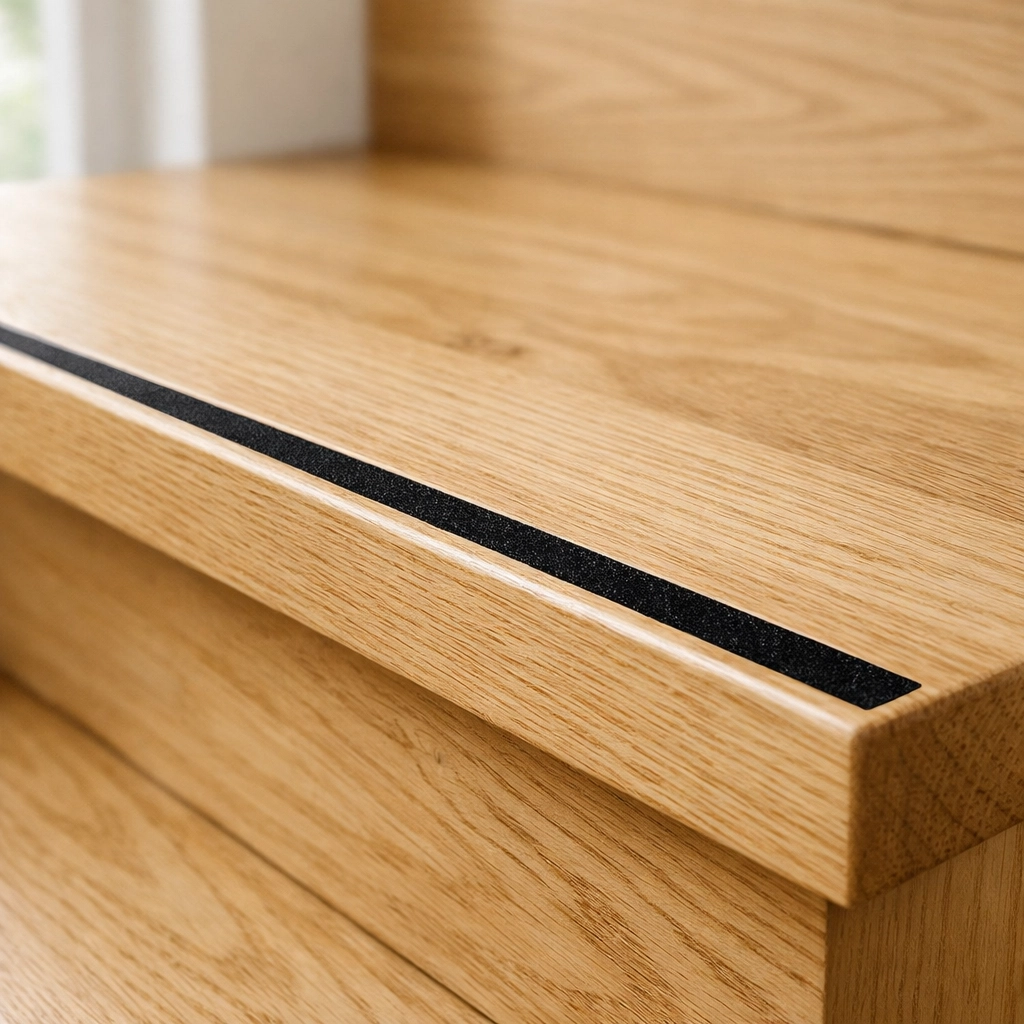
The Fix: You need to create a visual "break" at the bottom of the flight. You can do this by using a different colored tread on the very last step or by placing a thin, high-contrast strip of non-slip tape along the edge of the final riser. This tells your brain, "The stairs end here." It’s a simple visual hack that prevents that jarring "missing step" feeling.
3. Prioritizing Aesthetics Over Grip (Handrail Issues)
We often see handrails that look beautiful: intricate carvings, wide flat tops, or thick, chunky designs: but offer very little in the way of actual safety.
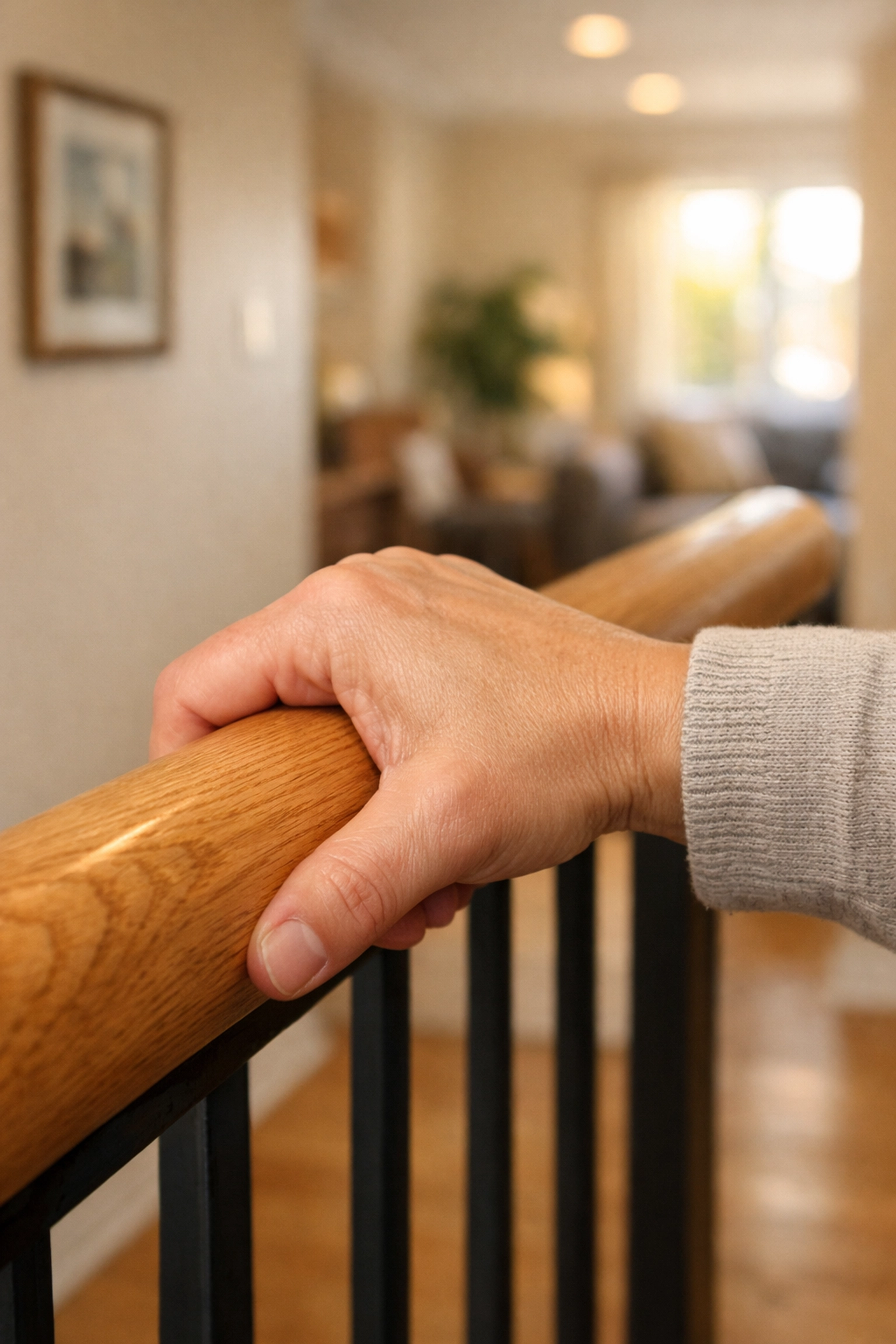
The Mistake: Many handrails are too decorative to be functional. If a handrail is too wide to wrap your hand around, it’s not a handrail; it’s a ledge. In a moment of a slip, you need a "power grip," which is only possible if your thumb and fingers can meet. Furthermore, many stairs only have a rail on one side, or the rail ends a few inches before the stairs actually stop.
The Fix: A safe handrail should be "graspable." Ideally, it should be round or oval with a diameter between 1.25 and 2 inches. If your current rail is too bulky, consider installing a secondary, thinner rail on the opposite wall. Most importantly, ensure the rail extends about 12 inches past the top and bottom step. This gives you a solid anchor point before you even start your ascent or descent.
4. The Hidden Hazard of Smooth Surfaces
Polished hardwood stairs are a staple of classic home design, but they are also essentially indoor ice rinks, especially if you are wearing socks or slippers.
The Mistake: We often prioritize the "clean look" of wood or tile over the friction required for safety. Even worse is the habit of "socks-only" walking. Socks provide zero traction on smooth wood, making it incredibly easy for your feet to slide out from under you.
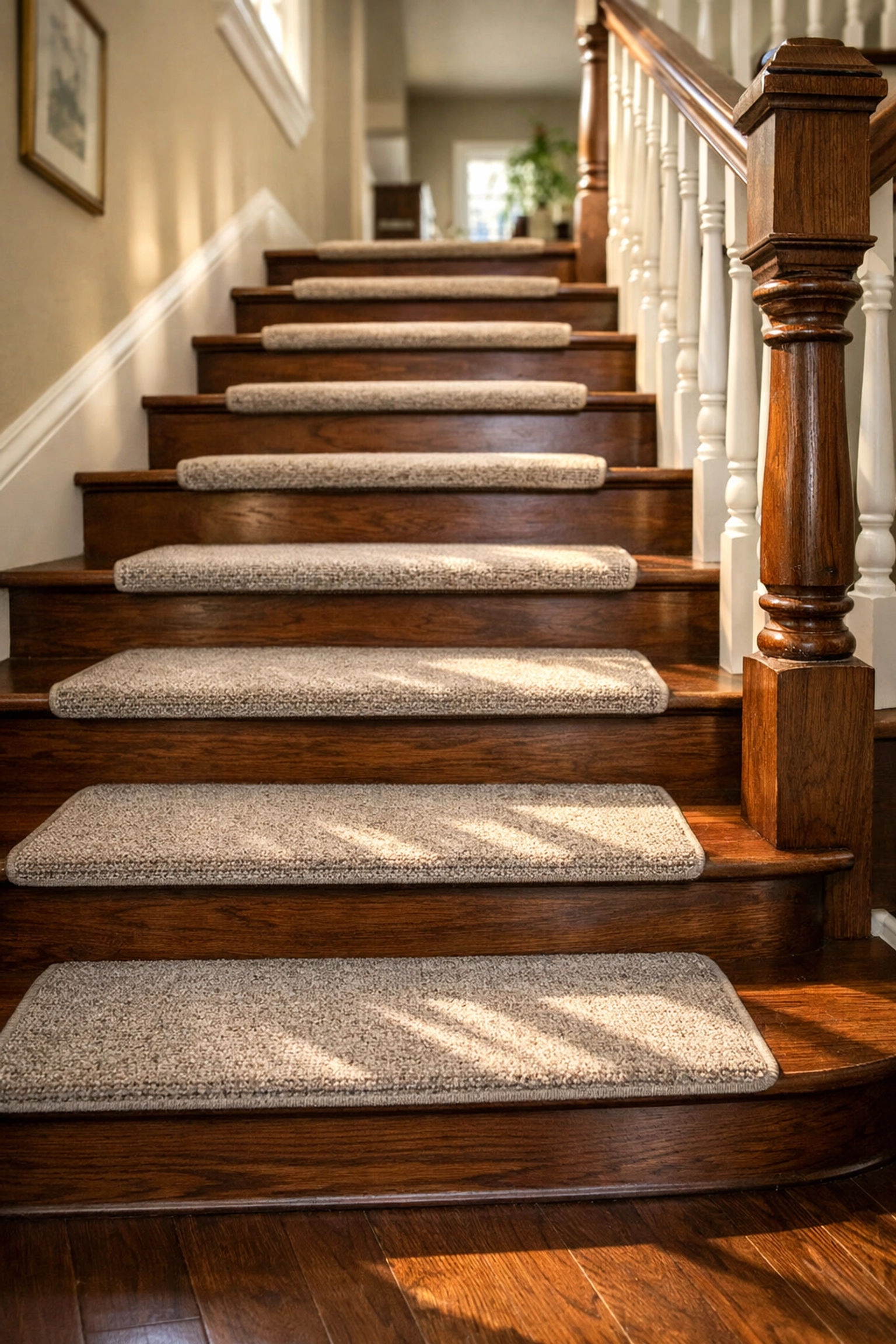
The Fix: You don't have to cover your beautiful wood with ugly carpet. There are many clear, adhesive anti-slip strips that provide a "sandpaper" texture without obscuring the wood grain. Alternatively, individual carpet treads can be tacked onto each step. These provide a soft landing for your feet and much-needed friction. Also, make it a rule to wear "indoor shoes" with rubber soles rather than walking in socks.
5. Shadow Zones and Poor Lighting
Lighting is often the most underrated element of home safety. If you can't see the edge of the step, you can't hit it accurately.
The Mistake: Many staircases are lit by a single overhead bulb at the top or bottom. This creates long, confusing shadows that can mask the actual edge of the tread. If you’re navigating the stairs at night, "guessing" where the step is becomes a dangerous game.
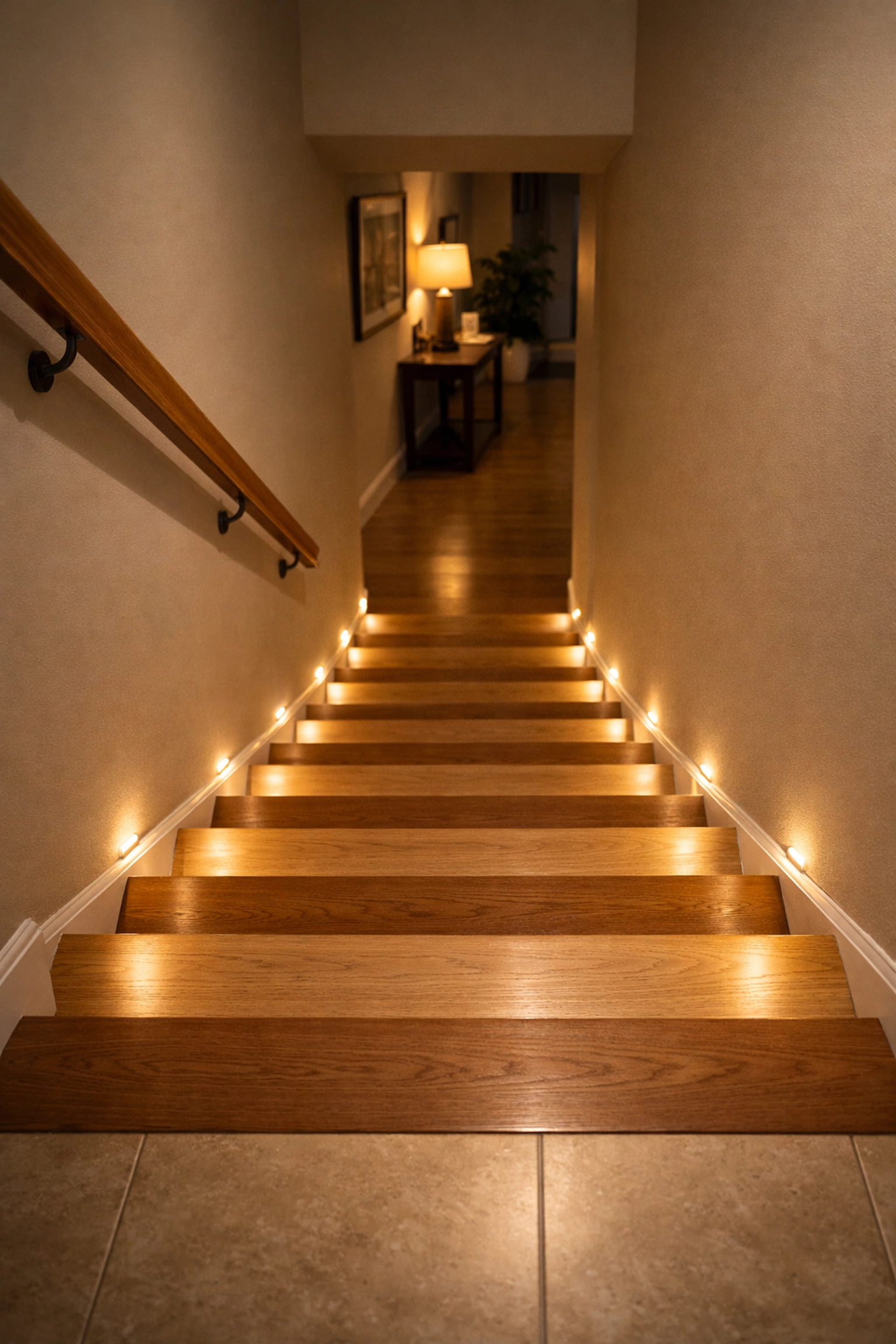
The Fix: The goal is uniform lighting. Ideally, you want light that shines directly onto the treads. Motion-activated LED strips under the handrail or along the baseboards are a fantastic, low-cost solution. They light up the path as you approach, ensuring you never have to fumble for a switch in the dark. At the very least, ensure your bulbs are the highest recommended wattage for the fixture and consider a "warm white" color which helps with depth perception better than "cool blue" tones.
6. Ignoring the "Warning Creaks" (Structural Wear)
Stairs take a lot of abuse. Over decades, the wood can dry out, nails can loosen, and the "stringers" (the supports on the sides) can pull away from the wall.
The Mistake: We often ignore a squeaky or slightly "springy" step, thinking it’s just the character of an old house. However, a loose tread can shift just enough when you put your weight on it to throw off your balance. If a carpeted step feels "mushy," the padding underneath might have disintegrated, or the carpet itself might be loose, creating a bunching hazard.
The Fix: Do a "stair audit" once a season. Walk up and down slowly and listen. If a step creaks or feels loose, it needs attention. Often, a few well-placed wood screws (screws hold better than nails over time) can secure a loose tread. If you have carpet, ensure it is tight and "wrapped" over the nose of each step. If you see any sagging, it’s time to call a professional to ensure the structural integrity is still there.
7. The "Stair Basket" and Other Clutter
We’ve all done it: placing a pile of mail, a pair of shoes, or a basket of laundry on the bottom steps to take up "next time we go."
The Mistake: This is perhaps the most common cause of avoidable falls. Clutter on stairs narrows your walking path and forces you to take awkward, uneven steps to avoid the objects. Even worse, if you are carrying something up or down, your view of the steps is already partially blocked; adding "landmines" like shoes or books into the mix is a recipe for disaster.
The Fix: Adopt a "Zero Tolerance" policy for stair clutter. If something needs to go up, it goes up now, or it stays on a table near the stairs, but never on the steps themselves. If you have a habit of carrying large loads that block your vision, try to break them into smaller trips. Always keep one hand free to use the handrail: this is known as the "three-point contact" rule (two feet and one hand, or two hands and one foot).
Putting It All Together
Safe stair navigation is a combination of a well-maintained environment and good personal habits. By fixing these seven mistakes, you aren't just making your home safer; you're making it more accessible and less stressful to live in.
Start small. Maybe today you clear the clutter, and next weekend you look into better lighting or a non-slip coating. These incremental changes add up to a significantly safer home. Remember, the goal isn't to be afraid of the stairs: it's to respect them and set yourself up for success every time you use them.
Stay safe, keep moving, and don’t hesitate to look at your home with fresh eyes. Sometimes the smallest fix makes the biggest difference.

