
Hi there, I’m Brian Kerr, the founder here at Fall Guys Products. When we talk about home safety, there is one area that consistently comes up as the biggest concern for families, seniors, and caregivers: the stairs.
It makes sense. Stairs are a transition point. They require balance, strength, and good vision all at once. But here’s the thing: staircases don’t have to be a source of anxiety. Most of the risks associated with stairs aren't about the stairs themselves, but rather about "pitfalls" in how they are maintained, lit, or used.
In this guide, I want to walk you through the most common stair safety mistakes we see in homes today and, more importantly, how you can fix them. Our goal isn't to scare you, but to give you the practical knowledge to make your home a place where you feel confident and secure.
The Hidden Danger of Poor Visibility
One of the most frequent causes of missteps isn't a physical obstruction, but a visual one. If you can’t clearly see where one step ends and the next begins, your brain has to guess. That’s a recipe for a trip.
Many older homes have a single light switch at the bottom of the stairs, or perhaps a dim bulb that casts long, confusing shadows. Shadows can be particularly deceptive; they can make a flat landing look like an extra step or hide the edge of a tread.
Brightening the Path
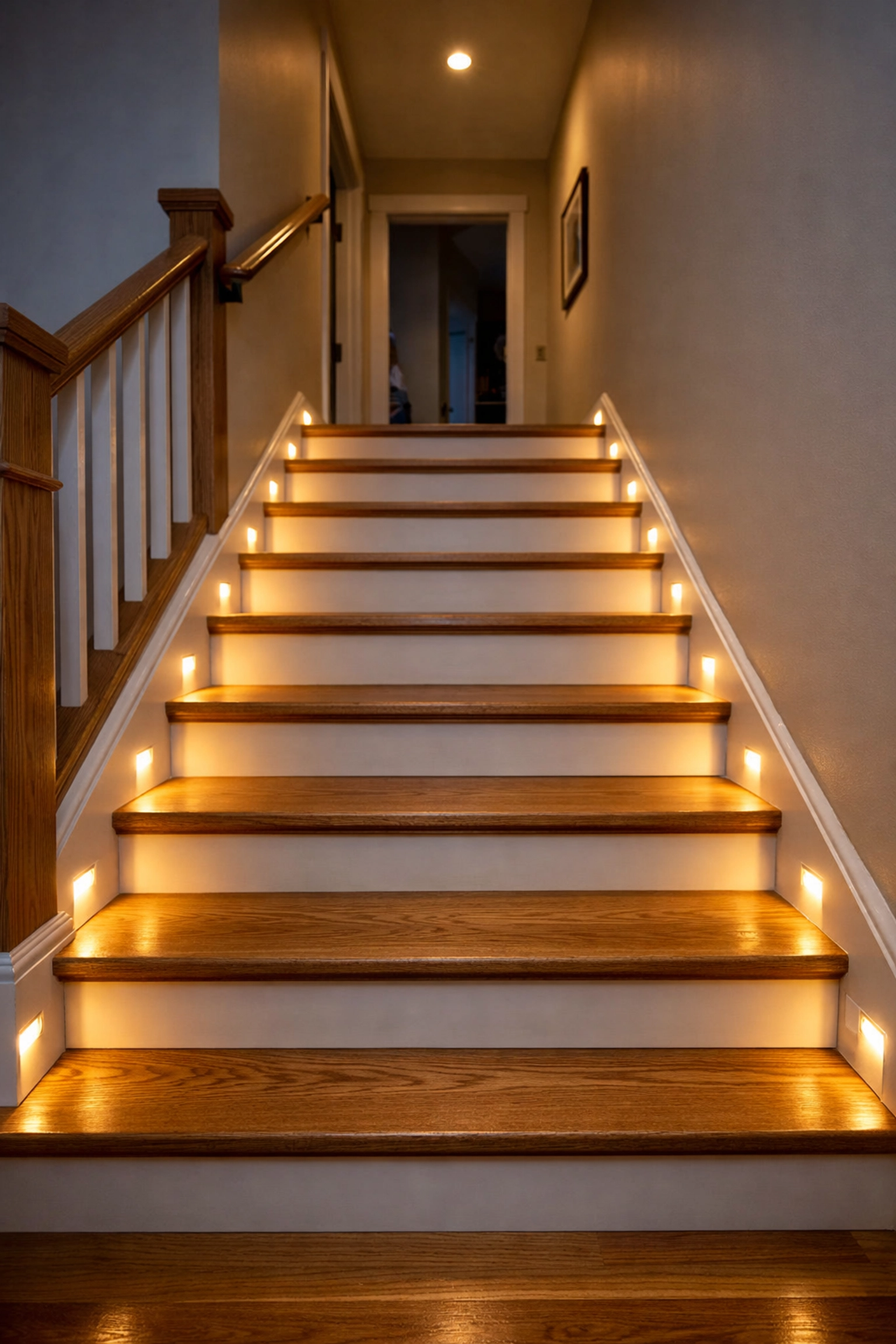
To fix this, we recommend looking at your lighting from a "functional" perspective. It isn’t just about having a light on; it’s about having the right light.
- Dual Switches: Ensure there are light switches at both the top and bottom of the staircase. No one should ever have to navigate stairs in the dark to reach a switch.
- Motion Sensors: Battery-operated LED motion lights are a game-changer. You can stick them along the baseboards. They light up as soon as you approach, providing a clear path without you having to fumble for a switch.
- Contrast is Key: If your stairs are all one color: like dark wood or uniform beige carpet: it’s hard to distinguish the "nose" (the edge) of the step. Applying a strip of high-contrast tape or a different colored non-slip tread to the edge of each step helps the eye identify exactly where to place the foot.
The "Just for a Second" Clutter Habit
We’ve all done it. You have a stack of books or a basket of laundry that needs to go upstairs, so you set it on the bottom step to take up "next time."
This is arguably the most common physical pitfall. In the moment, it feels efficient. But stairs are meant for transit, not storage. Even a small item like a pair of shoes or a loose power cord can catch a heel or cause a slip.
Breaking the Habit
The best way to avoid this pitfall is to implement a "zero-item" policy for staircases.
- Landing Baskets: Instead of putting items on the stairs, place a dedicated basket at the very top and very bottom (well away from the walking path). Put your items in the basket, then carry the whole basket up when you are ready.
- Clear the Path: Regularly check for loose rugs at the top or bottom of the stairs. These "transition rugs" often bunch up or slide, creating a secondary tripping hazard right where you are trying to find your balance.
Handrails: More Than Just a Suggestion
A handrail shouldn't be a decorative element; it is a critical safety tool. One of the biggest pitfalls is having a handrail that is loose, too short, or only on one side.
As we age, or if we are recovering from an injury, our center of gravity can shift. Having a sturdy, graspable rail on both sides of the stairs provides a "closed circuit" of support. If you lose your balance on one side, you have the other to stabilize you.
What Makes a Safe Handrail?
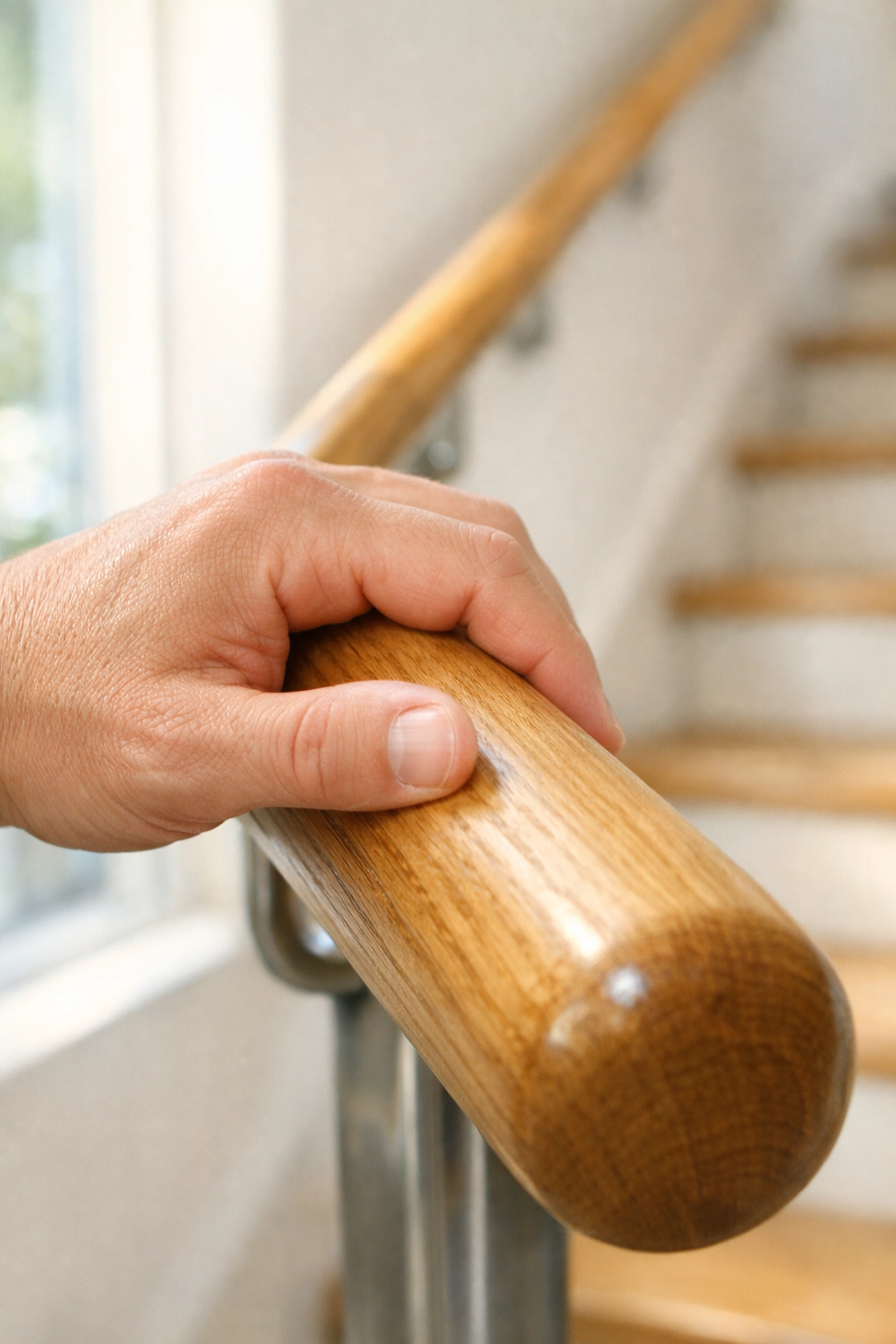
- Graspability: You should be able to wrap your hand comfortably around the rail. If the rail is too wide (like a thick piece of decorative lumber), you can’t get a secure "power grip" on it. A round or oval profile is usually best.
- Continuous Length: The rail should extend the full length of the stairs and, ideally, a few inches past the top and bottom steps. This allows you to maintain a grip until your feet are firmly on level ground.
- Strength: A handrail must be able to support the full weight of an adult lunging against it. If it wiggles when you shake it, it needs to be re-anchored into the wall studs immediately.
The Surface Matters: Treads and Traction
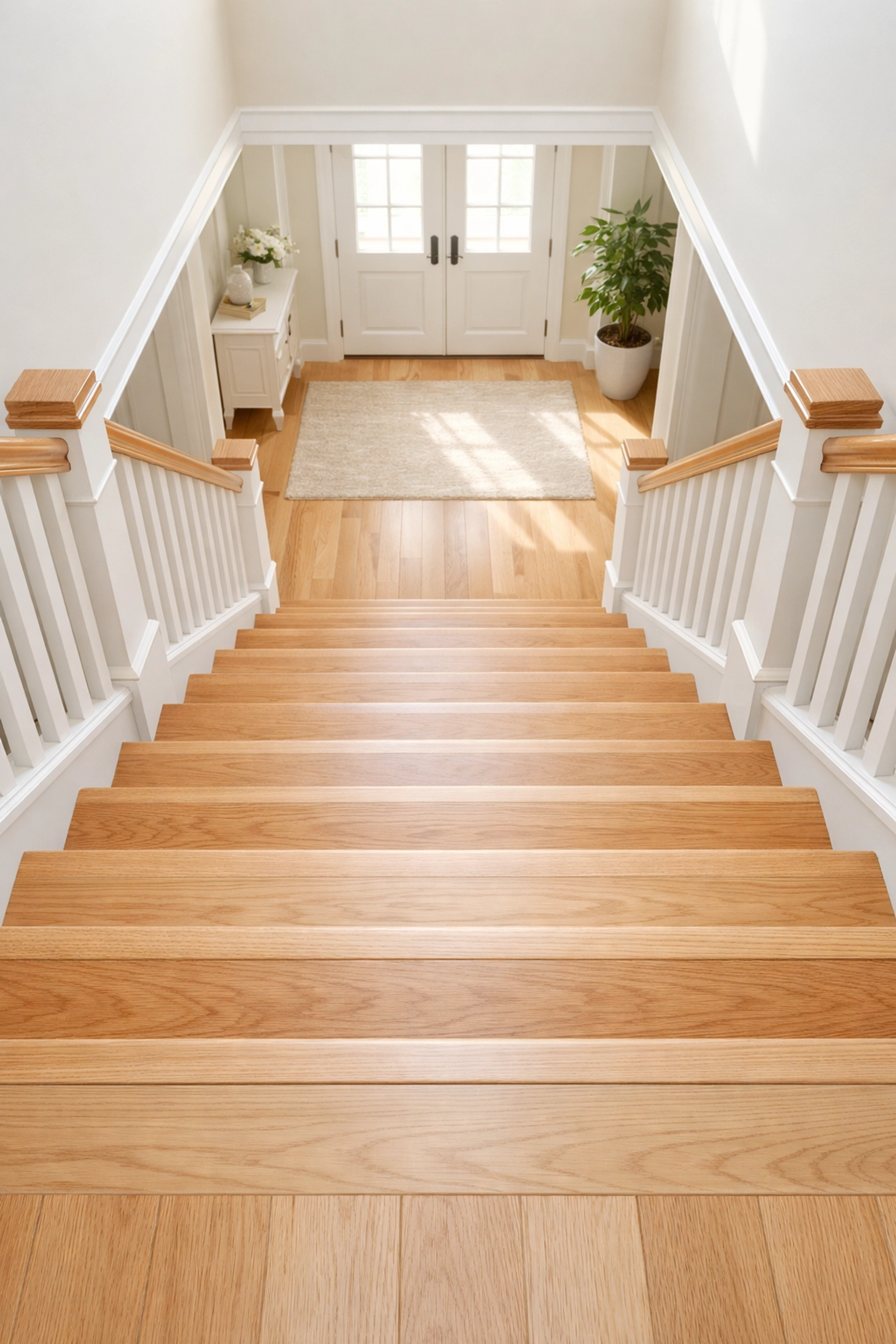
What your feet actually touch matters immensely. Polished hardwood stairs are beautiful, but they can be incredibly slick, especially if you’re wearing socks. On the flip side, old, frayed carpeting can catch a toe and cause a forward fall.
Improving Traction
- Non-Slip Strips: For wooden or tile stairs, clear or colored non-slip adhesive strips are an easy, low-cost fix. They add grit and friction without ruining the aesthetic of the home.
- Carpet Maintenance: If your stairs are carpeted, ensure the carpet is pulled tight and securely tacked down. If the "nose" of the carpet is rounded and slippery from years of wear, it might be time to replace the runner.
- The "Socks" Rule: Walking on stairs in smooth socks is a high-risk behavior. Encourage the use of "shams" or slippers with rubberized soles, or simply go barefoot if the surface allows for better grip.
Structural Consistency and the Rhythm of the Step
Did you know that your brain "maps" a staircase after the first two steps? Your body adjusts its muscle memory to the height (rise) and depth (run) of the steps.
A major structural pitfall is "non-uniformity." If one step is even half an inch taller or shorter than the others, it breaks that rhythm. This is often where "phantom trips" happen: where you feel like you tripped on nothing.
Checking Your Stairs
Take a tape measure and check the height of each step. If you find significant variations, it might be a sign that the house has settled or the stairs were improperly built. While fixing the actual structure of a staircase is a larger project, being aware of a "short step" can help you navigate it more mindfully.
Also, check for "headroom." If a ceiling or beam hangs low over the stairs, people naturally hunch over to avoid it, which shifts their center of gravity forward and increases the risk of a fall.
Behavioral Safety: How We Use the Stairs
Sometimes the pitfall isn't the house; it’s our habits. We often treat stairs as a hurdle to get over as quickly as possible.
- Rushing: Trying to answer a ringing phone or a doorbell is a common trigger for stair accidents. It’s better to miss the call than to take a tumble.
- Carrying Too Much: If you are carrying a large box with both hands, you can’t see your feet and you can’t use the handrail. Always keep at least one hand free to hold the rail. If you have a lot to move, consider a "buddy system" or moving items in smaller, lighter loads.
- Vision Check: If you wear bifocals or progressive lenses, be extra careful. These lenses can distort depth perception when you look down at your feet. Many people find it safer to tuck their chin down further to look through the "distance" part of their glasses when navigating steps.
A Simple Home Inspection Checklist
To wrap things up, I’ve put together a quick checklist you can use this weekend to audit the stairs in your home or the home of a loved one.
- Light: Can I see every single step clearly at 10 PM?
- Rails: Do the handrails wiggle? Are there rails on both sides?
- Edges: Is the edge of each step easy to see against the floor below it?
- Landing: Are the areas at the top and bottom completely free of rugs and clutter?
- Surface: Is there any fraying carpet or slippery wood?
- Grip: Can I comfortably wrap my hand all the way around the handrail?
Final Thoughts
Stair safety is about layers of protection. No single fix: like a better lightbulb or a sturdier rail: solves everything on its own. But when you combine good lighting, clear walkways, and solid support, you significantly reduce the risk of an accident.
At Fall Guys Products, we believe that staying mobile and independent starts with feeling safe in your own space. Take a few minutes today to look at your stairs with fresh eyes. Identifying these pitfalls is the first, and most important, step toward a safer home.
Stay safe and stay mobile,
Brian Kerr
Founder, Fall Guys Products

