
When we talk about aging in place, the conversation naturally turns toward safety. For many seniors and their caregivers, "safety" is often synonymous with fall prevention products. Whether it’s a bed rail, a floor-to-ceiling pole, or a simple grab bar in the shower, these tools are designed to provide a sense of security and physical stability.
However, simply owning these products isn't enough. In my years working with mobility aids, I’ve seen many well-intentioned families invest in high-quality equipment, only to have it fail when it matters most: not because the product was bad, but because of a few common, easily fixable mistakes.
Fall prevention is a system, not a single purchase. If you or a loved one are relying on mobility aids, it’s worth taking a few minutes to audit how you’re using them. Here are the seven most common mistakes people make with fall prevention products and, more importantly, how you can fix them to stay safe.
1. The "Set It and Forget It" Mentality
One of the most frequent mistakes is assuming that once a product is installed, it is safe forever. Fall prevention equipment is subject to constant stress. Every time a person uses a transfer pole or a rail to pull themselves up, the hardware is tested.
Over time, bolts can loosen, suction cups can lose their seal, and tension-mounted poles can shift slightly due to changes in humidity or floor settling. If you aren't regularly checking the integrity of your equipment, you might not realize it’s unstable until someone actually puts their full weight on it during a moment of imbalance.
How to Fix It:
Establish a "Safety Saturday" routine. Once a month, go through the house and physically test every piece of equipment. Give the poles a firm shake to ensure they haven't shifted. Tighten any visible screws on bed rails. If you use suction-based grab bars, remove them, clean the surface, and re-apply them to ensure a fresh, strong seal. Prevention is about being proactive before the equipment has a chance to fail.
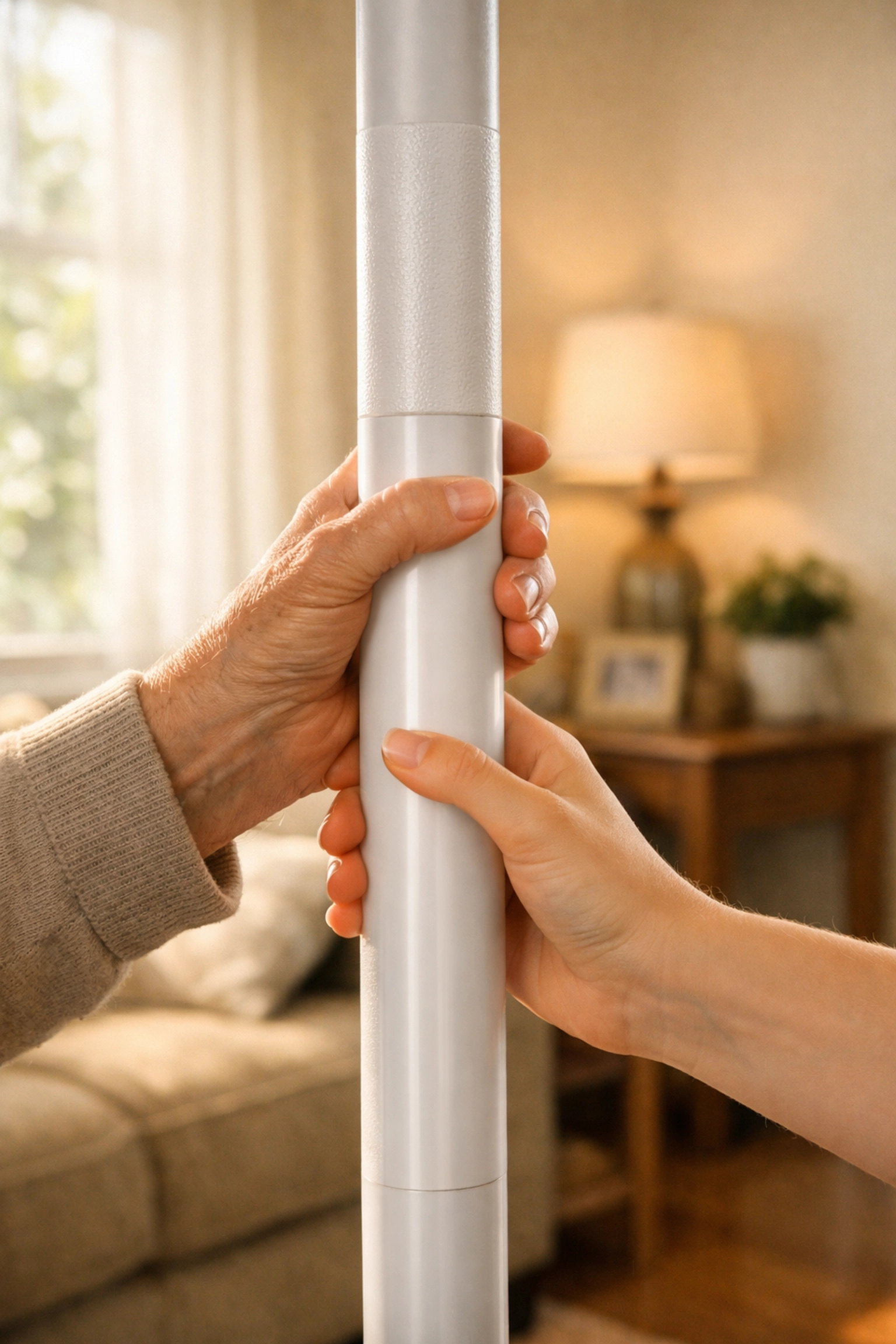
2. Ignoring Specific Weight Capacities
There is a common misconception that all medical-grade equipment is "heavy duty." In reality, fall prevention products are engineered with very specific weight limits. Using a standard independence pole for a bariatric patient, for example, can be dangerous.
It isn't just about the product breaking; it's about the physics of the support. A rail designed for a 250-pound limit may flex or bend under higher stress, which can cause the user to lose their grip or balance. Conversely, using a product that is "too big" or too bulky for a petite person can lead to ergonomic issues or a lack of proper grip surface.
How to Fix It:
Always check the manufacturer’s specifications for both "static" and "dynamic" weight. Static weight is the weight the product holds while still; dynamic weight accounts for the force exerted when someone "flops" or falls into the device. If the user is close to the weight limit, always opt for the bariatric version. It’s better to have more support than you need than to find yourself with too little.
3. Improper Placement and Height
I often see grab bars and rails installed in locations that seem logical but are actually ergonomically incorrect. For instance, putting a grab bar too high in the shower might force a senior to reach above their center of gravity, which can actually increase the risk of a fall. Similarly, a bed rail placed too far down toward the foot of the bed won't provide the leverage needed for a person to sit up safely.
The goal of these products is to keep the body in a "neutral" and balanced position. If you have to strain, reach, or twist to use a fall prevention tool, the tool itself is creating a new hazard.
How to Fix It:
Before drilling holes or tightening tension poles, do a "dry run" with the person who will be using the equipment. Have them mimic the movement they’ll be making: whether it’s getting out of a chair or stepping into the tub. Mark the spots where their hands naturally fall.
If you’re unsure, consider consulting an Occupational Therapist (OT). They are experts at analyzing movement and can tell you exactly where a rail should go to provide the maximum mechanical advantage.
4. Using the Wrong Tool for the Task
In an effort to save money or simplify things, people sometimes use products for purposes they weren't intended for. A classic example is the towel rack. Almost everyone has, at some point, reached out to a towel rack for balance in the bathroom. Most towel racks are held in by thin screws and plastic anchors in drywall; they are not designed to support human weight.
The same mistake happens with mobility aids. A person might try to use a bed rail as a stand-assist for a nearby chair, or use a walker as a permanent handrail in a hallway. When a product is used outside its design parameters, it lacks the stability required to prevent a fall.
How to Fix It:
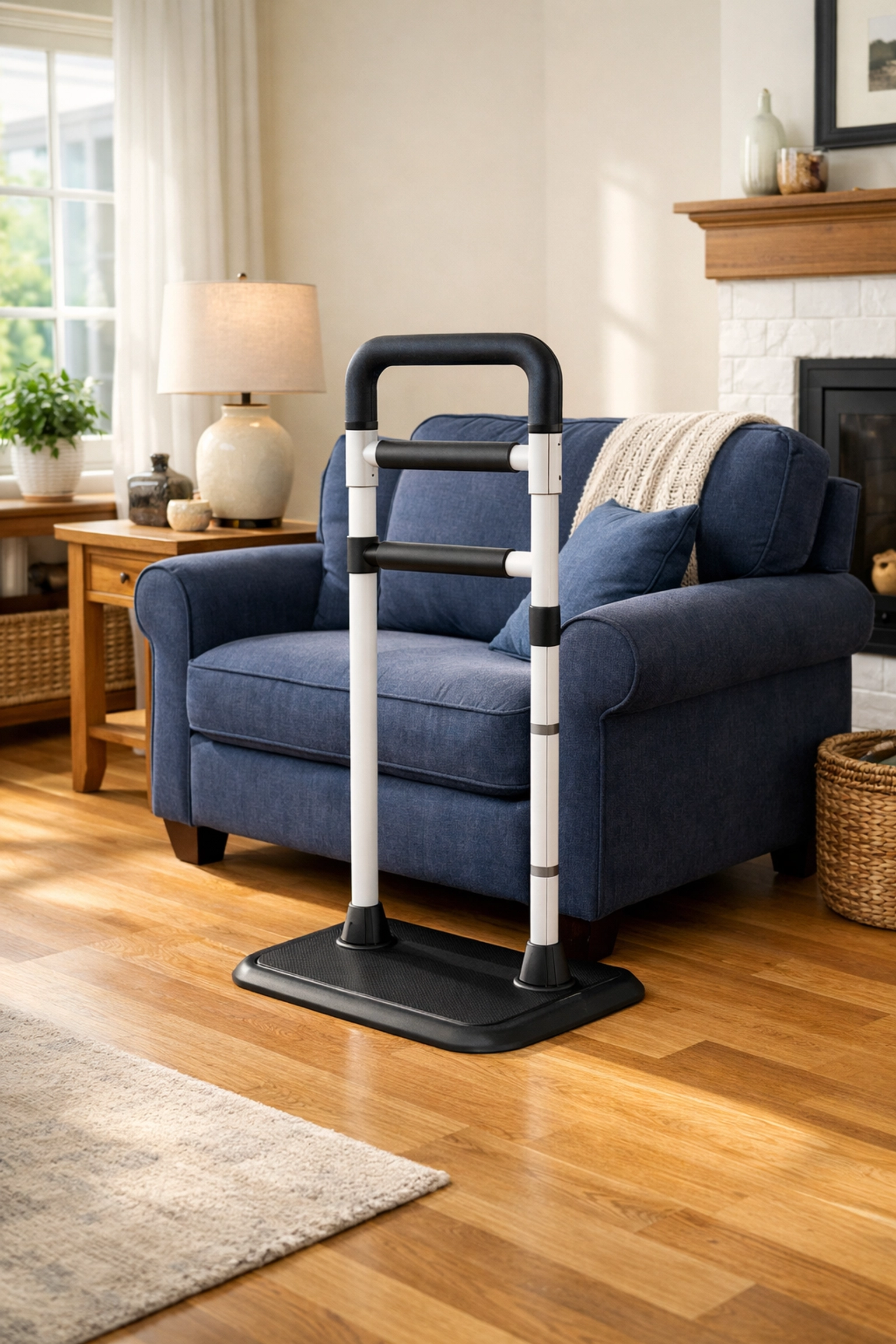
Match the product to the specific "transfer point" where falls are likely to happen. If the struggle is getting off the couch, look for a stand-assist specifically designed for upholstered furniture. If the struggle is the transition from the bedroom to the bathroom, a floor-to-ceiling pole is much safer than leaning on furniture along the way. Use the right tool for the right job, every time.
5. Neglecting the Floor and Environment
You can have the best, most expensive fall prevention poles and rails in the world, but if the floor around them is covered in area rugs or cluttered with cords, the risk remains high. A mistake we often see is "islands of safety." This is when a home has a great grab bar in the bathroom and a great rail in the bedroom, but the "no-man's land" in between is filled with tripping hazards.
Fall prevention products should be the anchor points in an otherwise clear and safe environment. If someone has to step over a rug to reach their independence pole, the pole’s effectiveness is halved.
How to Fix It:
Look at the "path of travel." Clear a wide, unobstructed path between all major areas of the home. Remove all throw rugs or secure them with heavy-duty double-sided tape. Ensure that the area around your mobility aids is especially clear. The moment a person reaches for a support rail is often the moment they are most vulnerable; they shouldn't have to worry about their feet at the same time.
6. Lack of Proper Training or Introduction
We often assume that how to use a grab bar or a transfer pole is "common sense." However, for a senior dealing with cognitive decline, balance issues, or even just the muscle memory of 80 years of moving a certain way, using new equipment can be confusing.
If a senior doesn't feel comfortable or "trust" the device, they may try to avoid using it altogether, or they may use it incorrectly (such as grabbing a pole too high or not using the crossbar for leverage). This hesitation or improper use can lead to the very falls you’re trying to prevent.
How to Fix It:
Don't just install a product and walk away. Spend time practicing. Encourage your loved one to use the device while you are there to spot them. Show them the best place to grip and explain why the device is there. This builds confidence. If the senior sees the device as a friend that helps them keep their independence, they are much more likely to use it consistently and correctly.

7. Relying on Suction and "No-Drill" Options Without Caution
"No-drill" solutions, like suction-cup grab bars or tension-mounted poles, are fantastic for renters or those who don't want to make permanent changes to their homes. However, the mistake lies in assuming they are "install and forget."
Suction cups are only as good as the vacuum they create. If there is a grout line under the cup, or if the tile is slightly porous, the suction will eventually fail. Similarly, tension poles are incredibly sturdy, but they rely on being perfectly vertical. If they are bumped or if the ceiling flexes, they can lose their grip.
How to Fix It:
If you use suction-based products, they must be checked daily. A quick tug before you step into the shower can prevent a disaster. For tension-mounted products, ensure they are installed on a solid ceiling joist and use a level to make sure they are perfectly straight. If a permanent, screw-in option is possible, it is almost always the safer long-term choice for those with significant mobility challenges.
Building a Culture of Safety
At the end of the day, fall prevention is about more than just hardware. It’s about creating an environment where a senior feels empowered to move around their home without fear. Mistakes happen, but most of the issues we see with mobility aids are the result of small oversights that can be fixed in an afternoon.
By treating your fall prevention products as part of a living system: one that requires regular check-ups, proper fit, and environmental support: you aren't just buying a product. You’re investing in peace of mind.
Take a walk through your home today. Check those bolts, clear those rugs, and have a conversation about how the equipment feels to the person using it. Those small steps are often the difference between a close call and a safe, independent day at home. Fall prevention isn't a one-time event; it’s a commitment to safety that evolves as our needs change. Stay proactive, stay observant, and stay safe.

