
When we talk about fall prevention, we often focus on the areas inside the home where we spend the most time: the bathroom, the kitchen, and the bedroom. While these are critical areas to address, the transition to the outdoors is where many unexpected slips and trips occur.
Fresh air and sunshine are vital for physical and mental well-being, but the environment outside is much less controlled than the one inside. Uneven ground, changing weather conditions, and varying light levels can turn a peaceful afternoon on the patio into a risky situation.
At Fall Guys Products, we believe that staying active and enjoying your garden or porch shouldn't come with a side of anxiety. By taking a proactive approach to your outdoor spaces, you can create a safe, welcoming environment that encourages movement and independence.
Here are ten in-depth ideas for optimizing your porches, pathways, and patios for safety.
1. Upgrade to High-Visibility Lighting
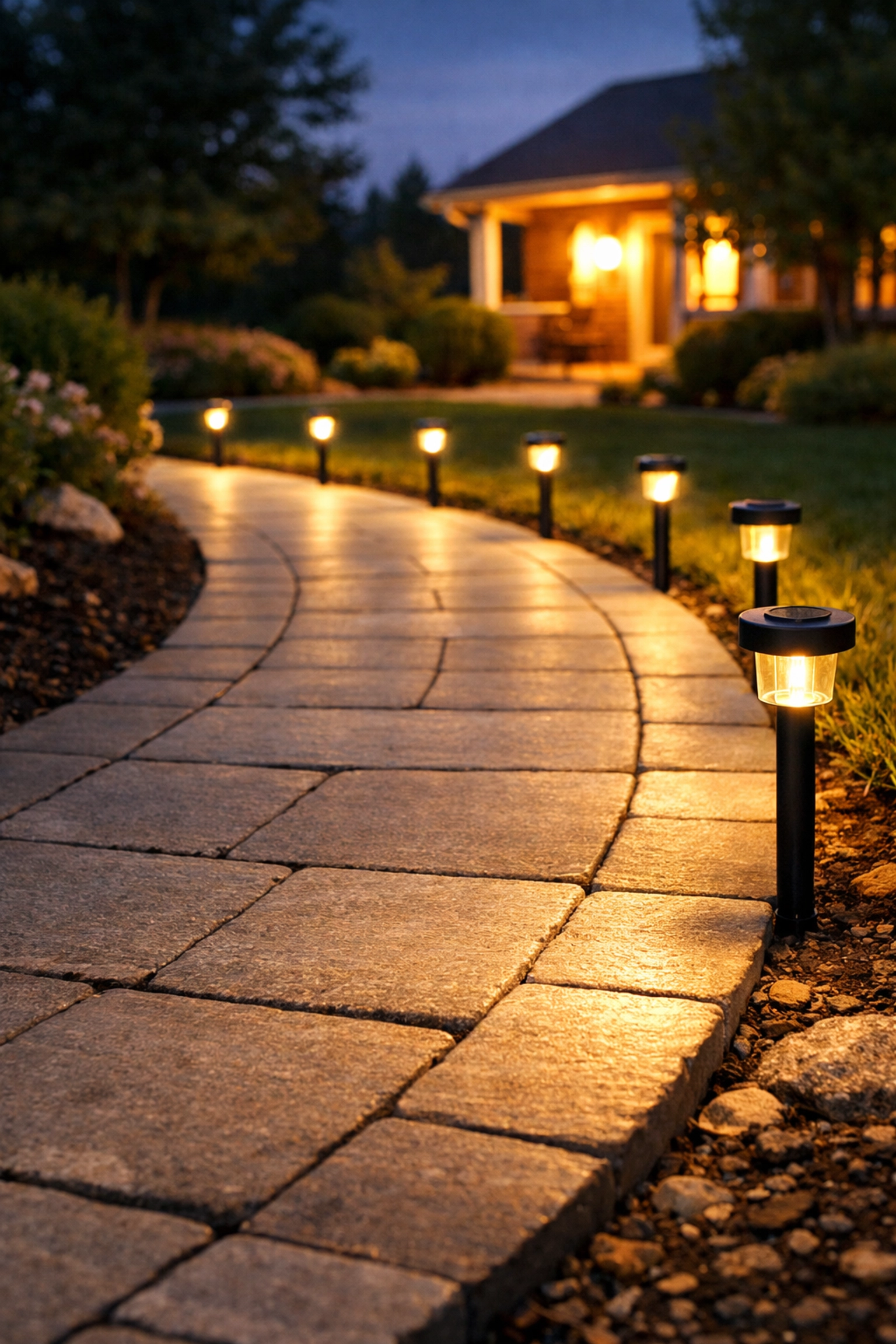
Lighting is your first line of defense. As we age, our eyes often require more light to perceive depth and identify small obstacles. A pathway that looks clear at noon can become a minefield at dusk.
Consider installing motion-sensor lights near entryways and along the sides of the house. These are particularly helpful because they provide light exactly when you need it without requiring you to fumbling for a switch in the dark. For walkways, solar-powered stake lights are an excellent, low-maintenance option.
When choosing bulbs, aim for a brightness equivalent to 60-70 watts. Ensure the light is directed downward onto the walking surface rather than outward, which can cause glare and temporary "blind spots." Consistency is key; you want to avoid "pools" of bright light followed by deep shadows, as the eye takes time to adjust between the two.
2. Install Double Handrails on All Stairs
Many outdoor stairs, particularly those leading to a porch or deck, only have a handrail on one side: if they have one at all. For maximum stability, every set of stairs should have sturdy handrails on both sides.
This allows for a "three-point contact" system where you can have both hands on a rail while moving one foot. Handrails should extend slightly beyond the top and bottom steps so that you have support before you start climbing and after you finish.
Check the "gripability" of your rails. Round or oval rails that your hand can fully wrap around are much safer than wide, flat wooden planks that you can only rest your palm on. If your current rails are made of slick wood or metal, consider adding non-slip grip tape to improve the hold, especially during damp weather.
3. Level Out Uneven Surfaces
Concrete settles, tree roots grow, and pavers shift. Over time, these natural processes create "lip" hazards: small height differences between sections of a path that are just high enough to catch a toe.
Conduct a "walk-through" of your property specifically looking for these edges. Any rise greater than a quarter-inch should be addressed. For concrete, a professional can often perform "mud-jacking" or grinding to level the slabs. For brick or stone pavers, you may need to lift the offending stones, level the sand or gravel underneath, and reset them.
Keeping your pathways smooth reduces the cognitive load of walking; you can focus on where you are going rather than constantly scanning the ground for the next trip hazard.
4. Define Step Edges with Visual Contrast
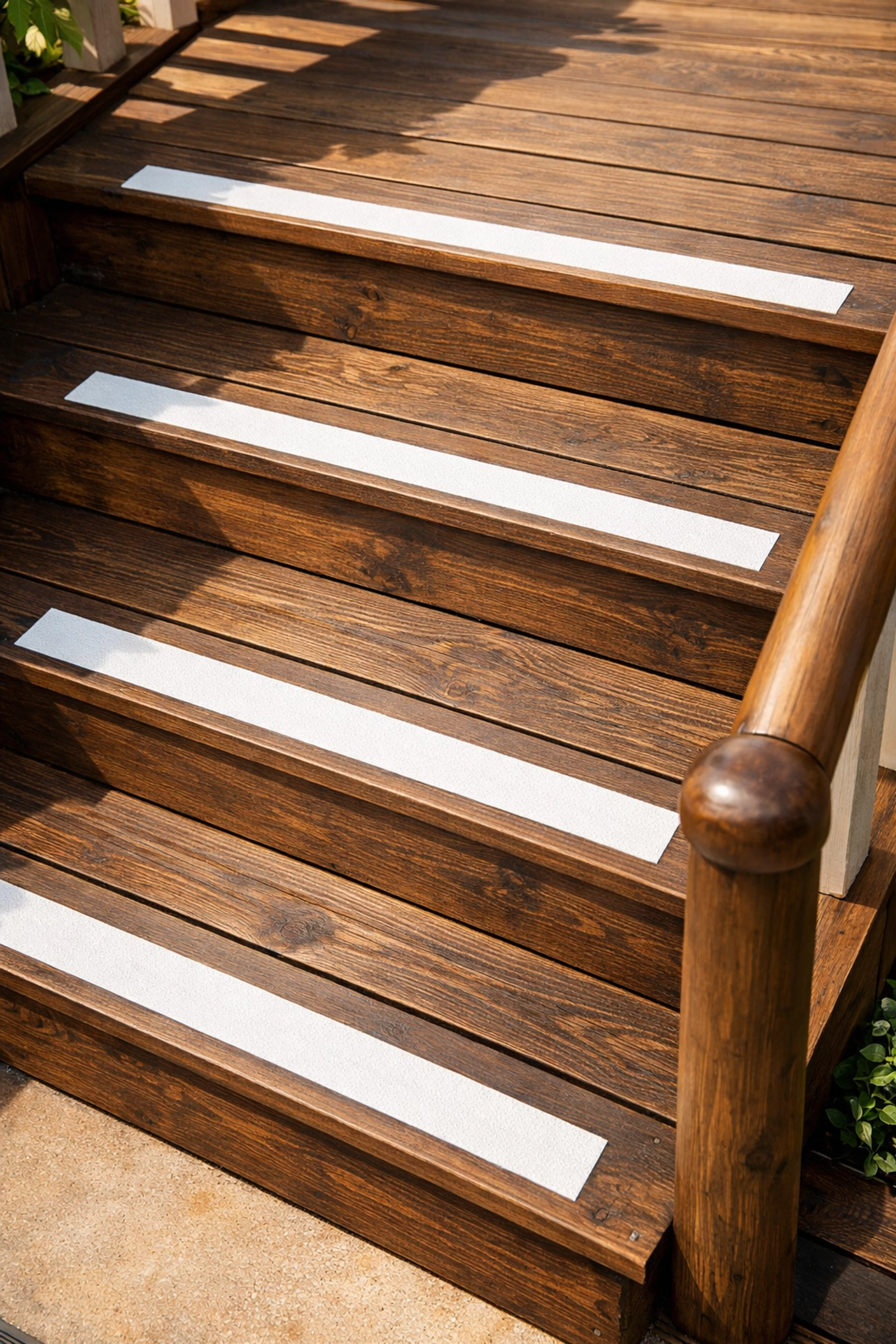
Depth perception can be tricky, especially on stairs that are all the same color, such as grey concrete or brown wood. When the edge of one step blends into the top of the next, it’s easy to misjudge where to place your foot.
A simple but highly effective solution is to apply a high-contrast strip to the edge (the "nosing") of each step. You can use outdoor-rated paint or heavy-duty anti-slip tape. For example, if you have dark wooden steps, a bright white or yellow strip along the edge makes each transition clear. This visual cue helps the brain quickly process the height and depth of the stairs, significantly reducing the risk of a misstep.
5. Manage Garden Hoses and Tools
One of the most common outdoor trip hazards is the humble garden hose. Left uncoiled across a path, it becomes a circular trap for feet and walkers alike.
Make it a habit to store hoses immediately after use. Automatic-retractable hose reels are a great investment because they do the heavy lifting for you, ensuring the hose is tucked away with minimal effort.
Similarly, gardening tools like rakes, shovels, and watering cans should have a designated "home" in a shed or on a wall rack. Never leave tools resting against a wall where they could fall into a walkway, and avoid leaving bags of mulch or soil in the middle of the patio.
6. Create Non-Slip Transitions
The "threshold" of your home: the spot where the indoor floor meets the outdoor porch: is a high-traffic zone that often involves a small step or a raised metal strip.
In wet weather, this area can become incredibly slick as water is tracked in and out. Consider placing a heavy-duty, non-slip mat both inside and outside the door. Ensure the mats have beveled edges so they don't become trip hazards themselves, and look for "rubber-backed" versions that won't slide around on the floor.
If the threshold height is an issue, a small rubber transition ramp can bridge the gap, creating a smooth slope that is much easier to navigate with a cane, walker, or even just tired legs.
7. Prune Overhanging and Encroaching Flora
A beautiful garden can sometimes grow a little too close for comfort. Overhanging branches can catch on clothing or cause you to duck, which shifts your center of gravity and increases the risk of a fall.
Low-growing plants that spill over onto the pathway reduce the "effective width" of your walking space. This forces you to walk closer to the edge or change your gait. Keep your pathways clear by pruning back bushes and trees regularly. Pay special attention to thorny plants like roses or barberry; a sudden "prick" can cause a startle response that leads to a loss of balance.
8. Add "Rest Stops" Along Long Paths
If you have a large backyard or a long driveway, the sheer distance can cause fatigue. When we get tired, our form suffers: we lift our feet less and our balance becomes less stable.
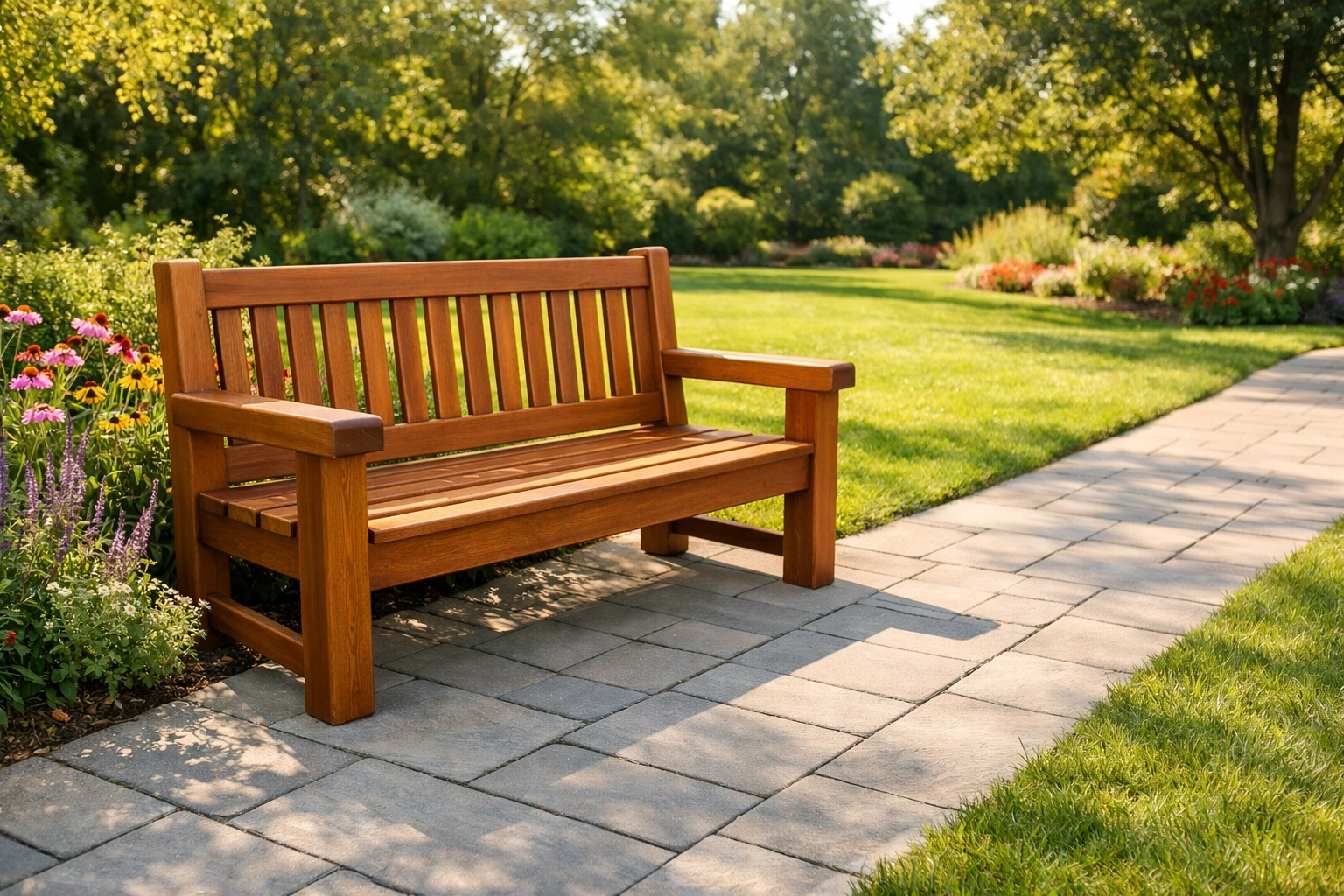
Strategic seating is a functional safety feature. Placing a sturdy, weather-resistant bench halfway down a long path provides a "safe zone" where you can sit, catch your breath, and regain your energy before continuing. Ensure the seating has armrests, as these provide the necessary leverage to help you stand up safely.
9. Address Seasonal Hazards (Moss and Ice)
The weather plays a massive role in outdoor safety. In shaded areas, wooden decks and stone paths can develop a layer of moss or algae that becomes like ice when wet.
Regular maintenance is essential. Power-washing your patio or using an eco-friendly moss killer can keep these surfaces "toothy" and safe.
In colder climates, ensure you have a plan for snow and ice removal. If you cannot clear the snow yourself, arrange for a neighbor or a service to do it as soon as the storm ends. Keep a container of salt or sand near the door (inside) so you can treat the immediate porch area before you even step outside.
10. Choose the Right Outdoor Footwear
Safety doesn't just stop at the ground; it includes what you put on your feet. It’s tempting to slip into a pair of loose clogs or flip-flops for a quick trip to the mailbox or to check the garden, but these offer very little support.
For outdoor activities, wear shoes with a firm heel, a non-slip rubber sole, and a secure fastening (like laces or Velcro). Avoid smooth-soled "dress" shoes or slippers that can easily slide on grass or damp wood. If you use a walking aid like a cane or walker, check the rubber tips regularly. Outdoor use wears these tips down faster than indoor use, and a worn-out tip loses its ability to grip the ground.
Putting It All Together
Creating a "fall-proof" outdoor space isn't about one single change; it’s about a combination of small, thoughtful adjustments. By looking at your porches, pathways, and patios through the lens of safety, you are investing in your future mobility and your ability to enjoy the outdoors for years to come.
Start with the most high-traffic areas: the steps to your front door and the path to the driveway: and work your way out. If you aren't sure where to begin, consider asking a physical therapist or a specialized home inspector to do a walk-through with you. They can point out hazards that you might have become "blind" to simply because you see them every day.
At Fall Guys Products, our goal is to provide the knowledge you need to stay safe in every corner of your life. Your backyard should be a place of relaxation, not a source of worry. With a little preparation, you can keep it that way.

