
Stairs are one of those things we use every single day without giving them much thought: until something goes wrong. In many homes, the staircase is the most significant architectural hazard. Whether you are living independently and planning for the future, or you are a caregiver looking out for a loved one, understanding the nuances of stair safety is critical.
At Fall Guys Products, we spend a lot of time thinking about how to make homes safer and more accessible. I’m Brian Kerr, and I’ve seen firsthand how a few small adjustments to a staircase can be the difference between a close call and a serious injury. Many of the "mistakes" people make aren't obvious; they are often built right into the home or develop slowly over time through habit.
In this guide, we’re going to look at the seven most common mistakes people make with stair safety and, more importantly, the practical, reassuring steps you can take to fix them right now.
1. Ignoring the "Goldilocks" Zone of Dimensions
When a house is built, the stairs are usually designed to meet a specific building code. However, codes change, and older homes often have stairs that are either too steep, too shallow, or inconsistent.
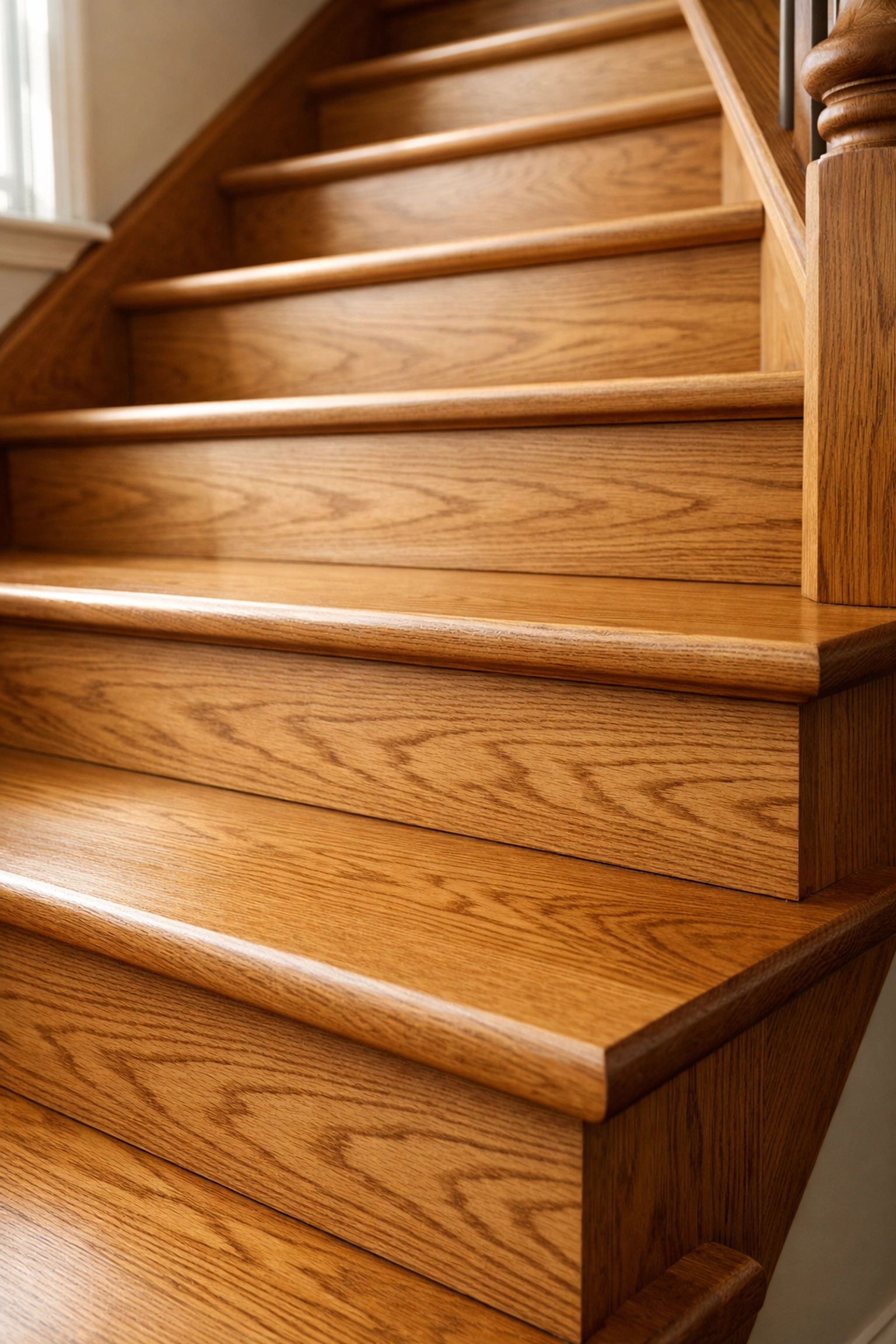
The most common mistake here is having risers that are too high or treads that are too narrow. The "riser" is the vertical part of the step, and the "tread" is the horizontal part where you place your foot. If the riser is too high (over 7.5 or 8 inches), it requires a lot of lower-body strength and balance to ascend. If the tread is too narrow (less than 10 inches), your foot doesn’t have enough surface area to plant securely, especially when coming down.
How to Fix It:
While you can’t easily rebuild a staircase, you can improve how you interact with it. If your treads are too shallow, ensure you are wearing footwear with a thin, firm sole that allows you to feel the edge of the step. For new builds or major renovations, aim for a riser height of about 6 to 7 inches and a tread depth of at least 11 inches. If your steps are inconsistent: meaning one step is slightly taller than the others: this is a major tripping hazard. Marking the edge of inconsistent steps with high-visibility "stair nosing" or grip tape can alert the brain to the change in height.
2. Living with "The Steep Slope"
A steep staircase is a workout for a young athlete, but it’s a liability for someone with mobility challenges. A slope that exceeds 40 or 45 degrees significantly increases the physical demand on the knees and hips. It also makes the descent much more frightening, as the center of gravity is pushed further forward.
How to Fix It:
If a staircase is dangerously steep, the best fix is to limit how often it’s used. Many people are moving toward "single-level living" by relocating the primary bedroom to the first floor. If that’s not an option, you must ensure that every other safety measure: like handrails and lighting: is doubled down on. Sometimes, adding a "mid-point landing" or a rest chair at the top and bottom can help manage the fatigue that often leads to stumbles on steep inclines.
3. Relying on Weak or Short Handrails
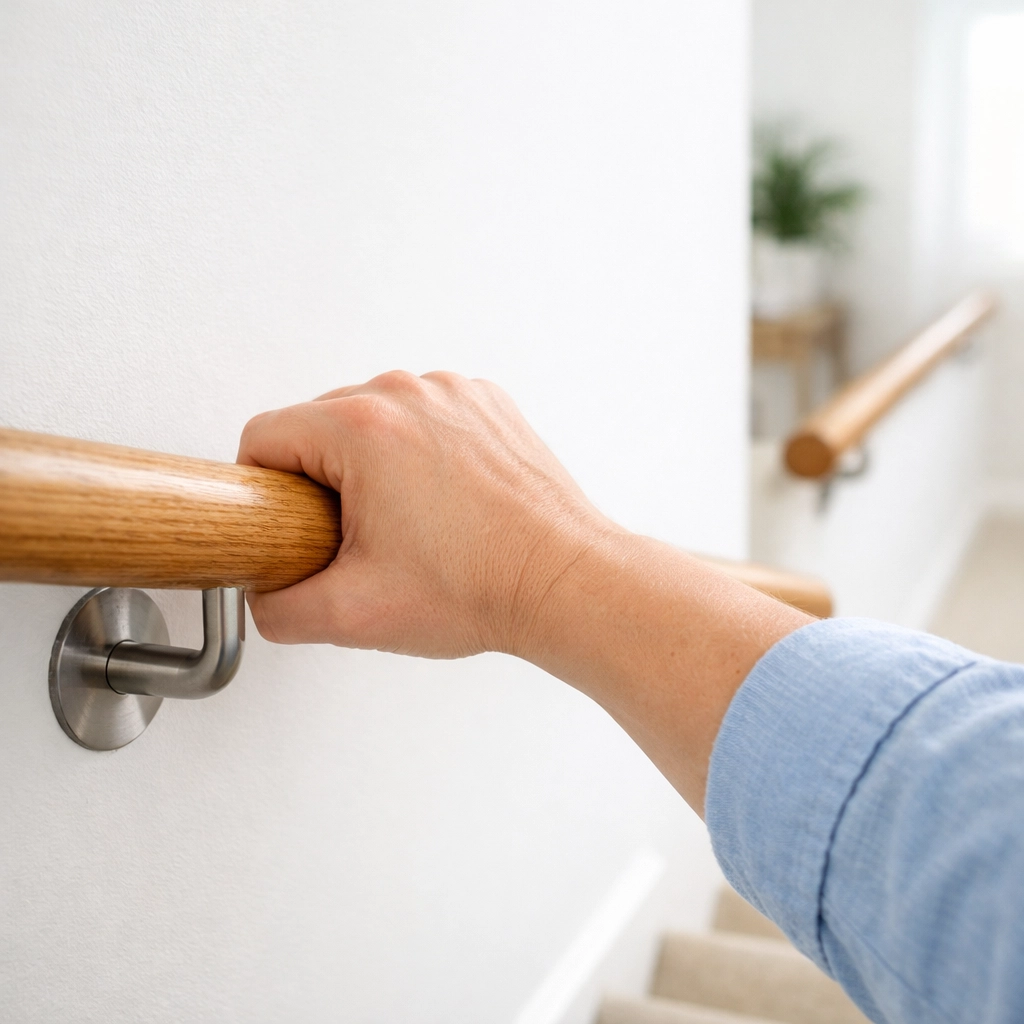
This is perhaps the most frequent mistake I see. A handrail shouldn't just be a piece of wood attached to the wall for decoration; it needs to be a structural safety device. Many homes only have a rail on one side, or the rail stops a few inches before the last step.
If you lose your balance on that very last step: which is where many falls happen: and the handrail has already ended, you have nothing to grab. Furthermore, if the handrail is loose or "wobbly," it won't support your full weight in an emergency.
How to Fix It:
- Install Dual Rails: Every staircase should have a handrail on both sides. This allows you to use both arms for stability and ensures there is support regardless of which side you naturally lean toward.
- The Extension Rule: Ensure your handrails extend at least 12 inches beyond the top and bottom steps. This gives you a "lead-in" and "lead-out," allowing you to find your balance before you start climbing or after you finish.
- Check the Grip: A handrail should be easy to wrap your hand around. If it’s too wide (like a flat piece of 2×4 lumber), you can’t get a secure "power grip." Round or oval rails with a diameter of about 1.25 to 2 inches are ideal.
4. The Danger of "Shadow Zones" (Poor Lighting)
We often underestimate how much our vision contributes to our balance. As we age, our eyes require more light to see clearly, and our depth perception can diminish. If your staircase is dim, or if the lighting creates harsh shadows, it becomes very difficult to tell where one step ends and the next begins.
A single overhead bulb at the top of the stairs is rarely enough. It often creates a silhouette effect where you are stepping into your own shadow.
How to Fix It:
The goal is "uniform illumination."
- Motion Sensors: Install motion-activated lights at the top and bottom. This ensures the stairs are lit the moment you approach them, even if you’ve forgotten to flip a switch.
- LED Strip Lighting: This is a fantastic modern fix. Running LED strips under the lip of each tread or along the baseboard illuminates the actual walking surface without creating glare.
- Contrast: If the stairs and the floor at the bottom are the same color (e.g., all dark wood), use a strip of contrasting colored tape or a different colored "nosing" on the edge of each step. This creates a clear visual "map" for your feet.
5. Overlooking Slippery Surfaces
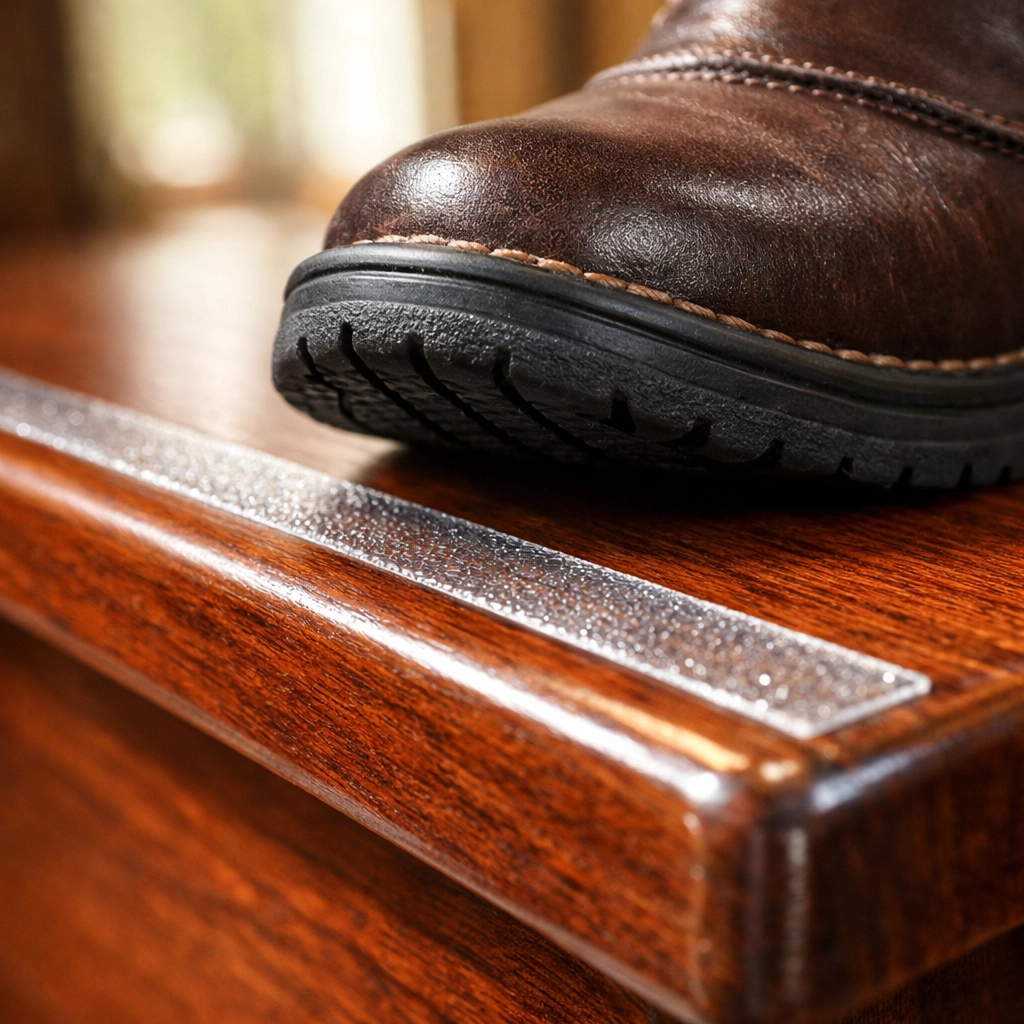
Polished hardwood stairs are beautiful, but they are essentially slides for anyone wearing socks or smooth-soled slippers. Even carpet can be a hazard if it’s thick and "shaggy," as it can hide the actual edge of the step and cause your foot to slide forward.
How to Fix It:
If you have wooden or tile stairs, you don't necessarily need to cover them in carpet. You can apply transparent anti-slip adhesive strips. These provide a grit-like texture that creates friction without ruining the look of the wood.
If you have carpeted stairs, ensure the carpet is "tightly wrapped" over the edge of the steps (the "nose"). If the carpet is loose or has a thick pad underneath that creates a rounded edge, it’s safer to remove the carpet or replace it with a low-pile, industrial-grade version that allows for a firm, flat foot plant.
6. Postponing Routine Maintenance
Stairs take a lot of abuse. Over years of use, treads can become loose, nails can pop up, and wooden boards can warp. A "squeaky" step isn't just an annoyance; it’s often a sign that the tread is moving. If a step shifts even half an inch while you are putting your weight on it, it can easily throw off your equilibrium.
How to Fix It:
Once every few months, do a "stair patrol."
- Walk up and down slowly, listening for creaks and feeling for any "give" in the boards.
- Check the "stringers" (the sides of the stairs) for cracks.
- If a board is loose, don’t just hammer a nail back in. Nails pull out over time. Use wood screws to secure the tread to the stringer. Screws have much better "bite" and won't back out.
- Check the handrail brackets. Tighten any screws that have wiggled loose from the wall studs.
7. Using Stairs as a "Landing Zone" for Clutter
We’ve all done it: we put a basket of laundry, a stack of mail, or a pair of shoes on the bottom few steps, intending to take them up "on the next trip." This is a recipe for disaster.
When you are walking down the stairs, your vision is focused a few steps ahead. If there is an object in your path, you might try to step over it, which shifts your center of gravity awkwardly. Even worse, if you don't see the object, a trip on a staircase is much more dangerous than a trip on flat ground because gravity is working against you.
How to Fix It:
Adopt a "Zero Tolerance" policy for stair clutter.
- Nothing: not even a piece of paper: should ever be left on a step.
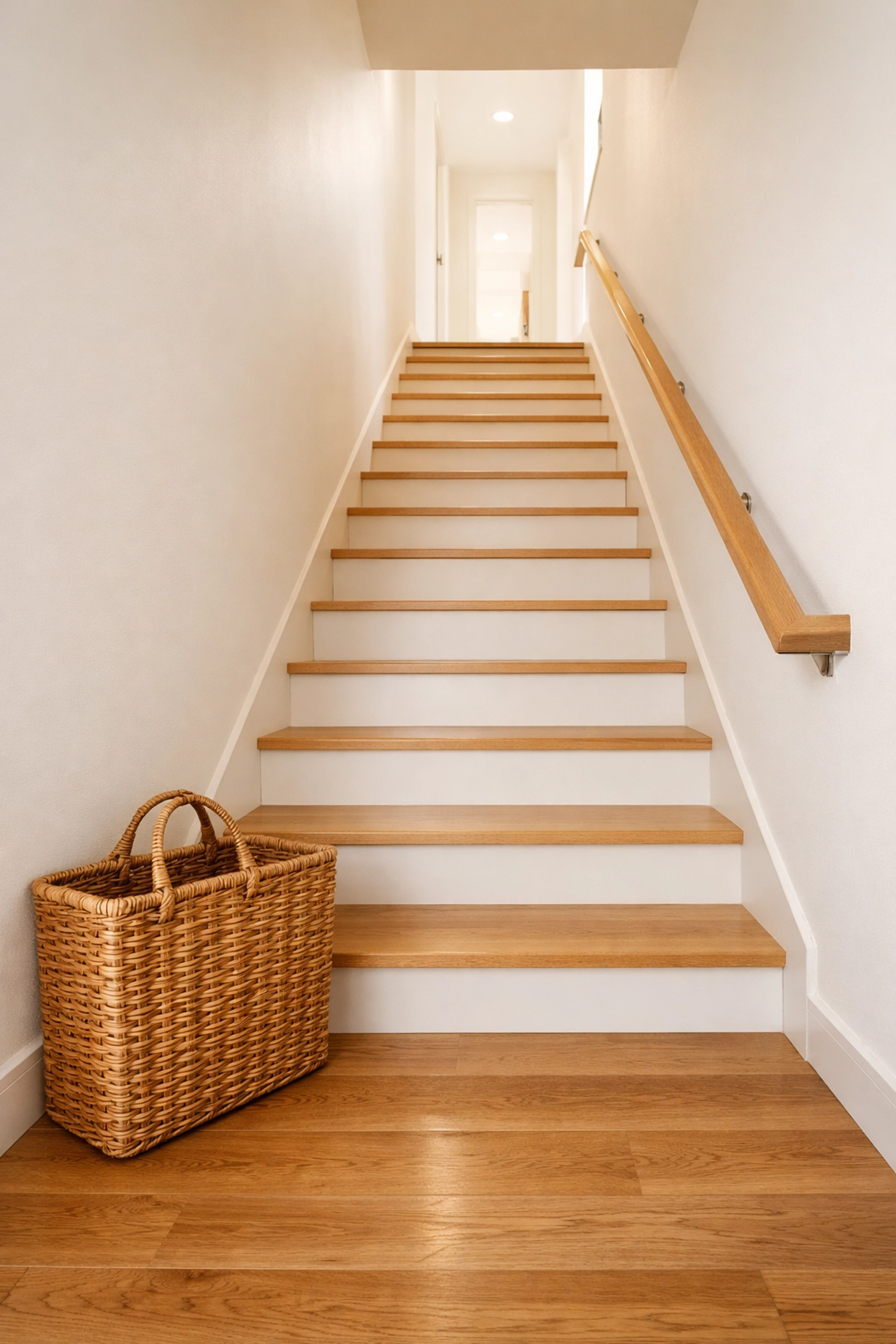
- If you have items that need to go up or down, place them in a dedicated "stair basket" that sits on the floor next to the stairs, not on them.
- Educate everyone in the house, including grandchildren and visitors, that the stairs are a "clear zone" only.
Thinking Beyond the Physical: The Behavioral Aspect
While fixing the physical environment is essential, we also have to look at how we move. One of the best ways to stay safe on stairs is to avoid rushing. Many falls happen when the phone rings or someone is at the door, causing us to move faster than our balance allows.
Another tip is the "Always One Hand" rule. Even if you feel perfectly steady, make it a habit to always have at least one hand lightly touching the handrail. This provides "proprioceptive feedback" to your brain, telling it exactly where your body is in space.
Stair safety doesn't have to be overwhelming or expensive. By addressing these seven common mistakes: lighting, dimensions, handrails, surfaces, maintenance, slope, and clutter: you can transform one of the most hazardous areas of your home into a space that supports your independence and peace of mind.
Remember, the goal isn't just to prevent a fall; it's to feel confident and secure in your own home every single day. Taking these steps now is a proactive way to ensure that your home remains the safe haven it's meant to be.

