
Stairs are a fundamental part of many homes, yet they often represent one of the most significant challenges as we age or face mobility changes. At Fall Guys Products, we believe that staying in the home you love should be a safe and stress-free experience.
When we talk about fall prevention, the conversation usually turns to bathroom grab bars or bedroom bed rails. While those are vital, the staircase is frequently overlooked until a "close call" occurs. The reality is that stair safety isn't just about whether or not you have a railing; it’s about the subtle details of lighting, depth perception, and even the way we carry ourselves as we move between floors.
If you or a loved one are feeling a little less confident on the steps lately, you aren't alone. Identifying common mistakes is the first step toward regaining that confidence. Here are seven mistakes many homeowners make with their stairs: and, more importantly, how you can fix them.
1. Inconsistent Step Dimensions (The Hidden Trip Hazard)
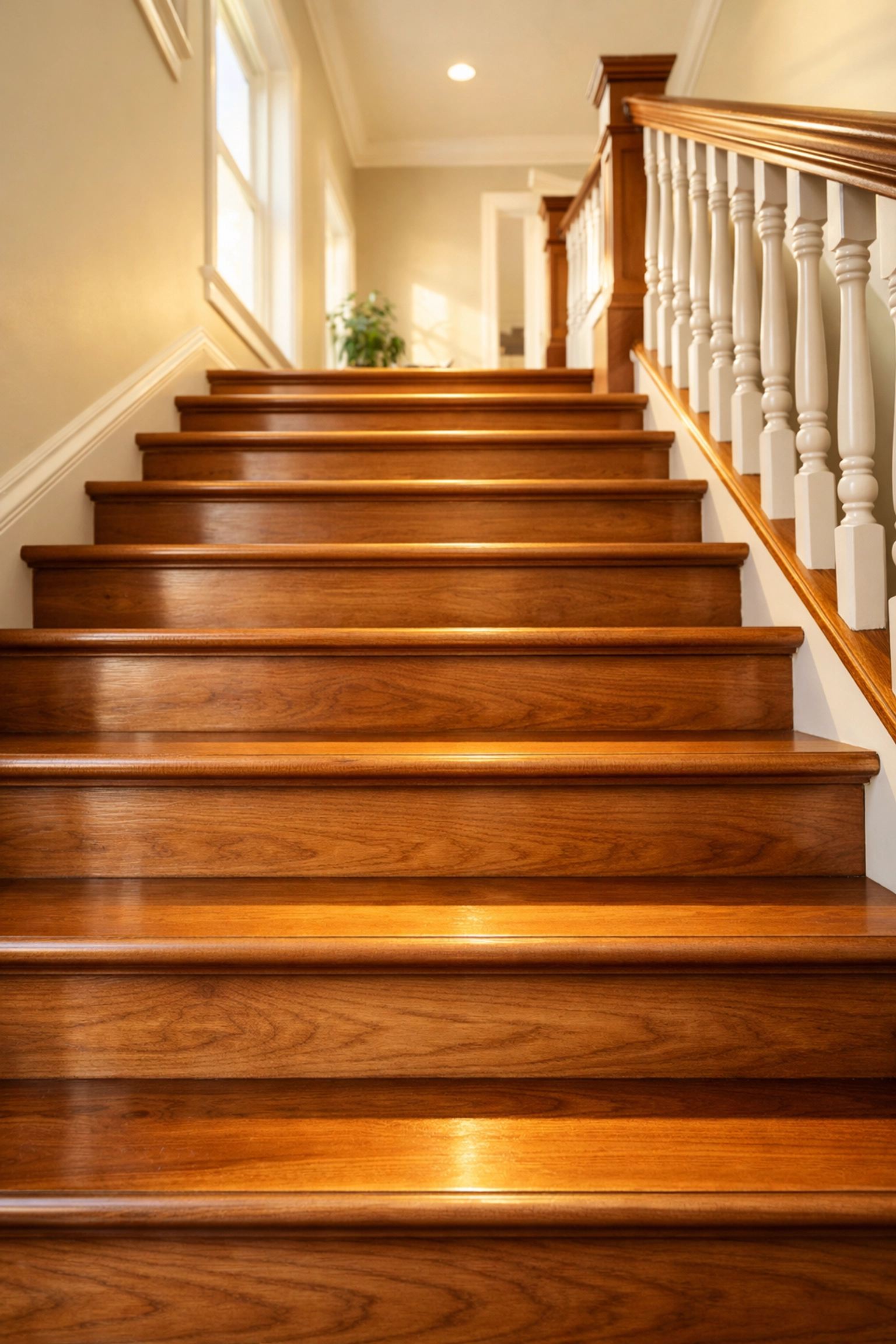
One of the most dangerous elements of a staircase is something you might not even notice with the naked eye: inconsistency. Our brains are incredibly efficient at "mapping" the environment. When you take the first two or three steps on a staircase, your motor memory sets a rhythm based on the height (rise) and depth (tread) of those steps.
If the top step is slightly shorter than the rest, or if the landing is deeper than the other treads, your foot won't land where your brain expects it to. This is often seen in older homes where the "nosing": the part of the step that overhangs: is missing on the top landing.
The Fix:
Consistency is king. If you are renovating, ensure that all steps maintain the same dimensions. If you are living with existing stairs, take a tape measure to them. If you find a variation of more than a quarter-inch between steps, that area needs to be highlighted. You can use high-contrast anti-slip tape on the edge of the inconsistent step to "alert" your brain that the rhythm is changing.
2. Falling for the "Bottom-Step Illusion"
Have you ever reached the bottom of the stairs and thought there was one more step when there wasn't? Or, worse, thought you were on the floor only to find one more step remaining? This is known as the "bottom-step illusion."
This happens most frequently when the flooring of the staircase matches the flooring of the lower level perfectly. For example, if you have oak stairs that lead down into an oak-floored hallway, the transition between the last step and the flat ground becomes visually blurred. Without a clear "stop" signal, it’s easy to misjudge the distance.
The Fix:
You need to create a visual "break" between the last step and the floor. You can do this by:
- Using a different color of anti-slip tread on the very last step.
- Installing a rug at the bottom of the landing that is a significantly different color than the stairs.
- Applying a strip of high-visibility tape to the edge of the final tread.
3. Relying on "Decorative" Rather Than "Functional" Handrails
Not all handrails are created equal. In many modern or high-end homes, handrails are designed for aesthetics first and safety second. You might see "chunky" rectangular rails or thin, ornate metal ones.
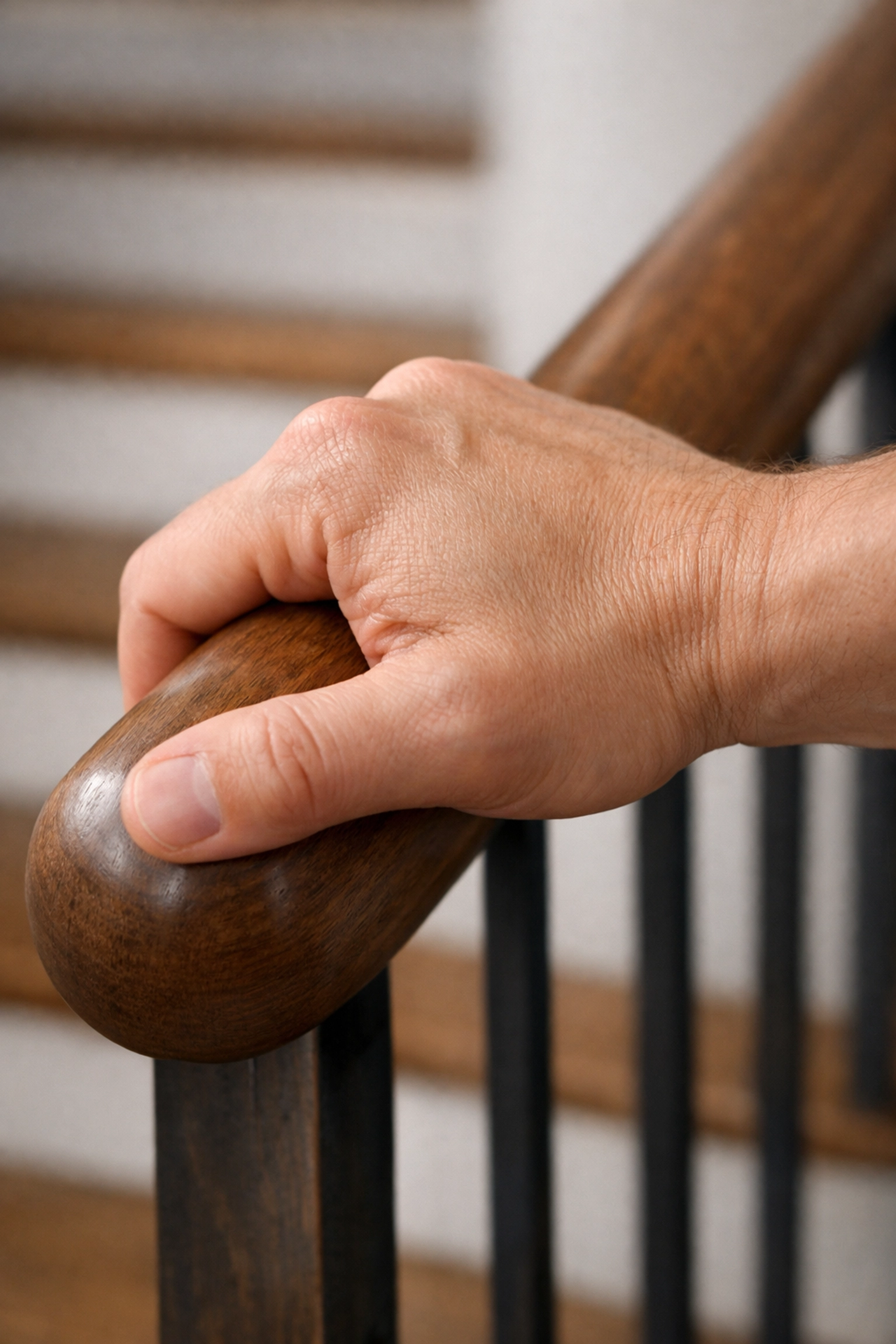
The mistake here is thinking that any rail is a safe rail. To be truly effective, a handrail must allow for a "power grip." This means your hand should be able to wrap almost entirely around the rail so that your thumb and fingers can meet. If a rail is too wide or too flat, you are merely resting your hand on it rather than gripping it. If you were to slip, a flat rail offers very little resistance to prevent a fall.
The Fix:
The ideal handrail is round or oval, with a diameter between 1.25 and 2 inches. It should be mounted between 34 and 38 inches above the stair nosing. Most importantly, ensure the rail is "continuous." You shouldn't have to let go of the rail to navigate a turn or a landing. If your home has a gap in the railing, consider installing a bridge rail or an additional segment to ensure you have a point of contact from the very first step to the very last.
4. Neglecting the "Shadow Zones" (Inadequate Lighting)
Dim lighting is one of the leading contributors to stair accidents. However, "bright" light isn't always the answer: it's about the quality and placement of the light.
A single overhead bulb at the top of the stairs often creates long shadows over the treads, making it difficult to see where one step ends and the next begins. Conversely, a very bright, unshielded bulb can cause glare, which is particularly difficult for individuals with cataracts or other vision changes.
The Fix:
The goal is uniform, glare-free illumination.
- Dual Switches: Ensure there are light switches at both the top and bottom of the stairs.
- LED Strip Lighting: Installing motion-activated LED strips under the lip of each tread or along the baseboard is a game-changer. It illuminates the walking surface directly without shining into your eyes.
- Night Lights: Use plug-in motion-sensor night lights in the hallways leading to the stairs to ensure your eyes have time to adjust to the light level before you begin your descent.
5. Walking in Socks or Smooth-Soled Slippers
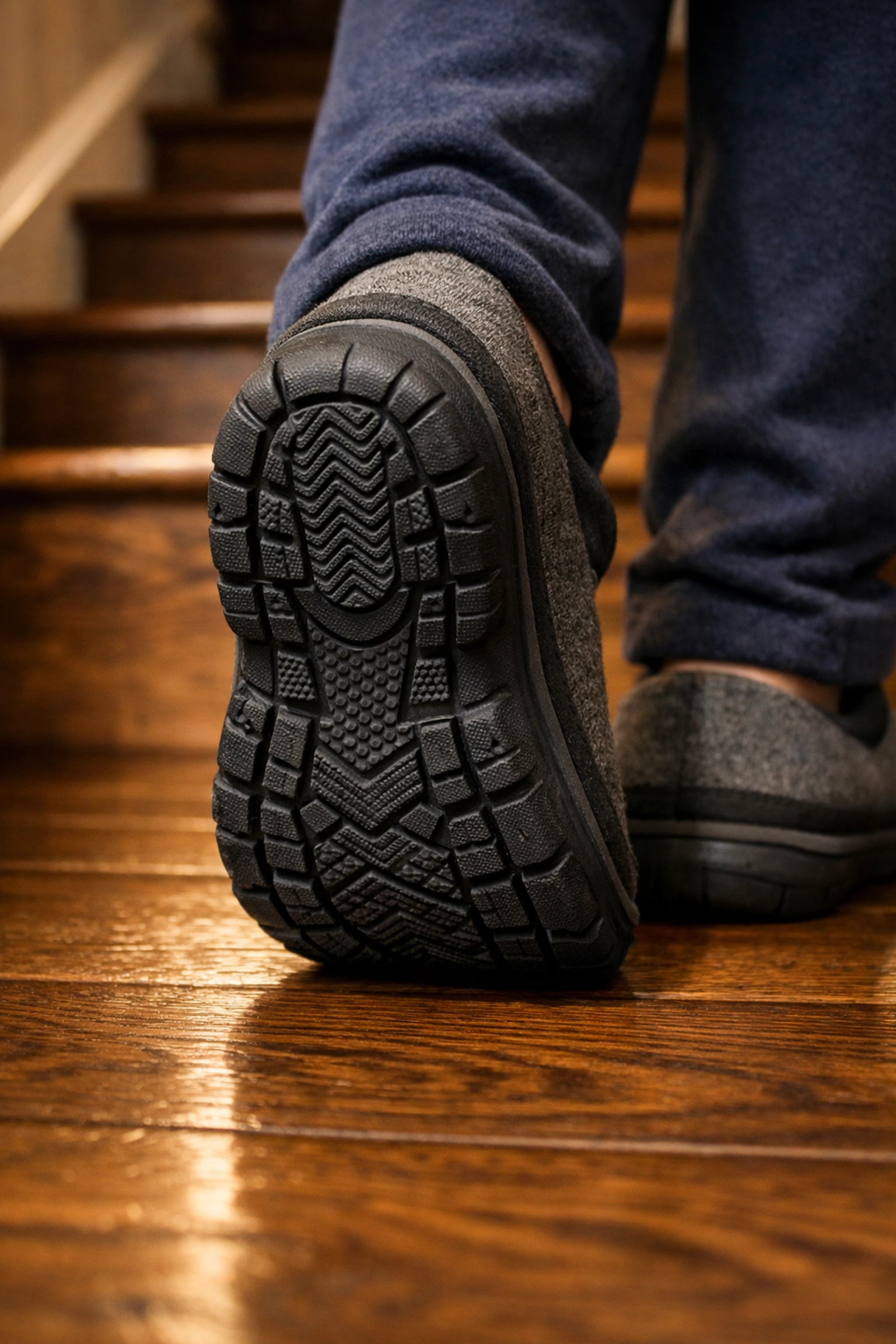
We all value comfort, especially at home. However, walking on hardwood or polished stone stairs in standard socks is essentially like walking on ice. Socks provide zero traction, and because they don't secure to your foot, they can slide or bunch up, causing a stumble.
Similarly, many "house slippers" have smooth leather or plastic soles that offer very little grip on finished wood. While the stairs themselves might be safe, the "equipment" you're wearing on your feet might be the weak link.
The Fix:
Always wear footwear with a non-slip rubber sole, even inside the house. If you prefer the comfort of socks, opt for specialized "grip socks" that feature rubberized patterns on the bottom. Better yet, keep a dedicated pair of "indoor-only" supportive shoes with high-traction soles near your bed or favorite chair.
6. The "I'll Take it Up Later" Clutter Trap
It’s a common habit: placing mail, a laundry basket, or a pair of shoes on the bottom two steps so you can "remember to take them up" the next time you go. This turns a functional staircase into an obstacle course.
Even if you think you’re aware of the items, they narrow the walking path and can distract you. If you are carrying something else, like a cup of tea or a book, your vision of your own feet is already obscured. Adding a stray shoe or a stack of magazines into that mix is a recipe for a trip.
The Fix:
Adopt a "Zero Items on Stairs" policy. If things need to go upstairs, use a "stair basket" placed completely off the walking path, perhaps on a side table near the base of the stairs. Never place items directly on the treads. If you find it difficult to carry items while using the stairs, consider installing a small "stair lift" for packages or, more simply, ask a family member to help clear the path each evening.
7. Ignoring the Impact of Vision Changes (The Bifocal Factor)
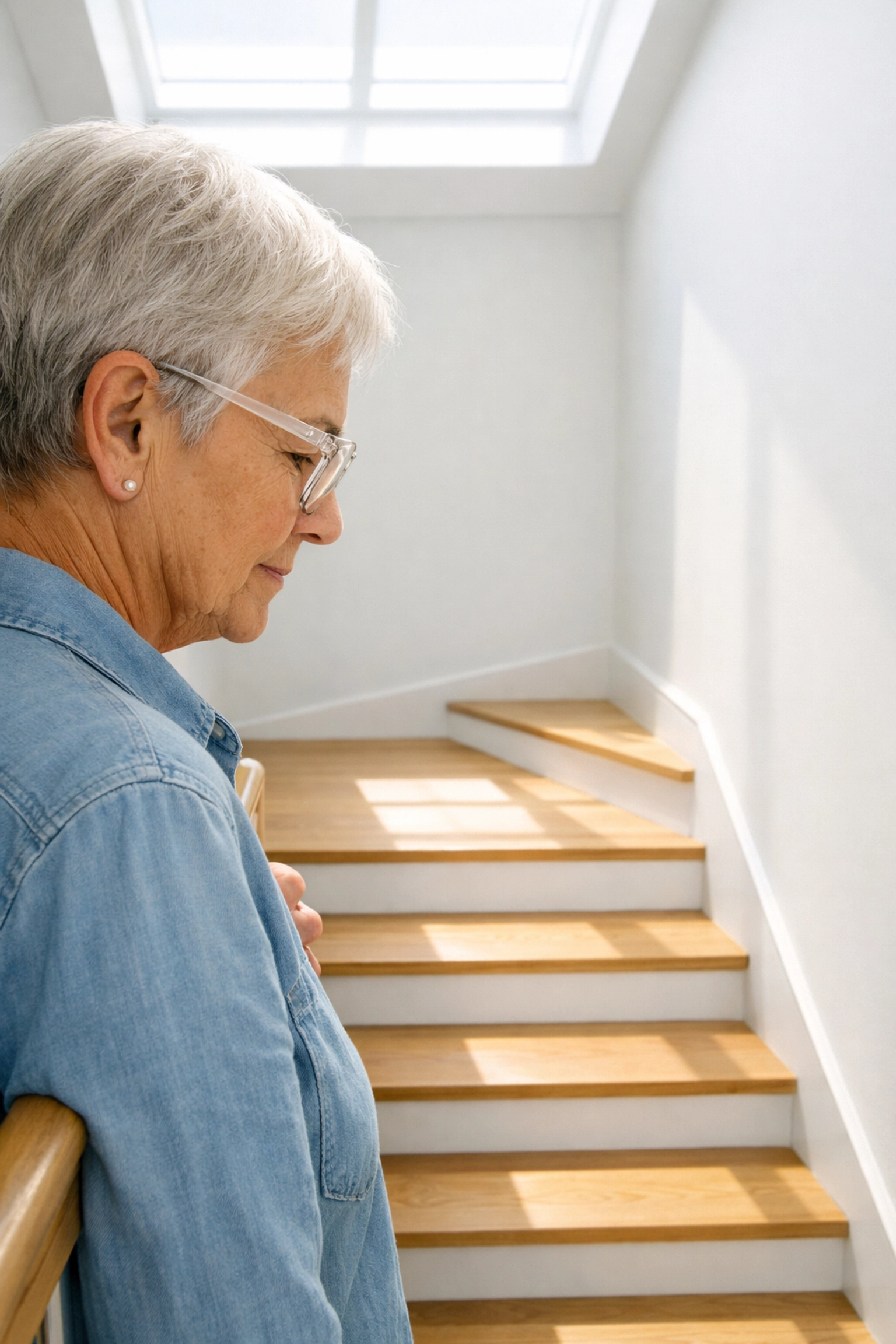
This is a subtle mistake that many people don't realize they are making. If you wear bifocals or progressive lenses, the bottom portion of your glasses is designed for reading (close-up work). When you look down at your feet while walking down the stairs, you are looking through that reading portion.
This can make the steps appear blurry or seem further away than they actually are, which severely distorts your depth perception.
The Fix:
When navigating stairs, try to tuck your chin down further so you are looking through the "distance" (top) part of your lenses rather than the "reading" (bottom) part. Alternatively, talk to your optometrist about getting a pair of single-vision glasses specifically for walking and moving around the house. It may seem like a hassle to switch, but the clarity of the steps is worth the effort.
The Importance of the "Three Points of Contact"
Beyond the physical environment, how we use the stairs matters. Many of us grew up running up and down the steps without a second thought. As we age, our center of gravity shifts and our reaction times may slow down.
The safest way to navigate any staircase is by maintaining "three points of contact" whenever possible. This means having both feet and at least one hand (on the rail) in contact with the structure at all times.
Don't be afraid to take it slow. There is no prize for finishing the staircase quickly. Take one step at a time, ensure your foot is firmly planted, and keep your hand securely on the railing. If you feel tired or winded, stop and rest on a landing or a wide step (if safe to do so) before continuing.
Regular Maintenance: The Seasonal Check-up
Finally, remember that stairs are subject to wear and tear. Over time, carpet can become loose or "bunched," creating a trip hazard. Wood treads can become slick as the finish wears down, and handrail brackets can wiggle loose from the drywall.
A simple safety checklist:
- Check the Carpet: Is it tight? Are there any frayed edges or loose staples?
- Test the Rail: Give it a firm shake. Does it move? If so, the brackets need to be tightened or moved to a more secure wall stud.
- Inspect the Treads: Look for cracks in wood or tiles that might catch a heel.
Final Thoughts
Stair safety isn't about one big change; it’s about a series of small, intentional adjustments. By fixing inconsistent dimensions, improving lighting, and choosing the right footwear, you can significantly reduce the risk of a fall.
At Fall Guys Products, our goal is to empower you with knowledge. Whether it’s choosing a better handrail or simply clearing away the clutter, every step you take toward a safer home is a step toward maintaining your independence and peace of mind. Stay safe, move with confidence, and remember that your home should always be your sanctuary.

