
Getting older often means making a few adjustments to keep doing the things we love. For many of us, that means bringing a mobility aid into the mix: whether it’s a cane for a little extra balance or a walker to help cover longer distances. These tools aren't just pieces of metal and plastic; they are keys to independence. They allow you to walk to the mailbox, visit friends, and navigate your home safely.
However, simply having a mobility aid isn’t the same as using it correctly. In my years of working in the medical equipment field, I’ve seen that many seniors: and their well-meaning family members: unintentionally make mistakes that actually increase the risk of a fall rather than preventing one.
If you find yourself feeling unsteady even with your walker, or if your wrist aches after using your cane, you might be making one of these common mistakes. Let’s walk through the most frequent errors and, more importantly, how you can fix them to stay safe and confident.
1. Choosing the Wrong Tool for the Job
The first mistake often happens before the mobility aid even leaves the store. Many people choose a device based on what a friend uses or what happened to be in the garage from a relative's recovery. But mobility aids are not "one size fits all."
A cane is designed for minor balance issues or to take a small amount of weight off a painful joint (like a "bad knee"). A walker provides much more stability for those who struggle with significant balance issues or weakness in both legs. A rollator: the kind with four wheels and a seat: is fantastic for endurance but can actually be dangerous for someone who needs to lean heavily on their frame, as it can "run away" from them.
How to Fix It:
Don't guess. Before purchasing any equipment, consult with a physical therapist or a doctor. They can perform a gait analysis and a balance assessment to tell you exactly what level of support you need. Using a cane when you really need a walker is like using a toothpick to prop up a tent: it’s just not enough support.

2. Setting the Height Incorrectly
This is perhaps the most common issue I see. If your mobility aid is the wrong height, it throws off your entire center of gravity.
If a cane or walker is too low, you’ll find yourself hunched over. This leads to back pain and forces you to look at the floor rather than at the path ahead of you. If it’s too high, you have to "hike" your shoulders up, which leads to neck strain and makes the device less stable because you can’t put your full weight through your arms comfortably.
How to Fix It:
There is a simple "rule of thumb" (or rather, a rule of wrist) for finding the right height:
- Stand up as straight as you comfortably can.
- Let your arms hang naturally at your sides.
- The handle of your cane or walker should line up with the crease on the inside of your wrist.
- When you grip the handle, your elbow should have a slight, comfortable bend: usually about 15 to 20 degrees.
3. Holding a Cane on the "Bad" Side
It feels intuitive to hold a cane on the side that hurts. If your right hip is bothering you, you naturally want to put the cane in your right hand to "help" that side. Surprisingly, this is exactly the opposite of what you should do.
Holding a cane on the same side as your weak or injured leg actually shifts your weight awkwardly and can cause you to limp more. It doesn't allow the cane to mimic the natural movement of your body.
How to Fix It:
Always hold your cane in the hand opposite of your weaker leg. If your right knee is the problem, hold the cane in your left hand. As you step forward with your right (weak) leg, you move the cane forward at the same time with your left hand. This allows the cane to take the pressure off the weak side and keeps your center of gravity right where it needs to be.
4. The "Step-Aid-Step" Coordination Shuffle
Using a walker or cane requires a specific rhythm. A common mistake is placing the mobility aid too far ahead of your body. When you push a walker way out in front, you are essentially leaning forward into a "danger zone." If your feet are too far behind your support, your balance is compromised, and the walker could slide out from under you.
Another common error is "furniture surfing": using the walker for a few steps, then letting go of it to grab a table or a doorway.
How to Fix It:
Think of your walker as a protective "bubble." You should always be standing inside the frame of the walker, not behind it.
- For a walker: Move the walker forward about one step's length. Step into the center of the frame with your weaker leg first, then follow with your stronger leg.
- For a cane: Move the cane and the weak leg together, then step through with the strong leg.
Always keep your eyes looking forward, not down at your feet. If you’re looking at your toes, you won't see the rug or the pet that might be in your path.
5. Neglecting Routine Maintenance
We wouldn't drive a car for five years without changing the oil or checking the tires, yet many people use the same walker for years without a single "tune-up."
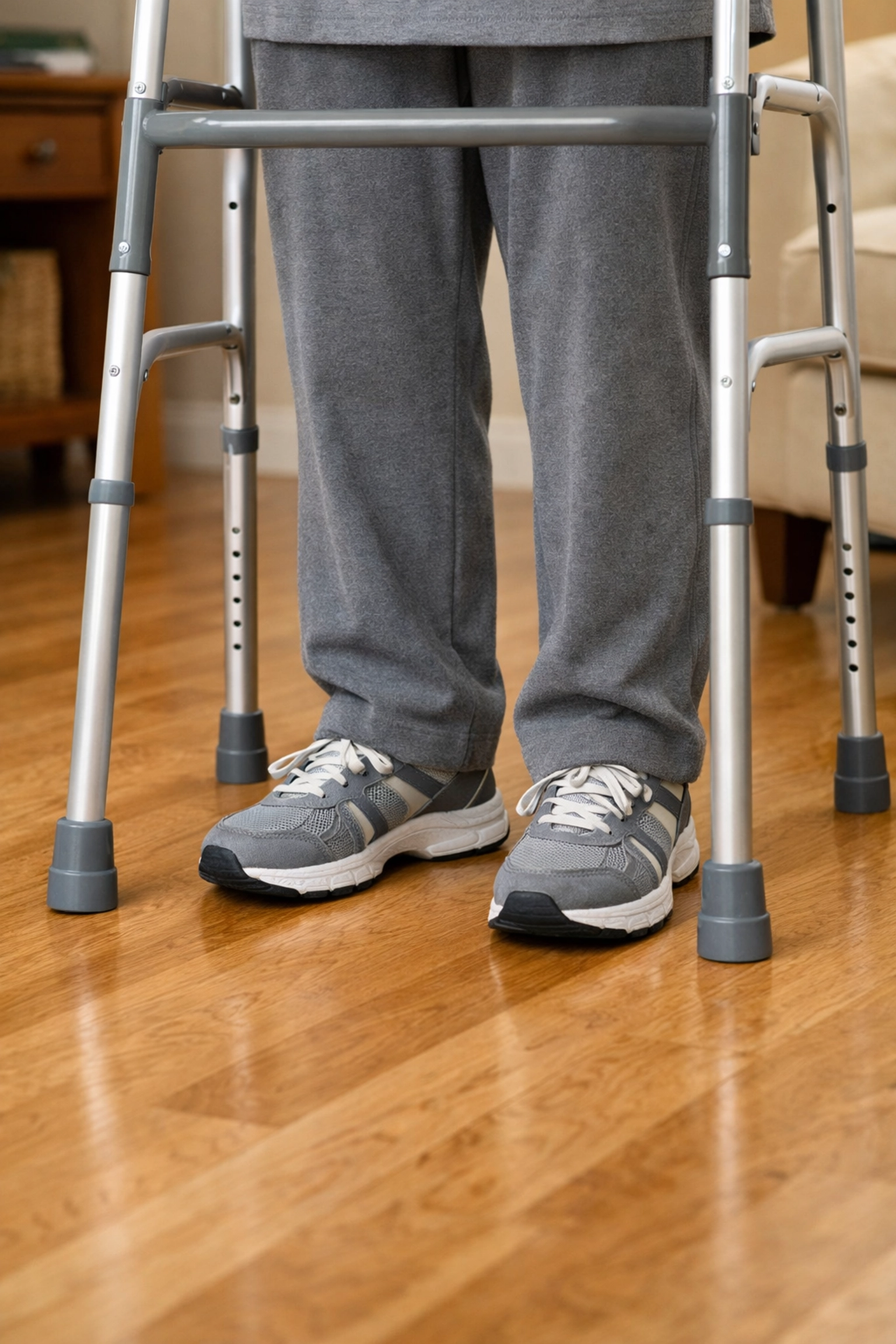
Mobility aids have parts that wear out. The most critical part is the rubber tip (the ferrule) at the bottom of canes and walker legs. These tips are designed to grip the floor. Once the tread wears down and the rubber becomes smooth or cracked, it’s like driving on bald tires in the rain. Similarly, rollator brakes can loosen over time, meaning the seat might slide away when you try to sit down.
How to Fix It:
Perform a weekly safety check.
- Check the tips: If the bottom of the rubber looks smooth or if you can see the metal of the cane poking through, replace the tip immediately.
- Check the "grip": Make sure the handles aren't loose or sticky.
- Brake check: If you have a rollator, squeeze the brakes to ensure they lock the wheels firmly.
- Tighten bolts: Give the frame a gentle shake. If you hear rattling, a bolt might need tightening.
6. Wearing the Wrong Footwear
You can have the most expensive, perfectly adjusted walker in the world, but if you’re wearing loose slippers or socks on a hardwood floor, your risk of falling is still high.
Mobility aids are designed to work in tandem with your feet to create points of stability. Slippery soles or shoes without a back (like clogs) don't provide the sensory feedback your brain needs to maintain balance. High heels or heavy boots can also throw off your gait and make using a mobility aid much more difficult.
How to Fix It:
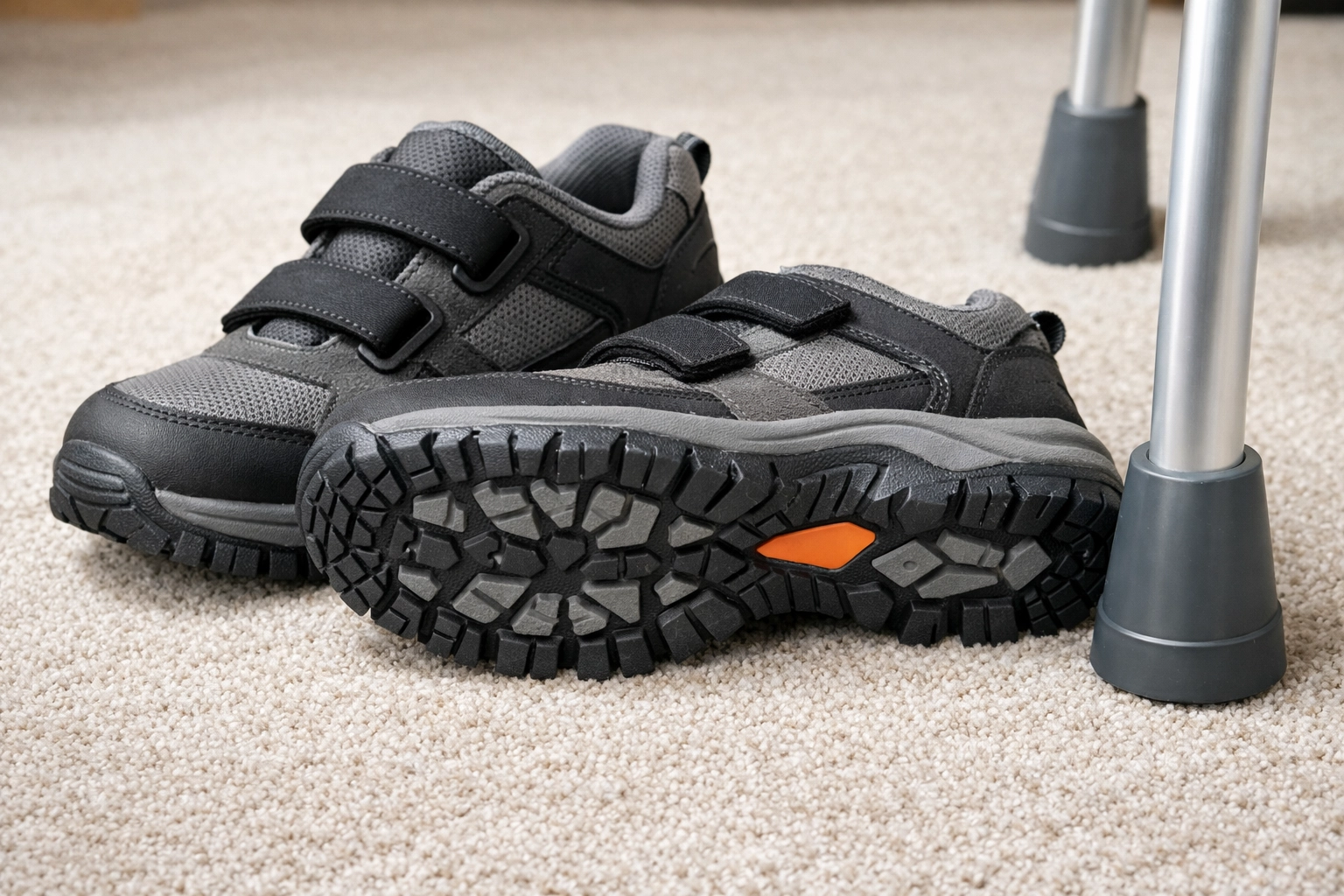
Whenever you are using your mobility aid, wear sturdy, closed-toe shoes with non-slip soles. Look for shoes with laces or Velcro that can be adjusted if your feet swell during the day. Avoid walking in just socks or smooth-bottomed slippers. If you prefer to be "shoeless" at home, look for high-traction house shoes that stay firmly attached to your feet.
7. Being Inconsistent (The "I'm Just Going to the Kitchen" Trap)
This is perhaps the most dangerous mistake of all. Many seniors use their mobility aid when they go to the grocery store or the doctor’s office because they know those are long distances. However, they leave the aid by the recliner when they get up to go to the kitchen or the bathroom.
Statistically, the majority of falls happen inside the home, often on short trips to the bathroom in the middle of the night. We tend to be less "on guard" in our own homes, leading us to take risks like "furniture surfing" (grabbing onto chairs or walls) instead of using the tool specifically designed to keep us upright.
How to Fix It:
If you have been prescribed a mobility aid, use it for every trip, no matter how short. Keep it within arm's reach of your bed, your favorite chair, and the dinner table. If you find your walker is too bulky for a small bathroom, talk to a professional about alternative solutions like installed grab bars or narrow-profile walking aids, but never settle for "winging it."
Beyond the Device: Creating a Safe Environment
Fixing these mistakes is a giant leap toward safety, but the environment plays a role too. A mobility aid is only as good as the surface it’s on.
- Remove Rugs: Throw rugs are the enemy of walkers and canes. Even a small "lip" on a rug can catch a walker wheel or a cane tip.
- Lighting is Key: Ensure the path you walk with your aid is well-lit. Motion-sensor nightlights are a great way to ensure you can see your path during those midnight trips to the kitchen.
- Clear the Path: Keep hallways free of clutter, electric cords, and pet toys.
Using a mobility aid correctly is a skill that takes a little practice. It might feel awkward at first, and it’s okay to feel a bit frustrated as you adjust to the new rhythm. But remember: these tools are there to support your freedom. By avoiding these seven common mistakes, you’re not just carrying a cane or pushing a walker: you’re actively protecting your independence and your health.
If you’re ever unsure, reach out to a healthcare professional. They would much rather spend thirty minutes teaching you how to use a walker correctly than see you in the clinic after a fall. Stay safe, stay upright, and keep moving forward.

