
When we talk about making a home safe for aging in place, the bedroom is usually at the top of the list. It makes sense, we spend about a third of our lives there. For many seniors, the simple act of getting in and out of bed becomes a daily challenge. Whether it’s due to arthritis, general muscle weakness, or balance issues, that transition from lying down to standing up is a high-risk moment for falls.
Naturally, the first solution most families look for is a "bed rail." But if you start browsing the aisles of a medical supply store or scrolling through options online, you’ll quickly realize that not all rails are created equal. You’ll see full-length "side rails" and smaller, handle-like "assist rails."
The big question is: which one actually keeps a senior safer? It might seem like more rail equals more safety, but in the world of fall prevention, that isn't always the case. In fact, choosing the wrong type of rail can sometimes introduce new risks that are worse than the ones you were trying to solve.
Let’s break down the differences between bed rails and assist rails, the safety concerns associated with each, and how to decide which one is right for your specific situation.
Understanding Bed Rails (The "Safety Net" Approach)
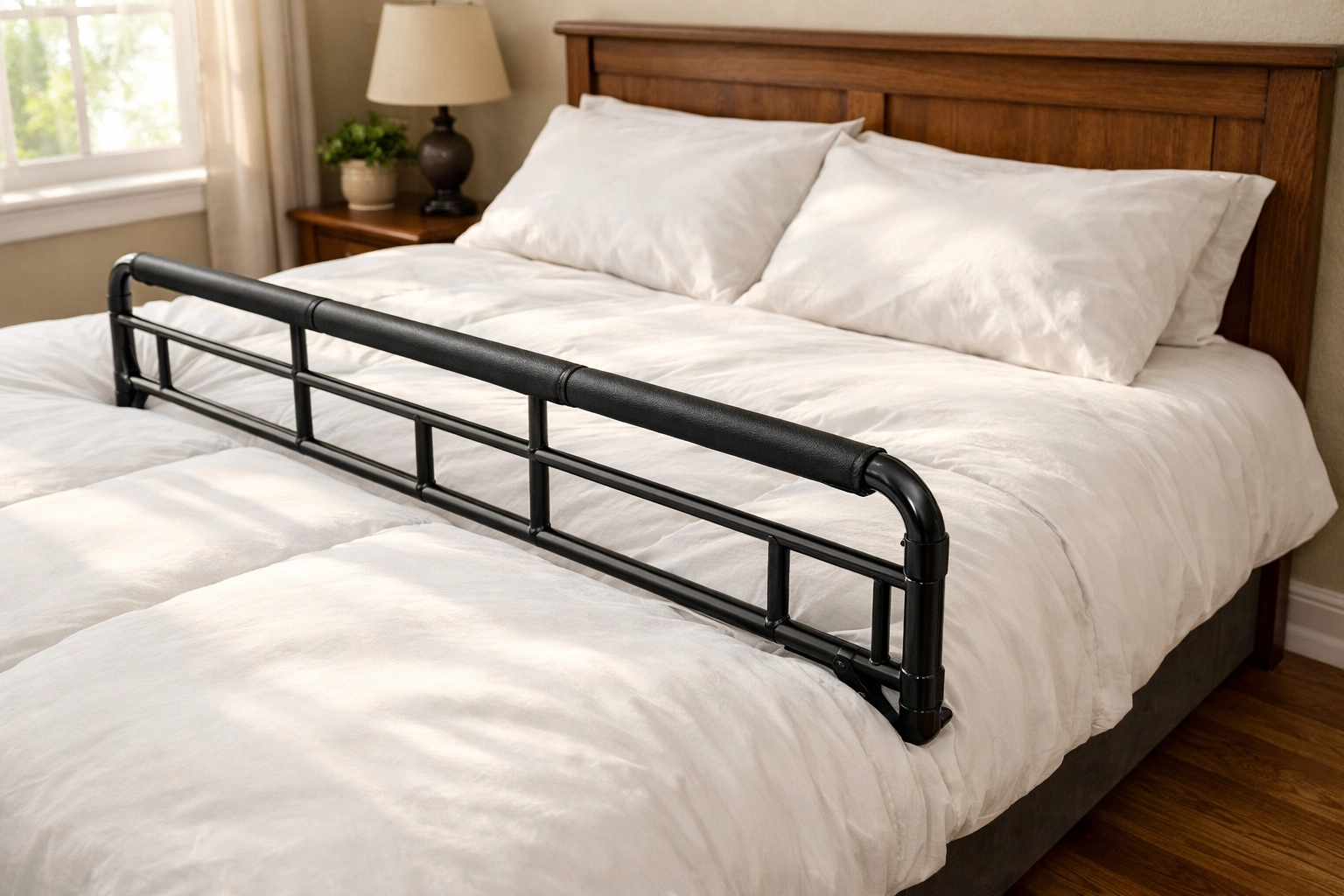
In the traditional sense, bed rails (often called side rails or hospital rails) are long barriers that run most or all of the length of the mattress. You’ve likely seen these in hospitals or nursing homes. Their primary purpose is to act as a physical barrier to prevent someone from rolling out of bed.
For a long time, these were the gold standard. The logic was simple: if there’s a fence there, the person can’t fall off the edge. However, over the last few decades, the medical community, including the FDA and the Consumer Product Safety Commission (CPSC), has shifted its perspective on full-length rails.
The Risks of Full-Length Rails
While they do stop a "roll-out," full-length rails introduce a few significant safety hazards:
- Entrapment: This is the most serious concern. If a rail is not perfectly fitted to the mattress, a gap can form. A person can become wedged between the mattress and the rail, or their limbs can get caught in the bars. For someone with limited mobility or cognitive impairment, this can be life-threatening.
- Climbing Over: If a senior becomes confused or has an urgent need to use the bathroom at night, they may try to climb over the rail. Because the rail is high, a fall from the top of a rail is much more dangerous than a fall from the bed itself. It changes a "roll" into a "plummet."
- Feeling Restricted: For many, full-length rails can feel like a cage. This can lead to "sundowning" agitation in patients with dementia, actually increasing their desire to escape the bed.
Understanding Assist Rails (The "Empowerment" Approach)
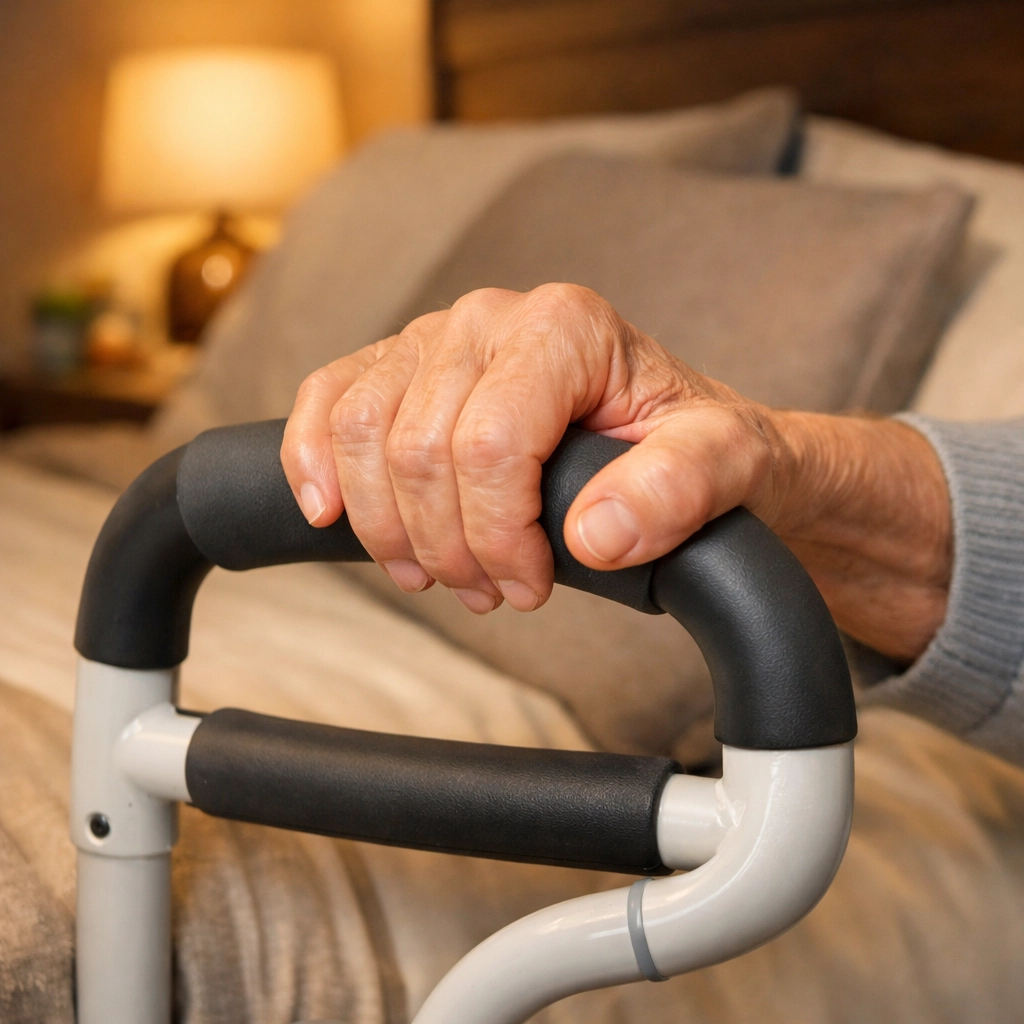
Assist rails, sometimes called bed handles, assist bars, or grab bars, are different. They aren't designed to be a fence. Instead, they are shorter, sturdy handles that typically extend only about 12 to 20 inches from the head of the bed.
Their primary job isn’t to keep you in bed; it’s to help you move while in bed and get out of bed safely. They provide a stable point of leverage to help a person:
- Roll over or reposition themselves.
- Pull themselves from a lying to a sitting position.
- Steady themselves while sitting on the edge of the mattress.
- Push off to a standing position.
Why Assist Rails are Often Preferred
In most home-care settings, occupational therapists and physical therapists tend to lean toward assist rails for seniors who still have some level of mobility.
The main reason is that they provide support without the "entrapment" footprint of a full rail. Because they are short, there is no barrier blocking the feet or the lower half of the body. If a senior needs to get up, the exit path is clear. They simply use the handle for balance and stand up.
The Safety Face-Off: Which One Wins?
If we are looking purely at "safety," we have to define what we are protecting against.
When an Assist Rail Wins
If the goal is to prevent a fall during the transition from sitting to standing, the assist rail is the clear winner. It acts as a stationary "anchor." For seniors with orthostatic hypotension (that dizzy feeling you get when standing up too fast), having a solid handle to grip while their blood pressure stabilizes is a lifesaver.
When a Bed Rail Wins
If the senior has a documented history of rolling out of bed due to seizures, involuntary muscle movements, or extreme restlessness, a bed rail (or a partial bed rail) might be necessary. However, even in these cases, safety experts now often recommend "bolster" cushions or "perimeter mattresses" as a softer, safer alternative to metal rails.
The "Gap" Factor: The Most Important Safety Rule
Regardless of whether you choose a full rail or an assist rail, the single most important safety factor is how it attaches to the bed.
Most home bed rails stay in place using a large metal frame that slides between the mattress and the box spring (or the bed base). They often use "safety straps" that wrap around the entire bed frame to prevent the rail from sliding out over time.
If you take away one thing from this article, let it be this: You must check for gaps every single day. As a person moves in bed, the mattress can shift. If a gap of even a few inches opens up between the rail and the mattress, the risk of entrapment skyrockets.
A safe rail should be:
- Pressed firmly against the side of the mattress.
- Secured with straps so it cannot wiggle or pull away.
- Compatible with the specific type of bed (some rails don't work with adjustable "hospital-style" beds or memory foam mattresses).
Physical and Cognitive Considerations
When deciding between these two, you have to look at the individual person’s needs.
Cognitive Health
For seniors with Alzheimer’s or other forms of dementia, full-length bed rails are generally discouraged. Confusion can lead to entrapment or dangerous attempts to climb over the rails. In these cases, assist rails are safer, but even better are "low beds" (beds that can be lowered almost to the floor) paired with a fall mat on the ground.
Physical Strength
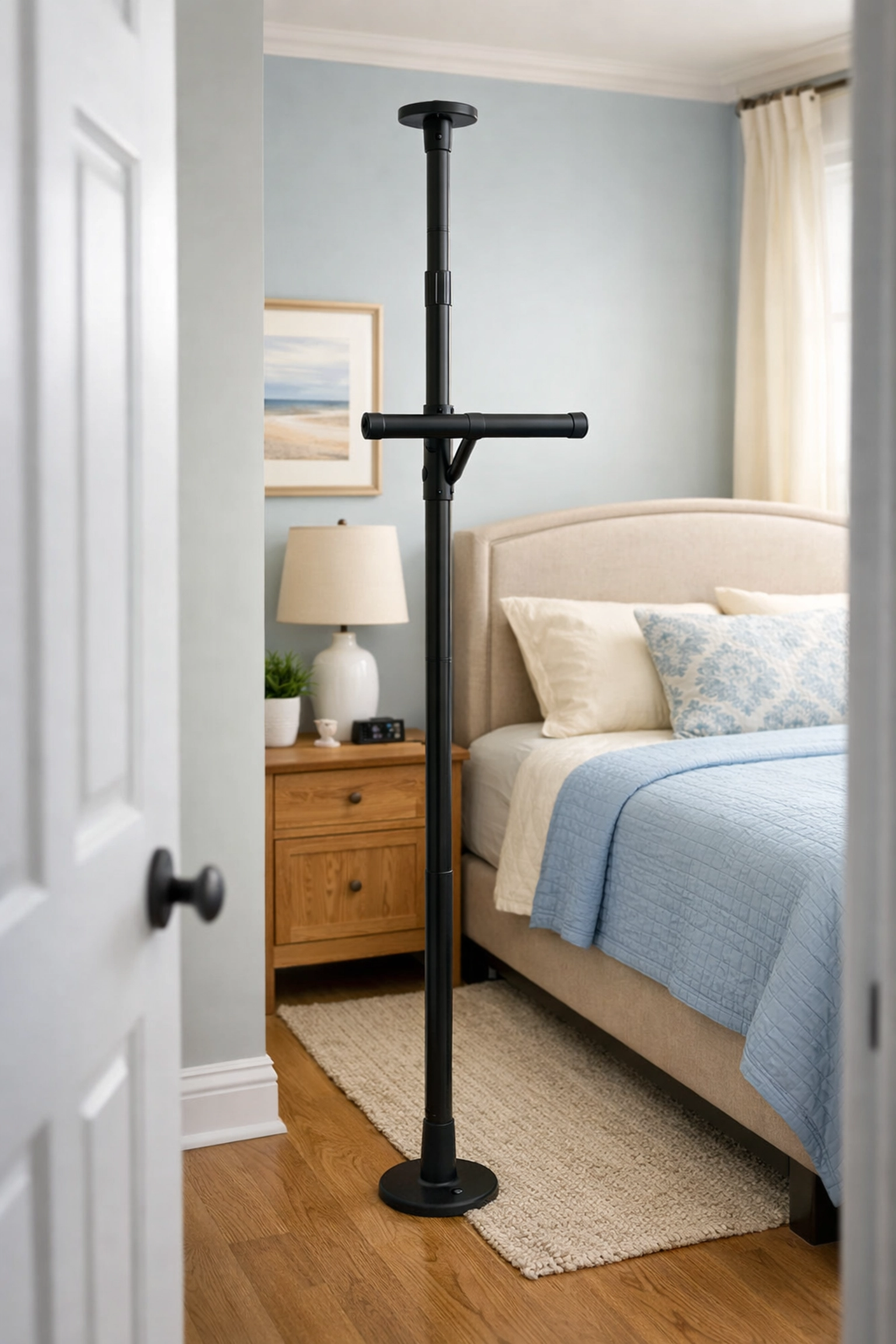
An assist rail requires some upper body strength. The user needs to be able to grip the bar and pull or push their own weight. If a senior has very little upper body strength, an assist rail might not provide enough help, and they might require a different type of aid, like a floor-to-ceiling transfer pole.
Alternatives to Traditional Rails
Sometimes, the best rail is no rail at all. If you’re worried about safety but concerned about the risks of entrapment or climbing, consider these alternatives:
- Pool Noodles or Foam Bolsters: Placing a long foam wedge or even a pool noodle under the fitted sheet at the edge of the bed can provide a gentle "reminder" to the body of where the edge is. It’s often enough to stop a roll-out without being a hard barrier.
- Concave Mattresses: These are mattresses where the sides are slightly higher than the center, creating a "cradle" effect that keeps the sleeper in the middle.
- Bedside Floor Mats: If a fall does happen, a high-impact foam mat placed next to the bed can significantly reduce the risk of a hip fracture or head injury.
- Bed Alarms: These sensor pads alert a caregiver the moment a senior starts to get out of bed, allowing help to arrive before a fall occurs.
How to Choose: A Quick Checklist
If you’re sitting at your kitchen table trying to make a choice for yourself or a loved one, ask these four questions:
- Is the goal to stop rolling out or to help standing up? If it's standing up, go with an assist rail.
- Is there a risk of confusion or wandering at night? If yes, avoid full bed rails.
- What kind of bed is it? Check the manufacturer’s guide. If it’s an adjustable bed, you need a specific type of rail that won't create a "moving gap" when the head of the bed is raised.
- Can the user follow safety instructions? A rail is a tool. The user needs to understand how to use it for support rather than trying to lean their entire body weight against it in a way that could tip the bed.

Final Thoughts from the Founder
At the end of the day, safety isn't about buying the biggest piece of equipment; it's about buying the right piece of equipment for the specific person. We often see families buy full-length rails because they want "maximum protection," but for an active senior who just needs a little help getting their legs over the side of the bed, a smaller assist rail is actually the safer, more dignified choice.
It keeps the bedroom feeling like a bedroom, rather than a clinical environment, and it encourages the senior to use their own strength, which is vital for maintaining mobility.
Whatever you choose, please take the time to install it correctly. Read the manual, use the safety straps, and do a "shake test" every morning to make sure everything is tight and secure. Safety in the bedroom is a combination of the right tools and constant vigilance.
By focusing on assist rails for mobility and being mindful of the entrapment risks of full rails, we can create a sleeping environment that isn't just a place to rest, but a safe launchpad for the day ahead.

