
Home is meant to be a sanctuary, a place where we feel most secure. However, as we age or face mobility challenges, certain areas of the home can begin to feel like obstacles rather than comforts. Among the most frequent sites for household accidents are entryways and staircases. These areas involve transitions: shifting from outside to inside, moving from one level to another, or navigating changes in flooring.
The good news is that most falls are preventable. By making thoughtful, often simple adjustments to the environment, we can significantly reduce the risk of injury and maintain independence. This guide explores ten in-depth strategies to transform your entryways and stairs into the safest parts of your home.
1. Implement Comprehensive, Layered Lighting
Shadows are a major contributor to missteps. When a staircase or entryway is dimly lit, it becomes difficult to judge the depth of a step or spot a small object on the floor. Proper lighting is the first line of defense in fall prevention.
Consider a layered approach to lighting. Traditional overhead lights are a start, but they often create shadows. Adding LED strip lighting along the underside of handrails or tucked into the nosing of each step provides clear definition for every individual stair.
Motion-sensor lighting is particularly effective for nighttime navigation. Instead of fumbling for a switch in the dark, the path illuminates automatically as you approach. For entryways, ensure that the exterior porch is brightly lit well before you reach the door, allowing you to see thresholds and any debris brought in by the wind.
2. Install Dual-Sided Handrails
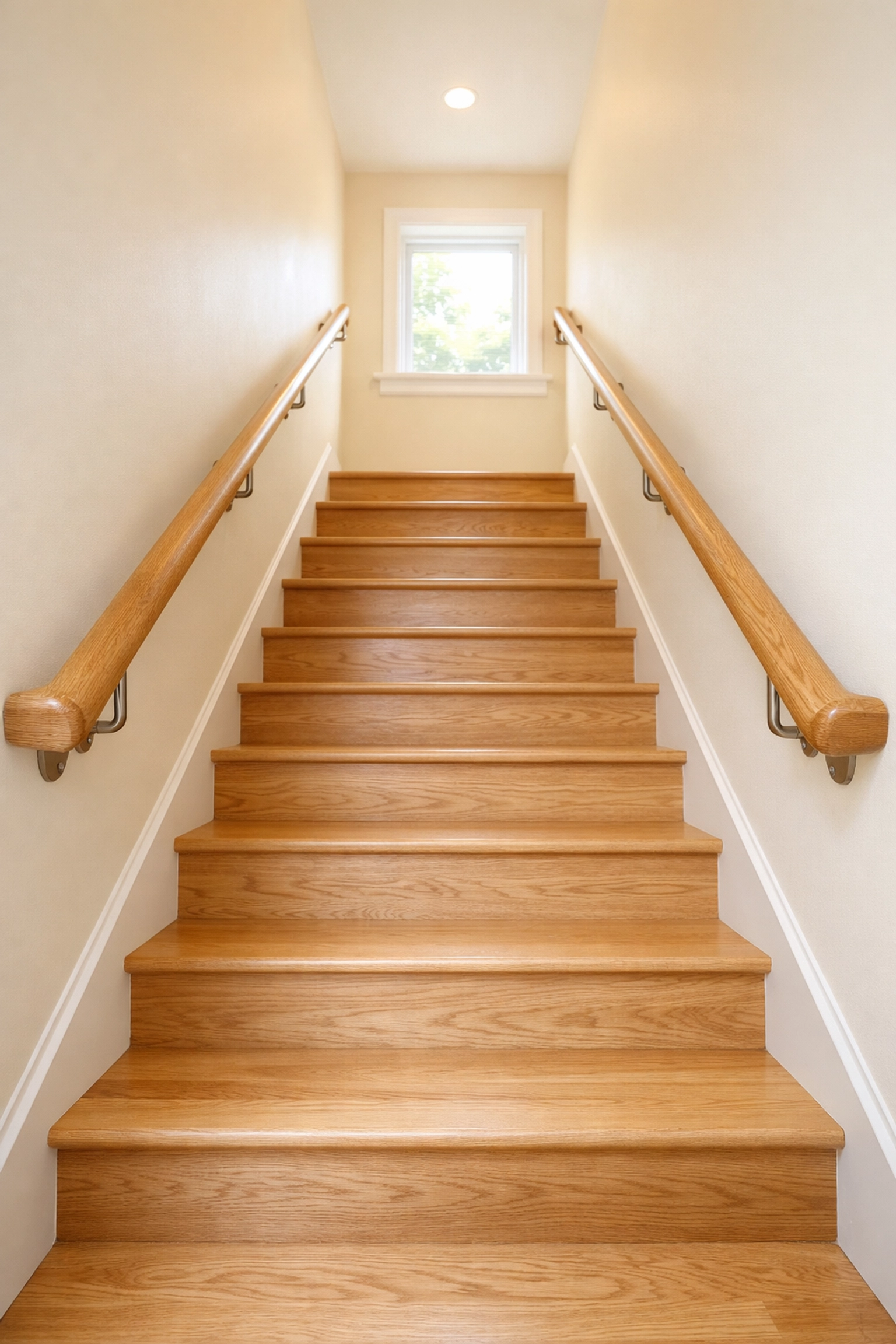
Many homes are built with a handrail on only one side of the stairs. While this may meet basic building codes, it doesn't always meet the needs of those with balance concerns. Installing sturdy handrails on both sides of every staircase: including short sets of steps in the garage or entry: provides a more secure grip and allows for better weight distribution.
The quality of the handrail matters as much as its presence. A handrail should be easy to "power grip," meaning your fingers can wrap almost entirely around it. If a rail is too wide or too decorative, it may be difficult to hold onto during a sudden loss of balance. Ensure the rails extend about 12 inches beyond the top and bottom steps so that you have support before you start climbing and after you finish.
3. Prioritize Non-Slip Surfaces
Smooth surfaces like polished wood, tile, or marble are aesthetically pleasing but can be incredibly slippery, especially when wearing socks or if the surface is slightly damp. Entryways are particularly prone to moisture from rain or snow, making them high-risk zones.
For wooden stairs, consider applying transparent anti-slip adhesive treads. These provide much-needed friction without hiding the beauty of the wood. If your stairs are carpeted, ensure the carpet is tight and low-pile. Loose or plush carpeting can catch the toe of a shoe or mask the actual edge of the step. In entryways, use heavy-duty, non-slip mats both inside and outside the door to catch moisture and provide a stable landing zone.
4. Eliminate Threshold Tripping Hazards
The transition between the outdoors and indoors often involves a "threshold": the raised strip at the bottom of a doorway. Even a half-inch rise can be enough to catch a foot, especially for those who may have a "shuffling" gait.
Where possible, look into low-profile or "zero-entry" thresholds. If a threshold cannot be removed, consider a small rubber threshold ramp. These mini-ramps create a smooth incline, turning a potential trip hazard into a manageable transition. Similarly, check the transitions between different types of flooring inside the home, such as where the entryway tile meets the living room hardwood, and ensure they are flush and secure.
5. Mark Step Edges for High Visibility
Depth perception can change with age, making it difficult to see where one step ends and the next begins, especially on uniform surfaces like dark wood or grey concrete. One of the most effective ways to combat this is by creating visual contrast.
By applying a strip of high-visibility tape or a line of contrasting paint to the "nosing" (the very edge) of each step, you provide the brain with a clear visual map of the staircase. For example, if you have dark stairs, a white or yellow strip on the edge makes each step stand out. This simple visual cue helps the user place their feet accurately every time.
6. Establish a "No-Clutter" Zone
It is a common habit to place items at the bottom or top of the stairs with the intention of taking them up or down "on the next trip." While this seems efficient, it is a primary cause of stair-related falls. A stray book, a pair of shoes, or a shopping bag can easily lead to a stumble.
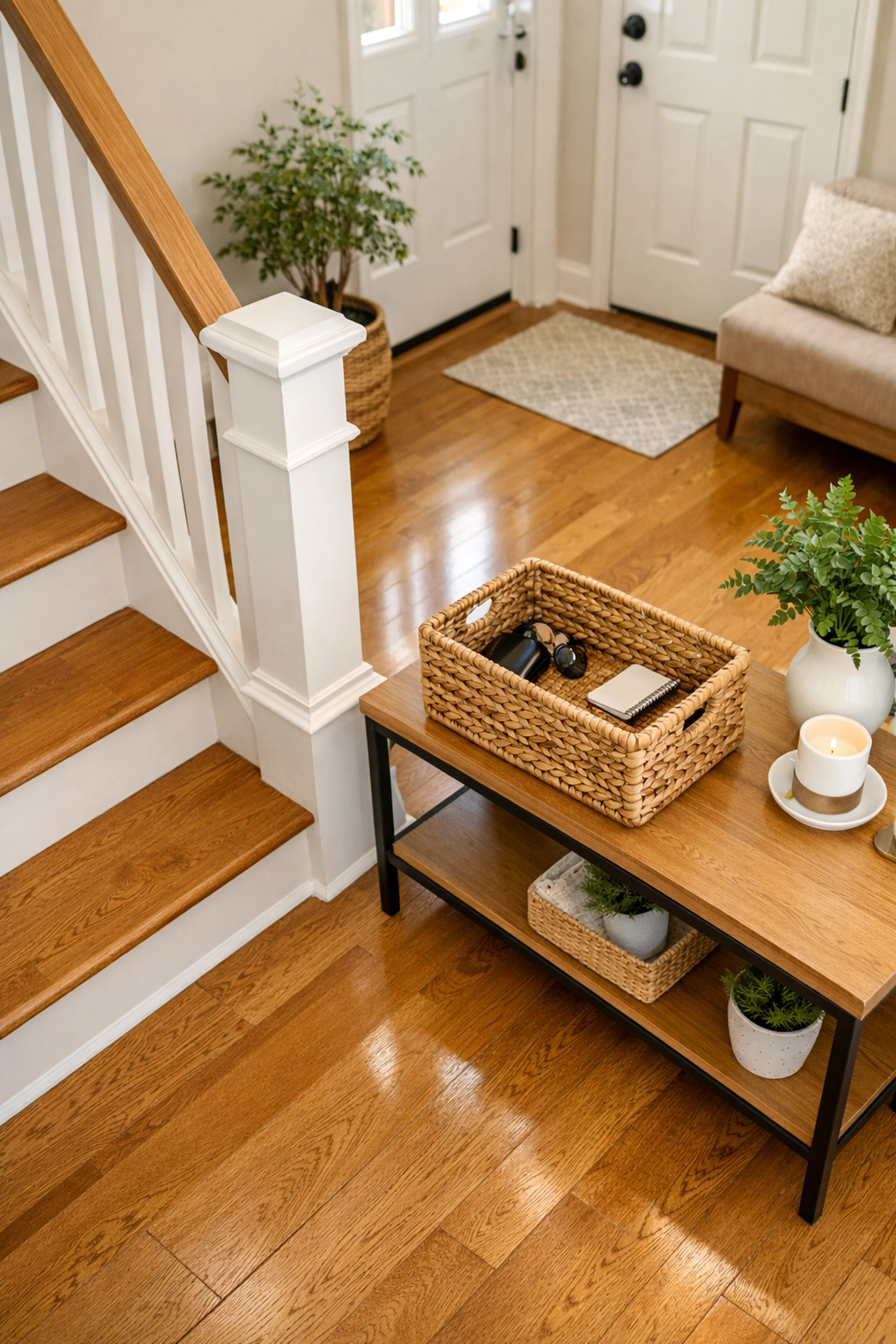
Commit to a strict rule: nothing ever sits on the stairs. To help with this, you can place a "stairs basket" several feet away from the landing. Items go in the basket, and the basket is carried up only when a hand is free and the user feels stable. In entryways, ensure there is a designated spot for shoes and umbrellas that is completely out of the walking path.
7. Regular Maintenance and Structural Checks
A safe staircase must be a stable staircase. Over time, wooden stairs can creak and loosen, and outdoor concrete steps can crack or shift due to weather and soil movement. Even a slight variation in step height can throw off a person’s rhythm and lead to a fall.
Perform a seasonal "safety audit" of your stairs and entryways. Check for:
- Loose floorboards or wobbly steps.
- Handrails that "give" when you pull on them.
- Worn-out non-slip treads or peeling tape.
- Uneven paving stones leading to the front door.
Consistency is key; if one step is even half an inch taller than the rest, the body isn't prepared for the change, which often results in a trip.
8. Create Resting Points
For those who fatigue easily, a long flight of stairs or a long walkway to the entryway can be daunting. Fatigue leads to poor form, which leads to falls. If space allows, creating "resting points" can make a significant difference.
On a long staircase with a landing, consider placing a small, sturdy chair (that does not obstruct the path) where a person can sit for a moment to catch their breath. In an entryway, a sturdy bench allows a person to sit down while taking off their shoes or setting down heavy groceries, preventing the need to balance on one leg.
9. Utilize Floor-to-Ceiling Support Poles
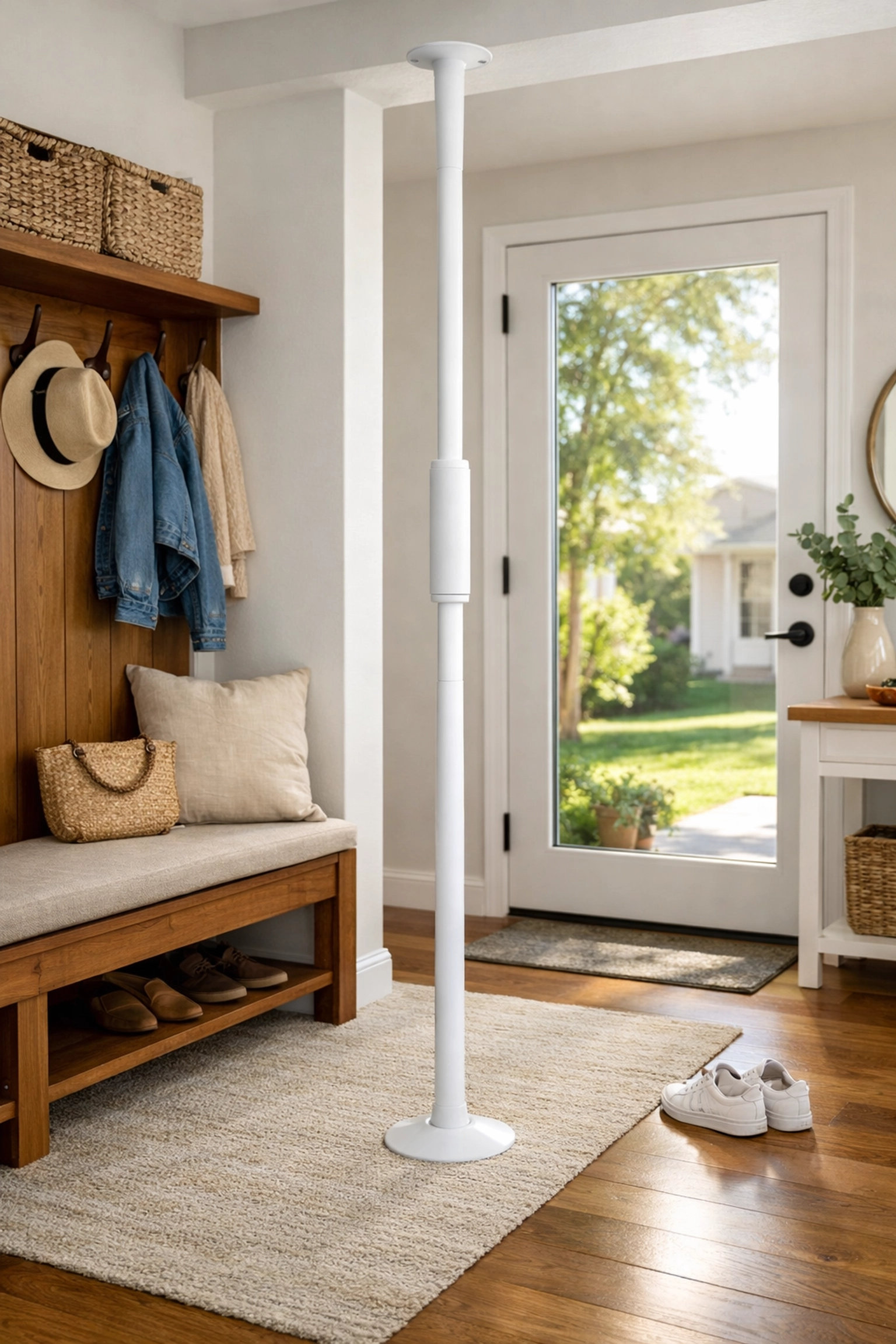
Sometimes, a standard handrail isn't enough, particularly at the transition points where a person is moving from a seated position to a standing one, or navigating the first few steps of a staircase. Floor-to-ceiling support poles, often called transfer poles, provide a vertical handhold that can be placed exactly where it is needed most.
Because these poles are tension-mounted, they can often be installed without drilling into the floor or ceiling, making them an excellent temporary or permanent solution for entryways. Having a solid, vertical post to grab onto while navigating a doorway or the beginning of a staircase offers a sense of security that horizontal rails sometimes cannot.
10. Encourage Safe Footwear and Habits
Safety is as much about behavior as it is about the environment. What we wear on our feet significantly impacts our stability. Walking on stairs in socks is one of the most dangerous habits, as it offers zero traction on wood or tile.
Encourage the use of sturdy, well-fitting shoes with non-slip soles, even inside the house. If shoes are not preferred, high-quality "grip socks" with rubberized bottoms are a better alternative than standard socks. Additionally, remind family members to avoid carrying large items that obstruct their view of their feet while using the stairs. Keeping at least one hand on the rail at all times should be a non-negotiable habit for everyone in the home.
The Role of Professional Assessment
While many of these ideas can be implemented by a handy family member, sometimes the best approach is to seek a professional mobility assessment. Physical therapists or certified aging-in-place specialists can look at a home through a trained lens. They may notice subtle hazards: like a slight slope in a walkway or the specific way a person’s gait interacts with a certain type of flooring: that a layperson might miss.
Professional guidance can also help in choosing the right type of assistive equipment. For example, they can help determine whether a standard grab bar or a more comprehensive rail system is appropriate for a specific entryway configuration.
Staying Proactive
Fall prevention is not about admitting weakness; it is about being proactive and ensuring that your home remains a place of comfort and independence. By addressing the "hot spots" of entryways and stairs, you are making a long-term investment in your health and well-being.
Most of these changes: better bulbs, clearing clutter, and adding non-slip tape: are low-cost and can be done in a single afternoon. Others, like installing dual handrails or threshold ramps, require a bit more effort but offer immense peace of mind. By taking these ten steps, you can navigate your home with confidence, knowing that you have minimized the risks and maximized your safety.
Remember, the goal is to create an environment that supports you. A safe home is a home where you can focus on the things that matter: spending time with family, enjoying hobbies, and living life to the fullest: without the constant worry of a misstep. Integrating these safety features early, rather than waiting for a fall to occur, is the best way to ensure a safe and mobile future.

