
Stairs are often the most intimidating part of a home for seniors and their families. They represent a transition between floors, but they also represent a significant physical challenge. In my years of looking at home safety, I’ve realized that most people look at a staircase and think the danger is simply "the height." While gravity is certainly a factor, the real risks are often hidden in the small details: the things we overlook because we’ve walked those same steps thousands of times.
When we talk about stair safety, we aren't just talking about preventing a fall; we’re talking about maintaining independence. If you feel safe on your stairs, you feel safe in your whole home. However, many homes, especially older ones, were built with design choices that don't prioritize long-term mobility.
Here are the seven most common mistakes people make with stair safety and, more importantly, the practical ways you can fix them to keep your home a place of comfort rather than a source of worry.
1. Thinking All Steps Are Created Equal
The human brain is an incredible machine. When you start climbing a flight of stairs, your brain calculates the height (riser) and the depth (tread) of the first two steps. It then sets a "rhythmic pattern" for your muscles to follow. You essentially go on autopilot.
The mistake many homeowners make is assuming their stairs are uniform. In many homes: particularly those with older construction: steps can vary by as much as half an inch. This is a major tripping hazard because your foot expects the surface to be exactly where the previous step was. If a step is slightly higher or lower, your toe catches, or your heel doesn't land firmly.
How to Fix It:
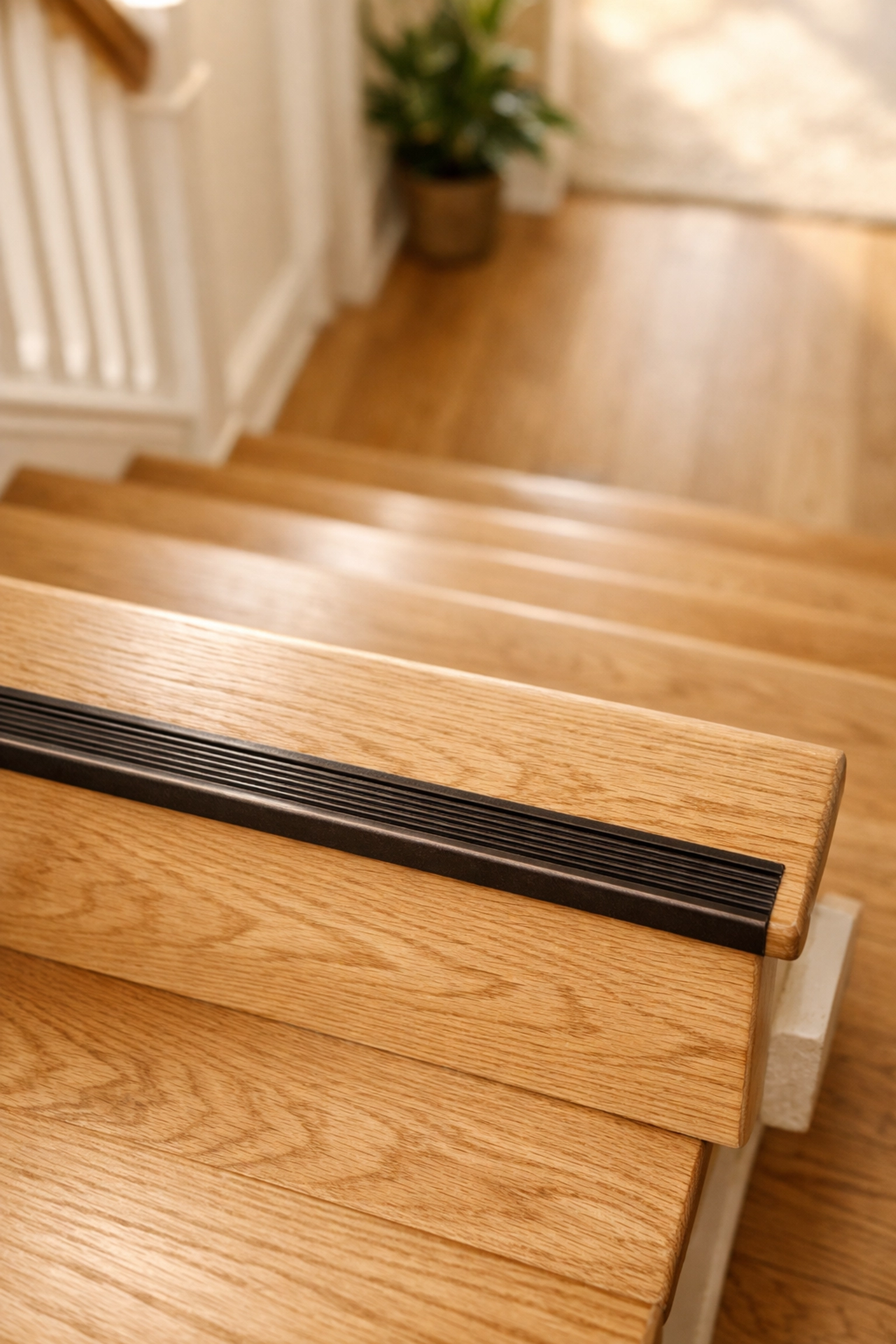
Ideally, a professional should measure your stairs. If you find a significant discrepancy (more than a quarter-inch difference between steps), it may require a carpenter to shim or adjust the treads. For a quicker fix, you can use high-visibility stair nosing. By adding a distinct color or texture to the edge of each step, you force the brain to stay "engaged" with every individual step rather than relying on muscle memory. This visual cue tells your eyes exactly where the edge is, reducing the chance of a misstep.
2. Falling for the "Bottom-of-Flight" Illusion
Have you ever reached the bottom of the stairs and thought there was one more step, only to realize you were already on the floor? Or worse, thought you were on the floor only to find there was one step left? This is what safety experts call the "bottom-of-flight illusion."
In many interior designs, the flooring of the hallway or living room is identical to the wood or carpet on the stairs. When you look down from the top or middle of the flight, the bottom step can blend seamlessly into the floor below. This lack of "visual contrast" causes people to overstep or understep, leading to a jarred spine or a tumble.
How to Fix It:
The fix here is all about contrast. You want the bottom step to look distinctly different from the landing. You can achieve this by applying a strip of anti-slip tape in a contrasting color (like a dark brown on light oak, or a white strip on dark carpet). If you don't want to use tape, consider a small, low-profile rug on the landing that is a completely different color than the stairs. Just ensure the rug is secured with a non-slip pad so it doesn't become a hazard itself.
3. Relying on Decorative Rather Than Functional Handrails
Many handrails are installed to meet a basic building code or to look good with the home’s decor. However, a "decorative" handrail isn't always a "safe" handrail.
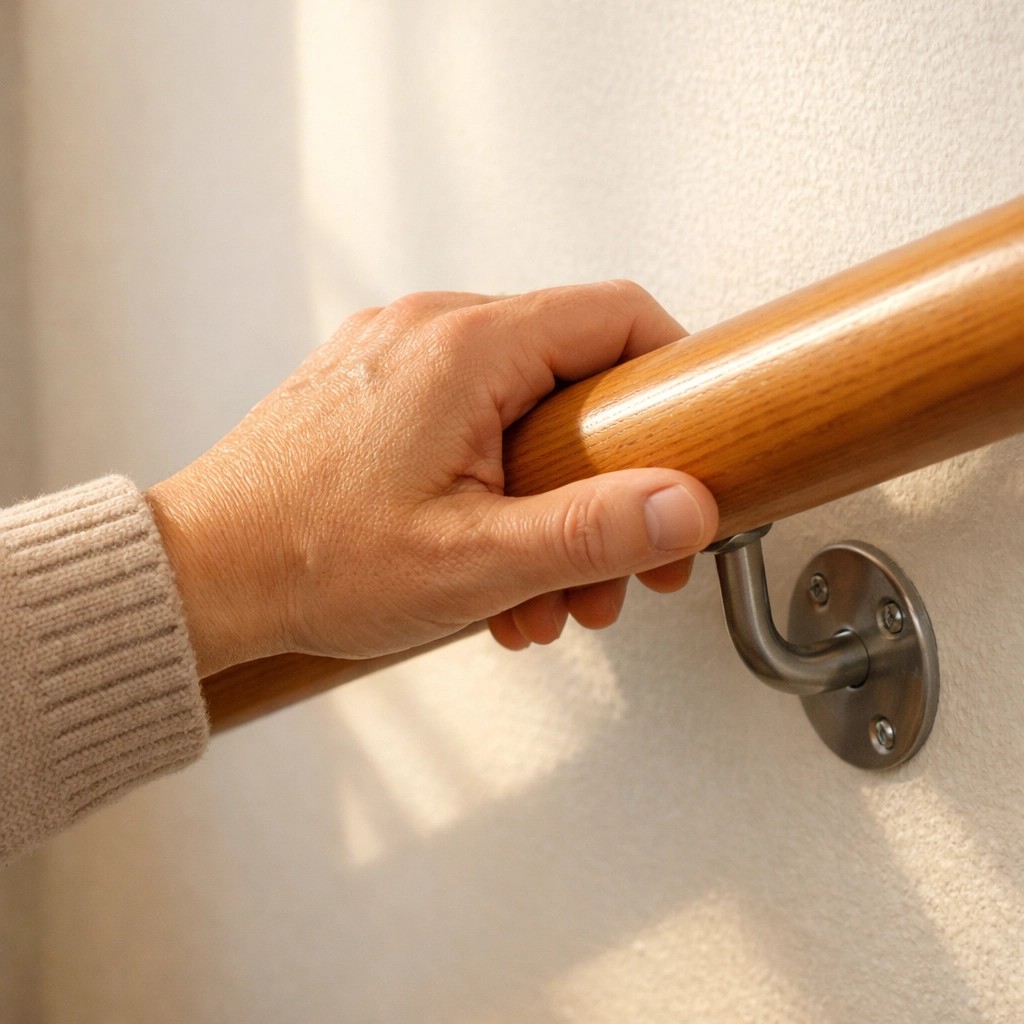
The most common mistake is having a handrail that is too wide or too ornate to actually grip. If you lose your balance, you need to be able to wrap your hand entirely around the rail to stabilize yourself. If the rail is a wide, flat piece of crown molding, your fingers can’t get a "power grip," and your hand will likely slide off if you actually fall. Furthermore, many homes only have a rail on one side, which doesn't account for weakness on one side of the body.
How to Fix It:
Check your handrails. Can you comfortably wrap your thumb and fingers around them so they meet on the other side? If not, you should consider installing a "mop stick" or a round handrail that is approximately 1.5 to 2 inches in diameter.
Additionally, if your staircase only has one rail, install a second one on the opposite wall. Having "dual-sided support" is one of the most effective ways to increase confidence and safety. It ensures that no matter which hand is stronger, you always have a firm grip available.
4. Overlooking the "Slippery Surface" Factor
We all love the look of polished hardwood or high-gloss tile. However, these surfaces are incredibly unforgiving on stairs, especially if you are wearing socks or smooth-soled slippers. Even carpet can be a hazard if it is a "plush" variety that rounds off the edge of the step, making the "nose" of the stair feel unstable.
The mistake is thinking that being "careful" is enough to overcome a lack of traction. Friction is your best friend when it comes to stair safety.
How to Fix It:
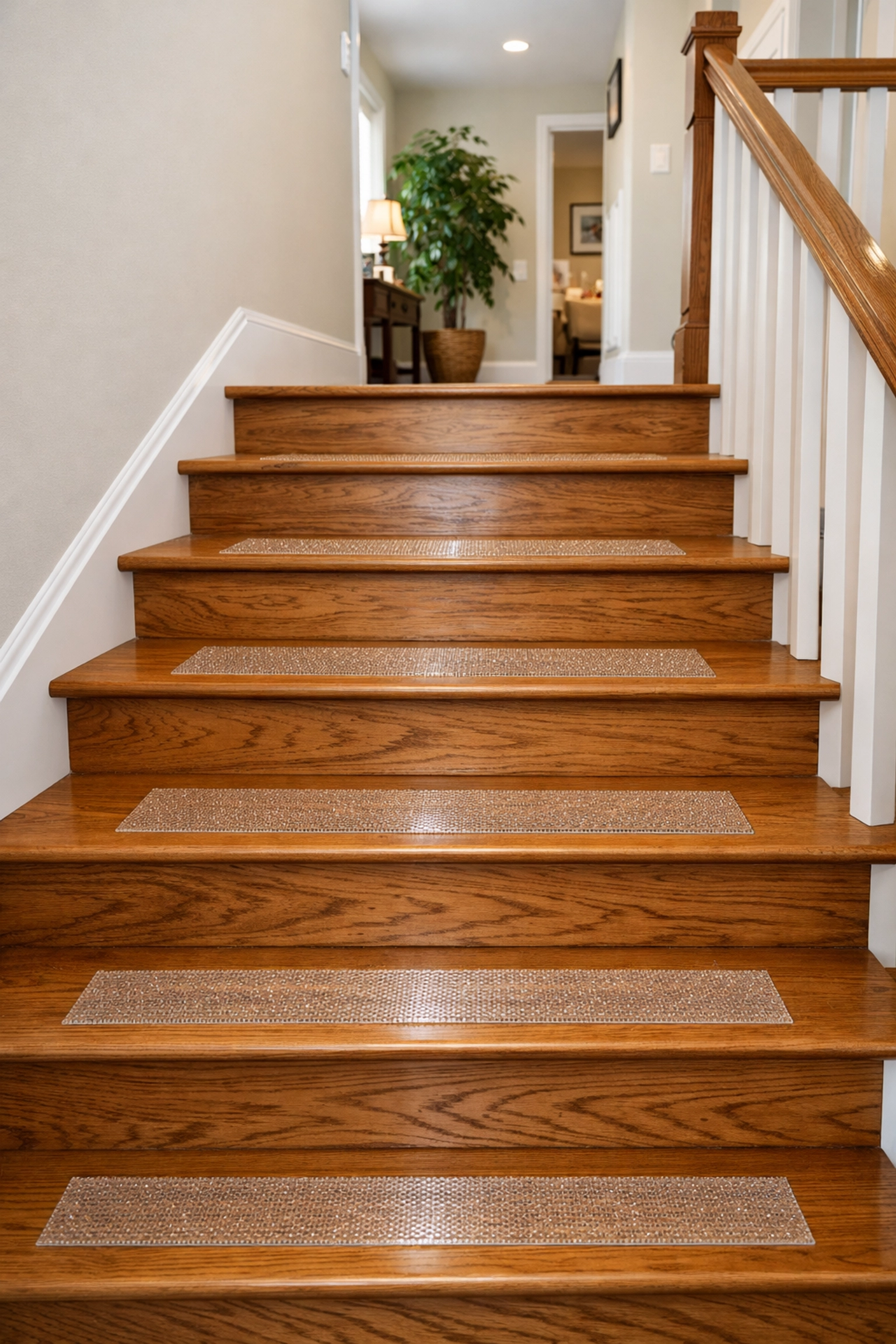
For wooden or tiled stairs, you don't have to hide the beauty of the material to make it safe. There are transparent anti-slip adhesive strips that provide a "sandpaper" texture without obscuring the wood grain. If you prefer carpet, ensure it is a "low-pile" variety and that it is tightly wrapped around the edge of each step.
Most importantly, address the "socks" issue. Encourage the use of footwear with rubber soles inside the house. If you prefer a "no-shoe" household, grip-soled socks are a mandatory safety upgrade for navigating stairs.
5. Ignoring Shadow Play and Poor Lighting
As we age, our eyes require significantly more light to see clearly and process depth. A common mistake is having a single, dim light bulb at the top of the stairs that casts long shadows over the middle and bottom steps. These shadows can hide the edge of a step or create the illusion of a step where there isn't one.
Furthermore, many people don't turn on the light for "just one quick trip" down the stairs at night, relying on their memory of the layout.
How to Fix It:
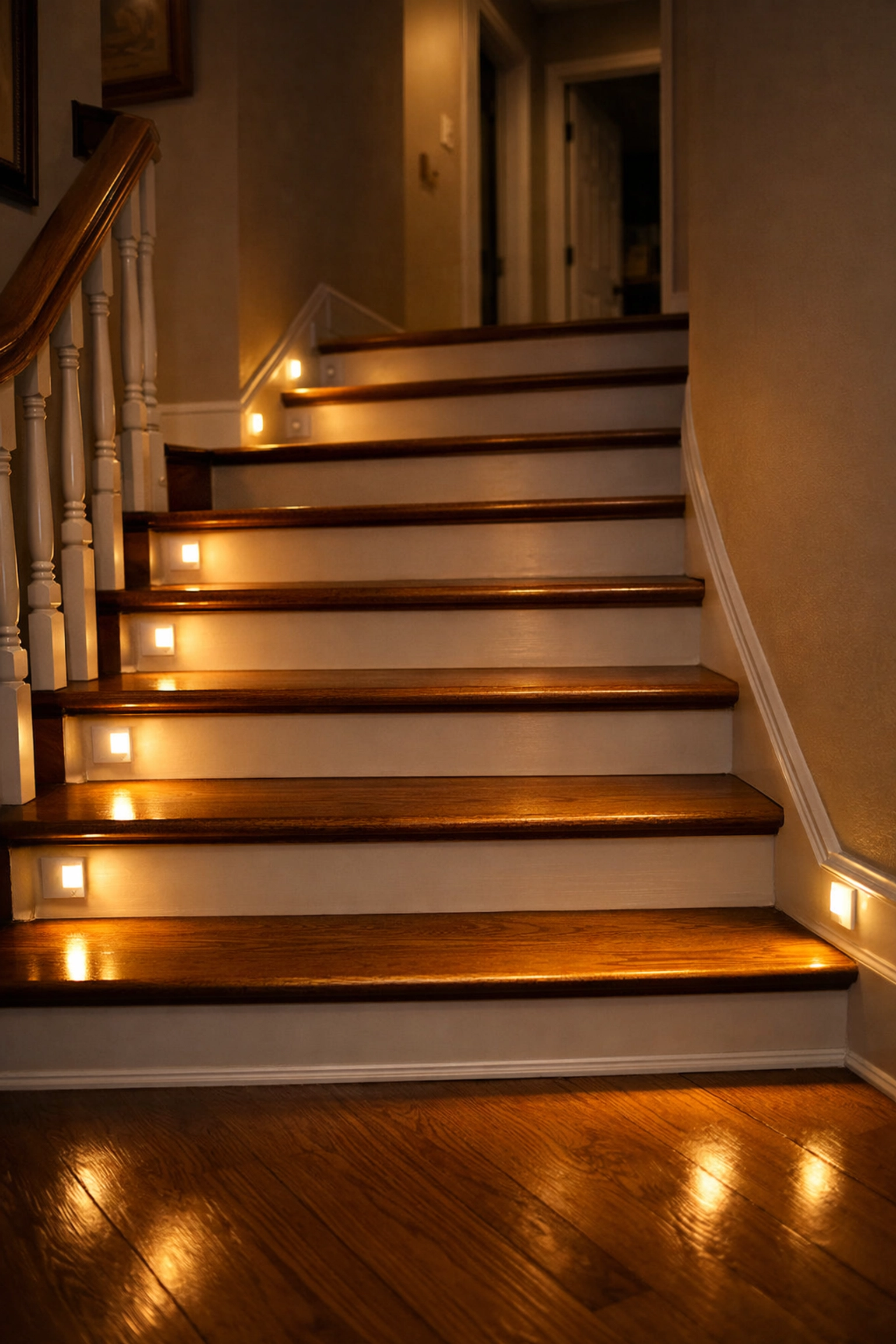
Lighting should be redundant and bright. Ideally, you should have light switches at both the top and the bottom of the stairs. If your home isn't wired for that, you can install battery-operated, motion-sensor LED lights along the baseboards of the staircase. These will automatically illuminate your path as soon as you approach the stairs.
Look for "warm" white light rather than harsh "cool" blue light, as warm light tends to produce less glare on polished surfaces, making it easier to see the actual edges of the steps.
6. Treating the Stairs Like a Temporary Shelf
We’ve all done it: "I’ll just put this book/laundry/box on the bottom step so I can take it up next time I go."
This is perhaps the most dangerous habit in any multi-level home. Using stairs as a staging area for items that need to go up or down creates an obstacle course. Even if you think you’ll remember the item is there, it’s easy to get distracted: a ringing phone, a doorbell, or a pet: and suddenly that "temporary" item becomes a trip hazard.
How to Fix It:
Adopt a "Zero Tolerance" policy for stair clutter. Nothing should ever sit on a step, even for a minute. If you find yourself constantly needing to move things between floors, use a "stair basket" with a handle. Keep the basket on the floor next to the stairs, not on the steps themselves. When the basket is full, carry it up in one trip using your free hand for the rail. If an item is too heavy to carry while holding the rail, it shouldn't be carried by one person: wait for help.
7. Neglecting the "Squeaks and Creaks" (Maintenance)
A squeaky stair isn't just an annoyance; it’s often a sign that the tread (the part you step on) has become loose from the stringer (the support beams). Over time, nails can back out or wood can warp. A loose tread can "give" or shift under your weight, which is enough to throw off your balance and cause a fall. Similarly, handrails can become wobbly after years of being pulled on.
How to Fix It:
Perform a "Stair Audit" every six months. Walk up and down slowly, feeling for any movement in the steps. Grab the handrail and give it a firm shake; it should feel like it's part of the wall, with zero wiggle.
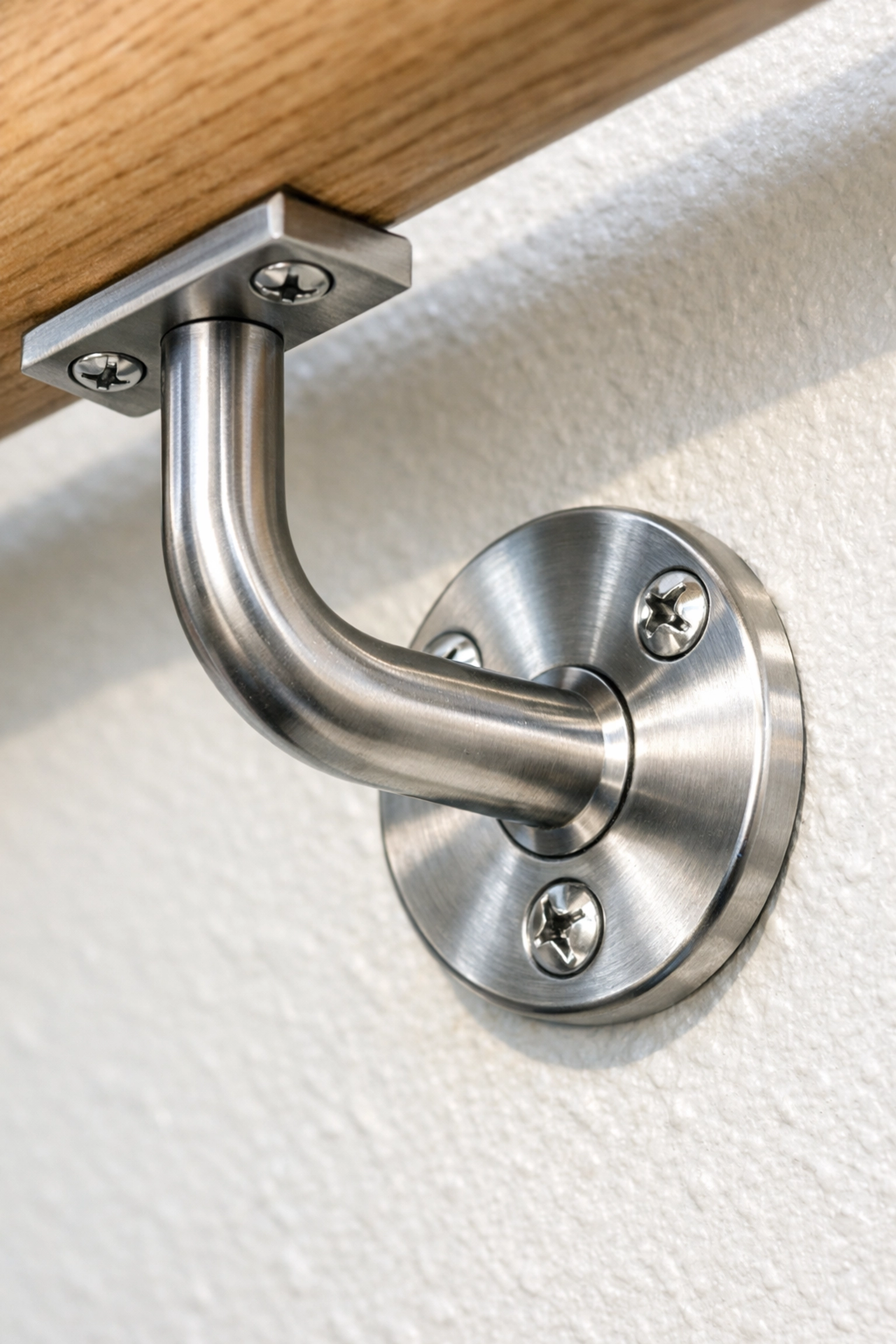
If you find a loose step, it can usually be fixed with a few well-placed wood screws (predrill the holes to avoid splitting the wood) or some construction adhesive. If a handrail is wobbly, it likely needs the brackets tightened or moved to a more secure wall stud. Don't wait for a "near miss" to fix these structural issues.
Final Thoughts: The Goal is Confidence
Stair safety isn't about making your home look like a hospital; it's about making your home work for you. Most of these fixes: like adding contrast strips, tightening a rail, or clearing clutter: take very little time and money, but they provide an immense amount of security.
When you take the guesswork out of where a step ends and where a handrail begins, you can move through your home with confidence. Safety is a series of small, intentional choices. By fixing these seven common mistakes, you’re ensuring that the stairs remain a functional part of your home for years to come.

