
Stairs are one of the most common places for accidents to happen in the home. For many of us, navigating a flight of steps is something we do a dozen times a day without a second thought. But as we get older, or as we care for aging parents, those steps can start to look a little more daunting.
At Fall Guys Products, we see the aftermath of stair-related falls far too often. The good news is that most of these incidents are preventable. It usually isn't one giant flaw that leads to a fall, but rather a series of small, overlooked mistakes that add up over time.
If you’re looking to make your home or a loved one’s home safer, the staircase is the best place to start. Let’s dive into the seven most common mistakes people make with stair safety and, more importantly, how you can fix them today.
1. Ignoring Tread and Riser Dimensions
The geometry of your stairs matters more than you might think. Our brains are incredibly good at "mapping" a staircase after the first step. If every step is exactly the same height and depth, your body moves into a rhythmic, automatic motion.
The mistake many homeowners make is living with "irregular" stairs. This often happens in older homes where the house has settled, or in DIY projects where the measurements weren't exact. If one riser (the vertical part) is even half an inch taller than the others, or if a tread (the horizontal part) is too narrow for a full foot to rest on, the rhythm is broken. This is a leading cause of trips.
The Fix:
Standard safety guidelines suggest a riser height of about 6 to 7 inches and a tread depth of at least 11 inches. If you can't rebuild your staircase, you can improve what you have. Ensure that the "nosing": the edge of the step: is prominent and secure. If a step is slightly uneven, a carpenter can often shim or adjust the individual tread to bring it back into alignment with the rest of the flight.
2. Living with "The Steep Slope"
We’ve all seen them: those narrow, steep staircases that feel more like climbing a ladder than walking up a floor. While steep stairs save space, they are incredibly taxing on the joints and significantly increase the risk of a backward fall if you lose your balance.
When a staircase is too steep, your center of gravity is pushed further forward when going up and further back when coming down. For someone with balance issues or limited hip mobility, this is a recipe for trouble.
The Fix:
The ideal angle for a residential staircase is between 30 and 37 degrees. If your stairs are steeper than 45 degrees, they are technically "service stairs" or ladders. While you might not be able to change the pitch of the stairs without a major renovation, you can mitigate the risk. Adding a sturdy landing halfway up can provide a place to rest and regain balance. If a renovation isn't in the cards, this is the time to be extra diligent about the other safety factors on this list, like lighting and handrails.
3. Weak or Missing Handrails
This is perhaps the most frequent mistake we encounter. A handrail isn't just a suggestion; it’s a critical safety tool. Often, homes only have a rail on one side, or the rail stops a few inches before the stairs actually end.
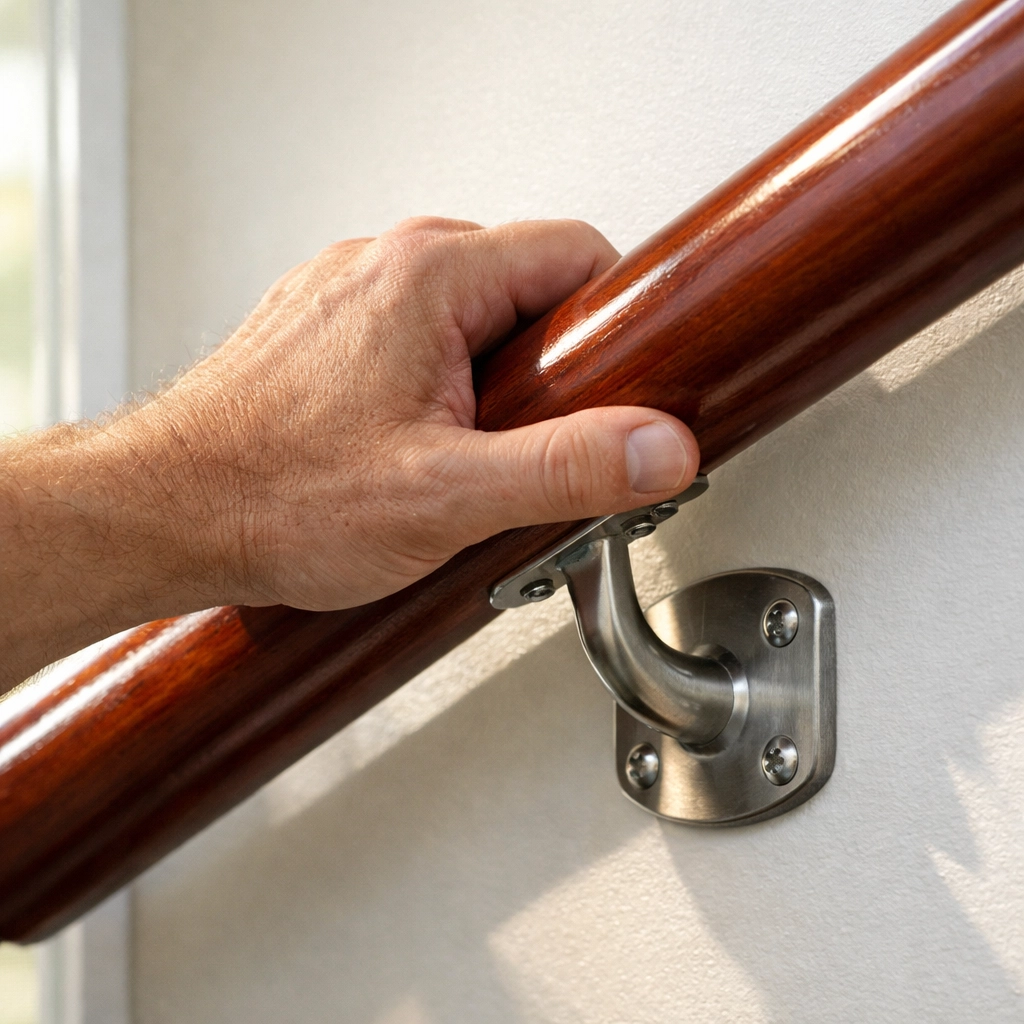
Another issue is the "decorative" handrail: ones that look beautiful but are too wide or too oddly shaped for a human hand to actually grip firmly. If you can’t wrap your fingers and thumb around the rail (a "power grip"), it won't help you much if you start to slip.
The Fix:
Every staircase should have handrails on both sides. This allows you to use your dominant hand regardless of whether you are going up or down.
- Extend the rails: Ensure the handrail extends at least 12 inches beyond the top and bottom steps. Many falls happen on the very last step because the user let go of the rail too early.
- Check the grip: The rail should be circular or oval, with a diameter of about 1.25 to 2 inches.
- Verify the strength: You should be able to put your full body weight on the rail without it wiggling. If it shakes, the brackets need to be tightened or moved into a wall stud.
4. Poor Lighting and "Shadow Zones"
If you can’t see where the step ends, you can’t place your foot safely. Many staircases are lit by a single overhead bulb at the top or bottom, which creates long, deceptive shadows. These shadows can make two steps look like one, or hide the edge of a tread entirely.
As we age, our eyes require more light to see clearly and take longer to adjust to changes in brightness. Walking from a brightly lit hallway into a dim stairwell is a high-risk transition.
The Fix:
You want "even" lighting across the entire flight.
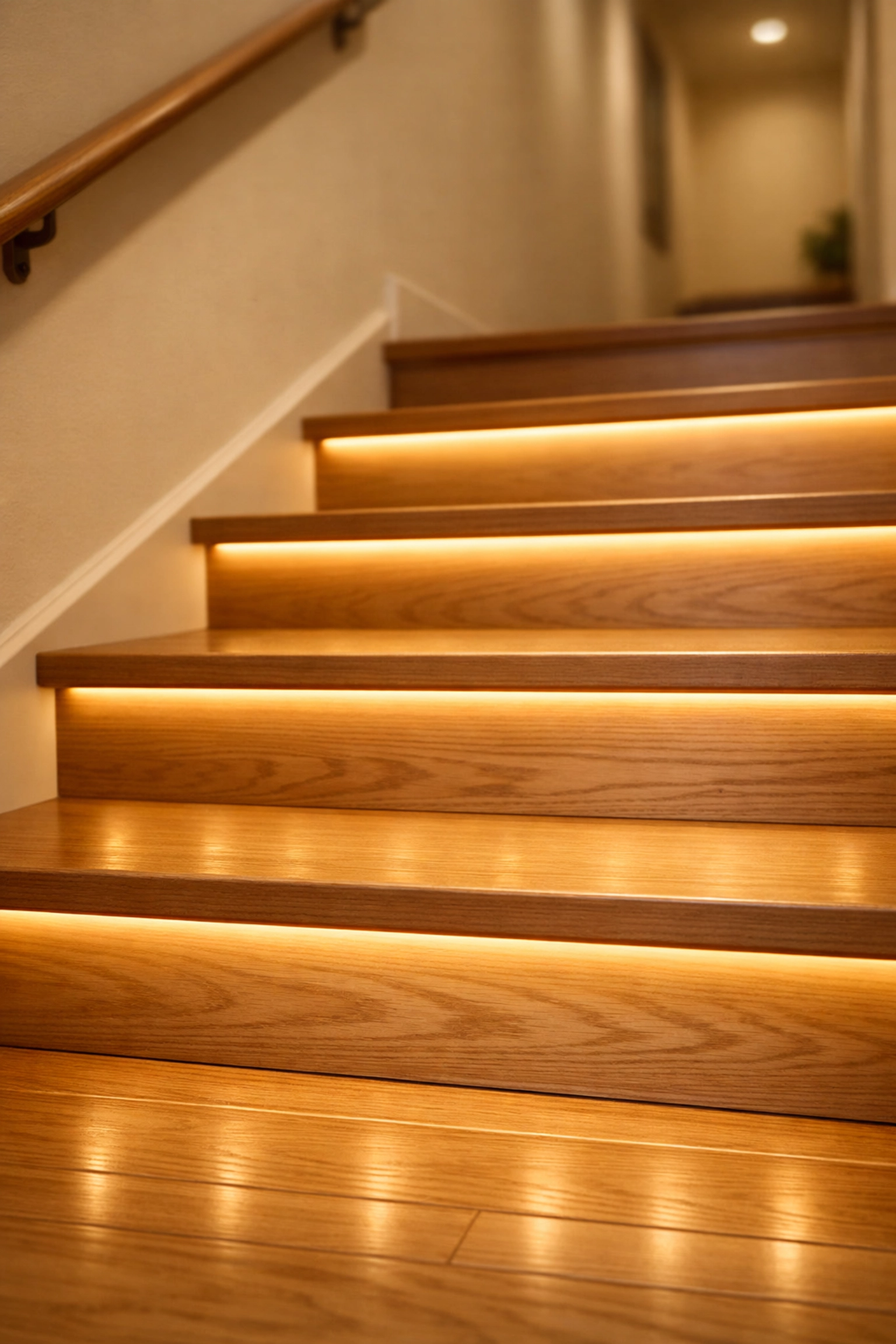
- Motion Sensors: Install motion-activated lights so the stairs illuminate automatically when someone approaches.
- LED Strips: Battery-operated LED strips under the lip of each tread can define the edge of the step perfectly.
- Dual Switches: Ensure there are light switches at both the top and the bottom of the stairs. Never "brave" a dark staircase because you didn't want to walk back down to flip a switch.
5. Prioritizing Aesthetics Over Traction (Slippery Surfaces)
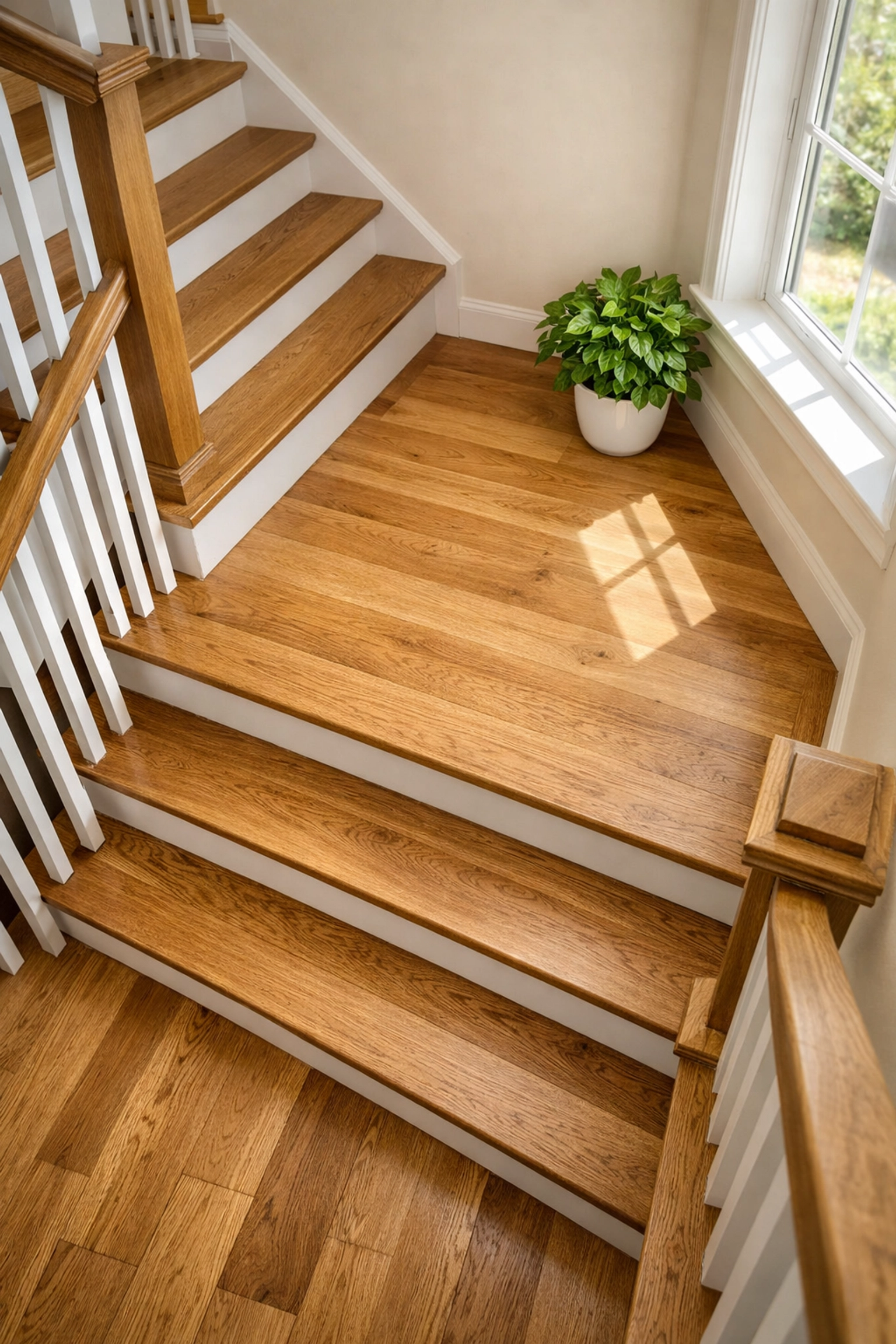
Polished hardwood stairs are beautiful. So are high-gloss tiles. But in the world of fall prevention, "shiny" often means "slippery." If you are wearing socks or smooth-soled slippers, these surfaces offer almost zero traction.
Even carpet can be a mistake if it’s a high-pile "shag" style that hides the edge of the step or if it's loosely installed. A loose carpet runner is essentially a slide waiting to happen.
The Fix:
You don't have to sacrifice style for safety, but you do need friction.
- Anti-Slip Strips: You can buy clear, adhesive anti-slip strips that provide grip without hiding the beauty of the wood.
- Non-Slip Treads: Rubber or textured fabric treads can be placed on each step.
- Low-Pile Carpet: If you prefer carpet, choose a tight, low-pile weave and ensure it is stapled tightly to every riser and tread.
- Contrast Strips: Use a different color or a bright tape on the edge of each step to provide a visual cue of where the step ends.
6. Neglecting Routine Maintenance
Stairs take a lot of abuse. Over time, wood can warp, nails can pop up, and screws can loosen. A "squeaky" step is often a sign that the tread is no longer firmly attached to the stringer (the framework of the stairs).
We often ignore these small warnings until a step actually shifts under our weight. Even a quarter-inch of movement can be enough to throw off your balance mid-stride.
The Fix:
Once a year, perform a "Stair Audit."
- Walk up and down slowly, listening for creaks and feeling for movement.
- Check for any protruding nails or loose carpet staples.
- If you find a loose tread, don't just hammer a nail back in. Nails can pull out again. Use long wood screws and construction adhesive to secure the tread to the frame.
- Check the "nosing" (the front edge) for wear. If it’s rounded off or splintered, it needs to be repaired or replaced to prevent your foot from sliding off.
7. Using the Stairs as Storage
We’ve all done it: placing a book, a pair of shoes, or a basket of laundry on the bottom steps to "take up later." This is a major safety hazard.
Stairs are a high-focus environment. When you are navigating steps, your brain is busy calculating distance and balance. Adding obstacles into that path: especially objects that might roll or slide: is incredibly dangerous. Furthermore, trying to carry large, heavy baskets that block your view of your feet is a primary cause of stair falls.
The Fix:
- The "No-Object" Rule: Establish a strict household rule that nothing ever sits on the stairs, not even for a minute.
- Clear the Landing: Ensure the areas at the top and bottom of the stairs are free of rugs that could slide or clutter that could cause a trip before you even reach the steps.
- One Hand Free: Always keep one hand on the handrail. If you have to carry something, make sure it’s small enough to hold in one arm so your other hand is free to grip the rail. If you have a lot to move, consider a "stair slide" or simply making multiple trips with smaller loads.
Bonus: Behavioral Adjustments
Sometimes the mistake isn't with the stairs themselves, but how we use them.
- Footwear: Avoid walking on stairs in socks. Bare feet are better, but supportive shoes with rubber soles are best.
- Rushing: Many falls occur when the phone rings or someone is at the door. No phone call is worth a trip to the hospital. Take your time.
- Vision: If you wear bifocals or trifocals, be extra careful. These lenses can distort your depth perception when you look down at your feet. Many people find it safer to have a dedicated pair of "single vision" glasses specifically for moving around the house.
Conclusion
Stair safety isn't about one big expensive fix; it’s about paying attention to the details. By fixing irregular dimensions, securing your handrails, improving lighting, and keeping the path clear, you turn a high-risk area into a manageable part of your home.
Take a walk over to your staircase right now. Grab the handrail: does it wiggle? Look at the lighting: is it dim? Small changes today can prevent a life-altering fall tomorrow. At Fall Guys Products, we believe that staying independent starts with staying safe, and a safe staircase is the backbone of an accessible home.
Stay safe out there. Give your stairs the attention they deserve, and they’ll continue to get you where you need to go for years to come.

